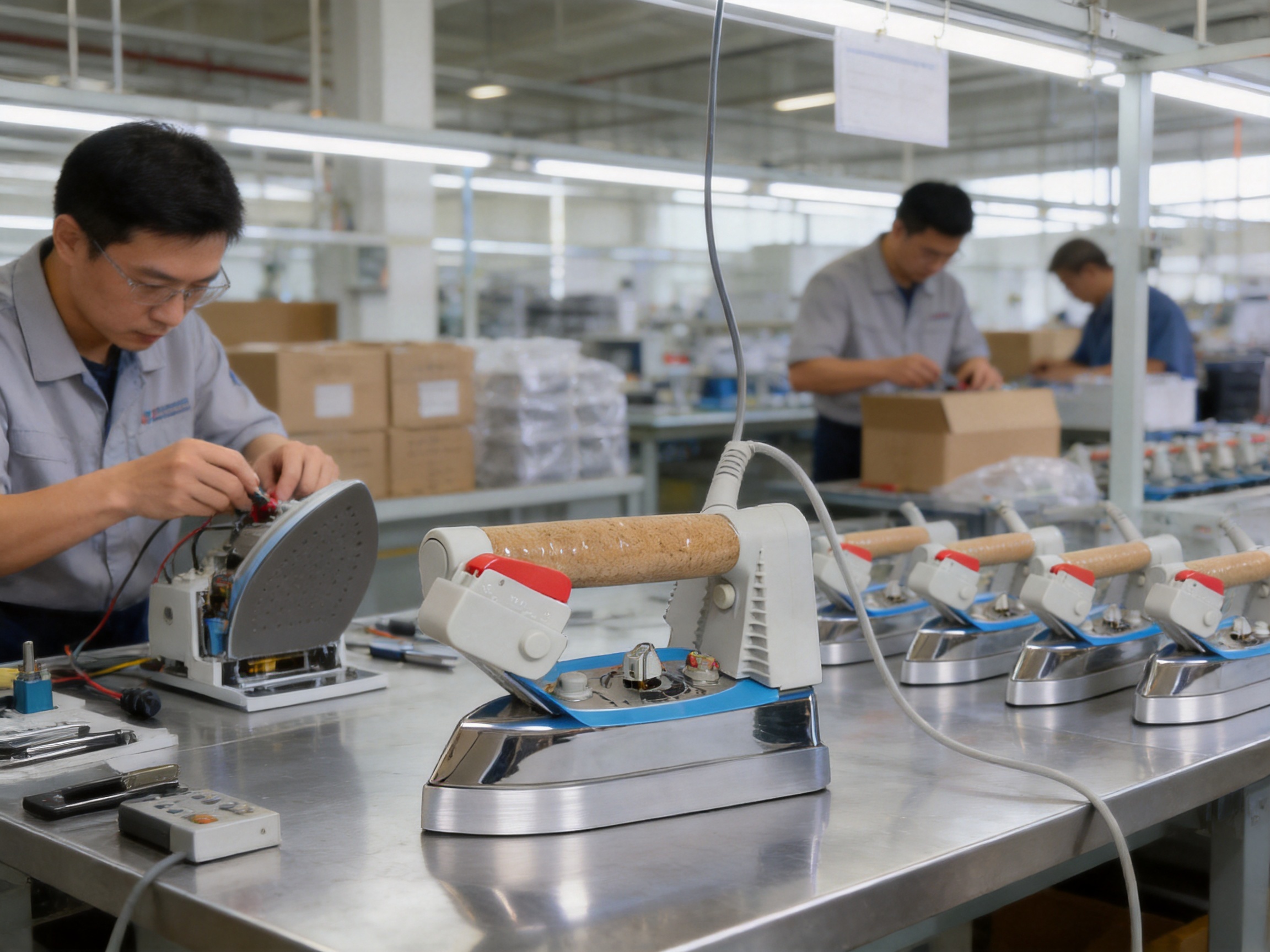
In garment care, textile production, tailoring, hospitality, and commercial laundry operations, the quality of an electric iron directly affects productivity and presentation. A suitable iron must heat quickly, maintain a dependable working temperature, glide smoothly over different materials, and remain comfortable during repeated use. It must also be easy to transport, simple to operate, safe for routine handling, and adaptable to the electrical standards of different markets. The STB-295 Dual Voltage Design Electric Iron is developed around these practical requirements.
With a 900W heating system, 110V/220V dual-voltage capability, a 1.55kg lightweight structure, and a precision-crafted non-stick soleplate, the STB-295 combines portability with professional performance. It is designed for users who need consistent garment finishing without the bulk, complexity, or high energy demand associated with larger pressing equipment. The iron is suitable for household garment care as well as professional textile finishing, making it a flexible solution for retailers, sewing workshops, uniform departments, hotels, laundries, costume departments, and apparel manufacturers.
This article examines the product’s operating advantages, technical characteristics, practical applications, quality considerations, and manufacturing background. It also explains why a dual-voltage professional iron can offer important advantages over conventional single-voltage models and how an experienced equipment manufacturer supports product reliability through research, production control, customization, and customer service.
The STB-295 is an electric iron engineered for dependable wrinkle removal and controlled garment finishing. Its compact structure allows operators to work efficiently on shirts, trousers, dresses, uniforms, collars, cuffs, seams, and other areas that require accurate pressing. Rather than relying on excessive size or weight, the design focuses on balanced heating performance, smooth movement, and manageable handling.
The product’s 900W power rating provides sufficient heating capacity for fast preparation and stable operation. In practical use, rapid heat-up reduces waiting time between tasks, while consistent heat helps the operator achieve a uniform finish across a garment. The dual-voltage design expands the iron’s suitability for international use, while the 1.55kg weight helps reduce fatigue when garments must be processed continuously.
A non-stick soleplate is another important feature. The soleplate is the surface that directly contacts the fabric, so its quality has a major effect on the working experience. A smooth, precision-crafted surface can move across textiles with less resistance and a lower risk of snagging. The advanced non-stick coating also helps prevent fabric fibers and finishing materials from adhering to the soleplate when the iron is used correctly.
| Specification | Product Information | Practical Benefit |
|---|---|---|
| Product model | STB-295 | Identifies the dual-voltage electric iron series |
| Voltage | 110V/220V | Supports use in different electrical markets |
| Power | 900W | Provides efficient heating and fast preparation |
| Weight | 1.55kg | Improves maneuverability and helps reduce operator fatigue |
| Soleplate | Precision-crafted with non-stick coating | Promotes smooth movement across multiple fabric types |
| Primary applications | Household care and professional textile finishing | Suitable for domestic, workshop, retail, and commercial use |
Electrical standards differ from one region to another. Many countries and territories use approximately 110V or 120V systems, while others use approximately 220V, 230V, or 240V systems. A single-voltage electric iron is normally restricted to the market for which it was manufactured. If it is connected to an incompatible supply, the equipment may fail to heat properly or may suffer serious electrical damage.
The STB-295 addresses this issue with a 110V/220V dual-voltage design. This feature makes the product more adaptable for international distribution, travel, mobile tailoring services, training centers, export orders, and businesses that operate in multiple locations. Dealers can also serve a broader customer base without maintaining entirely separate product lines for different voltage regions.
Dual-voltage capability is especially valuable for professional users who travel or transport equipment between facilities. Costume designers, alteration specialists, exhibition contractors, uniform suppliers, and mobile pressing services may work in locations with different electrical systems. A compatible voltage configuration allows the same iron model to remain useful across these environments, provided that the voltage selection and operating instructions are followed correctly.
For importers, the feature can simplify product planning. Instead of selecting a separate model for every destination, buyers may be able to use one adaptable product platform for multiple markets. This can support more efficient inventory management, reduce the risk of selling an incompatible model, and make product training easier for distributors and service teams.
Dual-voltage design does not eliminate the need for responsible operation. Users should confirm the local supply voltage, follow the product instructions, and use appropriate plugs, adapters, and electrical protection. The feature is valuable because it expands compatibility, but safe operation still depends on correct setup and proper maintenance.

STB-295 Dual Voltage Design Electric Iron
The heating system is the central working component of an electric iron. If heat-up is slow, the operator loses time. If the temperature is inconsistent, the finish may vary from one section of fabric to another. If the iron cannot maintain adequate heat during continuous work, operators may need to repeat passes, increasing labor time and potentially placing excessive stress on sensitive materials.
The STB-295 uses a 900W heating system intended to provide fast heat-up and consistent steam output. The power level is suitable for a compact professional iron because it balances working performance with practical energy consumption. It is strong enough to bring the soleplate to operating temperature efficiently while avoiding the excessive bulk and power requirements associated with much larger equipment.
Fast heat-up is useful in both domestic and commercial environments. At home, the user can prepare clothing without a long waiting period. In a workshop or garment department, rapid preparation helps reduce idle time between batches. When several garments need attention, the ability to begin work promptly contributes to a smoother workflow.
Consistent heating is equally important. Garment finishing is not simply a matter of making a hot surface touch fabric. The operator must create controlled contact that removes wrinkles without creating shine, distortion, scorching, or unwanted marks. A stable heating system supports predictable results when the user applies the correct temperature and technique for the fabric in question.
The 900W rating also makes the STB-295 practical for facilities that want professional functionality without installing a large industrial pressing station for every task. Large steam presses and specialized finishing machines remain valuable for high-volume operations, but a compact electric iron offers flexibility for detail work, small orders, repairs, touch-ups, and areas that cannot easily be placed on a large press.
Good garment finishing depends on more than the maximum temperature. Heat should be distributed across the working surface so that the operator can move naturally over the garment. Uneven heat can lead to inconsistent results, requiring repeated passes or additional manual checking. A precision-crafted soleplate works together with the heating assembly to provide a stable contact area.
Users should always consider the fabric type before beginning work. Natural fibers, synthetic textiles, blends, coated materials, and delicate decorative fabrics can have different heat tolerances. The STB-295 provides a practical heating platform, but professional results still depend on correct temperature selection, suitable pressing technique, and the use of a protective cloth when necessary.
At 1.55kg, the STB-295 is designed to provide a useful balance between stability and handling comfort. An iron that is too light may require additional pressure to create a clean finish, while an excessively heavy iron can cause fatigue during extended use. The stated weight gives the operator a manageable tool that can be lifted, repositioned, and guided across garments with relative ease.
Weight becomes particularly important when working on shaped garments. Sleeves, shoulders, collars, pleats, cuffs, trouser legs, and narrow seams require frequent changes of direction. A compact and maneuverable iron helps the user approach these areas more accurately than a large, cumbersome unit. It can also be lifted quickly to reposition the fabric or avoid an obstruction.
Reduced fatigue can improve both comfort and consistency. When operators become tired, they may apply uneven pressure, work more slowly, or make more handling mistakes. A balanced lightweight design allows them to maintain a steady rhythm for longer periods. This is beneficial for alteration shops, school uniform departments, hotel laundry rooms, costume workshops, and small apparel production lines.
The 1.55kg construction also supports easier transportation. Businesses that provide mobile pressing services or move equipment between workstations can benefit from a product that does not create unnecessary carrying difficulty. For distributors and end users, manageable weight may also reduce packaging and handling challenges during storage, shipment, and installation.
A professional iron should not be judged only by whether it is as light as possible. An ultra-light structure may be easy to carry, but it may lack the contact stability required for efficient pressing. The STB-295’s 1.55kg weight represents a practical compromise: light enough for maneuverability and repeated handling, while substantial enough to support controlled contact with the textile surface.
This balance is one of the product’s advantages over basic household irons that may be designed primarily for occasional use. Professional users often need equipment that feels stable in the hand and performs predictably over multiple garments. The STB-295 is positioned between a simple domestic appliance and a heavy industrial pressing machine, offering a useful middle ground for flexible garment care.
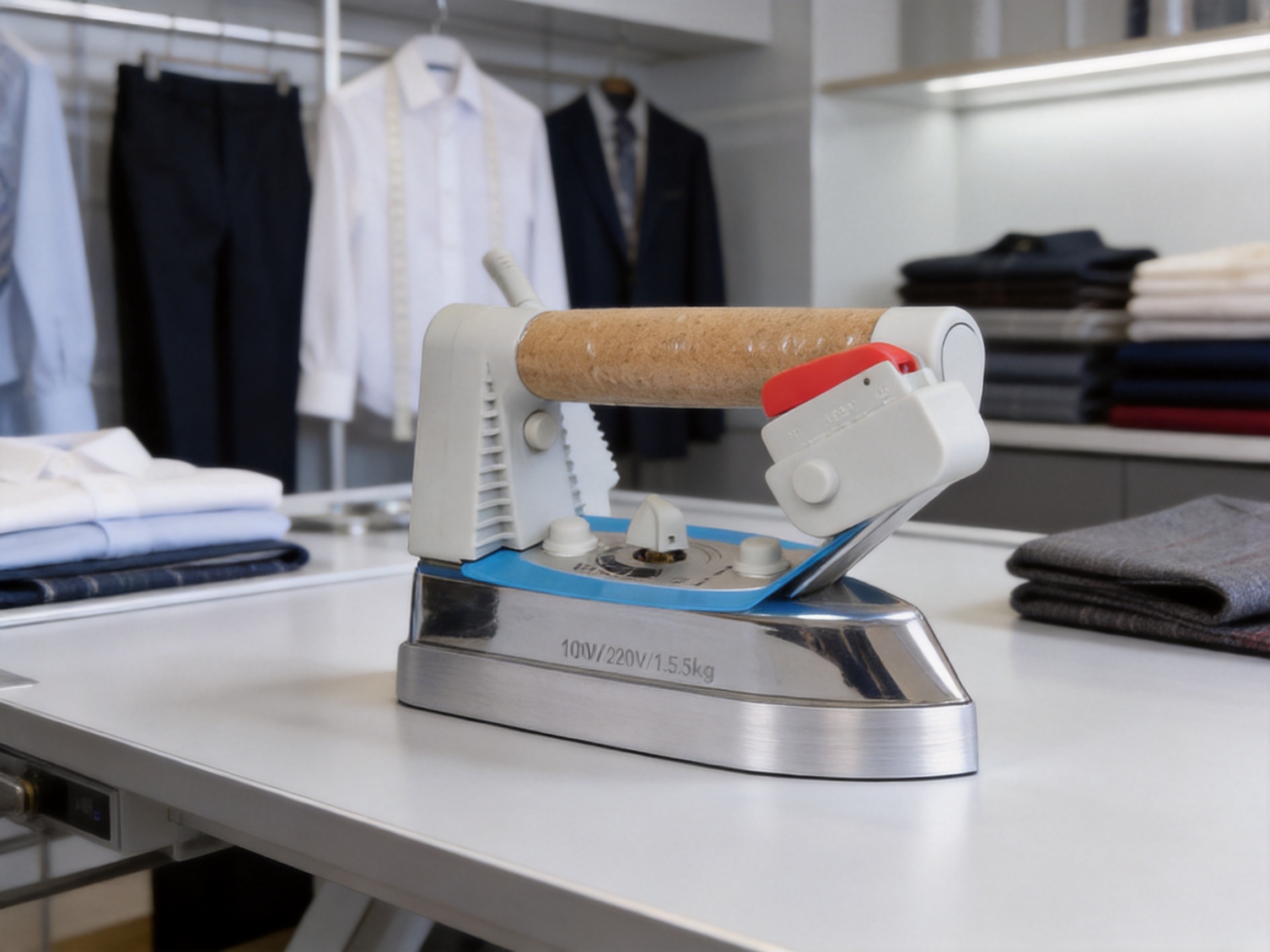
The soleplate has a direct influence on speed, fabric protection, and operator confidence. A rough or poorly finished soleplate can drag across garments, catch on threads, create unwanted friction, or leave marks. The STB-295 features a precision-crafted soleplate with an advanced non-stick coating to support smoother movement over a range of fabrics.
Smooth gliding allows the operator to cover a garment with fewer interruptions. Instead of applying excessive force to move the iron, the user can guide it through controlled strokes. This is especially useful for large panels such as shirts, jackets, skirts, and trouser legs, where repeated dragging can slow the work and increase physical strain.
The non-stick coating is also helpful when working with fabrics that are more likely to react to heat or friction. When used at an appropriate temperature, the coating can reduce the chance of fibers adhering to the soleplate. It also helps the iron move cleanly across the textile surface, supporting a more professional appearance.
However, no coating replaces correct operation. The soleplate should be kept clean, and users should avoid ironing over adhesives, printed transfers, plastic components, metal decorations, or other materials that may damage the surface. When pressing unusual fabrics, the operator should test an inconspicuous area first and follow the fabric manufacturer’s care instructions.
For cotton and cotton-blend garments, the smooth soleplate helps the user cover broad surfaces efficiently. For wool and tailored textiles, controlled movement can assist with shaping and crease formation. For synthetic blends, careful temperature management combined with a clean non-stick surface can help reduce the risk of sticking or shine. For delicate garments, a pressing cloth and low-temperature technique may be appropriate.
Tailors and alteration specialists often need to press small, precise areas rather than simply flatten a complete garment. The compact form of the STB-295 allows the user to approach seams, edges, darts, collars, and cuffs with greater control. The soleplate can be positioned accurately, which is important when the purpose of ironing is to shape a garment rather than only remove visible wrinkles.
The STB-295 is suitable for a broad range of users because it combines international voltage flexibility, efficient heating, manageable weight, and smooth operation. Its applications extend beyond ordinary household ironing.
At home, the product can be used for everyday clothing, bedding, uniforms, school garments, curtains, and other textiles that require pressing. The 900W system provides a practical heating level for regular use, while the lightweight structure helps users manage garments without excessive effort. The dual-voltage feature may also be useful for households that relocate internationally or require equipment compatible with more than one electrical standard.
Tailoring businesses need equipment that can handle precision work. A garment may need to be pressed after stitching, shaped around a seam, or prepared before final delivery. The STB-295 is appropriate for touch-ups, detail work, and routine finishing. Its maneuverability makes it useful where a larger press would be inconvenient or where the operator needs to work carefully around construction details.
In apparel production, electric irons may be used at several stages. Operators can press components before assembly, set seams after stitching, correct minor wrinkles during inspection, and complete garments before packing. The STB-295 can serve as a flexible workstation tool, particularly in small and medium-sized production environments where equipment must support multiple tasks.
Hotels, guesthouses, serviced apartments, and laundry providers require garments and linens to present a clean, professional appearance. Although high-volume facilities may use larger pressing systems for bulk work, a compact electric iron remains useful for final corrections, delicate items, guest services, and garments with complex shapes. Its manageable weight is valuable when staff members need to work continuously while moving between different textile items.
Schools, hospitals, restaurants, factories, and security organizations often maintain uniforms that must look neat and presentable. A flexible electric iron can support regular maintenance, last-minute preparation, and small-batch pressing. Dual-voltage capability can also assist organizations that operate across regions or purchase equipment through international supply channels.
Costume departments, theaters, event companies, and exhibition contractors often work under time pressure. Garments may need to be prepared at a venue, backstage, in a temporary workshop, or at a location with unfamiliar electrical standards. A compact dual-voltage iron can be transported easily and used for quick finishing, provided that the local power supply is confirmed and safe operating procedures are followed.
The first major advantage of the STB-295 is its broader electrical compatibility. A conventional single-voltage iron is limited by the supply specification for which it was manufactured. The dual-voltage design offers greater flexibility for distributors, travelers, international businesses, and organizations that need equipment in more than one region.
The second advantage is its professional balance of power and portability. Some basic irons are designed for occasional household use and may not be ideal for repeated textile finishing. In contrast, the STB-295 combines a 900W heating system with a 1.55kg construction, giving it the capacity for productive work without making it difficult to handle.
The third advantage is the precision non-stick soleplate. Low-cost or poorly finished soleplates can create drag and make fabric handling more difficult. A smooth coated soleplate contributes to improved movement, better control, and reduced risk of snagging when the product is used according to instructions.
The fourth advantage is versatility. A single product can support household care, professional finishing, tailoring, garment production, hospitality, and mobile services. This versatility may provide better value than purchasing separate basic irons for different tasks, especially for users who need one reliable tool that can adapt to changing work conditions.
The fifth advantage is ease of integration into existing operations. The STB-295 does not require the floor space, installation complexity, or infrastructure associated with a large pressing machine. It can be assigned to a worktable, finishing station, repair area, or mobile kit. This makes it practical for businesses that need to improve finishing quality without redesigning their entire production area.
| Comparison Area | Basic Single-Voltage Iron | STB-295 Dual-Voltage Electric Iron |
|---|---|---|
| Electrical compatibility | Usually limited to one voltage system | Designed for 110V/220V use |
| Heating performance | Varies by domestic model | 900W heating system for efficient preparation |
| Handling | May be light but not always balanced for professional work | 1.55kg structure supports maneuverability and control |
| Soleplate movement | Quality depends on the model and surface finish | Precision-crafted non-stick surface promotes smooth gliding |
| Application range | Primarily occasional household use | Household and professional textile finishing |
| International distribution | Requires separate voltage versions | One adaptable design can support multiple markets |
The performance of an electric iron depends on more than its visible specifications. Reliable products are created through coordinated research, component selection, production management, inspection, and customer support. The manufacturer behind the STB-295 has specialized in ironing equipment and related textile machinery since 2003. This experience provides an important foundation for understanding the requirements of garment professionals.
The company develops and produces electric irons, steam irons, hanging irons, spray guns, small steam machines, heat transfer machines, steam boilers, vacuum tables, and accessories. This product range gives the manufacturer a broader view of garment finishing processes. An electric iron is not treated as an isolated appliance; it is part of a complete workflow that may include steam generation, vacuum extraction, pressing, shaping, transfer printing, and final inspection.
Experience across related equipment categories can support more practical product development. Engineers and product teams can identify common customer concerns, such as heating stability, operator fatigue, surface durability, compatibility with different production environments, and ease of maintenance. Feedback from one product category can help inform improvements in another.
The manufacturer emphasizes independent research, development, and production. This approach allows product specifications to be adjusted according to market requirements rather than relying only on standardized external designs. For the STB-295, the combination of dual-voltage capability, 900W output, lightweight construction, and a non-stick soleplate reflects attention to the needs of both domestic and professional users.
Independent development also supports customization. Different distributors and professional customers may require changes in voltage configuration, labeling, packaging, plug style, product color, documentation, or branding arrangements. A manufacturer with its own product development and production resources is better positioned to evaluate and implement such requirements efficiently.
Research and development should be viewed as a continuing process. Garment materials, customer expectations, energy considerations, and international regulations change over time. Ongoing product improvement helps a manufacturer maintain relevance and refine details that affect daily operation, including ergonomics, surface treatment, component reliability, and packaging protection.
Effective manufacturing requires cooperation among research, procurement, assembly, quality control, sales, and service teams. The company’s research and development, management, and sales groups work together to support product quality and customer needs. Such coordination is important because an excellent design can still fail commercially if production consistency, documentation, shipment planning, or after-sales communication is weak.
In an organized production process, incoming components are assessed before they enter assembly. Key parts such as heating elements, electrical connections, handles, insulation materials, soleplates, coatings, and fastening components should meet defined requirements. During assembly, workers must follow controlled procedures so that parts are positioned correctly and electrical connections are secure.
Process control is especially important for an electric iron because the product combines heat, electricity, mechanical handling, and direct contact with textiles. Assembly accuracy affects heating performance, user safety, product life, and the overall working experience. Consistent procedures help reduce variation between individual units.
The manufacturer follows national and industry standards including GB4706.1-2005 and GB4706.2-2007, and its products have passed CCC and CQC certifications according to the supplied company information. Compliance with recognized standards demonstrates an effort to address electrical safety, construction requirements, and product conformity.
Standards provide a framework for evaluating household and similar electrical appliances. They help manufacturers consider insulation, temperature behavior, electrical strength, leakage, mechanical construction, labeling, and other important factors. Certifications and conformity marks can also help importers, distributors, and end users assess whether a product has been evaluated against applicable requirements.
Certification should be supported by continuing production control. A product that passes an evaluation must continue to be manufactured with consistent materials, processes, and specifications. For this reason, quality management is not limited to a single inspection at the end of production. It should include checks throughout procurement, assembly, testing, packaging, and shipment.
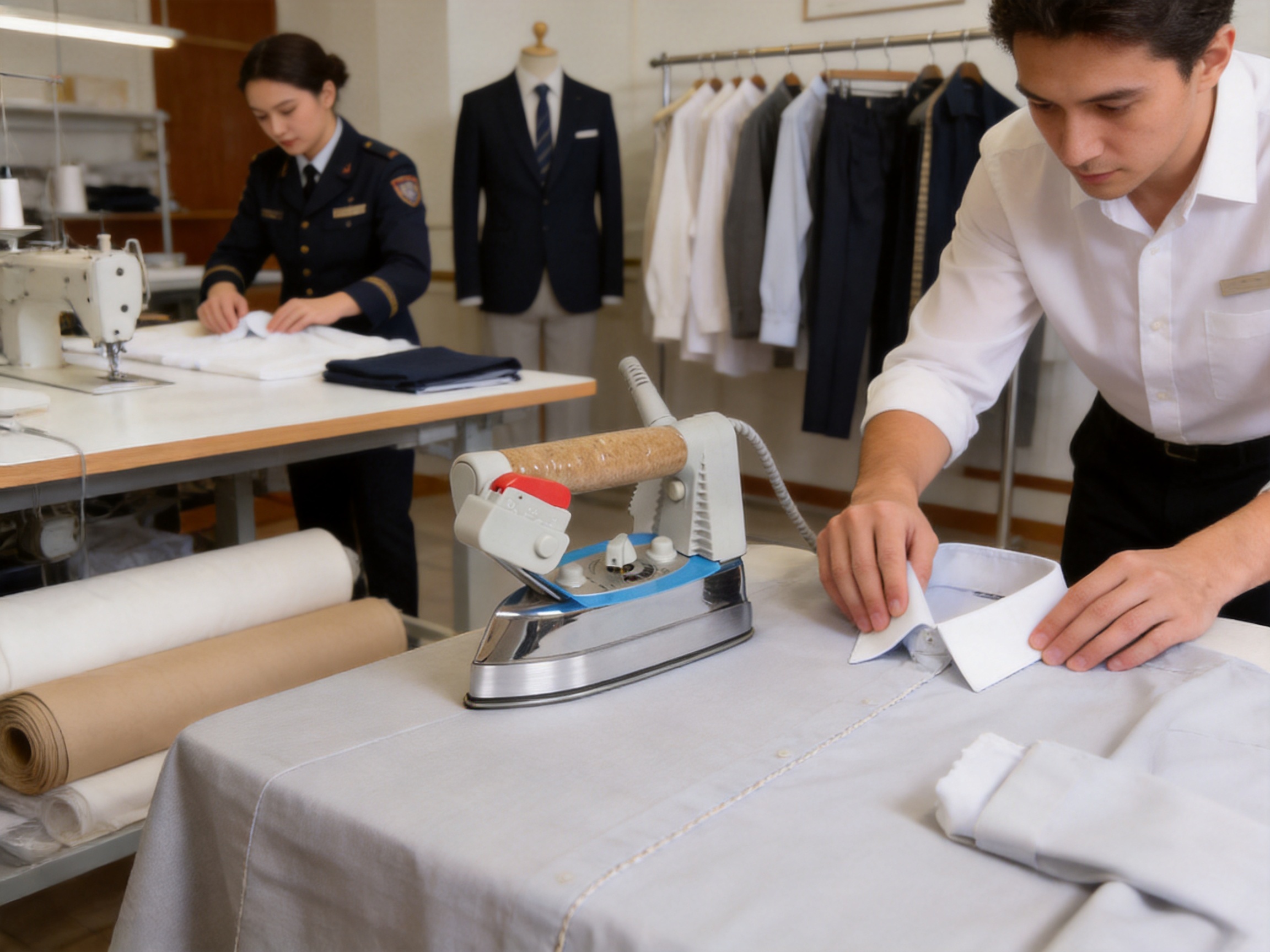
A dependable electric iron requires several layers of inspection. Visual checks can identify surface defects, incomplete assembly, damaged insulation, loose components, or coating irregularities. Electrical tests can help verify continuity, insulation performance, and correct operation. Functional testing can confirm that the unit heats properly and that the soleplate behaves as expected under normal conditions.
Weight and appearance may also be checked against product specifications. A 1.55kg design should remain consistent within reasonable production tolerances because changes in weight may indicate missing parts, unsuitable materials, or assembly variation. Packaging inspection is also important because the soleplate and electrical components must be protected during storage and transportation.
For dual-voltage products, voltage configuration deserves particular attention. The product must be clearly identified, and instructions must communicate how it is intended to be used in different electrical environments. Correct labeling and documentation reduce the chance of user error and help distributors provide accurate information to customers.
Quality control is most effective when it is preventive rather than purely corrective. Preventive control means defining material requirements, training production staff, maintaining equipment, recording inspection results, and analyzing recurring defects. This approach improves consistency and can reduce warranty claims, returns, and interruptions for customers.
Many buyers of garment equipment are not end users but importers, wholesalers, distributors, chain retailers, or industrial customers. These buyers may need specific packaging, language versions, electrical plugs, documentation, labels, or order quantities. A manufacturer with established export experience can help customers coordinate these requirements more efficiently.
The company offers customization and OEM services as part of its business strengths. For the STB-295, potential project discussions may include market-specific packaging, product identification, instruction manuals, electrical configurations, and other commercial details. Exact options should be confirmed during technical and sales communication because requirements can differ by market and order.
International supply also requires attention to shipment planning. Products must be packed to prevent damage to the soleplate, housing, cord, and controls. Carton design, internal protection, labeling, palletization, and loading procedures all influence the condition in which equipment arrives. Convenient shipment is one of the manufacturer’s stated advantages, supported by experience serving overseas customers.
The company’s products are mainly exported to Southeast Asia, Central Asia, South America, Africa, and other regions. This distribution experience indicates familiarity with international business communication, varied market conditions, and the practical requirements of overseas buyers. Such experience can be valuable when customers need support with product selection, documentation, order coordination, and shipment arrangements.
Before purchasing the STB-295, buyers should consider the intended operating environment. The product is well suited to detail pressing, garment finishing, household care, and small or medium-scale textile work. Businesses handling very large daily volumes may also require steam boilers, vacuum tables, pressing machines, or other specialized equipment. In those cases, the STB-295 can serve as a complementary tool for finishing and precision work.
Voltage compatibility should be confirmed before ordering. Buyers should identify whether the destination uses a 110V or 220V supply and determine how the dual-voltage function is configured. Plug standards, frequency requirements, local certification, and importer obligations should also be reviewed before commercial distribution.
Users should evaluate fabric types and production methods. If the operation involves delicate textiles, coated materials, printed garments, or heat-sensitive synthetics, staff should be trained to use suitable temperatures and protective techniques. The non-stick soleplate improves movement, but professional results still depend on operator knowledge.
Workstation design also affects performance. The iron should be placed on a stable, heat-resistant surface when not in use. Adequate space should be provided for the garment, cord management, and operator movement. Good lighting helps users inspect creases and fabric surfaces, while proper ventilation contributes to a comfortable working environment.
Before use, inspect the cord, plug, housing, soleplate, and voltage setting. Do not operate the product if the electrical components appear damaged. Confirm the supply voltage and ensure that the working surface is stable. The iron should be used only for its intended purpose and should not be left unattended while energized.
Choose a suitable temperature for the fabric. When working with a new or unfamiliar material, test a hidden section or use a protective pressing cloth. Avoid placing the hot soleplate directly on plastic decorations, adhesives, metallic trims, synthetic coatings, or printed surfaces unless the care instructions specifically permit it.
Keep the soleplate clean and free from residue. If material adheres to the surface, allow the iron to cool and follow the recommended cleaning procedure. Abrasive tools or harsh chemicals may damage the non-stick coating and should not be used unless specifically approved by the product instructions.
After use, disconnect the iron according to the operating procedure, allow it to cool completely, and store it in a dry location. The cord should not be wrapped tightly around a hot product. Regular inspection is particularly important in commercial environments where the iron is used frequently.
Maintenance records can be useful for professional users. Recording inspection dates, unusual heating behavior, cord replacement, cleaning, and service activity helps managers identify problems early. Preventive maintenance can extend working life and reduce unexpected interruption during busy production periods.
The value of an electric iron should be considered in relation to total operating performance rather than purchase price alone. A product that heats efficiently, moves smoothly, and remains comfortable during extended use can reduce wasted time and improve the output of each operator. When the same model can be used in multiple voltage markets, inventory and training may also become easier to manage.
The STB-295’s compact design can reduce the need for dedicated floor space. It can be added to an existing workstation without the installation investment associated with larger machines. This makes it attractive to small tailoring businesses, startup apparel companies, retailers offering alterations, and institutions that need reliable garment care without building a complete industrial finishing department.
Reduced fatigue may also have an indirect economic benefit. Comfortable equipment can help operators maintain a consistent pace and reduce the physical burden of repeated pressing. While the product cannot replace proper ergonomics or work scheduling, its 1.55kg weight supports a more manageable working routine.
The non-stick soleplate can contribute to efficiency by reducing drag and helping the user complete each pass more smoothly. When fabric does not catch or stick, there may be less need to reposition the garment or repeat the same area. Over many garments, small improvements in movement can produce meaningful time savings.
Customers purchasing textile equipment are often looking for more than a single appliance. They want dependable supply, consistent specifications, responsive communication, technical understanding, and long-term cooperation. A manufacturer established in 2003 and focused on ironing and garment equipment can offer industry-specific knowledge that a general appliance supplier may not possess.
The company’s product portfolio includes equipment for different stages of textile finishing. This allows it to understand how an electric iron interacts with steam systems, vacuum tables, heat transfer machines, spray guns, and related accessories. Such knowledge can help customers choose equipment according to their actual workflow rather than selecting products based only on isolated specifications.
Multiple brands and product lines are also part of the company’s market experience. The supplied information identifies Silver Star, Platinum Dragon, Tingshun, Jiasheng, Shengtai, and Jiangxin as brands associated with the company. This broad market presence suggests experience in serving different customer preferences, distribution channels, and application requirements.
Reliable service is particularly important for overseas buyers. Differences in language, regulations, shipping procedures, electrical systems, and market expectations can create unnecessary complications. A manufacturer with export experience and dedicated sales communication can help reduce these challenges and support a smoother purchasing process.
The garment industry continues to change. Consumers expect better appearance, faster service, and more flexible clothing care. Small workshops compete with larger businesses by offering customization and rapid turnaround. Hotels and uniform departments seek efficient equipment that is simple to train staff on. International distributors require products that can meet varied voltage and regulatory conditions.
These trends reinforce the value of a compact, adaptable electric iron. Future improvements may continue to focus on energy efficiency, ergonomic balance, surface durability, temperature control, electrical safety, packaging, and compatibility with more textile applications. Product development should remain connected to actual user feedback, because practical details often determine whether equipment performs well in daily work.
The STB-295 already addresses several of these needs through its dual-voltage capability, 900W heating system, lightweight structure, and non-stick soleplate. Its value lies in the way these features work together. Dual voltage improves market flexibility, efficient heating supports productivity, manageable weight improves handling, and the soleplate promotes smooth fabric contact.
The STB-295 is a dual-voltage electric iron designed for household garment care and professional textile finishing. It is suitable for clothing, uniforms, tailoring work, garment production, hospitality applications, and detail pressing.
The stated voltage specification is 110V/220V. Users should confirm the correct operating configuration, local electrical requirements, and instructions before use.
The STB-295 has a 900W heating system. This provides efficient heat-up and supports consistent performance during normal garment finishing work.
Yes. Its 900W heating system, 1.55kg weight, dual-voltage capability, and non-stick soleplate make it suitable for professional finishing, tailoring, workshops, uniform departments, hotels, and other textile-related operations.
The 1.55kg construction provides a balance between stability and maneuverability. It is substantial enough for controlled pressing but light enough to reduce handling difficulty and operator fatigue during repeated work.
The non-stick soleplate is designed to glide smoothly over various fabrics and reduce the possibility of snagging or sticking when used at a suitable temperature. It supports more comfortable and controlled garment finishing.
The iron can be used for many fabric types, but every textile has its own heat tolerance. Users should follow garment care instructions, choose an appropriate temperature, and test unfamiliar or delicate materials before full operation.
It depends on the application. The STB-295 is highly useful for detail work, small batches, touch-ups, household care, and flexible finishing. High-volume facilities may still require larger steam presses, vacuum tables, or specialized machinery for bulk production.
International buyers should confirm the destination voltage, plug requirements, electrical frequency, certification obligations, packaging needs, instruction language, order quantity, and shipping conditions. The dual-voltage design provides flexibility, but local compliance must still be reviewed.
The company information states that customization and OEM services are available. Buyers should discuss specific requirements such as packaging, labels, documentation, product identification, and electrical configurations with the sales team.
The manufacturer specializes in electric irons, steam irons, hanging irons, spray guns, small steam machines, heat transfer machines, steam boilers, vacuum tables, and related accessories. It has operated since 2003 and serves both domestic and overseas customers.
The company follows standards including GB4706.1-2005 and GB4706.2-2007. Its products are also described as having passed CCC and CQC certifications. Buyers should confirm the current certification documents applicable to the exact product and destination market.
The soleplate should be kept clean and protected from adhesives, plastics, metallic decorations, and other materials that may leave residue or damage the coating. Users should allow the iron to cool before cleaning and avoid abrasive methods unless approved by the instructions.
It can be used in homes, tailoring shops, alteration studios, apparel factories, hotel laundry rooms, uniform departments, costume workshops, retail service centers, training institutions, and mobile garment-finishing operations.
The STB-295 Dual Voltage Design Electric Iron is a practical solution for users who need reliable garment finishing in a compact format. Its 110V/220V compatibility supports international use, while the 900W heating system provides efficient preparation and consistent working performance. The 1.55kg structure improves maneuverability and helps reduce fatigue, and the precision-crafted non-stick soleplate promotes smooth movement across different fabrics.
Compared with basic single-voltage irons, the product offers broader electrical compatibility and a more professional balance of power, portability, and surface performance. Compared with larger pressing systems, it requires less space and can be moved easily between workstations. These characteristics make it suitable as a primary tool for small operations or as a flexible finishing tool within larger facilities.
The manufacturer strengthens the product proposition through experience in textile equipment, independent research and development, coordinated production management, OEM and customization capabilities, international distribution, and attention to recognized standards and certifications. Its wider portfolio of steam, pressing, transfer, and accessory equipment also supports a comprehensive understanding of garment finishing workflows.
For households, workshops, apparel businesses, hospitality providers, institutions, and international distributors, the STB-295 offers a combination of useful features rather than a single isolated benefit. Its value comes from dependable heating, adaptable voltage, comfortable handling, smooth fabric contact, and support from an experienced equipment manufacturer. When operated and maintained correctly, it can contribute to efficient, consistent, and professional garment presentation.
1. Product specification sheet for the STB-295 Dual Voltage Design Electric Iron, including voltage, power, weight, and soleplate information.
2. Manufacturer-provided company profile describing product development, production capabilities, export markets, OEM services, and related textile equipment.
3. GB4706.1-2005, Safety requirements for household and similar electrical appliances, general requirements.
4. GB4706.2-2007, Safety requirements for household and similar electrical appliances, particular requirements for electric irons.
5. General professional guidance on fabric care, temperature selection, pressing techniques, and textile finishing procedures.
6. General quality-management principles for electrical appliance assembly, inspection, packaging, and international distribution.
 +86-578-3158872 / +86-578-3158958
 jyshengda@163.com / caroying@jy-shengda.com
 No. 8 Nanyi Rd, Huzhen Industrial Park, Zhejiang, China
Copyright © Jinyun Shengda Sewing Equipment Co., Ltd. All Rights Reserved.
Ironing Press Machine Equipment Factory
 English
 中文简体
 русский
 عربى