Modern ironing requires more than a hot soleplate. Users expect fast heating, reliable temperature control, smooth movement across different fabrics, comfortable handling, and consistent performance over extended periods. The ST-999 (ES-999) Electric Iron is designed around these practical requirements. Combining a 1600W heating system, an electronic temperature display, and a durable non-stick soleplate measuring 194 x 128 mm, it provides a balanced solution for households, garment workshops, tailoring businesses, hotels, laundries, and other professional environments.
The product is manufactured by Jinyun Shengda Sewing Equipment Co., Ltd., a Chinese producer specializing in ironing equipment and related machinery. The company has developed a product range that includes electric irons, steam irons, hanging irons, spray guns, small steam machines, heat transfer machines, steam boilers, vacuum tables, and accessories. This broad manufacturing background gives the ST-999 (ES-999) Electric Iron a practical position within a complete garment-care and garment-production equipment portfolio.
Unlike a basic household iron designed only for occasional use, this model combines portability with features that are useful in more demanding ironing environments. Its high power rating supports quick heat-up, while its electronic temperature display helps users set and monitor heat more accurately. The imported non-stick coating on the soleplate is intended to provide smooth fabric contact and reduce the chance of garments sticking or snagging during operation.
These qualities make the ST-999 (ES-999) Electric Iron a versatile tool for removing wrinkles from shirts, trousers, uniforms, dresses, linens, tablecloths, and many other textile products. It can support precise work on delicate materials while also providing sufficient heating capacity for heavier fabrics. Its design reflects the need for efficient performance without making the product unnecessarily complicated to operate.

ST-999(ES-999) Electric Iron
The ST-999 (ES-999) Electric Iron is an electronically controlled ironing appliance with a 1600W power rating. It is available for 110V and 220V electrical systems, allowing it to serve customers in different markets when the appropriate voltage configuration is selected. The iron weighs approximately 2.6 kg, giving it enough stability for effective pressing while remaining manageable for routine operation.
The soleplate measures 194 x 128 mm. This size provides a useful working area for covering fabric efficiently, while still allowing the operator to maneuver around collars, cuffs, seams, pockets, buttons, and other difficult garment sections. A soleplate that is too small can slow production, while one that is excessively large may be difficult to control in detailed work. The dimensions of this model offer a practical compromise between coverage and maneuverability.
The iron is suitable for home use, but its characteristics also support small commercial operations. Tailors, sample rooms, uniform suppliers, alteration shops, clothing retailers, and laundry services can use it for finishing garments before delivery. It may also be used alongside steam equipment, vacuum tables, or other pressing machinery in a broader garment-care workflow.
Because the iron includes electronic temperature control, it is appropriate for operators who need to work with different textile categories. Fabrics such as silk, polyester, rayon, cotton, linen, wool blends, and synthetic materials can require different heat levels and handling methods. The ability to select and observe the temperature setting helps reduce guesswork and allows the operator to establish a more repeatable process.
| Specification | Details | Practical Significance |
|---|---|---|
| Product type | Electric iron | Suitable for garment finishing, household ironing, tailoring, and commercial use |
| Model | ST-999 (ES-999) | Identifies the product configuration for purchasing and service purposes |
| Voltage | 110V / 220V | Supports use in markets with different electrical standards |
| Power | 1600W | Provides rapid heating and stable operating performance |
| Soleplate size | 194 x 128 mm | Offers a practical balance between coverage and control |
| Soleplate finish | Imported non-stick coating | Promotes smooth gliding and helps reduce fabric adhesion |
| Temperature system | Electronic temperature display | Improves visibility and adjustment accuracy |
| Product weight | Approximately 2.6 kg | Provides pressing stability while remaining portable |
One of the most important advantages of an electric iron is the time required to reach its working temperature. A slow-heating iron can interrupt production, increase waiting time, and reduce the number of garments that can be completed during a working shift. The 1600W heating system in the ST-999 (ES-999) Electric Iron is designed to address this problem by delivering rapid heat-up performance.
High electrical power allows the heating element to raise the soleplate temperature quickly after the iron is switched on. This is valuable in households where users may need to press a garment shortly before leaving home. It is even more important in professional environments, where operators may turn the iron on and off repeatedly or move between different garment-finishing tasks throughout the day.
Rapid heating also helps create a more efficient workflow. Instead of waiting for the appliance to reach the required temperature, an operator can prepare garments, organize work surfaces, and begin pressing soon after activation. In commercial operations, small savings in preparation time can accumulate into meaningful improvements in daily productivity.
The 1600W rating also provides a useful reserve of heating capacity when the soleplate comes into contact with cooler or heavier materials. Fabrics absorb heat during pressing, and a capable heating system can help the soleplate recover its working temperature more effectively. Consistent heat is especially important when working on thicker cotton, denim, linen, workwear, or multiple fabric layers.
Compared with lower-powered irons, the ST-999 (ES-999) model can offer a more responsive experience. Users do not need to compensate for inadequate heat by holding the iron in one place for too long. Shorter contact times can support cleaner finishing and may reduce the risk of over-pressing particular areas of a garment.
Different fabrics respond differently to heat. A temperature level that works well for cotton may be unsuitable for silk, synthetic fibers, or blended materials. Excessive heat can cause shine, distortion, melting, discoloration, or permanent damage. Insufficient heat, on the other hand, may leave wrinkles behind and force the operator to repeat the same movement several times.
The electronic temperature display on the ST-999 (ES-999) Electric Iron gives the operator a clear indication of the selected temperature. This is more informative than relying only on an approximate dial position or waiting for an indicator light to change. A visible electronic setting helps users make more deliberate adjustments when switching from one fabric to another.
Electronic temperature control is particularly useful for businesses that process different garment categories. A tailoring shop may work on silk dresses in the morning, cotton shirts in the afternoon, and wool jackets later in the day. A laundry may process uniforms, household linens, and synthetic sportswear. The ability to adjust the setting according to the material supports a more disciplined and repeatable ironing procedure.
Temperature visibility can also assist with employee training. New operators can be taught to select appropriate heat levels based on fabric-care instructions and production procedures. Experienced users benefit from the same information because it allows them to maintain consistent settings across batches of garments. This supports quality control and reduces reliance on individual guesswork.
The temperature display should be used together with the garment manufacturer’s care label, a test on an inconspicuous area, and appropriate pressing techniques. Electronic control improves precision, but fabric condition, moisture, pressure, dwell time, and surface finish also influence the final result.
Delicate materials require careful handling because they may react quickly to heat and pressure. Silk, polyester, rayon, satin, and certain coated textiles can show marks or surface changes if pressed incorrectly. The ST-999 (ES-999) Electric Iron enables the user to select a lower temperature and monitor the setting before beginning work.
For delicate garments, operators can combine a suitable low-temperature setting with short, controlled movements. A pressing cloth may also be used when recommended. The smooth soleplate helps the iron move across the material without unnecessary dragging, while precise temperature selection contributes to better protection of the fabric surface.
Specialty fabric work often demands more than raw heating power. It requires a balance between heat, pressure, speed, and control. The combination of a responsive heating system and electronic temperature adjustment gives the operator the tools needed to manage this balance more effectively than a simple, unmarked heating appliance.
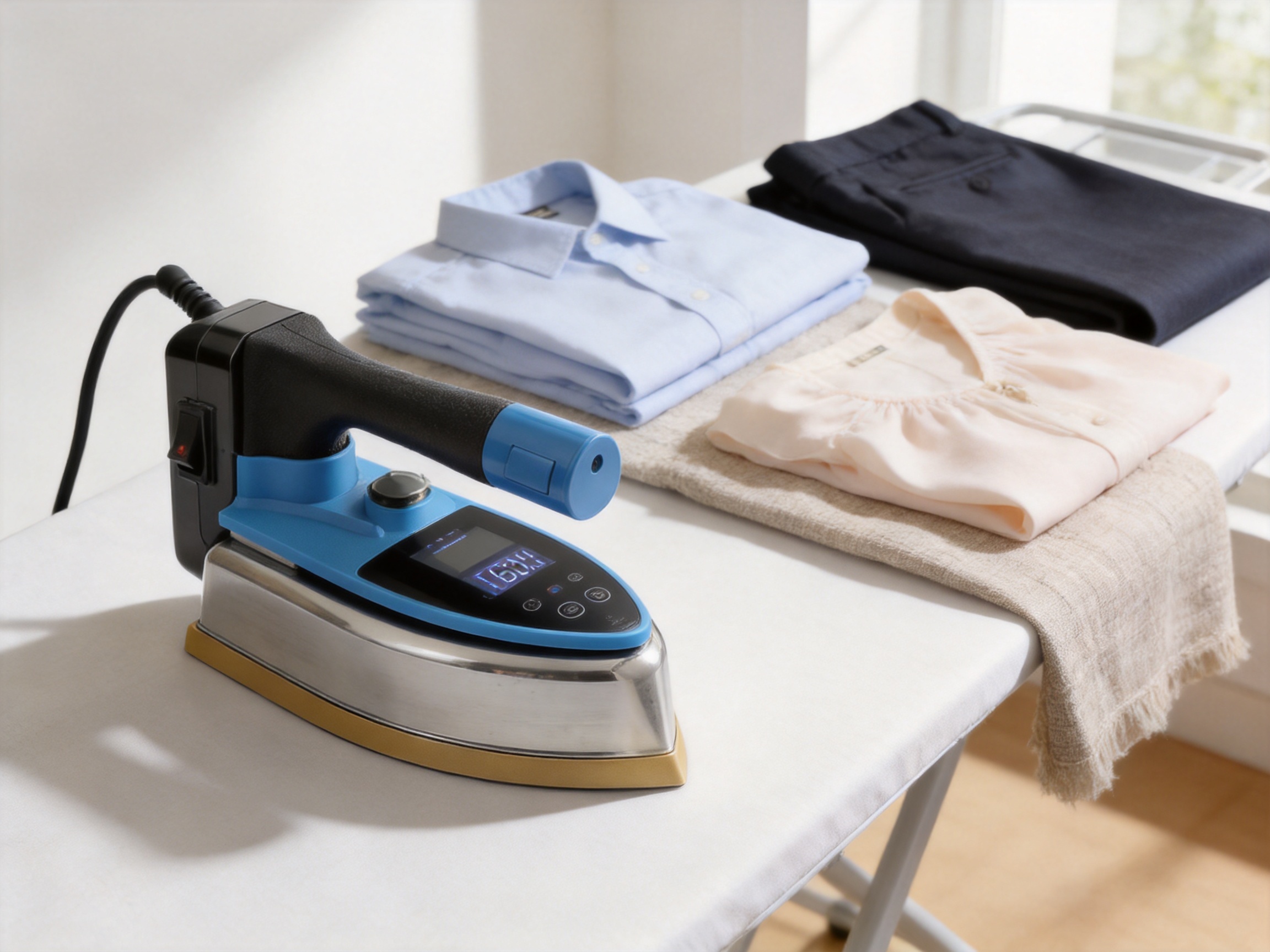
The soleplate is the primary contact surface between the iron and the garment. Its condition and coating have a direct effect on glide, pressing quality, and operator comfort. The ST-999 (ES-999) Electric Iron uses a non-stick coating made from imported materials. This coating is intended to reduce fabric adhesion and support smooth movement over a wide range of textiles.
A smooth gliding soleplate allows the operator to cover a garment with fewer interruptions. Instead of catching on the fabric, the iron can move across broad panels, seams, collars, and cuffs with more consistent motion. This is useful for both occasional home ironing and repetitive commercial work, where resistance can contribute to fatigue over time.
The non-stick finish may also reduce the chance of fabric snagging. Garments can contain loose threads, surface textures, prints, trims, or heat-sensitive finishes. A soleplate that moves cleanly helps minimize unnecessary contact problems. When pressing decorated or structured garments, the operator can better control movement around embroidery, appliqué, labels, and other features.
The 194 x 128 mm soleplate provides enough surface area to handle common garment panels efficiently. It can cover a substantial portion of a shirt front, trouser leg, skirt section, or household textile in each pass. At the same time, the dimensions remain suitable for detailed work around pockets, button plackets, sleeve ends, and narrow seams.
Maintaining the soleplate properly is important for preserving its performance. Users should avoid dragging the iron over hard objects, zippers, metal fasteners, or contaminated surfaces whenever possible. The iron should be stored in a clean and dry area after use. Correct operating practices help protect the coating and extend the useful life of the appliance.
The ST-999 (ES-999) Electric Iron weighs approximately 2.6 kg. Weight influences both pressing effectiveness and user comfort. An iron that is too light may require additional downward pressure to remove stubborn wrinkles. An iron that is too heavy may become tiring during extended work. The weight of this model is intended to provide a stable contact with the garment without making the product impractical to move.
A stable iron can help flatten fabric and define garment details more effectively. Operators may apply controlled movement rather than relying on excessive force. This is valuable when shaping collars, cuffs, pleats, seams, trouser creases, and other structured areas.
The ergonomic handle is designed to improve comfort during operation. Comfortable handling matters because ironing often involves repetitive wrist, arm, and shoulder movements. A suitable grip can help users maintain control and reduce unnecessary strain, particularly during long production sessions.
Portability is another advantage. The product can be moved between workstations, stored when not in use, or transported for mobile tailoring and alteration services. It is suitable for users who need professional-style performance without installing a large fixed pressing machine.
Many basic electric irons offer only a simple temperature dial, a lower power rating, and a standard metal soleplate. Such products may be adequate for occasional light ironing, but they can become limiting when users need faster production, more accurate heat adjustment, or smoother fabric handling.
The ST-999 (ES-999) Electric Iron differentiates itself through the combination of several features rather than through a single specification. Its 1600W power supports rapid heating. Its electronic temperature display gives the operator clearer information. Its non-stick soleplate promotes smoother movement. Its 194 x 128 mm working surface covers garments efficiently. Its 2.6 kg weight provides pressing stability while retaining portability.
These features address common weaknesses found in entry-level appliances. A low-powered model may take longer to heat or recover temperature. An iron without a clear temperature display may make fabric selection more difficult. A rough or poorly finished soleplate can drag across garments. A poorly balanced product can increase fatigue or require excessive pressure.
For professional users, the value of the ST-999 (ES-999) model also comes from process consistency. A garment business needs repeatable outcomes, not just occasional successful pressing. Clear temperature settings and stable heat make it easier to establish operating procedures and train staff. Smooth movement supports faster completion, while a durable soleplate finish may help reduce maintenance interruptions.
The model is not intended to replace every type of industrial pressing machine. Large production lines may require specialized presses, tunnel finishers, vacuum tables, or steam systems. However, it can serve as a flexible finishing tool within those operations. Its portability and control make it useful for areas that require detail work, spot correction, final touch-up, or small-batch processing.
In the home, the ST-999 (ES-999) Electric Iron can handle daily garments and larger textile items. Shirts, blouses, school uniforms, work trousers, dresses, bed linens, pillowcases, tablecloths, and curtains may all require occasional or regular pressing. The model’s heating capacity reduces preparation time, while its electronic display helps users select a suitable setting for different materials.
Household users may appreciate the non-stick soleplate because it allows the iron to glide across garments with less effort. A smooth movement is especially helpful when pressing large items that require repeated passes. The soleplate dimensions provide reasonable coverage without making the iron difficult to position on smaller garments.
The product can also be useful for families with varied clothing needs. One household may contain delicate synthetic garments, heavy cotton uniforms, linen clothing, and blended fabrics. Instead of using a separate appliance for every material, users can adjust the electronic temperature setting according to the care instructions.
Safe operation remains essential. The iron should be used on a stable, heat-resistant surface, kept away from children when hot, and disconnected from the electrical supply when not in use. Users should inspect the power cord and plug regularly and should never operate the appliance if visible damage is present.
Tailoring and alteration work often requires detailed pressing. Before a garment is sewn, fabric may need to be flattened, folded, or shaped. After sewing, seams may need to be opened, collars formed, sleeves pressed, and hems finished. An electric iron with accurate temperature control and a smooth soleplate is an important tool in each stage.
The ST-999 (ES-999) Electric Iron can support pattern preparation, sample development, fitting adjustments, and final presentation. The 194 x 128 mm soleplate is broad enough for general panels but manageable around curved or narrow sections. This versatility is useful in workshops where one operator may move between different garment types throughout the day.
Alteration shops can use the model for trouser creases, sleeve shaping, jacket finishing, shirt collars, and small corrections. The electronic temperature display helps staff adjust the setting when working with customers’ garments made from unknown or sensitive materials. A controlled approach can reduce the risk of damage and improve customer confidence.
For fashion samples and small-batch production, speed is important but precision is equally valuable. A fast-heating iron reduces waiting time between operations, while controlled temperature and smooth glide help maintain professional results. The product can also be paired with pressing cloths, sleeve boards, tailor’s hams, vacuum tables, and steam equipment according to the needs of the workshop.
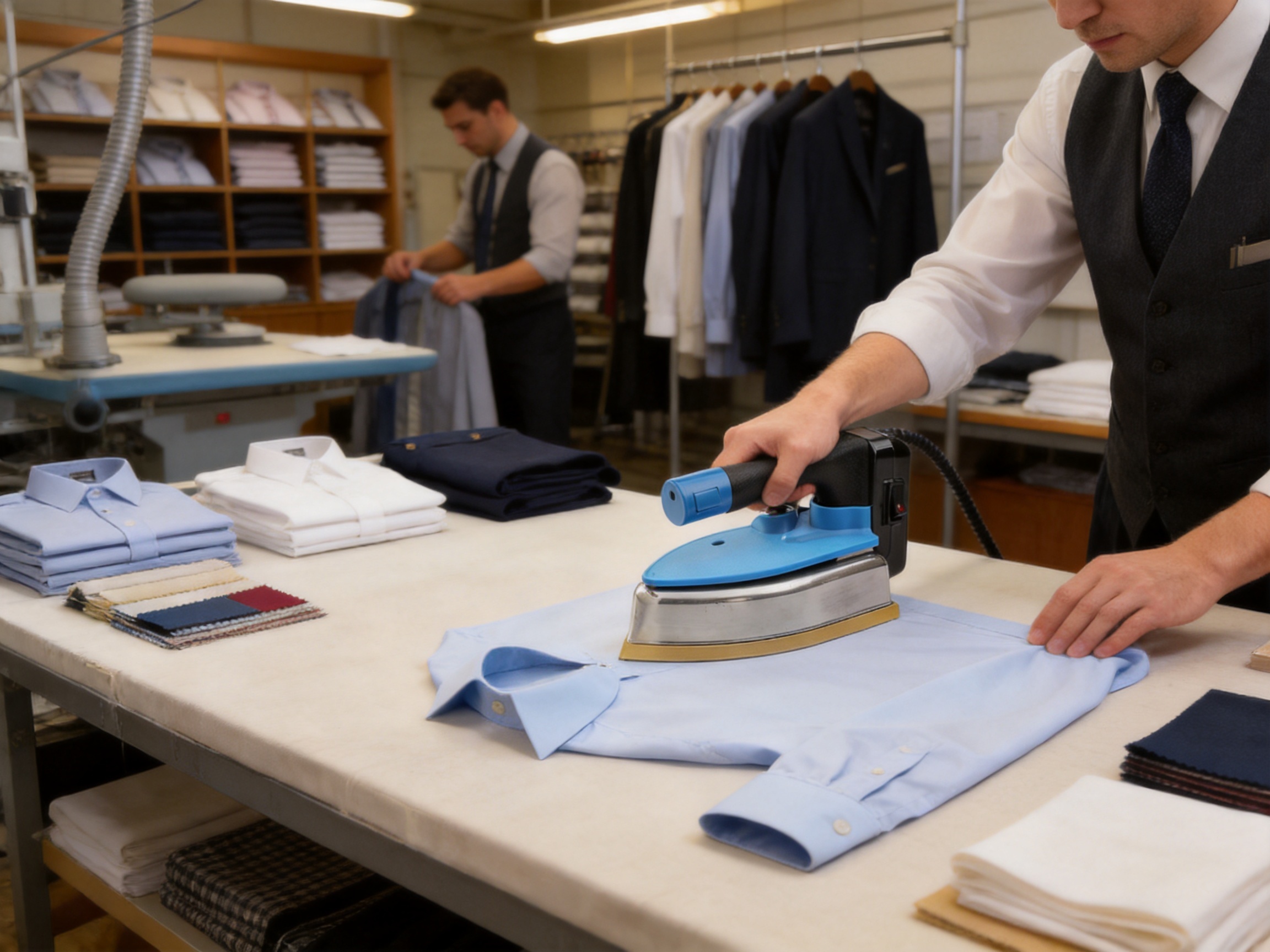
Commercial laundries and hospitality facilities often need to present garments and textiles in a clean, orderly condition. Hotels, guesthouses, restaurants, clinics, spas, and uniformed service organizations may process shirts, aprons, pillowcases, table linens, staff uniforms, and other textile products.
The ST-999 (ES-999) Electric Iron can be used for final finishing after washing and drying. The 1600W heating system supports quick preparation, while the soleplate helps operators move efficiently across broad textile areas. Electronic temperature control is useful because commercial textile loads may contain cotton, polyester blends, microfiber, linen, and other materials.
In a laundry environment, the iron may be used as a supplementary station alongside larger equipment. A vacuum table can hold garments in position and help remove moisture, while the electric iron handles collars, edges, seams, and final details. A steam boiler or steam iron may be selected for high-volume work, with the ST-999 (ES-999) model providing a flexible dry ironing or finishing option where appropriate.
Commercial users should establish cleaning, storage, electrical inspection, and operator-training procedures. The product’s performance depends not only on its technical design but also on correct use. When staff members follow consistent temperature settings and movement techniques, the organization can achieve more uniform results across shifts.
Jinyun Shengda Sewing Equipment Co., Ltd. was established in 2003 and is located in Huzhen Town, Lishui City, Zhejiang Province, China. The company operates in an area connected to Lishui, Jinhua, and Taizhou, giving it access to transportation networks and established industrial resources.
The company specializes in the independent research, development, and production of ironing equipment. Its product categories include electric irons, steam irons, hanging irons, spray guns, small steam machines, heat transfer machines, steam boilers, vacuum tables, and accessories. This concentration on ironing and garment equipment allows the company to develop product knowledge across both individual appliances and complete workstations.
For the ST-999 (ES-999) Electric Iron, this manufacturing background is relevant because the appliance is not an isolated consumer product. It forms part of a broader equipment system used in textile care, garment production, alteration, and finishing. Experience with steam generation, temperature management, pressing surfaces, and related machinery can support practical product development decisions.
The company maintains research and development, management, and sales teams that work together. Cooperation between these functions can help connect customer feedback with product improvement. In equipment manufacturing, users often identify practical needs that are not visible in a laboratory alone. Feedback from distributors, garment workshops, laundries, and overseas customers can inform adjustments to design, operating convenience, packaging, and service.
The company also owns several product brands, including Silver Star, Platinum Dragon, Tingshun, Jiasheng, Shengtai, and Jiangxin. These brands reflect the company’s experience in serving different market segments and product applications. Its products are distributed in China and exported to Southeast Asia, Central Asia, South America, Africa, and other regions.
Electrical ironing equipment must be designed and manufactured with attention to heating performance, insulation, electrical safety, mechanical durability, and user protection. The company states that it follows national and industry standards, including GB4706.1-2005 and GB4706.2-2007. It also reports that its products have passed CCC and CQC certifications.
Compliance with recognized standards provides a framework for evaluating product safety and manufacturing consistency. It can involve requirements related to electrical insulation, protection against electric shock, temperature behavior, mechanical construction, abnormal operation, labeling, and documentation. Certification does not eliminate the need for proper use, but it provides an important basis for product acceptance in relevant markets.
For international customers, certification information can assist with purchasing decisions, distributor qualification, and internal compliance procedures. Buyers should confirm the specific certification documents and voltage configuration applicable to the order before shipment, especially when importing equipment into a market with its own regulatory requirements.
Quality management also includes the selection of components and materials. The imported non-stick soleplate coating identified for this model is an example of a component choice intended to improve operating performance. Heating elements, temperature sensors, electrical connectors, power cords, insulation materials, handle components, and outer housings must work together as a complete product system.
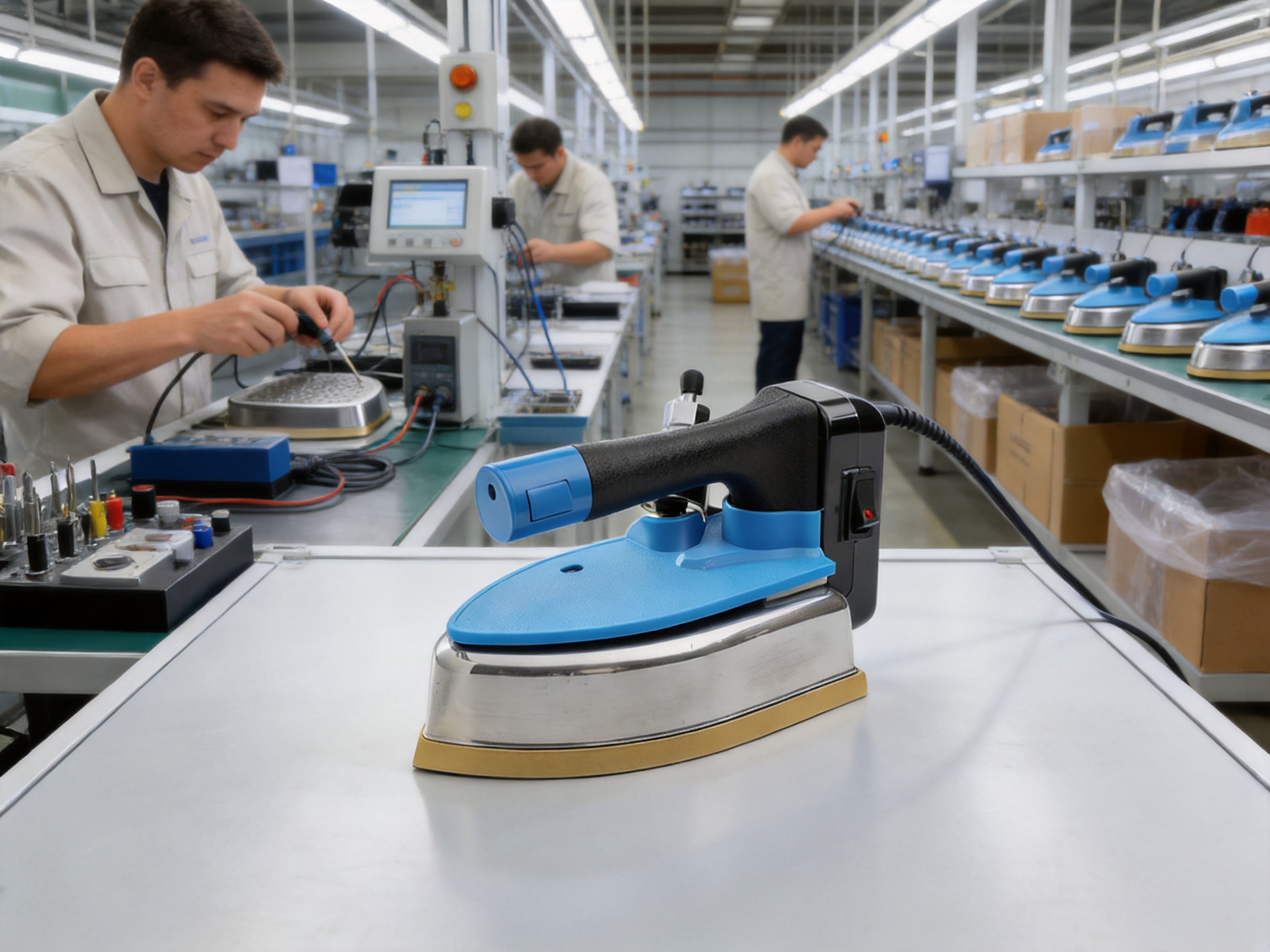
The production of an electric iron generally involves multiple controlled stages. These may include incoming inspection of raw materials, forming or machining of the soleplate, application and curing of the surface coating, assembly of the heating element, installation of temperature-control components, fitting of the handle and housing, electrical connection, appearance inspection, and final performance testing.
For a product such as the ST-999 (ES-999), soleplate flatness and surface quality are especially important. A flat working surface supports even contact with the garment. The non-stick coating must be applied consistently and bonded correctly so that normal operation does not immediately compromise the finish.
The heating assembly must be positioned securely and connected with suitable insulation. Temperature-control components need to respond consistently to the selected setting. The electronic display must correspond appropriately with the control system so that the user receives useful information rather than a merely decorative readout.
Final testing may include checking electrical continuity, heating behavior, temperature response, display operation, power consumption, insulation performance, appearance, and mechanical fit. Packaging inspection is also important because the product must withstand handling and transportation before reaching the customer.
Although specific internal production details may vary according to the factory’s process controls, the company’s focus on independent development and production provides the basis for coordinating design, assembly, testing, and customer service. This integrated capability can be an advantage over suppliers that rely entirely on unrelated contract manufacturing.
The company identifies customization and OEM services among its advantages. This is useful for distributors, importers, chain retailers, garment-equipment dealers, and professional users who require particular packaging, labeling, voltage configurations, or product specifications.
OEM cooperation can help businesses offer equipment under their own market identity while using an established manufacturing platform. Depending on the project, requirements may include logo placement, carton design, instruction manuals, electrical plugs, regional documentation, color adjustments, accessories, or other commercial details. Technical feasibility and minimum order quantities should be confirmed during quotation and sample approval.
Export experience is also valuable when equipment must be shipped across different regions. The company’s stated export markets include Southeast Asia, Central Asia, South America, Africa, and other areas. Familiarity with international shipment procedures can help support packing, documentation, freight coordination, and communication with overseas customers.
Because the product can be configured for 110V or 220V systems, buyers should clearly identify their destination voltage before placing an order. Plug style, frequency, certification, language requirements, and local service expectations should also be discussed. Correct configuration at the purchasing stage helps prevent avoidable installation and operating problems.
Before using the ST-999 (ES-999) Electric Iron, inspect the appliance, power cord, plug, soleplate, and handle. Place the iron on a stable, heat-resistant work surface and ensure that the electrical supply matches the product’s rated voltage. Remove any packaging material before switching on the appliance.
Read the garment care label and select an appropriate temperature. When the fabric type is uncertain, test the setting on an inconspicuous area or a spare fabric sample. Begin with a lower temperature for heat-sensitive materials and increase it only when necessary.
Allow the iron to reach the selected operating temperature before pressing. Use smooth, controlled movements rather than holding the soleplate stationary for an excessive period. For seams, collars, cuffs, and structured areas, position the garment carefully and apply only the pressure required to achieve the desired shape.
Keep the soleplate clean and avoid contact with adhesives, melted synthetic fibers, printed surfaces, or contaminated worktables. If residue appears, follow the cleaning recommendations provided by the manufacturer. Do not use abrasive tools that could damage the non-stick finish.
When work is complete, switch off and unplug the appliance according to the operating procedure. Allow it to cool before storage. The power cord should be arranged without sharp bends, and the product should be kept in a dry location away from moisture and unauthorized access.
Routine maintenance helps preserve heating performance and surface quality. Operators should inspect the soleplate regularly for scratches, residue, discoloration, or uneven wear. They should also check the handle, housing, cord, plug, and control interface for signs of damage.
If the temperature display behaves abnormally, the iron fails to heat, the cord becomes excessively warm, or the product produces unusual odors or sounds, operation should stop immediately. Electrical appliances should be serviced only by qualified personnel or through an authorized service channel.
Commercial users may benefit from a maintenance log. The log can record cleaning, inspections, repairs, temperature checks, and operator observations. Such records can support preventive maintenance and help identify recurring problems before they affect production.
Replacement parts and technical support should be discussed with the supplier when purchasing larger quantities. Buyers may request information about warranty terms, service procedures, spare components, user manuals, and recommended cleaning methods. These details are particularly important for businesses that depend on continuous equipment availability.
The value of an electric iron is determined by more than its purchase price. Heating speed, ease of use, garment protection, productivity, durability, maintenance requirements, and supplier support all influence the total cost of ownership. The ST-999 (ES-999) Electric Iron addresses several of these factors in a single portable unit.
The 1600W heating system can reduce preparation and waiting time. The electronic temperature display can help prevent avoidable fabric damage and improve operating consistency. The non-stick soleplate can make movement easier and support a smoother workflow. The balanced weight can provide stability without forcing the user to operate a large fixed machine.
For households, these features contribute to convenience. For tailoring shops and laundries, they can contribute to productivity and quality consistency. For distributors, the model fits within a broader equipment range and can be combined with related products such as steam irons, vacuum tables, steam boilers, and accessories.
The manufacturer’s product specialization, research and development capability, stated certification background, export experience, and OEM support further strengthen the purchasing proposition. Customers can evaluate the model not only as an individual iron but also as part of a supply relationship with a company focused on garment-finishing equipment.
The iron has a power rating of 1600W. This rating supports rapid heating and helps the appliance maintain useful operating performance during routine pressing tasks.
The stated voltage options are 110V and 220V. Buyers should select the correct version for the destination electrical system and confirm the plug, frequency, and certification requirements before ordering.
The soleplate measures 194 x 128 mm. This provides a practical pressing area for shirts, trousers, dresses, linens, and other textile products while preserving maneuverability around seams and detailed garment sections.
Yes. The model features an electronic temperature display that allows users to set and monitor the selected temperature. Users should still follow garment-care labels and test sensitive fabrics before full-scale pressing.
The soleplate uses a non-stick coating made from imported materials. The coating is intended to support smooth gliding and reduce the chance of fabric sticking or snagging during operation.
The product weighs approximately 2.6 kg. This gives it pressing stability while keeping it portable enough for household use, tailoring work, alteration services, and commercial finishing stations.
It can be used for delicate and specialty fabrics when the correct temperature and pressing method are selected. Operators should follow care instructions, use a pressing cloth when appropriate, and test an inconspicuous area before pressing the entire garment.
Yes. The model can support small businesses, tailoring shops, alteration stores, laundries, uniform suppliers, hotels, and other commercial users. High-volume facilities may use it as a flexible finishing tool alongside specialized steam or pressing equipment.
No. An electric iron serves a different function from a steam boiler or vacuum table. However, it can work alongside those machines for detailed pressing, touch-up work, collars, cuffs, seams, edges, and final garment finishing.
The manufacturer has specialized in ironing equipment and related machinery since 2003. Its capabilities include independent research and development, production, quality management, export support, customization, and OEM services. It also produces a broader range of garment-care equipment.
The company states that its products follow standards including GB4706.1-2005 and GB4706.2-2007 and have passed CCC and CQC certifications. Buyers should request the applicable documentation for the exact model and configuration being purchased.
Keep the soleplate clean, prevent contact with abrasive or contaminated surfaces, inspect the power cord and plug, store the appliance in a dry location, and stop using it if electrical or heating abnormalities occur. Repairs should be handled by qualified personnel.
The manufacturer identifies OEM and customization services as part of its business advantages. Specific options, minimum order quantities, packaging, labeling, voltage configuration, and documentation should be confirmed during the order process.
The ST-999 (ES-999) Electric Iron is a versatile garment-finishing appliance built around practical performance requirements. Its 1600W heating system supports fast heat-up, while the electronic temperature display gives users better control when working with different fabrics. The 194 x 128 mm non-stick soleplate provides a useful combination of coverage, smooth movement, and maneuverability. At approximately 2.6 kg, the iron offers stability without losing portability.
These features make the product suitable for households, tailors, alteration businesses, garment workshops, hotels, laundries, uniform suppliers, and other users that need dependable pressing performance. Compared with basic electric irons, it offers stronger heating capacity, more visible temperature management, and a purpose-oriented soleplate finish.
The product is supported by a manufacturer with experience in electric irons, steam equipment, pressing machinery, heat transfer systems, boilers, vacuum tables, and accessories. Its research and development activities, production capabilities, certification background, export experience, and OEM services provide additional value for customers seeking both an individual appliance and a longer-term equipment supplier.
When used according to fabric-care instructions and maintained properly, the ST-999 (ES-999) Electric Iron can provide efficient, controlled, and professional-looking results across a broad range of garment and textile applications.
1. Jinyun Shengda Sewing Equipment Co., Ltd. Product information for the ST-999 (ES-999) Electric Iron.
2. Jinyun Shengda Sewing Equipment Co., Ltd. Corporate information, manufacturing capabilities, product categories, and export markets.
3. GB4706.1-2005. Household and Similar Electrical Appliances—Safety—General Requirements.
4. GB4706.2-2007. Household and Similar Electrical Appliances—Safety Requirements for Electric Irons.
5. General textile-care principles for temperature selection, fabric testing, pressing pressure, and garment finishing.
6. Standard electrical appliance maintenance practices covering inspection, cleaning, storage, insulation, and safe operating procedures.
 +86-578-3158872 / +86-578-3158958
 jyshengda@163.com / caroying@jy-shengda.com
 No. 8 Nanyi Rd, Huzhen Industrial Park, Zhejiang, China
Copyright © Jinyun Shengda Sewing Equipment Co., Ltd. All Rights Reserved.
Ironing Press Machine Equipment Factory
 English
 中文简体
 русский
 عربى