The ST-533 Electric Iron is a practical garment-care appliance designed for users who need dependable heating, comfortable handling, and consistent results. With a 1200W power rating, a 202 x 115 mm soleplate, and a weight of approximately 2.3 kg, it provides a useful balance between heating performance, stability, and maneuverability. The design is suitable for everyday household ironing, tailoring work, small garment-care businesses, dry-cleaning operations, and portable use.
Unlike a basic household iron designed only for occasional touch-ups, the ST-533 is positioned as a versatile electric iron for users who value efficient operation and durable construction. Its soleplate may be supplied in hard anodized aluminum or with a high-quality non-stick coating, depending on the selected configuration. Both options are intended to support smooth movement across fabrics while helping the iron withstand repeated use.
The product is manufactured by Jinyun Shengda Sewing Equipment Co., Ltd., a Chinese producer specializing in electric irons, steam irons, hanging irons, spray guns, small steam machines, heat transfer machines, steam boilers, vacuum tables, and related accessories. The company combines product development, manufacturing, quality management, and export services to serve customers in domestic and international markets.
For buyers comparing garment-care equipment, the ST-533 offers several practical advantages. It heats rapidly, supports a broad range of fabric-care tasks, uses a compact soleplate that can access collars and cuffs, and has a substantial enough body weight to help press wrinkles effectively. These characteristics make it a useful choice for distributors, professional users, and families looking for an electric iron that is more robust than a basic consumer model.

ST-533 Electric Iron
Garment-care equipment must satisfy several requirements at the same time. It needs to produce sufficient heat, move smoothly over different materials, provide appropriate pressure, and remain comfortable during repeated operation. A product that performs well in only one of these areas may not be convenient in daily use. The ST-533 is designed around this combination of requirements.
The iron has a compact soleplate measuring 202 x 115 mm. This size provides enough surface area to cover practical sections of a garment while remaining manageable around detailed areas. It can be used on shirts, trousers, skirts, uniforms, dresses, household textiles, and other garments that require wrinkle removal. The shape is also convenient for working around collars, cuffs, seams, pockets, pleats, and narrow sections.
Its 1200W power rating supports fast heating and efficient operation. The iron is designed for 110V or 220V electrical systems, allowing buyers to select the appropriate version for their market or facility. Voltage compatibility should always be confirmed before ordering, because the correct electrical specification is essential for safe and reliable operation.
With a weight of approximately 2.3 kg, the ST-533 is neither an ultra-light travel iron nor an excessively heavy industrial pressing tool. This middle-weight design provides useful downward pressure when smoothing fabric while remaining manageable for routine ironing. The result is a balance between stability and control.
The iron is suitable for several user groups. A household may use it for regular laundry. A tailoring shop may use it for finishing garments before delivery. A dry cleaner may use it for touch-up work or final presentation. A hotel, uniform department, costume workshop, or small apparel business may also use it where dependable hand ironing is required.
| Specification | Details |
|---|---|
| Product name | ST-533 Electric Iron |
| Product category | Electric Iron |
| Voltage options | 110V / 220V |
| Power rating | 1200W |
| Approximate weight | 2.3 kg |
| Soleplate dimensions | 202 x 115 mm |
| Soleplate options | Hard anodized aluminum or high-quality non-stick coating |
| Typical applications | Home ironing, tailoring, garment finishing, dry-cleaning support, and portable use |
These specifications present a product that is compact enough for ordinary workspaces but sufficiently powerful for repeated garment-care tasks. Buyers can select the voltage and soleplate configuration that best match local requirements and intended application.
Heating speed is one of the most important factors in electric iron performance. A slow iron creates waiting time and interrupts the work process. In contrast, a properly rated heating system allows the operator to begin sooner and maintain a more productive workflow. The ST-533 uses a 1200W power rating to support rapid heat-up and consistent performance during normal operation.
For household users, fast heating means that the iron can be prepared while other laundry tasks are being organized. For professional users, it can reduce idle time between garments. In a tailoring or dry-cleaning environment, this can make the finishing process more efficient, particularly when several items need attention in sequence.
The power level also gives the iron enough heating capacity to address common garment materials. Cotton, linen blends, polyester fabrics, uniforms, workwear, and many other textiles may require different temperature settings and ironing methods. The ST-533 is designed to provide the heat needed for general fabric-care work, while the user remains responsible for choosing the correct temperature and handling procedure for each textile.
A powerful heating system is valuable only when it works together with an appropriate soleplate and practical controls. The ST-533 combines its 1200W rating with a compact soleplate and ergonomic handling concept. This means heat can be applied to the garment while the operator maintains control over direction, pressure, and contact time.
Compared with lower-powered irons, the ST-533 may offer a more responsive working experience, especially when ironing heavier fabrics or multiple garments. Compared with oversized professional pressing equipment, it requires less space and can be moved easily from one work area to another. This makes it a practical intermediate solution for users who need more capability than a basic domestic iron but do not require a large automated press.
In a home, efficient heating helps reduce the time required to prepare work clothes, school uniforms, formalwear, and household textiles. In a tailoring shop, the iron can support final pressing, seam flattening, and presentation work. In a dry-cleaning setting, it may assist with local corrections and finishing details. In a small production environment, it can serve as a flexible manual tool alongside other garment equipment.
The 1200W power rating also supports a straightforward working rhythm. The operator can prepare a garment, allow the iron to reach the required temperature, and then work systematically across the fabric. The compact design helps the user move between large sections and detailed areas without changing equipment.
Although the ST-533 is powerful for its size, operators should use it according to the fabric-care instructions supplied with garments. Excessive heat, prolonged contact, or incorrect handling can damage delicate materials. Proper training and suitable temperature selection remain important elements of safe and effective use.
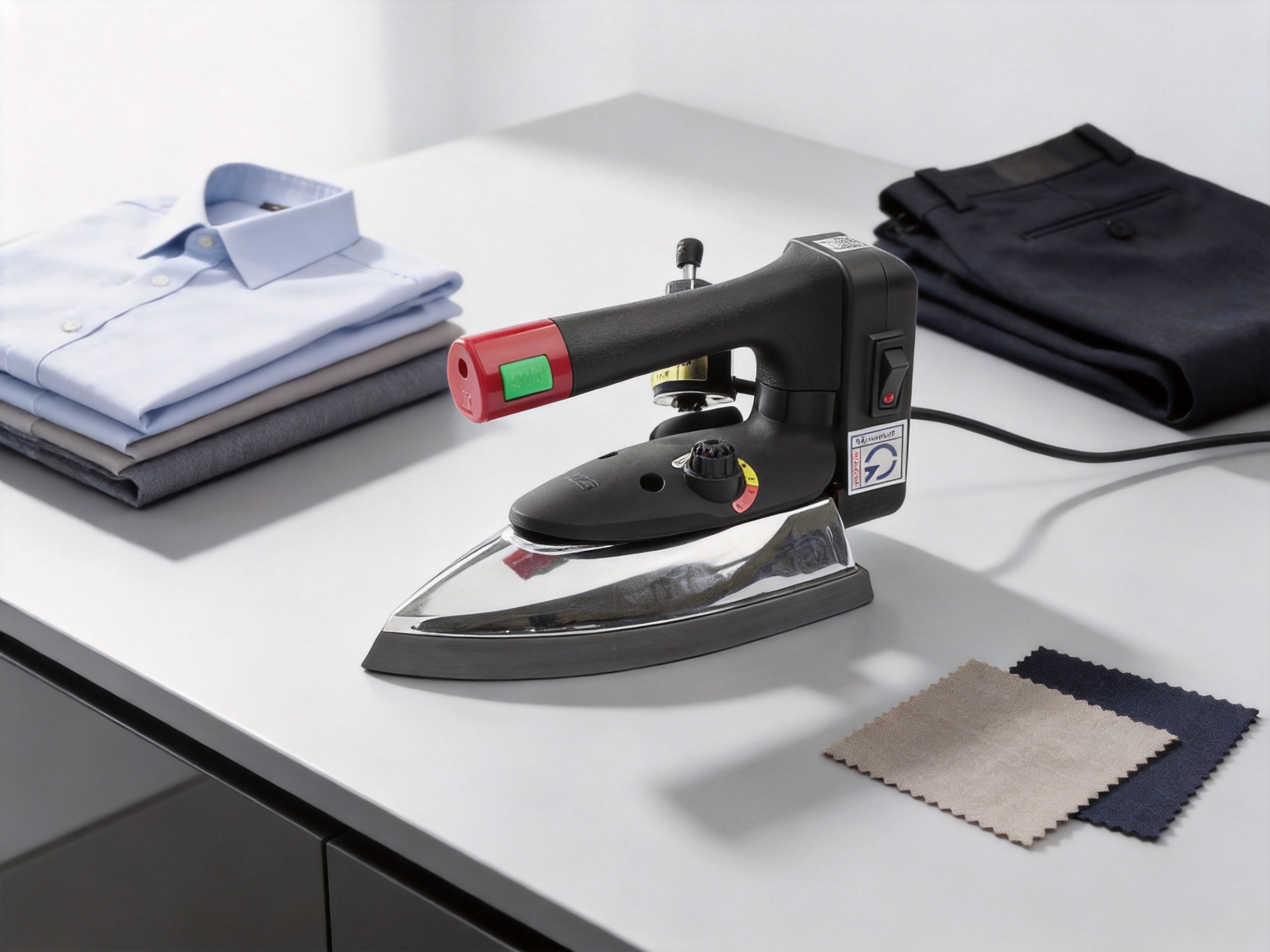
The soleplate is the part of an electric iron that directly interacts with fabric, so its design has a major influence on user experience. A good soleplate should glide smoothly, distribute heat effectively, resist wear, and remain easy to maintain. The ST-533 is available with a hard anodized aluminum soleplate or a high-quality non-stick coating, giving buyers flexibility according to their priorities.
Hard anodized aluminum is valued for its durability and resistance to surface wear. The anodizing process creates a strengthened surface layer that can help protect the underlying aluminum during repeated use. The material also supports efficient heat transfer, allowing the soleplate to respond effectively to the heating system.
For professional users, a hard anodized surface can be attractive because it is designed for frequent operation. Tailors, alteration businesses, and garment-care operators often need equipment that can tolerate repeated movement over many garments. A durable soleplate can contribute to a longer service life when it is used and maintained correctly.
The aluminum construction also contributes to the iron’s working stability. When combined with the 2.3 kg product weight, it helps the operator apply useful pressure without pressing excessively by hand. This can make wrinkle removal more efficient, especially on fabrics that require firm and even contact.
The non-stick soleplate option is designed to support smooth movement and reduce the likelihood of fabric adhering to the surface. This can be particularly useful when working with delicate or heat-sensitive materials, provided that the correct temperature is selected. A smooth surface also helps reduce drag, making the iron easier to guide across garments.
Non-stick construction may be preferred by household users and operators who want simple, comfortable handling. It can help the iron pass over fabric with less resistance, which is useful when working across large areas such as shirt fronts, trouser legs, table linens, and uniforms.
Regardless of the selected soleplate type, users should keep the surface clean and avoid contact with adhesives, plastic, metal fasteners, or unsuitable materials. Correct care helps preserve smooth movement and prolongs the useful life of the soleplate.
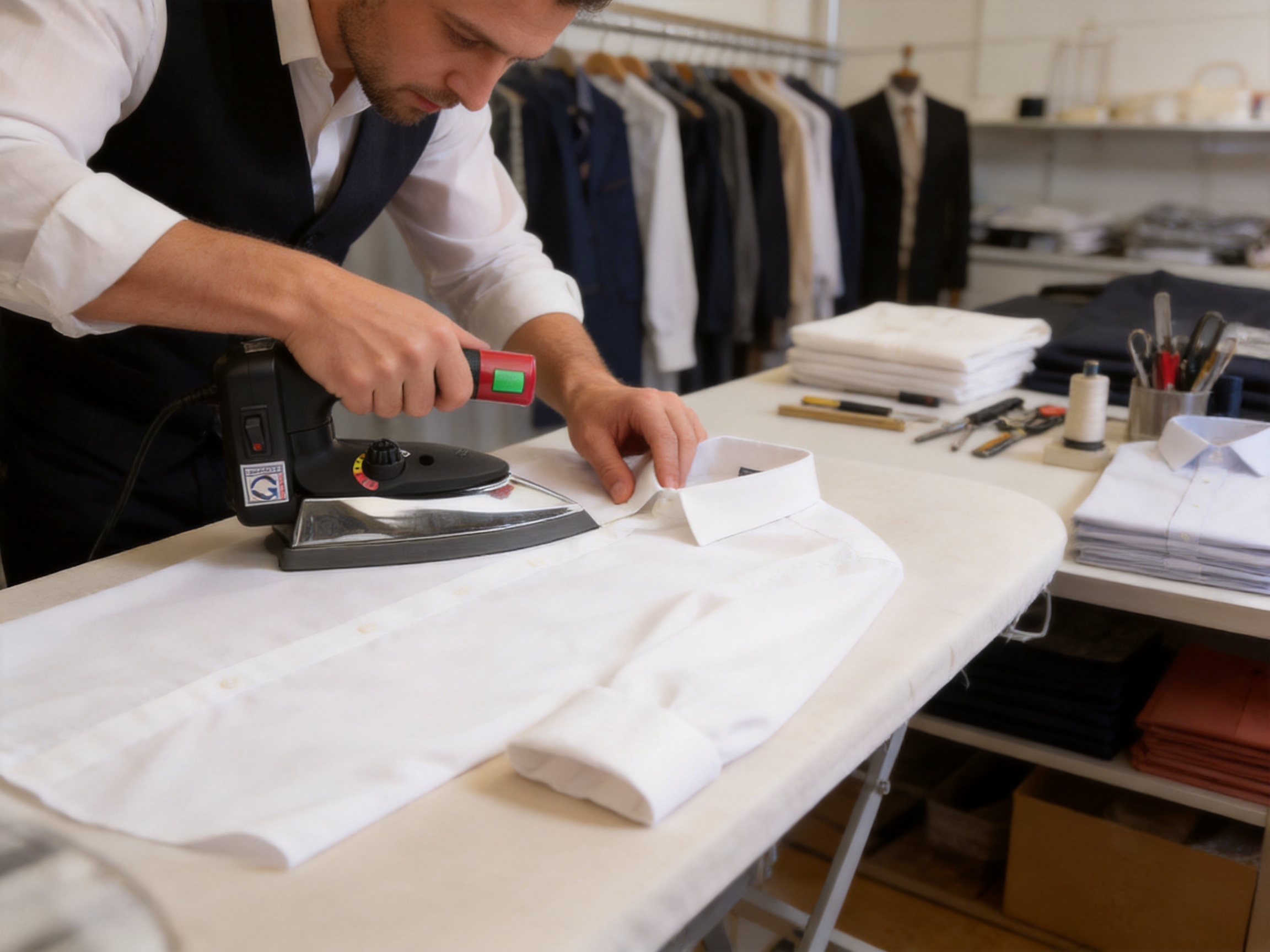
The 202 x 115 mm soleplate is compact enough to reach areas that may be difficult for a large pressing tool. Collars, cuffs, button areas, pocket edges, pleats, and narrow seams often require accurate positioning. A smaller soleplate can give the operator better visual access and more direct control around these sections.
At the same time, the soleplate is large enough to cover practical sections of fabric efficiently. The user does not need to make an excessive number of passes across an ordinary garment. This balance between coverage and precision is one of the product’s important functional advantages.
Ironing performance depends not only on heat but also on how easily the user can control the equipment. The ST-533 weighs approximately 2.3 kg, a specification that provides a stable feel during use. The iron’s own weight helps maintain contact with fabric, reducing the need for excessive downward force from the operator.
For wrinkle removal, stable contact can be especially useful on cotton, workwear, uniforms, and other fabrics that benefit from firm pressing. The operator can guide the iron across the material while allowing its weight to contribute to the process. This may reduce unnecessary wrist pressure compared with a very light iron that requires constant manual force.
At the same time, the ST-533 remains compact enough to move between different areas of a garment. The operator can change direction, approach seams, and adjust the angle of the iron with reasonable control. Its size and weight make it suitable for both broad strokes and detailed finishing work.
Long ironing sessions can cause discomfort in the hand, wrist, arm, and shoulder. An ergonomic product cannot eliminate fatigue completely, but it can help create a more comfortable working position. The ST-533 is designed with a practical grip and a manageable body size to support controlled operation.
The balance between weight and maneuverability is important. An iron that is too light may require extra pressure. An iron that is too heavy may become difficult to move repeatedly. The ST-533’s 2.3 kg weight offers a compromise for users who need both pressing stability and everyday handling.
Operators can further improve comfort by maintaining an appropriate ironing-board height, keeping the work area organized, and changing posture during extended sessions. Professional facilities should also train employees to use smooth movements rather than excessive force.
Garments contain many areas where precision matters. A shirt collar may need a crisp edge, a cuff may require careful shaping, and a trouser seam may need to remain aligned. The compact soleplate and ergonomic form of the ST-533 help the user position the iron accurately in these areas.
This control can be a meaningful advantage over larger or less maneuverable pressing equipment when the task involves finishing details. The iron can be used as a stand-alone tool or as a complementary device alongside vacuum tables, steam equipment, and other professional garment-care machines.
Buyers often compare an electric iron with household steam irons, heavy industrial irons, automated pressing machines, and low-cost compact models. Each category has a place, but the correct choice depends on the intended work. The ST-533 occupies a practical position between simple consumer equipment and larger production machinery.
Some low-cost irons use lower power ratings and lightweight construction. These products may be suitable for occasional use, but they can take longer to heat and may provide less pressing stability. The ST-533’s 1200W power rating and 2.3 kg weight are intended to provide a more capable working experience.
For users who iron regularly, the combination of faster heating and stable contact can improve productivity. The product is also designed for more varied applications, including garment finishing in professional environments. This makes it a stronger option for buyers who need equipment that can be used beyond occasional household touch-ups.
Travel irons prioritize low weight and small storage size. Their portability can be convenient, but their smaller heating systems and reduced soleplate areas may limit performance on heavier fabrics or larger garments. The ST-533 is not an ultra-miniature appliance; instead, it provides a more substantial working surface and stronger performance while remaining compact enough for transport when necessary.
For travelers who need a dependable ironing tool rather than the smallest possible device, the ST-533 can provide a useful balance. It may also serve people who move equipment between workshops, homes, classrooms, hotels, or service locations.
Industrial pressing machines can deliver high productivity for standardized operations, but they require more floor space, investment, installation, and operator training. They may not be appropriate for small businesses, homes, or applications involving varied garments and detailed areas.
The ST-533 offers manual flexibility. The operator can work on individual garments, make local corrections, and adapt the movement to different shapes. It can be introduced without the space and infrastructure requirements associated with larger machinery. For small businesses and developing workshops, this flexibility can be commercially valuable.
An ordinary uncoated soleplate may be more vulnerable to sticking, surface contamination, or visible wear when used incorrectly. The ST-533’s hard anodized aluminum or non-stick surface options are intended to improve durability and gliding performance. The selected configuration allows distributors and end users to align the product with their preferred maintenance approach and application.
The ST-533 has a broad application range because it combines practical heating power with compact manual control. It can be used wherever garments or fabrics require smoothing, shaping, pressing, or final presentation.
For families, the iron can handle everyday clothing such as shirts, blouses, trousers, dresses, school uniforms, workwear, and casual garments. Its 1200W rating supports quick preparation, while the compact soleplate can reach areas that need careful attention.
The product may be particularly useful for households that iron several garments each week. Its stable weight helps with common wrinkles, and the soleplate options provide a choice between hard anodized durability and non-stick gliding performance.
Tailors and alteration specialists often need to press seams, shape garment sections, prepare fabric for stitching, and present completed work. A compact electric iron can be used between sewing operations or during final inspection.
The ST-533 is suitable for this environment because it can be moved quickly around worktables and used for both broad fabric sections and detailed areas. Its manual operation allows the tailor to respond to the construction and shape of each garment.
Dry-cleaning businesses frequently need to perform final touch-ups before garments are returned to customers. The ST-533 can support local wrinkle removal and finishing work. Its moderate weight and compact soleplate make it useful where operators must process different garment styles throughout the day.
When used alongside a vacuum table or steam equipment, the electric iron can become part of a broader finishing station. Each tool can perform the task for which it is best suited, improving workflow flexibility.
Hotels, restaurants, schools, hospitals, and industrial facilities may need to maintain a neat appearance across uniforms and workwear. A durable electric iron can support routine maintenance and last-minute presentation work.
Because the ST-533 is available for 110V or 220V systems, buyers can select a configuration appropriate for their regional electrical standard. Facilities should verify their power requirements and operating procedures before purchase.
The compact form of the ST-533 allows it to be considered for portable applications. It may be carried between locations by service providers, garment professionals, costume teams, event personnel, or travelers who require more capable performance than a very small travel iron can provide.
Users should consider the product’s 2.3 kg weight when planning transport. It is portable in the sense that it can be moved and stored conveniently, but it is designed to provide useful pressing stability rather than minimum possible weight.
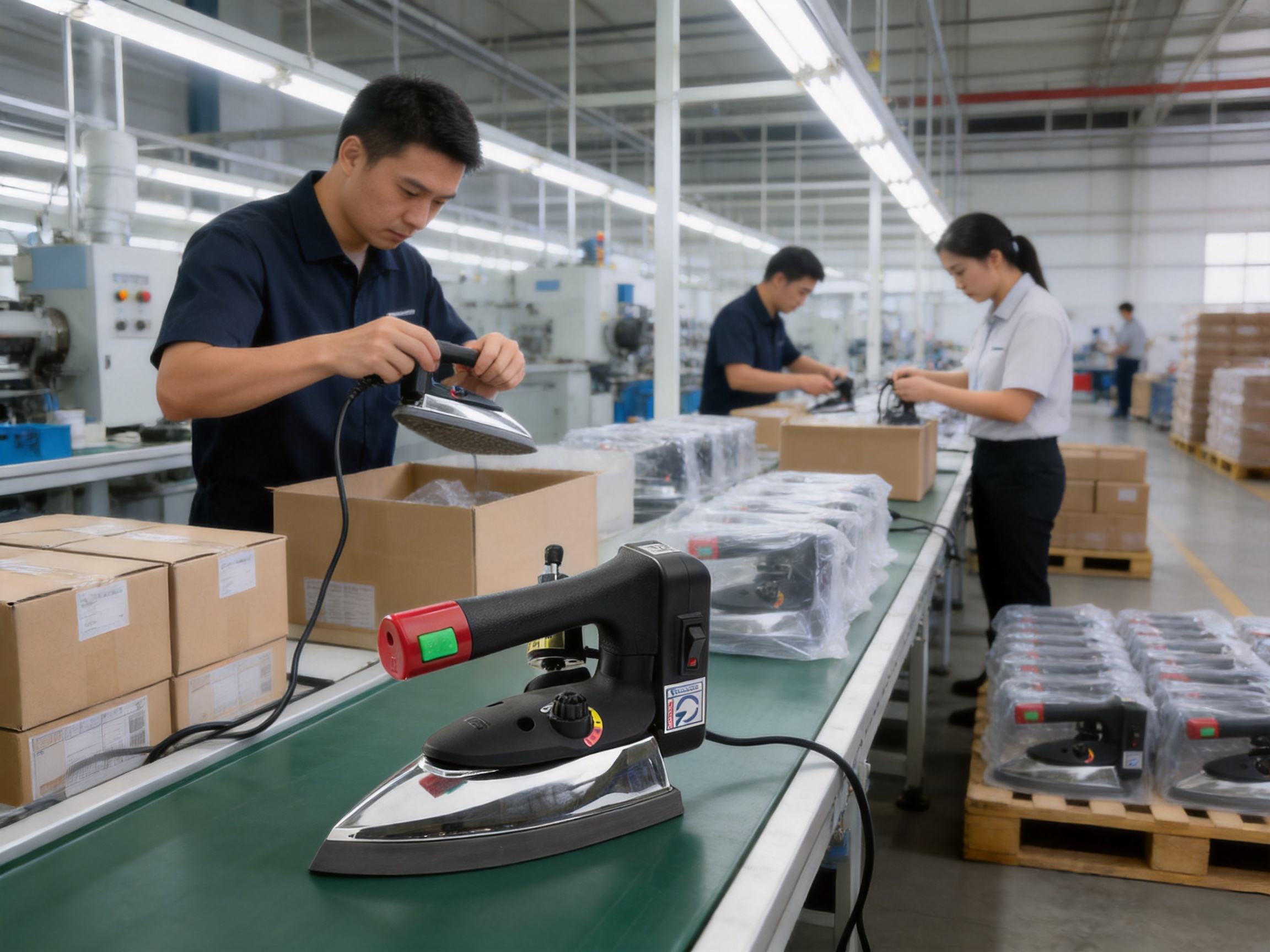
The performance of an electric iron depends on more than its visible specifications. Product reliability is influenced by design development, component selection, assembly consistency, inspection procedures, electrical safety, and after-sales support. Jinyun Shengda Sewing Equipment Co., Ltd. has operated in the sewing and garment-equipment field since 2003, giving it experience across several related product categories.
The company specializes in independent research, development, and production. Its product range includes electric irons, steam irons, hanging irons, spray guns, small steam machines, heat transfer machines, steam boilers, vacuum tables, and accessories. This broad portfolio allows the company to understand garment-care workflows from multiple perspectives rather than focusing on one isolated appliance category.
Independent product development enables the manufacturer to improve product structures, heating performance, handling characteristics, and compatibility with customer requirements. For a product such as the ST-533, development work may involve the relationship between wattage, soleplate size, weight distribution, grip design, electrical configuration, and surface treatment.
A manufacturer with experience across electric irons and steam-related equipment can also respond to changing needs in professional garment care. Customers may require different voltage versions, soleplate options, packaging configurations, branding arrangements, or product combinations. Research and development capability supports these practical commercial requirements.
The company states that it continuously improves products and upgrades quality. In practical manufacturing terms, this means attention to production consistency, component matching, assembly accuracy, surface finishing, electrical inspection, and product testing. These steps are important because an electric iron must provide both mechanical usability and electrical reliability.
The ST-533’s product concept reflects a focus on functional durability. The selected soleplate materials are intended to withstand regular contact with fabric, while the 1200W heating system supports efficient use. Consistent assembly is necessary to ensure that the handle, soleplate, heating components, and electrical parts work together as intended.
The company’s products are exported to Southeast Asia, Central Asia, South America, Africa, and other regions. International distribution requires attention to voltage requirements, packaging, documentation, product consistency, communication, and shipment planning. Experience in these areas can benefit importers and distributors seeking a stable supply of garment-care equipment.
Regional customers may have different preferences regarding product specifications, electrical standards, packaging, and service expectations. A manufacturer accustomed to overseas orders is better positioned to discuss these variables before production and shipment.
Electrical appliances must be manufactured with attention to safety, insulation, heating control, wiring, and mechanical integrity. The company states that it follows national and industry standards, including GB4706.1-2005 and GB4706.2-2007. It also states that its products have passed CCC and CQC certifications.
These standards and certifications are important indicators for buyers evaluating electrical equipment. They show that the company operates within recognized compliance frameworks for applicable products. Importers should still confirm the exact certification scope, model applicability, and documentation required in their destination market before placing an order.
Manufacturing responsibility includes more than obtaining certification. It also involves maintaining consistent production procedures, checking finished products, protecting equipment during shipment, and responding to customer feedback. The company’s stated emphasis on research, quality upgrades, and professional service supports this broader approach.
The ST-533 is offered in 110V and 220V versions. Voltage selection should be made according to the local power supply and the buyer’s distribution plan. Using a product with an unsuitable voltage can cause malfunction, damage, or safety risks.
Distributors should identify the destination country, frequency requirements, plug configuration, labeling rules, and certification expectations during the purchasing process. Clear communication at the quotation stage can prevent avoidable problems after shipment.
Visual and mechanical inspection is also important. The soleplate should be smooth, clean, and free from defects that could affect fabric contact. The handle should be securely assembled, and the body should be checked for damage or loose parts. Packaging should protect the iron from impact and surface abrasion during transport.
Professional users should establish a routine inspection schedule after receiving the product. Checking the cable, plug, soleplate, handle, and general condition before use can help identify issues early.
The company identifies customization and OEM services among its business advantages. These services can be valuable for importers, wholesalers, distributors, retail brands, and professional equipment suppliers. Depending on the project, customization may involve product branding, packaging, labeling, voltage configuration, product combinations, or other agreed specifications.
OEM cooperation requires clear technical communication. Buyers should define the target market, order quantity, electrical requirements, packaging language, logo placement, inspection expectations, and delivery schedule. A written specification helps both parties maintain consistency from quotation through production.
For distributors, the ST-533 can form part of a broader product portfolio. It may be sold alongside steam irons, spray guns, vacuum tables, steam boilers, heat transfer machines, and accessories. Offering several complementary products allows distributors to serve different customer segments, from home users to garment factories and professional finishing businesses.
The company’s experience with multiple product categories can also support equipment matching. A customer may begin with an electric iron and later require a steam boiler, vacuum table, or other garment-care solution. A supplier with a wider range can help create a more coordinated purchasing plan.
Convenient shipment is listed among the company’s advantages. Export buyers generally need assistance with product packaging, order consolidation, shipping documentation, and delivery coordination. These details are especially important for electrical appliances, which must be protected from moisture, impact, and rough handling.
Buyers should confirm carton dimensions, gross and net weight, loading quantity, shipping marks, product manuals, spare parts, and warranty arrangements before shipment. They should also review the inspection process and define how any transport-related issue will be managed.
Correct operation helps the ST-533 deliver better results and remain reliable over time. Users should place the iron on a stable ironing surface, connect it to the correct voltage supply, select an appropriate temperature, and allow the heating system to reach the required operating condition before beginning work.
Garments should be sorted according to fabric type and care instructions. Delicate materials should be treated with caution, while heavier materials may require a higher setting and slower movement. When uncertain, the user should test the iron on an inconspicuous area or follow the fabric manufacturer’s guidance.
The iron should be moved continuously when it is hot. Leaving a heated soleplate in one position for too long can mark or damage fabric. Operators should also avoid ironing directly over plastic elements, adhesive decorations, sensitive prints, or materials that may melt.
First, prepare a clean and stable ironing surface. Remove objects that could scratch the soleplate or interfere with garment movement. Next, check the garment label and organize the items by fabric type or required temperature.
Connect the iron to the correct power supply and select the required setting. Allow adequate heating time. Begin with a suitable test area, then use smooth, controlled strokes. Work from larger sections toward collars, cuffs, seams, and other detailed areas.
When the garment is finished, place the iron safely according to the operating instructions. Do not leave a hot iron unattended. Disconnect the power when the ironing session is complete and allow the appliance to cool before storage or cleaning.
Maintenance should include regular inspection of the soleplate, cable, plug, handle, and housing. The soleplate should be cleaned only according to the manufacturer’s recommendations. Abrasive tools, harsh chemicals, and unsuitable cleaning products may damage the surface.
Users should keep the iron in a dry location and protect it from unnecessary impact. Professional operators should record maintenance activities and remove damaged equipment from service until it has been inspected or repaired by a qualified person.
Household buyers should consider frequency of use, available voltage, storage space, preferred soleplate surface, and the types of garments typically ironed. The ST-533 may be appropriate for households that want a robust, stable iron rather than an extremely lightweight appliance.
Tailoring shops should evaluate the product according to daily workload, worktable layout, operator comfort, and the need for detailed garment finishing. The compact soleplate can be useful for seams and shaped sections, while the 1200W power rating supports efficient preparation.
Distributors should consider market demand, product positioning, packaging, target price, certification requirements, and after-sales support. The product can be promoted as a versatile electric iron for both domestic and professional users, provided that marketing materials accurately reflect the configuration being supplied.
Industrial buyers should determine whether the ST-533 will be used as a primary ironing tool or as a supplementary device. It can complement larger steam or pressing systems by providing flexibility for local corrections, detail work, and small batches.
Before placing an order, buyers should confirm the required voltage, soleplate option, quantity, packaging configuration, plug style, instruction language, certification documents, delivery schedule, warranty terms, and available spare parts.
Importers should also ask whether the product can be supplied under their own brand, whether sample approval is available, and what inspection procedures are used before shipment. These discussions help ensure that the final product matches the intended market and application.
The purchase price is only one part of the total cost of an electric iron. Buyers should also consider heating efficiency, expected service life, maintenance needs, downtime, operator productivity, packaging, shipment, and replacement availability.
A durable soleplate and reliable heating system can contribute to long-term value when the product is used correctly. Faster heat-up can save time, while stable contact can reduce the number of passes required to remove wrinkles. Comfortable handling may also support better productivity during extended work periods.
For a small business, a versatile manual iron can be a cost-effective addition because it does not require the space or installation investment of a large machine. It can be used for multiple garment types and integrated into existing workflows.
For distributors, a product with several application possibilities may have broader market appeal. The same model can be offered to households, tailoring shops, dry cleaners, uniform departments, and small garment businesses, subject to suitable positioning and local compliance requirements.
Jinyun Shengda Sewing Equipment Co., Ltd. was established in 2003 and is located in Huzhen Town, Lishui City, Zhejiang Province, China. The company benefits from a location near the junction of Lishui, Jinhua, and Taizhou, with access to transportation and established information channels.
The company’s operations cover research, development, manufacturing, management, sales, and customer service. Its teams work together to improve products and provide equipment solutions for garment-care applications. The company owns or supplies several brands, including Silver Star, Platinum Dragon, Tingshun, Jiasheng, Shengtai, and Jiangxin.
Its product range demonstrates experience in both heating and garment-finishing technologies. Electric irons and steam irons address manual pressing. Spray guns and small steam machines support targeted garment care. Steam boilers and vacuum tables support professional finishing stations. Heat transfer machines serve decoration and apparel-production applications. Accessories help customers complete or maintain their equipment systems.
The company reports stable distribution channels in China and positive feedback from overseas customers. It emphasizes reliable quality, diverse products, competitive costs, professional service, convenient shipment, customization, and OEM cooperation. These capabilities are relevant to buyers who need more than a single product purchase and are seeking an ongoing equipment supplier.
For customers evaluating the ST-533, the manufacturer’s broader experience provides additional confidence in product application knowledge. The iron is not presented as an isolated consumer appliance; it is part of a wider garment-equipment portfolio developed for different stages of apparel care and production.
The ST-533’s strongest advantage is its balanced specification. It combines a 1200W heating system, a 202 x 115 mm soleplate, a 2.3 kg working weight, dual-voltage availability, and a choice of soleplate surfaces. Each feature addresses a practical requirement, and together they create a flexible ironing tool.
Its power rating supports efficient preparation. Its weight contributes to pressing stability. Its compact soleplate improves access to detailed areas. Its surface options allow buyers to select a configuration based on durability or smooth, non-stick movement. Its size allows it to fit into homes, workshops, service counters, and professional finishing stations.
The product also benefits from the manufacturer’s experience in garment equipment, export supply, product development, and quality management. While no single iron is suitable for every application, the ST-533 is well positioned for users who need a capable manual electric iron with broader usefulness than a basic low-power household model.
For professional customers, the product can serve as a dependable support tool. For households, it offers strong general-purpose performance. For distributors, it provides a versatile item that can be marketed across several customer groups. For OEM buyers, it offers a foundation for customized supply programs subject to technical discussion and agreement.
The ST-533 has a power rating of 1200W. This rating supports rapid heating and efficient operation for household and professional garment-care tasks.
The product is available in 110V and 220V versions. Buyers should select the appropriate model for the electrical standard of the destination market and confirm the required configuration before ordering.
The soleplate measures approximately 202 x 115 mm. Its compact size provides useful coverage while allowing the user to work around collars, cuffs, seams, pockets, and other detailed areas.
The ST-533 weighs approximately 2.3 kg. This gives the iron a stable feel and provides useful pressing pressure while remaining manageable for routine operation.
The soleplate may be supplied in hard anodized aluminum or with a high-quality non-stick coating. The preferred option can depend on the buyer’s application, surface-performance preferences, and purchasing specification.
Yes. The product is suitable for small tailoring shops, dry-cleaning businesses, garment-finishing operations, uniform departments, and other professional settings that require manual ironing. It can also be used as a supplementary tool alongside larger steam or pressing equipment.
Yes. The ST-533 can be used for household laundry, including shirts, trousers, dresses, uniforms, and other garments. Its power, compact soleplate, and stable weight make it suitable for regular home use.
The compact design makes the ST-533 portable between locations, and it may be suitable for travelers or mobile garment professionals who want a capable ironing tool. However, its 2.3 kg weight is greater than that of a very small travel iron, so buyers should consider transport requirements.
It may be used on suitable delicate fabrics when the correct temperature and handling method are selected. Users should always follow the garment-care label, begin cautiously, and avoid prolonged contact or excessive heat.
The ST-533 is manufactured by Jinyun Shengda Sewing Equipment Co., Ltd., a Chinese company specializing in electric irons, steam irons, garment-care machines, heat transfer equipment, steam boilers, vacuum tables, and accessories.
The company identifies customization and OEM services among its capabilities. Buyers should discuss branding, packaging, voltage, labeling, order quantities, inspection requirements, and other specifications directly during the quotation and order process.
The company states that it follows standards including GB4706.1-2005 and GB4706.2-2007 and that its products have passed CCC and CQC certifications. Buyers should request current documentation and confirm applicability to the exact model and destination market.
Users should keep the soleplate clean, inspect the power cable and plug, protect the iron from impact and moisture, and follow the manufacturer’s cleaning and storage instructions. Damaged equipment should not be used until it has been properly inspected.
Yes. It can complement vacuum tables, steam boilers, steam irons, spray guns, heat transfer machines, and other garment-care equipment. Its manual flexibility is useful for detail work and final corrections.
The ST-533 Electric Iron is designed to provide practical, efficient, and versatile garment care. Its 1200W heating system supports quick preparation, while the 202 x 115 mm soleplate offers a useful combination of coverage and precision. The 2.3 kg weight provides pressing stability without making the product excessively difficult to maneuver.
The choice of hard anodized aluminum or non-stick soleplate allows buyers to select a configuration suited to their priorities. The iron can serve households, tailoring shops, dry cleaners, uniform departments, hospitality operations, garment professionals, and portable users.
Its competitive value comes from the balance of power, size, weight, surface design, and application flexibility. It is more substantial than many basic low-power irons, more maneuverable than large pressing machines, and more capable than extremely lightweight travel models. This makes it an appropriate option for users seeking reliable manual ironing without the cost or space requirements of large industrial equipment.
The manufacturer adds further value through independent research and development, a broad garment-equipment portfolio, export experience, OEM and customization capabilities, quality improvement efforts, and stated compliance with relevant standards and certifications. Together, these strengths make the ST-533 a practical product for both direct users and equipment distributors.
For the best results, buyers should select the correct voltage and soleplate configuration, follow fabric-care instructions, maintain the equipment properly, and confirm market-specific documentation before purchase. Used correctly, the ST-533 can provide dependable wrinkle removal and garment finishing across a wide range of everyday and professional applications.
1. Product specification sheet for the ST-533 Electric Iron, including voltage, power, weight, soleplate dimensions, and surface options.
2. Manufacturer-provided product information concerning ST-533 applications, operating advantages, and intended user groups.
3. Jinyun Shengda Sewing Equipment Co., Ltd. company profile and manufacturing overview.
4. GB4706.1-2005, General Requirements for Household and Similar Electrical Appliances.
5. GB4706.2-2007, Particular Requirements for Electric Irons.
6. Manufacturer-provided information regarding CCC and CQC certification status.
7. General textile-care and garment-finishing principles concerning fabric temperature selection, soleplate maintenance, and safe ironing procedures.
 +86-578-3158872 / +86-578-3158958
 jyshengda@163.com / caroying@jy-shengda.com
 No. 8 Nanyi Rd, Huzhen Industrial Park, Zhejiang, China
Copyright © Jinyun Shengda Sewing Equipment Co., Ltd. All Rights Reserved.
Ironing Press Machine Equipment Factory
 English
 中文简体
 русский
 عربى