In modern garment care, an electric iron must do much more than become hot. It must reach working temperature quickly, distribute heat consistently, glide smoothly across different fabrics, generate useful steam, and remain comfortable during long periods of operation. The ST-85AF, also identified as the ES-85AF, is designed around these practical requirements. With a rated power of 1200W, a working weight of 2.3kg, an adjustable temperature system, an efficient steam function, and a 200 × 117 mm soleplate, it provides a balanced solution for household ironing, tailoring workshops, garment finishing, laundry services, uniform preparation, and other professional applications.
The value of a professional electric iron is determined by the complete working experience rather than by one specification alone. Heating speed affects productivity, soleplate quality affects fabric protection, handle design affects operator comfort, and safety features affect confidence in daily use. The ST-85AF combines these elements in a compact and practical structure. Its configuration is intended to help users remove wrinkles efficiently while maintaining control over the garment and reducing unnecessary physical effort.
This article examines the product’s operating advantages, construction, fabric-handling capability, safety design, maintenance requirements, and suitability for different working environments. It also explains how the manufacturer’s research, production, quality-control, customization, and service capabilities support the reliability of the finished product.

ST-85AF(ES-85AF) Electric Iron
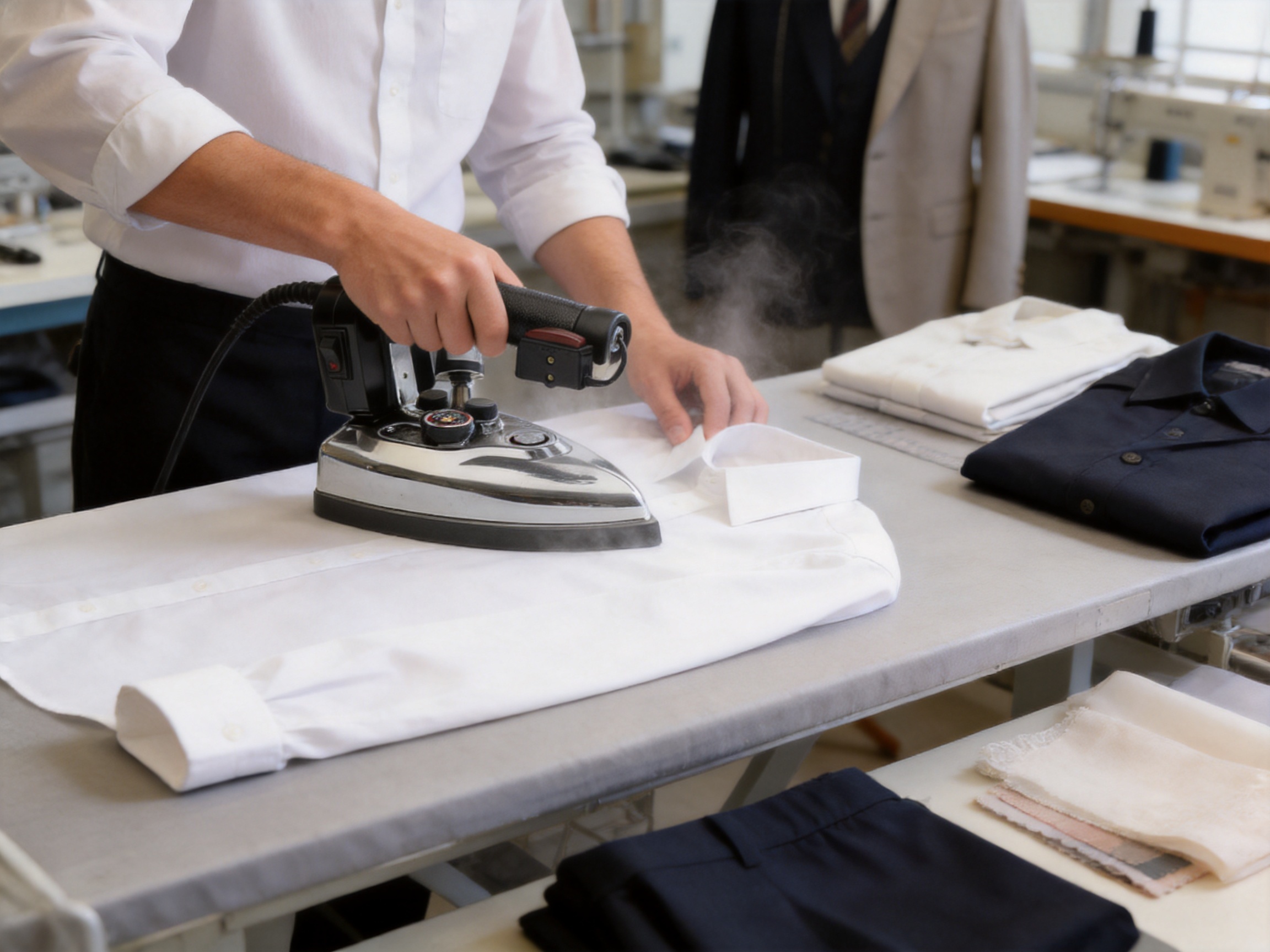
Ironing is often the final stage between garment production and customer presentation. Even a well-cut and carefully sewn garment can lose its visual appeal if seams are uneven, collars are poorly shaped, or fabric surfaces contain visible creases. An electric iron gives the operator direct control over these final details. It can be used to flatten seams, sharpen edges, open hems, shape collars, improve cuffs, and restore a neat appearance after washing, transportation, or storage.
Professional users usually need a machine that can perform repeatedly without excessive waiting or complicated adjustment. A production worker may process many pieces in one shift, while a tailoring shop may move between cotton, polyester, wool blends, silk, denim, and other materials within the same working period. A suitable iron therefore needs a responsive heating system and a temperature-control arrangement that can adapt to changing fabric requirements.
The ST-85AF is designed to answer these needs through a relatively high 1200W power rating, an adjustable temperature control, and a soleplate designed for smooth movement. These features work together. Power provides heating capacity, temperature control provides precision, and the soleplate transfers heat and pressure to the fabric in a controlled manner. The operator can therefore manage both large flat surfaces and smaller areas such as collars, cuffs, pockets, pleats, and seam allowances.
The principal specifications provide a clear picture of the iron’s operating profile. The dual-voltage availability of 110V/220V makes the product suitable for different electrical environments, subject to correct local configuration and safe installation. The 1200W rating supports rapid heating and effective heat recovery during normal use. At 2.3kg, the iron has enough working presence to apply useful pressure while remaining manageable for repeated movement.
| Specification | Details | Practical Significance |
|---|---|---|
| Product model | ST-85AF / ES-85AF | Identifies the electric iron configuration |
| Product category | Electric Iron | Suitable for garment ironing and finishing operations |
| Voltage | 110V/220V | Supports use in different electrical markets when correctly configured |
| Power | 1200W | Enables rapid heating and effective heat recovery |
| Weight | 2.3kg | Balances pressing force with handling comfort |
| Soleplate size | 200 × 117 mm | Provides useful coverage while remaining maneuverable |
| Soleplate options | Hard anodized aluminum or imported non-stick coating | Offers durability and smooth fabric movement |
| Temperature control | Adjustable | Allows adaptation to different textile types |
| Steam function | Efficient steam generation | Helps loosen fibers and release stubborn wrinkles |
| Safety function | Automatic shut-off | Reduces risk when the iron is left unattended |
Specifications should always be considered together with the intended application. For example, a very light domestic iron may be easy to lift but may not provide sufficient pressure for professional finishing. Conversely, an excessively heavy industrial unit may deliver strong pressure but cause fatigue during detailed work. The 2.3kg working weight of the ST-85AF is positioned as a practical compromise between stability and maneuverability.
One of the most important advantages of a 1200W electric iron is its ability to reach a useful operating temperature quickly. Waiting for an appliance to heat can interrupt workflow, especially in a garment workshop, laundry department, hotel, uniform room, or small production line. Faster readiness means that operators spend more time processing garments and less time waiting for equipment.
Power also supports heat recovery. When the soleplate contacts a cool or damp garment, some heat is transferred away from the iron. During repeated strokes, the heating system must restore the working temperature. A 1200W design provides a strong electrical input for this process, helping the iron maintain an effective operating condition during normal ironing tasks.
Rapid heating does not mean that every fabric should be treated at the highest available temperature. The operator must still select a suitable setting for the material. The advantage is that the iron can respond efficiently after the desired temperature has been selected. This is particularly useful when moving through batches of garments where the operator needs predictable preparation between pieces.
Compared with lower-powered irons, a 1200W unit can offer a more productive balance for demanding work. A lower wattage may be adequate for occasional light ironing, but it can require more patience during start-up or recovery. The ST-85AF is more suitable for users who value steady performance and need to complete multiple garments without unnecessary pauses.
Heat alone can remove many wrinkles, but steam improves the process by introducing moisture into the fabric structure. Steam can help relax textile fibers, soften stubborn creases, and make it easier for the soleplate to create a smooth surface. This is valuable when working with materials that have been compressed during storage or when dry pressing alone does not provide the desired result.
The ST-85AF includes an efficient steam function intended to penetrate fabric fibers. When used correctly, steam can reduce the amount of force needed from the operator. Instead of repeatedly pressing the same crease with excessive pressure, the user can apply controlled steam and then guide the soleplate over the softened area. This supports a more efficient and less tiring working technique.
Steam is also useful for shaping garments. Tailors and garment finishers may use it around curved areas, seams, collars, cuffs, and structured components. Moisture and heat can assist with forming the material without relying only on mechanical pressure. The result can be a cleaner, more professional appearance, particularly when the operator understands the behavior of the fabric.
Different textiles require different levels of heat and moisture. Delicate fabrics should be treated carefully, while thick materials may require more sustained heat and steam. The product’s adjustable temperature control allows the operator to coordinate the steam function with the material being processed. This flexibility is an important advantage over simple irons that provide limited control over fabric conditions.
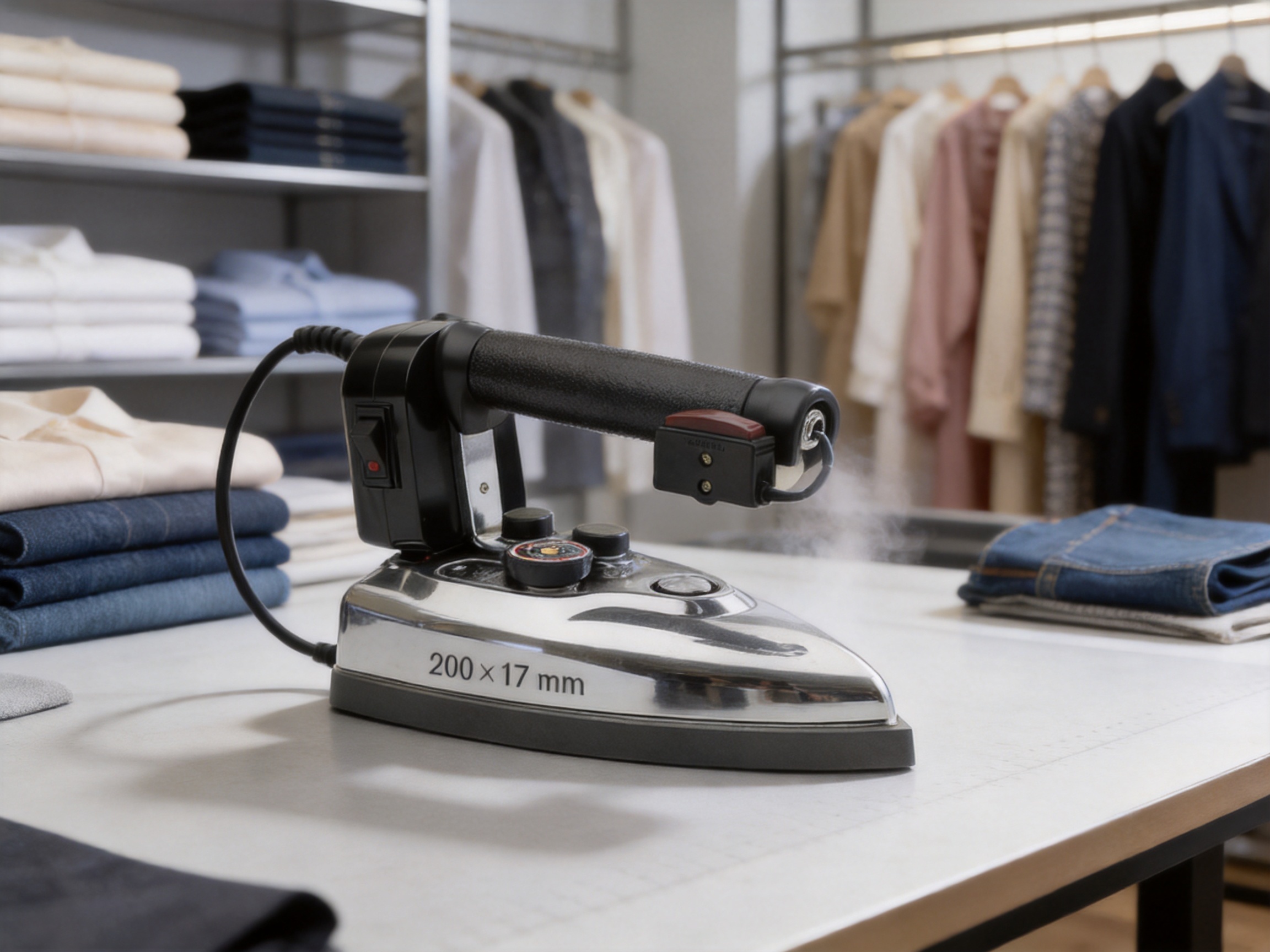
The soleplate is the primary contact surface between the iron and the garment. Its material, finish, size, and shape influence how easily the appliance moves and how evenly heat is transferred. A poor soleplate may drag on fabric, cause sticking, leave marks, or make it difficult to reach detailed areas. A well-designed soleplate contributes directly to productivity and finished quality.
The ST-85AF can be equipped with either a hard anodized aluminum soleplate or an imported non-stick coating. Hard anodized aluminum is valued for its durability and resistance to wear. It provides a firm, stable surface for repeated ironing and is suitable for users who need a dependable soleplate for regular operation. The material also supports effective heat transfer when properly maintained.
The non-stick option is designed to reduce friction and lower the likelihood of fabric sticking to the soleplate. This can be especially helpful when working with synthetic blends, treated textiles, printed materials, or fabrics that are more sensitive to excessive surface contact. Smooth movement helps the operator maintain an even stroke and reduces the risk of pulling or distorting the garment.
Both soleplate options are intended to glide across a range of materials. The choice between them may depend on the user’s preferred working method, fabric mix, maintenance habits, and operating environment. The availability of options gives distributors, workshops, and professional users more flexibility than a one-surface configuration.
The 200 × 117 mm soleplate provides a useful working area without becoming too large for detail work. A broad contact area can cover more fabric in each pass, which helps improve productivity on shirts, trousers, skirts, jackets, uniforms, and other garments. At the same time, the dimensions remain suitable for maneuvering around narrow sections.
Small or confined areas often determine the quality of the finished garment. Collars, cuffs, plackets, pockets, shoulder areas, and spaces between buttons require a soleplate that can be positioned accurately. The ST-85AF’s size supports this type of work while still allowing efficient coverage on larger panels.
A balanced soleplate size also helps distribute pressure. The operator can use a controlled stroke rather than repeatedly pressing with a small contact point. This can produce a more uniform finish and reduce the number of passes required to remove visible wrinkles.
Textiles differ significantly in their response to heat, moisture, and pressure. Cotton commonly tolerates higher temperatures than many synthetic fabrics, while silk and other delicate materials require more careful treatment. Blended fabrics may require an intermediate setting. Without adjustable temperature control, the same iron may be unsuitable for a broad range of garments.
The ST-85AF includes an adjustable temperature system that allows the user to select a working level according to the material. This supports safer and more consistent results. The operator can begin with an appropriate setting, test an inconspicuous area when necessary, and then adjust the temperature as the fabric requires.
Temperature control also helps reduce the risk of scorching, glazing, shrinking, or surface damage. A garment may be expensive or difficult to replace, so fabric protection is a central consideration in professional ironing. The user should always follow textile-care instructions and avoid leaving the hot soleplate stationary on the garment.
For mixed production environments, adjustability improves equipment utilization. One iron can be used for everyday cotton shirts in the morning, synthetic uniforms later in the day, and delicate garments during a finishing stage. This reduces the need to maintain separate irons for every fabric category and makes the equipment more practical for small and medium-sized operations.
Professional ironing often involves repetitive lifting, guiding, turning, and repositioning. If an iron is too heavy or poorly balanced, the operator may experience wrist, forearm, shoulder, or back fatigue. Fatigue can reduce accuracy and may eventually affect productivity and workplace comfort.
With a weight of 2.3kg, the ST-85AF is designed to provide useful pressing force without becoming excessively difficult to handle. The weight can help the soleplate maintain contact with the fabric, while the operator retains the ability to move around detailed garment areas. This is an important distinction between an iron that merely presses heavily and one that can be controlled precisely.
A manageable weight is also useful when working vertically or when garments must be repositioned frequently. The operator can make shorter, more accurate movements around seams and shaped sections. In tailoring and repair work, this level of maneuverability can be as valuable as raw heating power.
Reduced fatigue may support more consistent results during long working sessions. When an operator remains comfortable, it becomes easier to maintain correct temperature selection, controlled steam use, and even pressure. Ergonomics therefore contributes not only to user well-being but also to product quality.
The handle is the main point of contact between the operator and the iron. It must provide a secure grip while allowing the hand and wrist to guide the appliance naturally. An uncomfortable handle can cause unnecessary tension, particularly when the operator performs hundreds of repeated strokes.
The ST-85AF features an ergonomic handle intended to improve control and comfort. A secure grip helps the user maintain a stable direction when moving across long seams or large fabric panels. It also supports precise movement when working around collars, cuffs, pockets, buttons, and other narrow areas.
Ergonomic design is especially relevant when the iron is used in a commercial setting. A household user may operate an iron for a short period, but a professional may use it repeatedly throughout the day. Small improvements in grip comfort can become significant over hours of operation. The handle design is therefore part of the product’s productivity value rather than merely a visual feature.
Good control also supports safer operation. A stable grip reduces the chance of accidental slips, unexpected contact with the garment, or incorrect placement on the rest surface. Operators should still use appropriate protective procedures, but ergonomic handling provides an additional practical advantage.
Heat-producing appliances require careful operation. An unattended iron can damage a garment, work surface, or surrounding material. The ST-85AF includes an automatic shut-off function designed to activate when the iron is left unattended. This feature helps reduce risk during interruptions and provides greater peace of mind in busy environments.
Automatic shut-off should be regarded as a protective support rather than a replacement for correct working habits. Users should always switch off and unplug the iron when it is no longer needed, place it on a stable heat-resistant surface, and allow it to cool before storage or maintenance. The safety function is valuable because interruptions can occur unexpectedly, but responsible operation remains essential.
In a workshop, operators may be required to move between stations, answer questions, collect garments, or change settings. An automatic shut-off function provides an additional safeguard if the iron is temporarily forgotten. It can also be useful in domestic environments where users may be distracted by other tasks.
Safety is part of the total cost of ownership. A product that helps prevent avoidable incidents can protect garments, workstations, and users. The inclusion of an automatic shut-off system strengthens the ST-85AF’s suitability for both everyday and professional use.
Basic electric irons are often designed for occasional household use and may prioritize low purchase cost over extended productivity. They may have lower power, limited steam output, less robust soleplate materials, less precise handling, or fewer safety functions. While such a product may be adequate for a small number of garments, it may not provide the same level of performance in a workshop or commercial laundry setting.
The ST-85AF distinguishes itself through the combination of power, steam, soleplate options, temperature adjustment, ergonomic handling, and automatic shut-off. Competitor products may offer one or two of these features, but the user must evaluate how effectively they work together in actual operation. A well-balanced configuration can be more valuable than a single unusually high specification.
The 1200W power rating gives the ST-85AF a useful advantage in heating speed and recovery. The 2.3kg weight provides a practical balance between pressure and maneuverability. The 200 × 117 mm soleplate offers coverage without sacrificing access to narrow garment areas. These features make the iron suitable for users who need more than occasional wrinkle removal.
The choice of soleplate material is another advantage. Hard anodized aluminum and imported non-stick coating offer different working characteristics, allowing the product to be matched more closely to user expectations. This type of configuration flexibility is useful for distributors serving multiple markets and for professional customers with different fabric mixes.
Cotton garments often require firm heat and sufficient pressure to remove deep wrinkles. The ST-85AF’s power and working weight support this type of application. Steam can help relax cotton fibers, while the soleplate provides a smooth surface for opening seams and creating a clean finish.
Denim and other thick fabrics may require additional passes or more deliberate pressure. The product’s robust heating capacity helps the operator work through heavier materials more effectively than a low-powered iron. Steam may also be used where appropriate, although the user should follow the garment’s care instructions.
Synthetic materials require greater caution because excessive heat can cause melting, shining, distortion, or permanent marks. Adjustable temperature control allows the operator to select a lower setting. The non-stick soleplate option may also help reduce unwanted drag and sticking when used correctly.
Silk and other delicate fabrics require careful temperature management, controlled movement, and attention to moisture. The iron’s adjustability provides the necessary basis for delicate work, but the operator should always verify the recommended care method. A pressing cloth or other protective technique may be appropriate for sensitive materials.
Blended fabrics can present a special challenge because their components may respond differently to heat. The operator should normally follow the lowest safe temperature indicated for the blend and test the fabric when uncertain. The ST-85AF’s adjustable control makes these transitions more manageable than a fixed-temperature appliance.
Tailors use irons for shaping, seam opening, edge definition, and final presentation. A compact soleplate is useful when working around curved sections and detailed construction. The ST-85AF can support pressing operations before, during, and after assembly, helping improve the appearance of finished garments.
Schools, factories, hotels, hospitals, restaurants, and security organizations may need to prepare uniforms regularly. These garments often include cotton, polyester, and blended fabrics. Adjustable temperature control, efficient heating, and manageable weight make the iron suitable for repeated uniform maintenance.
Hotels and laundry businesses must present clothing and linens in a clean, orderly condition. Productivity and consistency are important because staff may process many items each day. The 1200W heating system and steam function can support faster wrinkle removal, while the automatic shut-off feature adds protection in busy work areas.
Retailers may need to refresh garments before placing them on display or preparing them for customers. A smooth soleplate and precise handling can help improve the appearance of shirts, trousers, jackets, dresses, and other items. A well-finished garment can create a stronger presentation and reduce the visual effect of transport creasing.
Although the product is suitable for professional applications, it can also serve households that require dependable performance. Families with school uniforms, business clothing, formal garments, or frequent laundry loads may benefit from rapid heating, adjustable temperature, and easy handling.
A reliable electric iron depends on more than its visible specifications. Product performance is influenced by design control, component selection, assembly accuracy, electrical testing, thermal management, surface finishing, and final inspection. The manufacturer behind the ST-85AF has specialized in ironing equipment since its establishment in 2003 and has developed experience across electric irons, steam irons, hanging irons, spray guns, small steam machines, heat transfer machines, steam boilers, vacuum tables, and related accessories.
This broad product scope is significant because ironing equipment shares many technical requirements. Engineers and production teams working with heating systems, steam generation, electrical controls, pressure surfaces, and operator interfaces can apply knowledge across multiple product categories. Experience with complementary equipment also helps the company understand how an individual iron may fit into a broader garment-finishing workflow.
The company’s activities include independent research, development, and production. Independent development gives the manufacturer greater control over product improvement rather than relying only on external designs. It can study customer feedback, identify recurring operational needs, adjust structures, improve materials, and develop configurations for different markets.
Continuous product improvement is particularly important for ironing equipment because customer expectations change over time. Users may request faster heating, better surface performance, improved ergonomics, more convenient maintenance, or stronger compatibility with local electrical systems. A manufacturer with an established development process is better positioned to respond to these requirements.
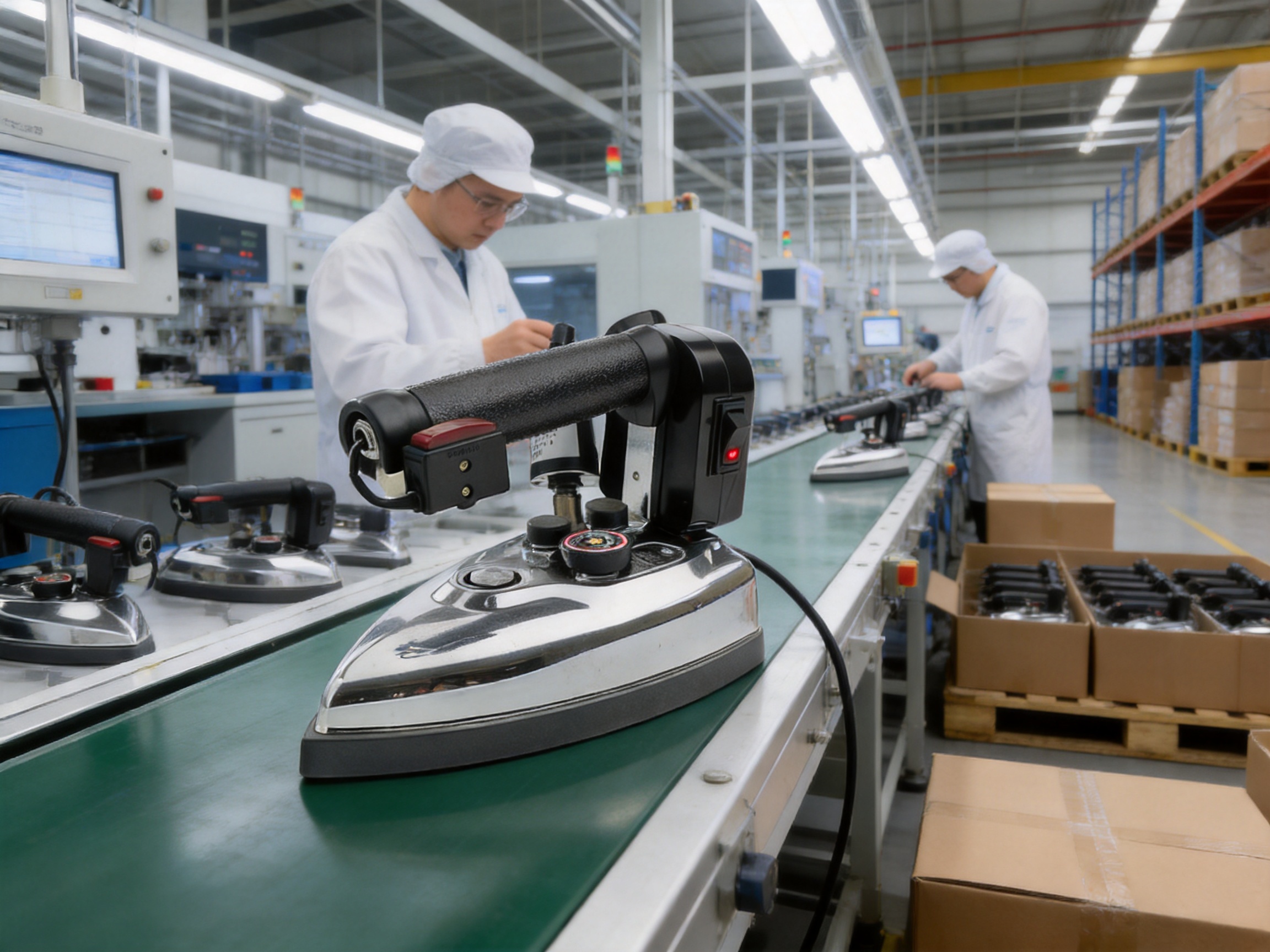
Manufacturing quality begins with the organization of the production process. Heating appliances contain electrical and mechanical components that must work together safely. Assembly workers need clear procedures, suitable tools, correct component identification, and inspection checkpoints. Consistency is essential because small deviations in wiring, insulation, fastening, or surface treatment may affect performance.
The manufacturer states that its products follow national and industry standards, including GB4706.1-2005 and GB4706.2-2007. These standards relate to the safety of household and similar electrical appliances and provide a framework for design and testing. Compliance with applicable standards helps establish disciplined production requirements and supports market acceptance.
The company’s products have also passed CCC and CQC certifications. Certification does not eliminate the need for proper operation or maintenance, but it demonstrates that the products have been assessed within relevant certification systems. For buyers, distributors, and importers, documented certification can simplify product evaluation and strengthen confidence in sourcing.
Quality management should extend from incoming materials through assembly and final inspection. Components such as heating elements, thermostatic controls, electrical cables, insulation parts, handles, soleplates, and fasteners all influence the completed iron. Inspection and testing at multiple stages can help identify defects before products are packed and shipped.
Final quality checks may include appearance inspection, electrical safety checks, heating performance verification, control response, steam-function evaluation, and assessment of the soleplate surface. The exact internal procedures may vary by production batch and product configuration, but a systematic approach is central to reliable manufacturing.
Research and development allows a manufacturer to turn practical user needs into product features. For an electric iron, development may involve thermal design, handle ergonomics, water and steam pathways, temperature control, soleplate geometry, electrical protection, packaging, and serviceability.
The ST-85AF reflects a development approach that balances several requirements rather than maximizing only one. High power is useful, but it must be matched with temperature control. Steam is helpful, but it must be integrated into a manageable operating method. A durable soleplate is valuable, but it must also glide smoothly. A safety feature is important, but the overall structure must remain straightforward for the operator.
The company’s research and development teams work together with management and sales personnel. This type of cooperation can improve communication between market demand and technical execution. Sales teams observe customer preferences, service teams identify field issues, and technical teams convert this information into design or process improvements.
Independent development also supports product customization. Buyers may require different voltage configurations, branding arrangements, packaging, soleplate options, documentation, or accessory combinations. A manufacturer with its own development and production resources can generally coordinate these requirements more efficiently than a company that only resells finished products.
OEM capability is valuable for importers, wholesalers, distributors, and established garment-equipment brands. Different markets may have different expectations regarding product appearance, packaging, labeling, electrical configuration, instruction materials, and product combinations. Customization can help buyers present a product that aligns with their distribution strategy.
The manufacturer identifies customization and OEM services among its business advantages. This suggests that the company can support customers who need more than a standard off-the-shelf product. For a product such as the ST-85AF, possible discussions may involve voltage requirements, soleplate selection, packaging format, accessory planning, and documentation.
Customization should always be managed through clear technical confirmation. Electrical specifications must match the destination market, and any requested modification should be evaluated for safety, performance, and certification implications. Professional communication between buyer and manufacturer is therefore important before mass production.
OEM cooperation may also help distributors create a coherent product range. An electric iron can be offered alongside steam irons, spray guns, vacuum tables, boilers, and other garment-finishing equipment. A supplier capable of producing several related categories can simplify sourcing and support more consistent product positioning.
The company is located in Huzhen Industrial Park, Zhejiang, China, in an area positioned near Lishui, Jinhua, and Taizhou. The manufacturer describes the location as benefiting from convenient transportation and well-developed information channels. These conditions can support coordination with component suppliers, logistics providers, domestic distributors, and overseas customers.
Convenient transportation is important for equipment manufacturers because products may need to move from component suppliers to production facilities and then to domestic or international shipping points. Efficient logistics can help reduce avoidable delays and support more predictable delivery planning.
The company has established distribution channels in China and exports products to Southeast Asia, Central Asia, South America, Africa, and other regions. International experience can help a manufacturer understand the practical requirements of different markets, including electrical configurations, packaging expectations, documentation, communication practices, and shipping arrangements.
For overseas buyers, supplier reliability includes more than product quality. It also includes response speed, order coordination, packing discipline, production scheduling, document preparation, and after-sales communication. The manufacturer presents professional service and convenient shipment as part of its overall business strengths.
Buyers should still confirm order-specific details before shipment, including voltage, plug format, carton dimensions, quantity, labeling, spare parts, operating instructions, certifications, and destination requirements. Clear confirmation helps reduce misunderstandings and makes international procurement more efficient.
The price of an electric iron should be evaluated against its working value. A low initial price may not be economical if the product heats slowly, produces inconsistent results, causes fatigue, damages fabrics, or requires frequent replacement. Conversely, a product with appropriate power, durable construction, and reliable support may provide stronger value over its service life.
The ST-85AF is positioned as a practical professional product because its features address common operating costs. Faster heating can reduce idle time. Efficient steam can reduce repeated passes. A smooth soleplate can improve movement. A manageable weight can reduce fatigue. Adjustable temperature can help protect garments. Automatic shut-off can reduce risk. Each benefit may appear modest individually, but together they can influence daily productivity.
Quality also affects customer satisfaction. Garment businesses depend on consistent presentation, and households expect dependable appliances. When an iron performs predictably, users can develop an efficient working routine. Predictability is especially important when different operators share the same equipment.
The manufacturer’s range of products, certification experience, independent development, and export history further support its ability to serve customers seeking dependable garment-care equipment. These factors do not replace product testing, but they provide useful context when comparing suppliers.
Before use, inspect the power cord, plug, handle, soleplate, and visible housing. Confirm that the voltage configuration matches the electrical supply. Place the iron on a stable and heat-resistant surface and ensure that the working area is clear of flammable materials.
Sort garments by fabric type and care requirement. Preparing a group of similar fabrics can reduce repeated temperature changes and improve workflow. Begin with a lower-temperature group when practical, then move to materials requiring higher settings. Always follow the garment label and use a test area when the fabric is unfamiliar.
Allow the iron to reach the selected operating condition before beginning detailed work. Use smooth, controlled strokes rather than excessive force. Apply steam according to the fabric and garment structure, and avoid concentrating heat in one location for too long.
When working around buttons, printed surfaces, coated textiles, or decorative elements, use suitable caution. Turn garments inside out or use a protective pressing layer when recommended. Keep the soleplate moving and maintain awareness of the temperature setting.
After use, switch off and unplug the iron. Place it safely on its resting surface and allow it to cool completely. Do not wrap the cord tightly around a hot appliance. Store the product in a dry, clean location away from children and moisture.
Regular maintenance helps preserve heating performance and surface quality. The soleplate should be kept clean and free from adhesive residue, melted fibers, dust, and other contamination. Cleaning methods should be compatible with the soleplate material. Abrasive tools or unsuitable chemicals may damage the surface and should be avoided.
If the iron includes a steam system, users should follow the recommended procedure for water management and cleaning. Mineral deposits can affect steam performance and may eventually obstruct internal pathways. The correct water type and maintenance schedule should be confirmed through the product documentation or supplier guidance.
Electrical inspection is also important. If the power cord, plug, insulation, or housing shows damage, the iron should be removed from service until it has been examined by a qualified technician. Users should not attempt unauthorized repairs to electrical or heating components.
Commercial operators may benefit from a maintenance record. The record can include cleaning dates, inspection results, unusual operating observations, and service actions. This approach helps identify developing problems before they cause production interruption.
The hard anodized aluminum option may appeal to users who prioritize a durable working surface and a firm, traditional pressing feel. It can be suitable for workshops that handle a broad range of fabrics and require a soleplate capable of repeated use.
The imported non-stick coating may appeal to users who prioritize smooth gliding and reduced fabric adhesion. It can be useful where the operator frequently works with synthetic materials or garments that are more sensitive to surface friction.
Neither option eliminates the need for correct temperature selection and cleaning. A non-stick surface can still be damaged by excessive heat, contamination, or improper tools. An aluminum surface can also lose performance if residue is allowed to build up. The best choice depends on the customer’s operating conditions, fabric mix, and maintenance practices.
Buyers often compare products based on wattage, price, appearance, and delivery time. These factors are important, but manufacturing depth can provide a more complete picture. A supplier that researches, develops, manufactures, tests, and services its own equipment may be better positioned to answer technical questions and manage product improvements.
Manufacturing depth can also improve communication. When a buyer reports a concern about heating, soleplate movement, steam performance, or packaging, an integrated manufacturer may be able to communicate directly with the relevant technical and production teams. This can shorten the path from feedback to corrective action.
A broad product portfolio is another advantage. Since the company produces electric irons as well as steam irons, spray guns, boilers, vacuum tables, heat transfer machines, and accessories, customers can explore complete garment-finishing solutions from one specialized source. This can simplify purchasing and help ensure that equipment is compatible within a workshop.
Established experience since 2003 provides additional industry background. Long-term operation does not automatically guarantee that every product will suit every customer, but it indicates that the manufacturer has had time to build processes, supplier relationships, distribution experience, and market knowledge.
The ST-85AF is intended for ironing and finishing garments made from various fabric types. It can be used in homes, tailoring shops, garment workshops, uniform departments, laundry services, hospitality operations, retail environments, and other settings that require controlled heat, pressure, and wrinkle removal.
The iron has a rated power of 1200W. This power level supports rapid heating and helps the appliance recover heat during normal ironing work. Users should confirm that the electrical supply and product configuration are correct before operation.
The listed voltage is 110V/220V. The exact configuration should be confirmed with the supplier before purchase and installation. Users must never connect the appliance to an incompatible electrical supply.
The product weighs approximately 2.3kg. This provides useful pressing force while keeping the appliance manageable for repeated movement and detailed garment work.
The soleplate measures 200 × 117 mm. This size offers a balance between coverage on larger garment sections and maneuverability around collars, cuffs, seams, pockets, and other narrow areas.
The product is available with either a hard anodized aluminum soleplate or an imported non-stick coating. The best option depends on the buyer’s preferred surface characteristics, fabric mix, and maintenance practices.
Yes. The ST-85AF is equipped with an efficient steam function intended to help penetrate fabric fibers and loosen stubborn wrinkles. Steam output should be used in accordance with the fabric type and garment-care instructions.
Yes. Adjustable temperature control allows the operator to select a suitable setting for materials such as cotton, silk, synthetics, and blended fabrics. Correct temperature selection is essential for avoiding scorching or other fabric damage.
Yes. The automatic shut-off function is designed to activate when the iron is left unattended. It provides an additional safety measure, although users should still switch off and unplug the appliance after use.
Its power, steam function, soleplate options, manageable weight, adjustable temperature, and ergonomic handle make it suitable for many professional garment-finishing applications. The exact suitability depends on production volume, fabric types, workflow, and local operating requirements.
The supplier specializes in research, development, and production of electric irons and a broad range of related ironing and garment-finishing equipment. It also identifies OEM, customization, professional service, quality management, and convenient shipment among its business strengths.
The company has distribution experience in China and exports products to Southeast Asia, Central Asia, South America, Africa, and other regions. Buyers should confirm destination-specific electrical, certification, labeling, and shipping requirements for each order.
The ST-85AF electric iron is built around a practical combination of heating power, steam assistance, soleplate performance, temperature flexibility, ergonomic handling, and safety protection. Its 1200W power rating supports rapid readiness and effective heat recovery. Its 2.3kg weight provides a useful balance between pressing force and maneuverability. The 200 × 117 mm soleplate is sized for both broad garment surfaces and detailed finishing work.
The availability of hard anodized aluminum and imported non-stick soleplate options gives buyers additional flexibility. Adjustable temperature control supports work across different textiles, while the steam function helps soften fibers and release difficult wrinkles. The ergonomic handle contributes to comfort during repeated operation, and the automatic shut-off feature provides an additional layer of protection.
Beyond the product itself, the manufacturer offers the advantages of specialized industry experience, independent research and development, broad product coverage, certification experience, OEM and customization support, international distribution, and professional service. These capabilities are important for buyers who need a long-term equipment partner rather than a one-time source.
For households, the iron offers dependable garment-care functionality. For workshops, laundries, uniform departments, retailers, and garment producers, it provides a compact tool for efficient finishing. When operated according to fabric-care instructions and maintained correctly, the ST-85AF can contribute to cleaner presentation, reduced processing time, and a more comfortable ironing routine.
1. Product specification sheet for the ST-85AF / ES-85AF Electric Iron.
2. Manufacturer-provided product information concerning voltage, power, weight, soleplate dimensions, steam function, temperature control, handle design, and safety features.
3. Manufacturer company profile concerning research and development, production capabilities, OEM services, export markets, and quality management.
4. GB4706.1-2005, Safety of Household and Similar Electrical Appliances—General Requirements.
5. GB4706.2-2007, Safety of Household and Similar Electrical Appliances—Particular Requirements for Electric Irons.
6. General textile-care principles relating to the control of heat, moisture, pressure, and fabric handling during ironing.
7. General occupational ergonomics principles for repetitive hand-held appliance operation.
 +86-578-3158872 / +86-578-3158958
 jyshengda@163.com / caroying@jy-shengda.com
 No. 8 Nanyi Rd, Huzhen Industrial Park, Zhejiang, China
Copyright © Jinyun Shengda Sewing Equipment Co., Ltd. All Rights Reserved.
Ironing Press Machine Equipment Factory
 English
 中文简体
 русский
 عربى