Reliable steam generation is essential for garment finishing, tailoring, apparel production, laundry services, textile workshops, and many other applications that depend on consistent heat and moisture. A steam boiler must do more than simply heat water. It must produce usable steam efficiently, operate safely, fit into the available workspace, and remain practical during long working sessions. The SPR-MN2035 Steam Boiler is designed around these requirements, combining a 3.5-liter water capacity, compact construction, integrated safety monitoring, and a dedicated iron power supply in one practical system.
With a boiler power of 1600W and an iron power of 900W, the SPR-MN2035 offers a balanced configuration for garment care and other light-to-medium steam applications. It is available for both 220V and 110V electrical environments, giving distributors and users greater flexibility when selecting equipment for different countries, workshops, and operating conditions. Its 355 x 320 x 450mm packing dimensions also make it easier to place, transport, and store than many larger commercial steam systems.
The equipment is especially suitable for users who need dependable steam without installing a large fixed boiler. It can support pressing, garment shaping, wrinkle removal, cleaning, and related tasks while reducing interruptions caused by repeated water refilling. The built-in pressure gauge and liquid level alarm further improve operating awareness and help protect the machine from unsafe or damaging conditions.
A steam boiler converts water into steam through controlled heating. In professional ironing, the steam softens textile fibers, allowing wrinkles to be removed more efficiently and helping garments achieve a cleaner, more refined appearance. Steam can also assist with shaping collars, cuffs, seams, sleeves, and other difficult areas that are not easily finished with dry heat alone.
Traditional dry-ironing equipment can be effective for some materials, but steam provides additional flexibility. Moisture helps relax fibers, while heat supports the reshaping process. For this reason, steam equipment is widely used in garment factories, alteration shops, dry-cleaning businesses, hotels, laundries, uniform services, and domestic or semi-professional workspaces.
A boiler must maintain a practical balance between heating capacity, water volume, operating safety, physical size, and energy use. A unit that is too small may require constant refilling and may struggle during busy periods. A unit that is too large can consume unnecessary space, require more complicated installation, and be difficult to move. The SPR-MN2035 addresses this balance with a compact format and a 3.5-liter tank designed for extended use without excessive bulk.
The boiler is also supplied with a 900W iron power configuration, making it a coordinated solution rather than a standalone water-heating device. This integrated approach can simplify equipment selection for buyers who want a steam source and compatible ironing capability in one product arrangement.

SPR-MN2035 Steam Boiler
The technical configuration of the SPR-MN2035 reflects its intended use as a portable and efficient steam solution. The 1600W boiler heating system is designed to generate steam within a practical working period, while the 900W iron power rating supports garment finishing tasks. The 3.5-liter capacity provides a useful operating reserve for users who need to work continuously without stopping frequently to add water.
| Specification | Details |
| Product model | SPR-MN2035 |
| Product type | Steam boiler with ironing support |
| Voltage options | 220V / 110V |
| Boiler power | 1600W |
| Iron power | 900W |
| Water capacity | 3.5 liters |
| Packing dimensions | 355 x 320 x 450mm |
| Safety monitoring | Built-in pressure gauge and liquid level alarm |
These specifications make the SPR-MN2035 appropriate for users who want more capability than a basic domestic iron but do not require a large industrial boiler installation. The unit’s capacity and power level are suitable for intermittent or sustained professional work, depending on the specific garment volume, steam demand, operating method, and work environment.
The availability of both 220V and 110V versions is an important commercial advantage. Electrical standards vary between regions, and selecting the appropriate voltage helps buyers integrate the machine into their existing facilities. Export distributors can also offer the product to a wider range of markets without needing to redesign the entire system for each destination.
Water capacity directly affects working efficiency. When a boiler has a small tank, the operator may need to interrupt production repeatedly to refill it. These interruptions can slow down garment processing, reduce productivity, and make it more difficult to maintain a smooth workflow. The SPR-MN2035 uses a 3.5-liter water tank to provide a longer operating period between refills.
The value of this capacity is especially clear in commercial environments. A tailoring shop may need to finish several garments in sequence. A laundry may need to process uniforms, shirts, trousers, or household textiles throughout the day. A garment production line may use steam at different stages of pressing and finishing. In these situations, reducing unnecessary pauses can improve both operator convenience and overall output.
The larger tank does not mean that the boiler must occupy excessive space. The compact dimensions allow the water capacity to be combined with a relatively small footprint. This is a key advantage over equipment that offers a similar operating duration but requires a much larger installation area.
Users should still follow appropriate water management practices. The tank should not be overfilled, and the recommended water quality should be observed according to the supplier’s operating instructions. Regular checking and cleaning can help minimize mineral deposits, maintain heating performance, and extend the working life of the equipment.
Extended operation can improve productivity in several ways. First, it reduces the number of times the operator must leave the workstation. Second, it helps maintain a consistent workflow, which is valuable when garments are being processed in batches. Third, it makes the equipment more suitable for mobile or temporary locations where access to water may be less convenient.
For small workshops, the ability to work for longer periods without refilling can be particularly useful. Staff may need to alternate between pressing, inspection, packaging, and other tasks. A boiler that requires less frequent attention allows the operator to concentrate on garment quality rather than constantly monitoring the water supply.
For domestic or semi-professional users, a 3.5-liter capacity offers a comfortable reserve without the complexity of a large commercial steam plant. It provides a practical compromise between convenience and manageable equipment size.
Space is an important consideration in modern work environments. Many tailoring businesses, repair shops, studios, and small production areas operate in rooms where every square meter must be used efficiently. The SPR-MN2035 has compact packing dimensions of 355 x 320 x 450mm, making it easier to position near a worktable, ironing station, or storage area.
A compact steam boiler offers several practical advantages. It can be placed in a small workshop without requiring major rearrangement. It can be moved between workstations when different operations are being performed. It can be stored more conveniently when not in use. It can also be included in temporary setups, training facilities, exhibition areas, and mobile service environments.
Portability is valuable not only because of the machine’s physical size but also because it increases the number of locations where the equipment can be used. A business may need to move equipment between a production room and a finishing room. A service provider may need to transport steam equipment to a customer’s premises. A training center may need to rearrange equipment according to class requirements. Compact construction makes these changes easier to manage.
Compared with larger fixed systems, the SPR-MN2035 can reduce the planning requirements associated with installation. It does not eliminate the need for safe electrical connections, ventilation, stable positioning, and proper operating procedures, but it can simplify the physical arrangement of a small or medium work area.
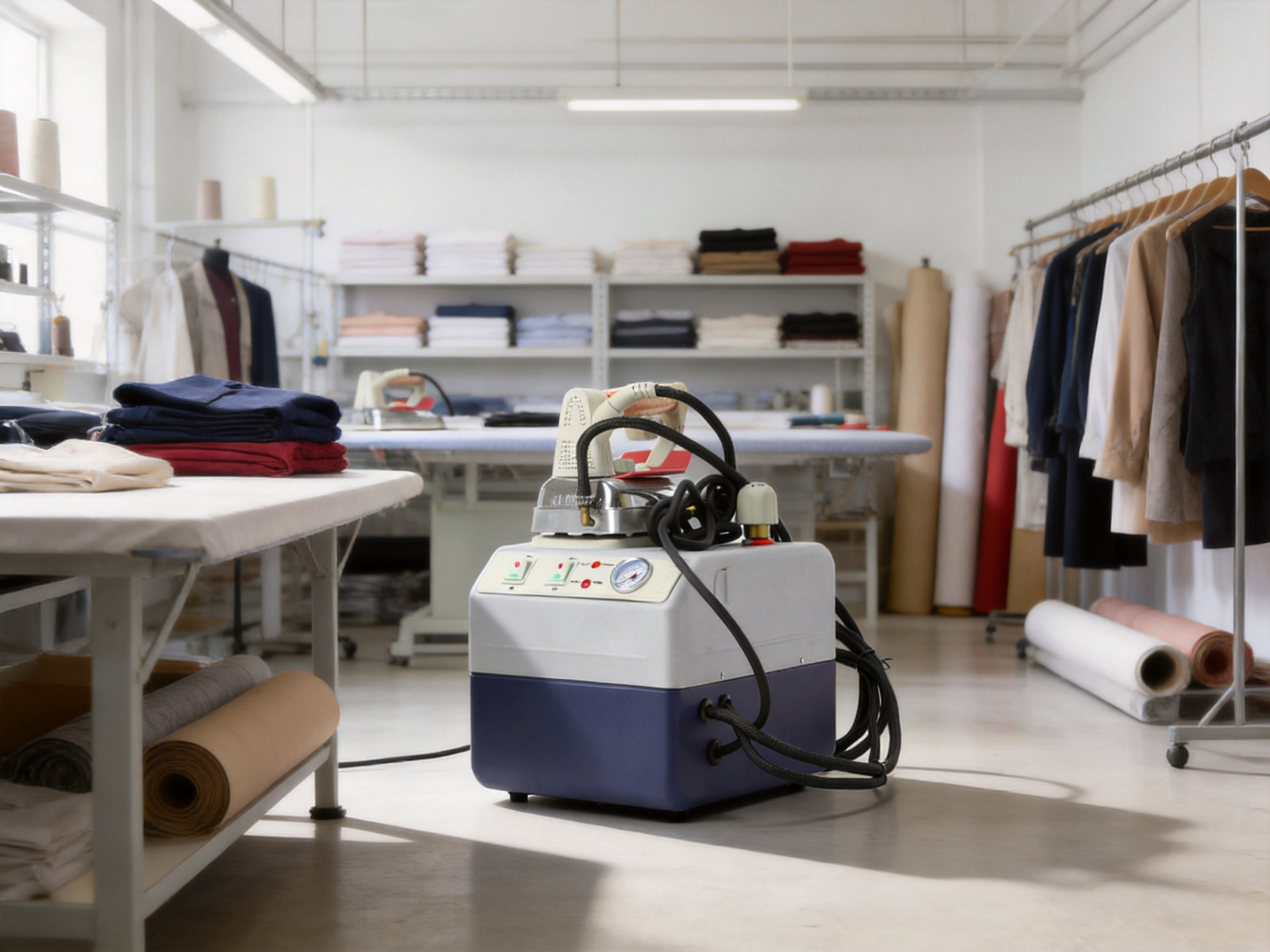
The 1600W boiler power is designed to provide effective water heating and practical steam generation in a compact format. Steam equipment must produce enough heat to support useful output without creating unnecessary energy demand. A balanced power configuration helps the machine serve common ironing and garment care tasks while remaining suitable for businesses that monitor operating costs.
Quick steam availability is useful when an operator needs to begin work without a long preparation period. Consistent steam is equally important because irregular output can affect pressing quality. The SPR-MN2035 is designed to provide steady steam generation for both continuous and intermittent applications, subject to the appropriate operating conditions and water level.
The separate 900W iron power rating complements the boiler system. It provides the ironing component with dedicated electrical capacity while the boiler concentrates on steam production. This arrangement supports coordinated use of heat and moisture, allowing operators to select the most effective combination for different fabrics and garment structures.
Steam output requirements vary depending on the textile, garment construction, production speed, and operating technique. Delicate fabrics may require controlled steam and careful handling, while heavier materials may require more time or repeated treatment. The SPR-MN2035 gives users a flexible source of steam that can be adapted to a range of routine garment-finishing tasks.
Energy efficiency is not determined only by the rated wattage of a machine. It also depends on how efficiently the heat is transferred, how often the system cycles, how well the equipment is maintained, and how effectively the operator uses steam. A compact boiler can reduce unnecessary energy consumption by avoiding the need to heat a much larger volume of water than the application requires.
The 3.5-liter tank provides enough reserve for extended use while remaining smaller than the tanks found in large centralized systems. This can be advantageous for small and medium operations that need professional steam performance but do not require the output of a full-scale industrial boiler room.
Operators can further support efficient use by preparing garments in batches, avoiding unnecessary steam release, keeping hoses and connections in good condition, and following the recommended maintenance schedule. These practices help the boiler deliver useful output with less wasted time and energy.
Pressure is a central part of steam boiler operation. The built-in pressure gauge allows the operator to observe the internal pressure level during use. This information helps users understand the operating condition of the boiler and maintain the system within the appropriate working range.
A pressure gauge is valuable because it provides direct visual feedback. Instead of relying only on sound, steam flow, or personal judgment, the operator can refer to an instrument designed for pressure monitoring. This can make operation more predictable and can help identify unusual conditions at an earlier stage.
Monitoring pressure is also important when steam is used for different tasks. A user may require a controlled flow for delicate garments or a more sustained supply for heavier materials. Understanding the boiler’s pressure condition helps the operator make better decisions about timing, steam release, and work sequence.
The gauge should be kept visible and inspected regularly. If the reading appears abnormal, fluctuates unexpectedly, or does not respond as anticipated, the operator should stop using the equipment and follow the appropriate inspection procedure. Safety instruments are most useful when they are treated as active parts of the operating process rather than decorative components.
Water level management is another essential safety consideration. A boiler must have sufficient water to continue heating safely. If the water level becomes too low, continued heating may cause overheating, reduce component life, or damage the system. The SPR-MN2035 includes a liquid level alarm to alert the user when the water level drops below a defined threshold.
The alarm provides an additional layer of protection by drawing attention to a condition that may otherwise be overlooked during busy work. Operators can respond by checking the water supply and following the correct refill procedure. This is particularly useful in commercial environments where the person working with the boiler may also be handling garments, tools, packaging, or customer orders.
A liquid level alarm can also support better maintenance habits. Repeated low-level operation may indicate incorrect filling practices, an unusual level of steam consumption, or a need for inspection. By providing an audible or visual warning, the system helps users respond before the situation becomes more serious.
Safety features do not replace proper training. The machine should always be operated according to its instructions, and users should understand how to fill, start, stop, depressurize, and maintain the boiler. However, combining operator awareness with a pressure gauge and liquid level alarm gives the SPR-MN2035 a stronger safety profile than a basic boiler without monitoring devices.
The SPR-MN2035 occupies a practical position between simple domestic steam devices and large industrial boiler systems. Comparing these categories helps explain its competitive advantages.
Basic domestic steam devices are often designed for short sessions and limited garment quantities. Their water tanks may be relatively small, and they may not provide the same level of operating information as a dedicated steam boiler. Users who work with multiple garments or require longer steam availability may experience frequent refilling and interruptions.
The SPR-MN2035 offers a larger 3.5-liter water capacity, a dedicated 1600W boiler, a pressure gauge, and a liquid level alarm. These features make it more appropriate for professional or semi-professional workflows where reliability, duration, and monitoring are important.
The machine is also designed as a coordinated system with a 900W iron power configuration. This can provide a more organized solution than combining unrelated household appliances that were not intended to work together during extended use.
Large fixed boiler systems can provide high output, but they may require more installation space, more extensive plumbing or electrical planning, and a dedicated operating area. Such systems are appropriate for high-volume production, but they may be excessive for small workshops, tailoring stores, mobile operators, and businesses with moderate steam requirements.
The SPR-MN2035 provides a compact alternative for users who need dependable steam without committing to a large fixed installation. Its portable format supports flexible workspace planning and can reduce the logistical burden associated with relocating or expanding a small operation.
Some low-cost boilers focus primarily on heating water and may provide limited information about pressure or water level. Although a lower purchase price can be attractive, the lack of monitoring may create greater operating uncertainty. Users may find it more difficult to identify low-water conditions or confirm whether the boiler is operating within a suitable range.
The SPR-MN2035 distinguishes itself by integrating a pressure gauge and liquid level alarm. These features improve visibility and contribute to safer, more controlled use. For businesses that value dependable operation and reduced risk, the additional monitoring capability can be more important than selecting the lowest initial price.
The SPR-MN2035 can support a variety of applications because steam is useful for both textile finishing and general heat-and-moisture tasks. Its compact size and moderate power level make it adaptable to different professional environments.
Tailors and alteration specialists often work with individual garments that require careful finishing. Steam can help remove wrinkles, shape seams, relax fabric, and improve the appearance of completed alterations. The compact boiler can be positioned close to an ironing table without occupying excessive floor area.
The 3.5-liter capacity is useful when several garments must be finished consecutively. The operator can concentrate on fitting and finishing details instead of stopping repeatedly to refill a small tank.
Garment manufacturers use steam during pressing, shaping, inspection, and final presentation. Sample rooms may also require a flexible steam source for developing new styles and checking the appearance of different fabrics. The SPR-MN2035 can support these tasks where a full-scale central boiler system is unnecessary or unavailable.
Laundries and uniform services often process shirts, workwear, school clothing, hospitality garments, and other textile products. A consistent steam supply can improve finishing quality and help garments appear neat and presentable. The unit’s extended water capacity can support batch work and reduce interruptions during daily operations.
Hotels, guest houses, restaurants, and event venues may need to maintain uniforms, table textiles, curtains, or presentation garments. A portable boiler can be useful when equipment must serve more than one area or when the available service space is limited.
Steam can also be used in certain cleaning and maintenance applications where heat and moisture are appropriate. The actual suitability depends on the material, surface, and safety requirements. Users should always confirm that the intended surface can tolerate steam before beginning work.
Vocational schools, sewing academies, and equipment demonstration rooms benefit from machines that are easy to position and explain. The pressure gauge and liquid level alarm provide useful teaching points for introducing students to safe boiler operation and professional garment care practices.
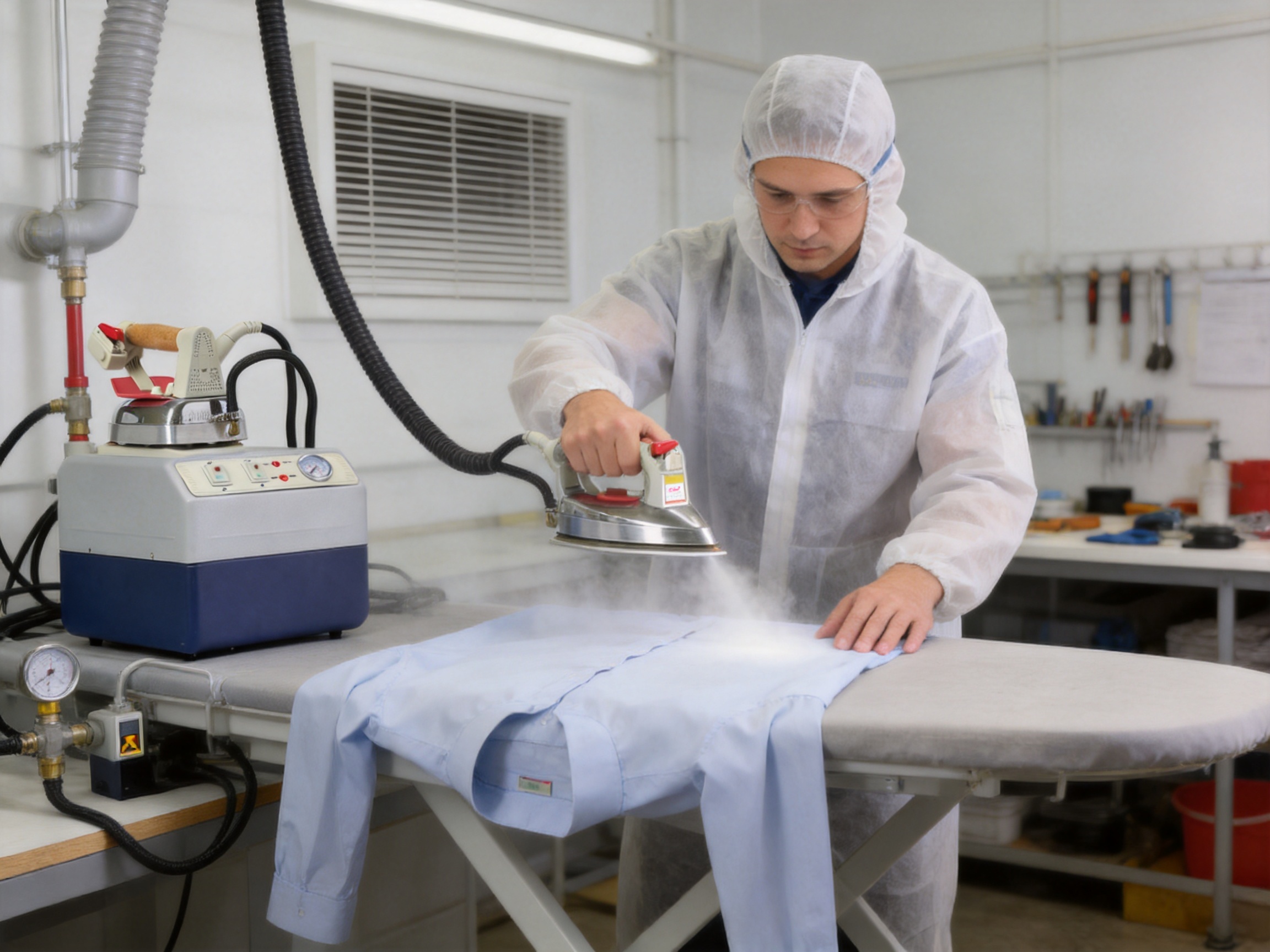
The performance of a steam boiler depends not only on its published specifications but also on the manufacturer’s ability to develop, assemble, test, and support the equipment consistently. The producer of the SPR-MN2035 has specialized in ironing and steam-related equipment since 2003, building experience across electric irons, steam irons, hanging irons, spray guns, small steam machines, heat transfer machines, steam boilers, vacuum tables, and accessories.
This broad product knowledge is valuable because these product categories are closely connected. Understanding irons, boilers, steam delivery, vacuum tables, and garment-finishing accessories allows the manufacturer to consider how individual products are used together. It also supports more practical product development because engineers and production teams can evaluate equipment from the perspective of complete working systems rather than isolated components.
The company operates from Zhejiang, China, in a manufacturing region with established industrial supply chains and access to transportation networks. Its location in Huzhen Industrial Park supports coordination between product development, manufacturing, component sourcing, quality management, packaging, and shipment.
Independent research and development is an important strength for an equipment manufacturer. It allows the producer to improve product structure, refine operating functions, respond to market feedback, and develop equipment for different customer requirements. For a steam boiler, research and development may involve heating performance, water capacity, pressure monitoring, alarm functions, component arrangement, portability, electrical compatibility, and user convenience.
The SPR-MN2035 reflects a development approach that prioritizes practical performance. Its specifications are not focused solely on maximum output. Instead, they combine a useful capacity, moderate dimensions, balanced power, and basic safety monitoring. This combination suggests attention to the actual needs of workshops and professional users who require dependable equipment without unnecessary complexity.
A manufacturer that produces several categories of ironing equipment can develop a more complete understanding of the garment-finishing process. Steam boilers must work effectively with irons, hoses, pressing surfaces, and operator techniques. Vacuum tables may be used to assist drying and shaping, while heat transfer machines support different finishing and decoration operations.
This integrated knowledge can contribute to better compatibility and more practical product configurations. It can also help the company advise customers who are building a complete ironing station rather than purchasing a single machine.
Quality-oriented production involves more than checking the final appearance of a machine. It includes selecting suitable materials and components, controlling assembly procedures, verifying electrical connections, inspecting pressure-related components, checking alarm functions, and ensuring that packaging protects the product during shipment.
For a steam boiler, quality control is particularly important because the product combines heat, water, electrical power, and pressure. Each of these factors must be addressed through appropriate design and manufacturing practices. Consistency between units is also essential for distributors and commercial users who need predictable performance across multiple purchases.
The company states that its products follow national and industry standards, including GB4706.1-2005 and GB4706.2-2007, and that its products have passed CCC and CQC certifications. These standards and certifications provide a framework for electrical safety and product evaluation. Buyers should confirm the certification scope and applicable documentation for the exact model, voltage version, and destination market.
A professional steam boiler typically passes through multiple production stages before shipment. While exact internal procedures may vary by factory and model, a responsible manufacturing process generally begins with product design and engineering review. The manufacturer evaluates the intended water capacity, power rating, physical arrangement, safety functions, and operating environment.
During design review, the layout of the water tank, heating components, pressure monitoring system, liquid level detection, electrical wiring, controls, and external housing must be considered together. Compact equipment requires careful internal arrangement because components must fit within a limited space while remaining accessible for inspection and service.
Engineering review also considers user interaction. The pressure gauge should be visible, the water-filling process should be practical, and the alarm should provide a clear warning. The design should support stable placement and reduce the risk of accidental operation in an unsuitable condition.
Incoming component inspection helps ensure that key parts meet the required specifications before assembly. Electrical components, heating elements, gauges, alarms, switches, connectors, hoses, and structural parts should be checked according to internal quality procedures.
Consistent component quality is important because a problem in a small part can affect the performance of the complete machine. For example, an inaccurate gauge may reduce the value of pressure monitoring, while an unreliable liquid level sensor may fail to provide the expected warning.
During assembly, wiring, pipe connections, seals, fasteners, and controls must be installed correctly. Steam and water pathways require careful attention because leaks can reduce performance and create safety concerns. Electrical connections must be secure and properly arranged to reduce the possibility of loose contacts or overheating.
Assembly control is especially important in compact machines because limited internal space can make routing and inspection more challenging. A well-organized assembly process supports easier testing, maintenance, and future service.
Functional testing may include checking heating response, steam generation, pressure indication, liquid level alarm operation, electrical performance, and basic control behavior. Testing helps identify defects before products are packed and shipped.
For export products, testing and documentation are also important for distributors and importers. Clear model identification, voltage information, packaging details, and user instructions help reduce confusion during installation and after-sales support.
Steam boilers contain electrical and mechanical components that should be protected from impact, moisture, and movement during transportation. Proper packaging should stabilize the product, protect exposed surfaces, and make the model and voltage information easy to identify.
The stated packing size of 355 x 320 x 450mm gives logistics planners a useful reference when calculating storage, container loading, warehouse arrangement, and delivery requirements. Compact packing can help reduce handling difficulty and support more efficient distribution.
Different markets may require different voltage configurations, packaging formats, labels, product documentation, or branding arrangements. The manufacturer offers customization and OEM services, which can be valuable for importers, wholesalers, distributors, and established equipment brands.
OEM cooperation requires clear communication about technical specifications, minimum order quantities, packaging, inspection procedures, certification documents, and delivery schedules. A manufacturer with experience across several ironing equipment categories may be better positioned to coordinate product variations and related accessories.
Customization can also support market-specific needs. For example, a distributor may require a particular language for the user manual, a regional plug configuration, special carton markings, or a coordinated product line that includes irons, boilers, vacuum tables, and accessories.
The company’s existing export experience includes Southeast Asia, Central Asia, South America, Africa, and other regions. International experience can help a manufacturer understand the importance of shipment planning, voltage selection, communication across time zones, documentation, and after-sales service.
Correct installation and operation are essential for safe and reliable performance. The SPR-MN2035 should be placed on a stable, level surface in a clean and adequately ventilated area. The surrounding space should allow the operator to view the pressure gauge, access the water-filling area, and respond to the liquid level alarm.
The correct voltage version must be selected before connection. A 110V model and a 220V model should not be connected to an incompatible electrical supply. The power source should be suitable for the machine’s rated load, and electrical installation should be performed in accordance with local requirements.
Before starting the equipment, the user should check the water level, inspect visible hoses and connections, and confirm that the work area is clear. Water should be added according to the operating instructions and should not exceed the recommended filling level. The boiler should not be operated without sufficient water.
During operation, the pressure gauge should be monitored and the liquid level alarm should be treated as an immediate warning. If an abnormal pressure reading, unusual noise, persistent leakage, electrical odor, or unexpected alarm occurs, the equipment should be stopped and inspected by a qualified person.
Steam can cause burns. Operators should use appropriate protective practices, avoid directing steam toward people, and keep hands away from outlets, hoses, and recently heated surfaces. New users should receive basic training before working independently.
Regular maintenance helps preserve heating efficiency, steam consistency, and safety. Mineral deposits may accumulate when water contains dissolved salts or other impurities. These deposits can affect heating elements, reduce heat transfer, restrict passages, and increase maintenance requirements.
Users should follow the manufacturer’s recommendations for water quality, cleaning intervals, draining, and descaling. The correct cleaning method depends on the internal construction and should not be replaced with an unapproved chemical treatment.
External inspection should include the power cord, plug, switches, gauge, alarm indicators, hoses, fittings, and visible seals. Any damaged or deteriorated component should be repaired or replaced before continued use.
The machine should be allowed to cool before maintenance. Pressure must be released according to the proper procedure, and users should never open or disconnect pressurized components. Only qualified service personnel should work on internal electrical or pressure-related parts.
Good maintenance is also a competitive advantage because it reduces downtime. A business that keeps its steam equipment clean and correctly adjusted is more likely to achieve stable output and predictable garment quality over time.
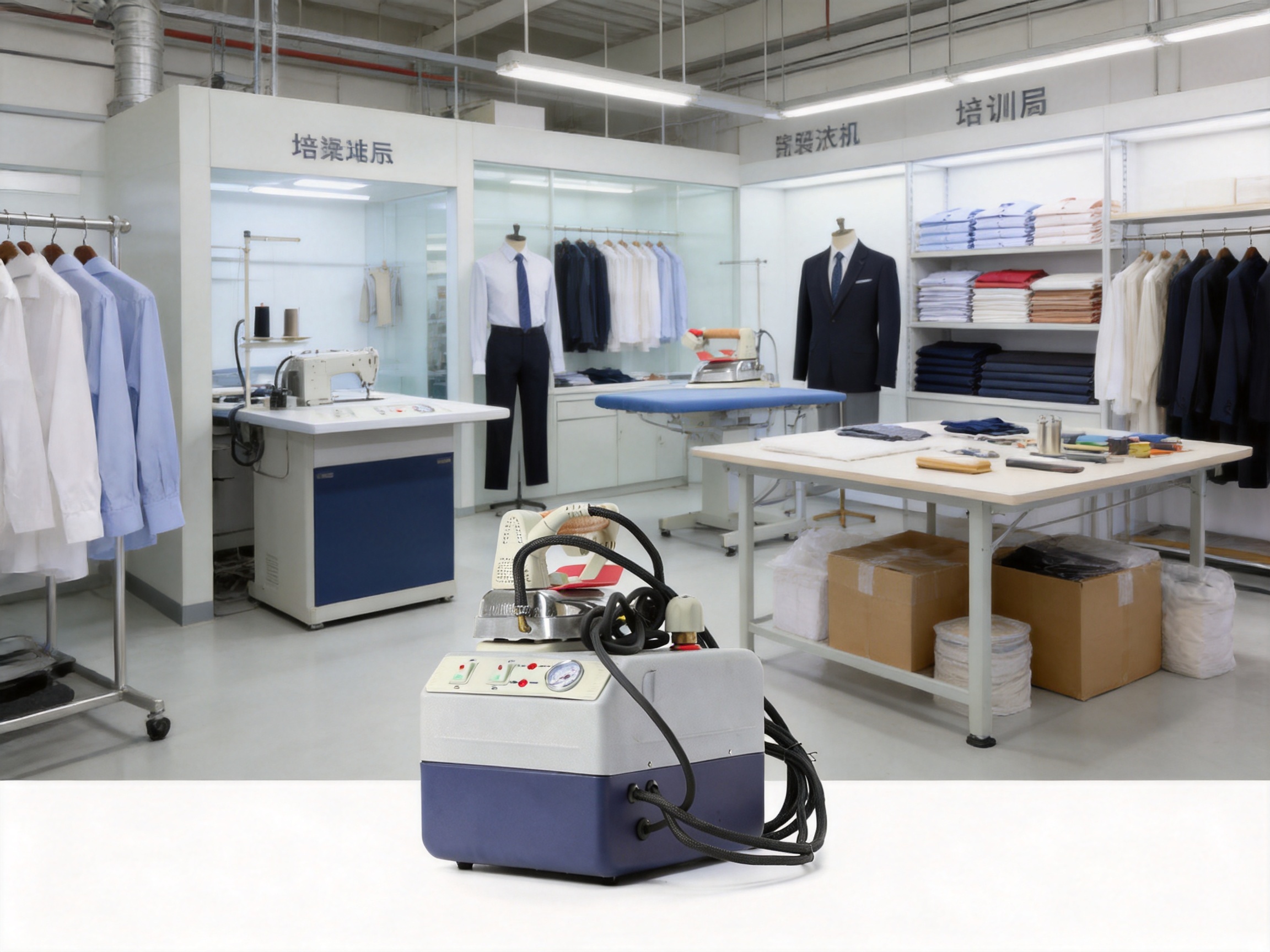
Purchasing steam equipment is an operational decision, not simply a product purchase. Buyers must consider productivity, workspace, staff convenience, safety, maintenance, energy use, transportation, and future service. The SPR-MN2035 offers a combination of features that can support these business priorities.
Its 3.5-liter water capacity can reduce refill interruptions. Its compact format can help businesses make better use of limited floor space. Its pressure gauge and liquid level alarm can improve operating awareness. Its 1600W boiler power and 900W iron power provide a balanced configuration for garment finishing. Its 110V and 220V options support different markets and installation environments.
These characteristics can make the machine attractive to new businesses establishing a pressing station, existing businesses replacing an older boiler, distributors building a product range, and organizations that require portable steam equipment for multiple locations.
The manufacturer’s wider product range is another benefit for buyers who intend to expand. A business may begin with one steam boiler and later add irons, vacuum tables, heat transfer equipment, spray guns, or accessories. Working with a supplier that understands several related product categories can simplify sourcing and technical communication.
Before purchasing the SPR-MN2035, buyers should evaluate their expected workload and operating conditions. The machine is well suited to compact professional and semi-professional applications, but every business should confirm that its steam demand matches the boiler’s capacity.
Estimate how many garments or textile items will be processed per day, how long each operating session will last, and whether the boiler will be used continuously or intermittently. A 3.5-liter capacity can reduce refilling, but very high-volume production may require a larger system or multiple units.
Verify whether the facility uses 110V or 220V power and select the correct product version. Buyers should also confirm available circuit capacity and local electrical requirements before installation.
Use the 355 x 320 x 450mm packing dimensions as a planning reference, while allowing additional space for operation, ventilation, hoses, operator movement, and maintenance access. The machine should not be placed where it can be knocked over or exposed to unnecessary moisture.
Water quality affects boiler maintenance. If the local water supply is hard or contains high levels of minerals, the buyer should discuss suitable water treatment or maintenance practices with the supplier. Preventive care can help preserve heating performance.
Operators should understand filling, startup, pressure monitoring, alarm response, shutdown, and cleaning procedures. Buyers should also confirm the availability of spare parts, technical support, warranty terms, and service documentation before placing a commercial order.
The SPR-MN2035 is designed to generate steam for garment ironing, textile finishing, garment care, light cleaning applications, and related professional or semi-professional tasks. It can support tailoring shops, laundries, garment workshops, hotels, uniform services, training centers, and other environments that need a compact steam source.
The water capacity is 3.5 liters. This capacity helps reduce the frequency of refilling compared with smaller steam devices and supports longer working sessions.
The boiler power is 1600W, and the iron power is 900W. Together, these ratings provide a balanced configuration for steam generation and ironing operations.
Yes. The model is available in 220V and 110V versions. Buyers should select the correct voltage version for the intended installation location and confirm local electrical requirements before use.
The built-in pressure gauge provides a visible indication of internal boiler pressure. It helps the operator monitor the operating condition and identify unusual readings that may require attention.
The liquid level alarm warns the user when the water level falls below a defined threshold. This helps reduce the risk of dry operation and reminds the operator to check and replenish the water according to the correct procedure.
Yes. Its compact dimensions, portable format, and moderate power configuration make it suitable for many small workshops, tailoring businesses, alteration shops, and limited-space production areas. The buyer should still confirm that the expected steam demand matches the machine’s intended capacity.
Its compact and portable design makes it suitable for many mobile or temporary setups, provided that the location offers a stable surface, proper ventilation, safe electrical power, and appropriate water access.
It is not intended to replace every large industrial boiler system. High-volume factories with extensive continuous steam demand may require larger centralized equipment. The SPR-MN2035 is better suited to compact professional, medium-duty, intermittent, or flexible applications.
Maintenance may include regular inspection, cleaning, draining, descaling, checking hoses and electrical connections, and verifying the condition of the pressure gauge and liquid level alarm. Users should follow the supplier’s instructions and have internal repairs performed by qualified personnel.
The operator should stop or pause operation as appropriate, check the water level, and follow the correct refill procedure. The machine should not be allowed to continue heating without adequate water. If the alarm remains active after proper filling, professional inspection may be required.
The manufacturer offers customization and OEM services. Buyers should discuss technical specifications, branding, packaging, documentation, certification, order quantity, and delivery requirements in advance.
Potential users include garment manufacturers, tailoring and alteration shops, laundries, dry-cleaning services, hotels, restaurants, uniform suppliers, textile workshops, educational facilities, cleaning-service providers, and distributors of professional ironing equipment.
The SPR-MN2035 Steam Boiler is a practical solution for users who need dependable steam generation without the size and complexity of a large fixed boiler system. Its 3.5-liter water capacity supports extended operation, while the compact 355 x 320 x 450mm format makes it easier to position, transport, and store.
The combination of a 1600W boiler, 900W iron power, 110V and 220V options, built-in pressure gauge, and liquid level alarm gives the product a balanced configuration for professional and semi-professional garment finishing. These features help distinguish it from basic unmonitored steam devices and oversized systems that may not suit smaller work environments.
The product is also supported by a manufacturer with experience in the research, development, and production of irons, steam equipment, boilers, vacuum tables, heat transfer machines, spray guns, and accessories. This broad manufacturing background supports a more complete understanding of garment-finishing requirements and provides opportunities for coordinated purchasing, customization, OEM cooperation, and long-term equipment development.
For buyers evaluating steam equipment, the most important considerations are not only power and capacity but also safety monitoring, portability, maintenance, manufacturing consistency, service support, and suitability for the intended workload. When these factors are considered together, the SPR-MN2035 presents a useful balance of performance, convenience, and operational control for a wide range of steam-based applications.
1. Product specification sheet for the SPR-MN2035 Steam Boiler, including voltage, power, water capacity, dimensions, and safety features.
2. Manufacturer-provided company information concerning research and development, production capabilities, product categories, customization, OEM services, and export markets.
3. Manufacturer-provided information concerning compliance with GB4706.1-2005 and GB4706.2-2007 and product certification through CCC and CQC.
4. General principles of steam boiler operation, pressure monitoring, water-level control, electrical safety, and preventive maintenance for compact steam equipment.
5. General garment-care and textile-finishing practices involving heat, moisture, steam pressing, wrinkle removal, shaping, and professional ironing workflows.
 +86-578-3158872 / +86-578-3158958
 jyshengda@163.com / caroying@jy-shengda.com
 No. 8 Nanyi Rd, Huzhen Industrial Park, Zhejiang, China
Copyright © Jinyun Shengda Sewing Equipment Co., Ltd. All Rights Reserved.
Ironing Press Machine Equipment Factory
 English
 中文简体
 русский
 عربى