The ST-530 Electric Iron is a practical garment-care appliance designed for users who need dependable heating, comfortable handling, and consistent ironing results. With a rated power of 1200W, dual-voltage operation, a 2.3 kg body, and a 203 x 114 mm base plate, it combines useful working capacity with a manageable form. The design is suitable for everyday household ironing, small tailoring businesses, garment shops, clothing preparation areas, and other applications where fabrics must be presented in a clean and polished condition.
Unlike a basic household iron designed only for occasional use, the ST-530 is positioned as part of a broader professional ironing equipment range. Its construction, temperature adjustment, non-stick soleplate, steam functionality, and flexible cord support a wider range of garment-care tasks. Users can work with everyday clothing, linens, curtains, and many common textile materials while adjusting the operating conditions to match the fabric.
The product is manufactured by Jinyun Shengda Sewing Equipment Co., Ltd., an established Chinese producer specializing in electric irons, steam irons, hanging irons, spray guns, small steam machines, heat transfer machines, steam boilers, vacuum tables, and related accessories. The company’s broad product knowledge allows the ST-530 to be developed within a complete garment-finishing equipment environment rather than as an isolated consumer appliance.
This article examines the ST-530 Electric Iron in detail, including its operating specifications, user benefits, construction characteristics, manufacturing background, quality approach, application range, and advantages compared with ordinary electric irons. It also explains why the product can be a useful choice for distributors, garment professionals, retailers, and end users who require practical performance without unnecessary complexity.

ST-530 Electric Iron
The ST-530 Electric Iron is designed to provide controlled heat for smoothing wrinkles and improving the appearance of garments and textile products. Its 1200W heating capacity supports rapid warm-up and stable operation during routine ironing. This power level gives the iron sufficient energy for daily clothing care while maintaining a compact format that is easier to manage than larger industrial pressing systems.
The iron operates at both 110V and 220V. This dual-voltage design gives the product broader market suitability because electrical standards vary between countries and regions. Distributors can consider the model for several international markets, subject to the appropriate plug, wiring, and local compliance requirements. Travelers, exporters, and users working in different electrical environments may also benefit from this flexibility.
With a weight of approximately 2.3 kg, the ST-530 offers a balance between working stability and maneuverability. A very light iron may require additional downward pressure to achieve satisfactory contact, while an excessively heavy model may cause fatigue during extended use. The ST-530’s weight provides a solid feel over the garment while remaining manageable for repeated movements across shirts, trousers, dresses, linens, and other fabrics.
The 203 x 114 mm base plate provides a useful ironing surface. Its dimensions are large enough to cover a practical area of fabric while remaining narrow enough for work around collars, seams, cuffs, pockets, pleats, and other detailed sections. This balance is important for users who need both productivity and control.
| Specification | ST-530 Electric Iron | Practical Significance |
|---|---|---|
| Product type | Electric iron | Suitable for garment and textile pressing |
| Voltage | 110V/220V | Adaptable to different electrical markets |
| Power | 1200W | Supports rapid heating and consistent operation |
| Weight | 2.3 kg | Balances stability with manageable handling |
| Base plate size | 203 x 114 mm | Provides practical coverage for garments and textiles |
| Temperature control | Adjustable | Allows heat selection for different fabric types |
| Surface design | Non-stick soleplate | Promotes smoother movement over fabrics |
| Steam function | Included | Helps address stubborn wrinkles |
One of the most important advantages of the ST-530 is its 1200W power rating. Heating performance directly affects the efficiency of any electric iron. An iron that takes too long to reach operating temperature can interrupt work, while a model that struggles to maintain heat may produce inconsistent results. The ST-530 is designed to heat efficiently so that users can begin ironing with less waiting time.
Rapid heating is particularly valuable in households with several garments to press before work, school, travel, or special occasions. It is also useful in small garment shops and tailoring rooms where clothing must be prepared continuously throughout the day. Shorter warm-up periods allow operators to spend more time on productive work and less time waiting for the equipment to become ready.
The 1200W output also supports consistent heat during normal operation. When an iron is moved repeatedly across fabric, the soleplate transfers heat into the textile. A suitable power level helps the appliance recover heat as required, supporting a more uniform working experience. This is important when pressing thicker cotton garments, layered sections, seams, or household textiles that require repeated passes.
Heating efficiency should always be considered together with temperature control. High power alone does not guarantee safe results for every fabric. The ST-530 therefore combines its 1200W heating capability with adjustable temperature settings. Users can select a lower setting for more sensitive materials and a higher setting for fabrics that require greater heat, following appropriate garment-care instructions.
For daily users, small time savings can have a meaningful effect. An iron that reaches working temperature promptly is convenient when only one shirt, a uniform, or a small household item needs attention. The product can be stored and used as needed without requiring a lengthy preparation period.
In a commercial setting, warm-up efficiency can improve workflow organization. A tailor may prepare a garment immediately after sewing, while a clothing retailer may press items before placing them on display. The ST-530 can support these tasks without the size, installation requirements, or operating complexity associated with a larger pressing station.
The ST-530 can be used for ordinary garments, linens, curtains, and other common fabrics. Its working surface and adjustable temperature allow the operator to approach each material according to its construction. Thicker fabrics may benefit from a higher setting and controlled steam, while lighter fabrics may require lower heat and gentler movement.
Correct technique remains important. Users should read the garment label, select a suitable temperature, test unfamiliar materials in an inconspicuous area, and avoid leaving the heated soleplate stationary on fabric. These practices help protect textiles and support reliable results regardless of the iron model.
The ST-530 operates at 110V and 220V, making it more adaptable than single-voltage products. Electrical voltage differs among countries, and a model restricted to one voltage may require a transformer or may not be suitable for a particular destination. Dual-voltage capability simplifies product planning for importers and provides greater flexibility for users who operate across different regions.
For distributors, this feature can reduce the need to manage several electrically different product versions. A single model with appropriate configuration can be considered for multiple markets, although importers must still verify plug types, labeling, certification, frequency requirements, and local electrical regulations before sale.
For users who travel or relocate, dual-voltage operation can help maintain access to familiar equipment. The feature is especially relevant to professionals who participate in exhibitions, temporary garment production, training programs, or mobile tailoring activities. The user should always confirm the correct voltage selection and use the proper connection arrangement for the destination.
The dual-voltage specification also reflects the company’s experience with international customers. Shengda products are exported to Southeast Asia, Central Asia, South America, Africa, and other regions. Serving markets with different electrical and commercial conditions requires attention to product configuration, packaging, documentation, and communication with buyers.
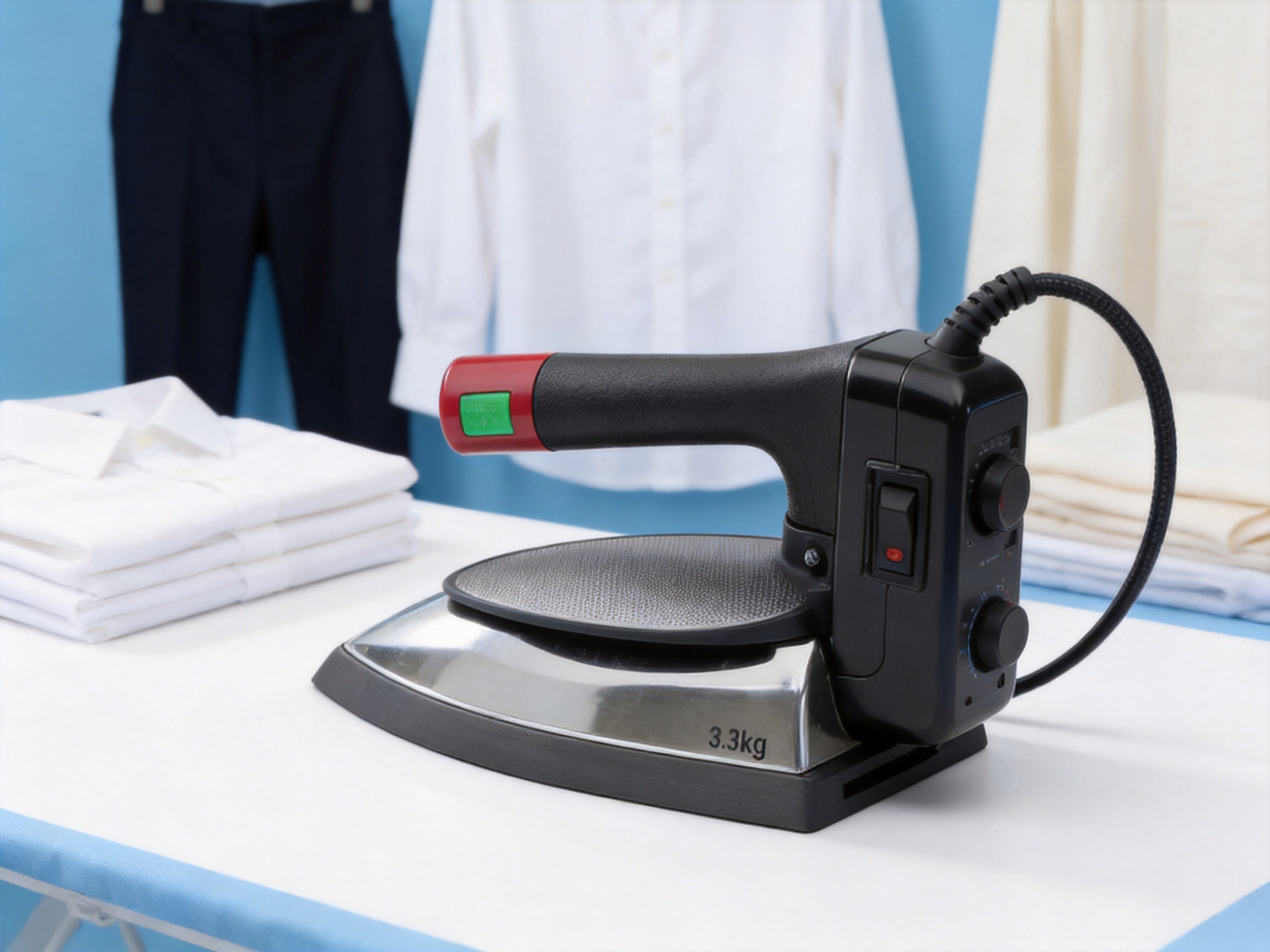
Ironing involves repeated forward, backward, and sideways movements. The weight and shape of the appliance therefore have a direct effect on user comfort. At approximately 2.3 kg, the ST-530 is substantial enough to maintain contact with the fabric but not so heavy that it becomes impractical for routine work.
A balanced iron helps the user guide the soleplate smoothly. This can be especially helpful when working along sleeves, collars, trouser legs, seams, and small garment sections. The operator can position the iron accurately instead of relying on excessive force. Better control may also reduce the likelihood of accidentally dragging the soleplate across an unwanted area.
Lightweight handling is valuable for home users who may iron several garments in one session. It is equally relevant to tailors and garment workers who repeat the same actions throughout the day. Lower physical strain can contribute to a more comfortable work routine, although users should still maintain good posture, use an appropriate work surface, and take regular breaks during extended operation.
The 203 x 114 mm base plate provides an effective compromise between coverage and precision. A broader soleplate can press a larger area in one pass, improving productivity on open sections of fabric. At the same time, the ST-530’s practical dimensions allow access to detailed areas that may be difficult to reach with an oversized pressing surface.
This versatility makes the iron appropriate for clothing with structured details. A user can work around pockets, plackets, collars, cuffs, button areas, and seams while still covering larger sections such as shirt fronts, skirts, trousers, and bed linens. The exact result depends on fabric type, moisture level, temperature, and operator technique, but the format supports a wide variety of routine tasks.
The ST-530 includes a non-stick soleplate intended to glide smoothly across fabrics. Soleplate movement is a central part of ironing performance. If the surface drags, catches, or develops excessive friction, the operator may need to apply more force, and delicate fabrics may be exposed to unnecessary stress.
A non-stick surface helps reduce friction and supports more fluid movement. It can be useful when working across cotton, blended textiles, uniforms, household linens, and other materials suitable for ironing. The smooth contact also supports controlled movement around seams and garment details.
Users should maintain the soleplate according to the operating instructions. Residue from fabric treatments, adhesives, synthetic materials, or excessive heat can affect any iron surface. Allowing the appliance to cool before cleaning, using suitable cleaning methods, and avoiding abrasive materials can help preserve the surface. A clean soleplate is more likely to provide smooth and predictable performance.
The non-stick soleplate works together with adjustable temperature control. The surface helps the iron move smoothly, while the temperature setting allows the user to select a heat level suitable for the textile. This combination is more useful than relying on a fixed heat setting because garments vary significantly in fiber content, construction, thickness, and finish.
Delicate fabrics require careful treatment, low temperature, and appropriate protective methods. Heavier materials may need more heat and steam. Users should never assume that a non-stick surface alone prevents scorching or damage. The safest approach is to follow the garment label and use controlled movement without leaving the iron stationary.
Different fabrics respond differently to heat. The ST-530’s adjustable temperature control allows users to adapt the ironing process to the material being handled. This feature improves versatility and makes the appliance more suitable for mixed garment loads.
Lower settings may be appropriate for sensitive or synthetic fabrics, while medium settings can be used for many blended materials. Higher settings may be suitable for certain cotton or linen items when permitted by the care label. The user should allow the iron to reach the selected temperature before beginning and should change settings carefully when moving from one fabric type to another.
Temperature control is particularly useful in tailoring and garment preparation. A professional may work on different textiles during the same day, including woven fabrics, blends, uniforms, linings, and decorative materials. A fixed-temperature iron would not provide the same degree of flexibility and may increase the risk of unsatisfactory pressing results.
Correct temperature helps flatten wrinkles without creating unnecessary shine, impressions, or heat marks. In garment shops, appearance is directly connected with customer perception. A properly pressed item looks cleaner, more structured, and more ready for presentation. In a home, the same control helps clothing and household textiles maintain a neat appearance.
The ST-530 does not replace good ironing practice. The operator should sort items by temperature, avoid excessive pressure, use a pressing cloth when appropriate, and pay attention to printed, coated, or decorated surfaces. Nevertheless, adjustable heat gives the user a practical tool for applying these techniques.
The ST-530 includes a steam function designed to assist with stubborn wrinkles. Steam can soften textile fibers and make it easier for the soleplate to smooth creases. This is useful for garments that have been folded, stored, packed for shipment, or handled during production.
Steam can also help improve the appearance of thicker fabrics and layered areas. When used correctly, it reduces the amount of force required from the operator and can make the ironing process more efficient. The user should apply steam according to the material and the equipment instructions, especially when working with fabrics that may react to moisture.
Steam functionality gives the ST-530 an advantage over basic dry irons that rely only on direct heat and pressure. A dry iron may be adequate for light touch-ups, but steam provides an additional method for loosening wrinkles. The combination of heat, moisture, and controlled movement supports more professional-looking results in a wider range of situations.
Users should use clean water and follow the recommended maintenance procedure for the steam system. Mineral deposits may accumulate in appliances over time, especially where water contains a high level of dissolved minerals. Regular care helps maintain steam performance and reduces the possibility of residue affecting the soleplate or garment.
The ST-530 is equipped with a long, flexible cord intended to support easier movement during ironing. Cord flexibility matters because ironing requires the appliance to move across a working area. A stiff or short cord can limit reach, create tension, or require the user to reposition the ironing board repeatedly.
A flexible cord allows the user to reach different parts of a garment while maintaining a natural hand position. It is useful when turning sleeves, moving around large linens, or pressing curtains and other extended textiles. The design also helps reduce tangling during normal use, contributing to a smoother workflow.
Good cord management remains important. The cord should be kept away from the hot soleplate, sharp edges, water, and areas where it may be pulled or crushed. Before storage, the user should allow the iron to cool completely and avoid wrapping the cord too tightly around the appliance. These habits can help extend the service life of the electrical connection.
The ST-530 is described as having a durable construction intended for reliable use over time. Durability is especially important for ironing equipment because the appliance is exposed to repeated heating and cooling cycles, handling, movement, and contact with different textile materials.
A durable design can reduce the likelihood that normal daily use will quickly affect the appliance’s performance. It also provides greater confidence to commercial users who need equipment that can be used repeatedly in a tailoring room, garment store, or small production area. Durability does not eliminate the need for care, but it supports a longer and more dependable working life when the iron is operated correctly.
For buyers, durability should be evaluated as part of the complete product value. The initial purchase price is only one consideration. Reliability, ease of operation, maintenance requirements, service support, and suitability for the intended workload all influence the total cost of ownership. The ST-530’s combination of power, adjustability, steam, and practical construction can make it a valuable option for users seeking more than a basic occasional-use appliance.
The ST-530 offers several advantages when compared with simpler electric irons. Its 1200W output supports faster heating, while dual-voltage operation gives it wider electrical adaptability. The 2.3 kg weight provides a stable working feel without making the appliance excessively difficult to maneuver.
The non-stick soleplate is another important distinction. Basic irons may have simpler surfaces that do not provide the same smooth movement over fabrics. The ST-530 is designed to reduce friction and support controlled pressing, which is useful for both everyday garments and professional preparation work.
Adjustable temperature control improves fabric compatibility. Instead of treating every textile in the same way, the user can select a more suitable heat level. The steam function further increases capability by assisting with stubborn wrinkles and thicker materials.
The product also benefits from being manufactured by a company with a broader garment-equipment portfolio. A specialist manufacturer understands the relationship between ironing, steaming, pressing, vacuum tables, boilers, spray equipment, heat transfer, and garment finishing. This background supports a more focused approach to product design than may be available from a general appliance producer with no specific garment-equipment specialization.
For households, the ST-530 provides a practical combination of performance and convenience. It can be used for daily clothing, school uniforms, work shirts, dresses, trousers, linens, curtains, and other household textiles. Quick heating reduces preparation time, while adjustable heat helps users care for different fabrics.
The manageable weight is suitable for repeated domestic use, and the steam feature helps with wrinkles that are difficult to remove using dry heat alone. The non-stick soleplate supports smoother movement, while the flexible cord makes it easier to work across a standard ironing board.
Small garment shops and tailoring businesses often require equipment that occupies less space than a full industrial pressing line but provides more capability than a basic household model. The ST-530 fits this intermediate requirement. It can be used for final pressing before delivery, preparation before display, touch-ups after alteration, and general presentation work.
Its temperature adjustment is useful when handling garments made from different materials. Steam can help shape and smooth clothing after sewing, while the practical soleplate size supports both broad panels and detailed sections. The dual-voltage design may also benefit businesses serving export markets or operating in regions with different electrical standards.
Jinyun Shengda Sewing Equipment Co., Ltd. was established in 2003 and is located in Huzhen Town, Lishui City, Zhejiang Province, China. The company operates near the junction of Lishui, Jinhua, and Taizhou, an area with convenient transportation and developed information channels. This location supports communication with suppliers, customers, logistics partners, and international markets.
The company specializes in the independent research, development, and production of garment-care and garment-finishing equipment. Its product scope includes electric irons, steam irons, hanging irons, spray guns, small steam machines, heat transfer machines, steam boilers, vacuum tables, and accessories. This range demonstrates a focused understanding of the equipment used throughout clothing preparation and finishing processes.
Independent research and development allows the company to improve products according to market feedback and application requirements. For an electric iron, development considerations may include heating efficiency, soleplate performance, temperature adjustment, steam behavior, body balance, cord flexibility, electrical safety, and ease of maintenance. These elements must work together; improving one component without considering the others may not produce a better user experience.
The company’s research and development, management, and sales teams work together to support product improvement and customer service. This cooperation is important because manufacturing quality depends not only on production machinery but also on accurate communication between technical personnel, factory management, sales staff, distributors, and end users.
A broad portfolio gives Shengda experience across several stages of garment care. Electric irons address direct contact pressing. Steam irons and small steam machines support moisture-based wrinkle removal. Steam boilers provide steam sources for suitable professional applications. Vacuum tables assist with garment positioning and moisture removal. Spray guns and heat transfer machines address additional finishing or production needs.
This product knowledge can help the company understand how an electric iron fits into different working environments. The ST-530 can function as a standalone tool for homes and small shops, or as a complementary appliance alongside other garment equipment. Buyers can also communicate with a supplier that understands related equipment when planning a broader garment-finishing setup.
The company states that it has improved products and upgraded quality through continuous development. In practical terms, quality improvement for electric irons should address reliable heating, stable electrical performance, secure assembly, durable external materials, effective temperature adjustment, smooth soleplate operation, and safe everyday handling.
Consistent product quality is particularly important for export customers. International buyers expect stable specifications from one production batch to another, clear communication, suitable packaging, and responsive support. A manufacturer serving multiple regions must pay attention to product documentation, voltage requirements, shipping conditions, and market-specific expectations.
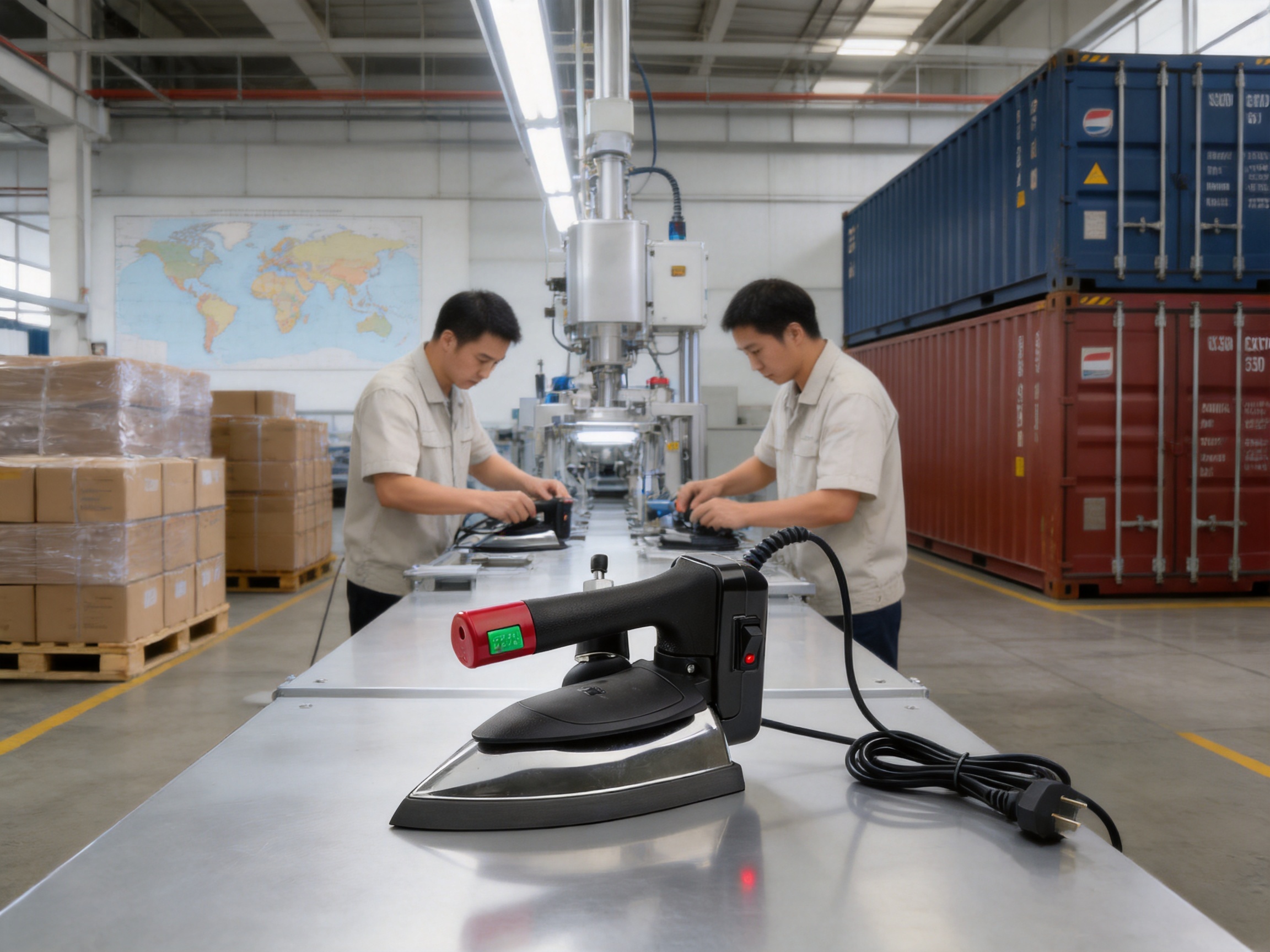
Shengda states that it follows national and industry standards, including GB4706.1-2005 and GB4706.2-2007. The company also reports that its products have passed CCC and CQC certifications. These references indicate an emphasis on electrical appliance safety, product conformity, and quality management within the applicable certification framework.
Buyers should request current certification documents and confirm that the specific ST-530 configuration supplied to their market matches the relevant requirements. Certification status, voltage configuration, plug type, labeling, and import rules can vary by destination. Importers are responsible for checking local regulations before placing products on the market.
Compliance is an important part of product value because an electric iron combines heating elements, electrical wiring, insulation, controls, and a steam or water-related function. A responsible manufacturing process must consider these components as a complete system. Correct assembly, inspection, testing, labeling, and packaging all contribute to safer and more reliable distribution.
The company identifies customization and OEM services among its business advantages. This capability can be useful for distributors, wholesalers, retailers, and established garment-equipment brands that require specific packaging, labeling, product configurations, or commercial arrangements.
OEM cooperation generally requires clear technical communication. Buyers should define voltage, frequency, plug style, branding requirements, packaging artwork, instruction manuals, minimum order quantities, inspection procedures, spare parts, and shipment terms. A manufacturer with experience in international sales can help coordinate these details, although every project should be confirmed through formal technical and commercial documentation.
Customization can also support market positioning. Some distributors may need a product designed for a specific retail segment, while others may require a professional appearance for tailoring and garment-care customers. The ST-530 platform offers a combination of specifications that can be presented to different markets while maintaining a clear core product identity.
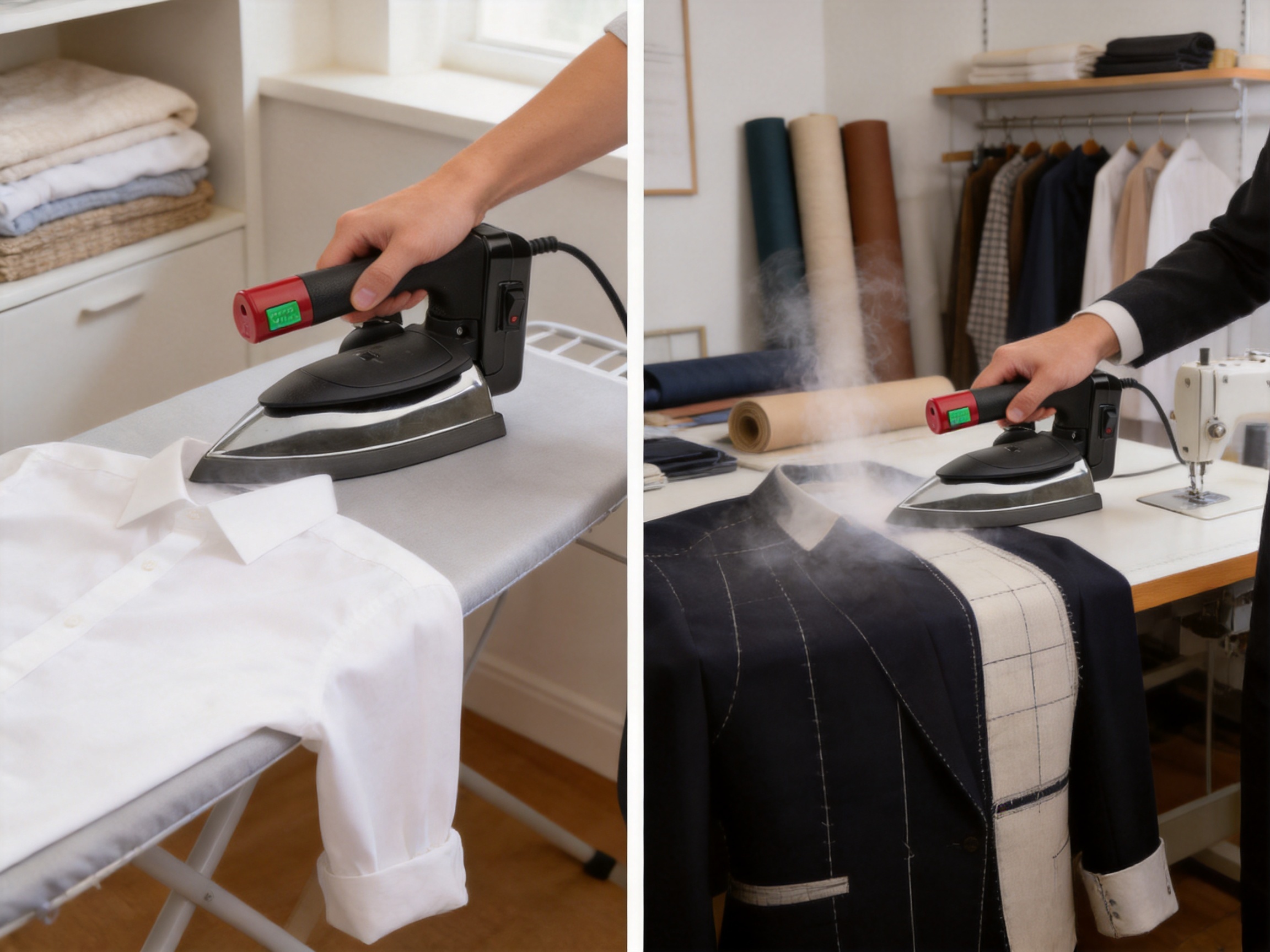
The ST-530 is suitable for pressing shirts, blouses, trousers, skirts, dresses, uniforms, jackets, and other everyday clothing. Its adjustable temperature allows the operator to respond to different fabric requirements, while the non-stick soleplate supports smooth movement over broad and detailed sections.
It can also be used for bed linens, table textiles, pillow covers, curtains, and similar household items. The 203 x 114 mm working surface provides useful coverage without becoming too cumbersome for smaller boards or detailed textile work. Steam may assist with creases created during storage or folding.
The iron is also useful before travel, events, interviews, ceremonies, and customer appointments. A promptly heating appliance can handle last-minute garment touch-ups, while the manageable weight makes it easier to use for short or extended sessions.
Tailors can use the ST-530 during garment construction and after alterations. Pressing seams, shaping sections, preparing collars, flattening hems, and improving the final presentation are all important steps in professional clothing work. An iron with adjustable heat and steam provides more options than a simple fixed-temperature model.
Small clothing shops can use the appliance before garments are placed on display or handed to customers. Clothing that has been transported or stored may develop wrinkles, and final pressing can improve its presentation. The ST-530 can serve as a convenient tool for daily finishing without requiring the installation of a complete industrial pressing line.
Alteration services can also benefit from a flexible electric iron. After shortening trousers, adjusting sleeves, replacing zippers, or modifying seams, the garment may need pressing to restore its shape and appearance. The product’s combination of precision and broad coverage supports these finishing tasks.
Before using the ST-530, inspect the power cord, plug, soleplate, controls, and water-related components if steam is required. Select the correct voltage configuration and connect the iron to a suitable electrical outlet. Place the appliance on a stable ironing surface and keep children away from the heated equipment.
Sort garments according to fabric type and temperature requirement. Begin with items that require lower heat and gradually move to materials that can tolerate higher temperatures. Follow the care label, avoid direct contact between the hot soleplate and unsuitable decorations, and use a pressing cloth when appropriate.
When using steam, fill the water reservoir according to the manufacturer’s instructions and avoid overfilling. Use suitable water and maintain the system as recommended. If the iron will not be used for an extended period, empty remaining water where appropriate and store the appliance in a dry location.
After operation, switch off and unplug the iron. Allow it to cool completely before cleaning or storing. Keep the soleplate free from residue, store the cord without sharp bends, and avoid placing heavy items on the appliance. Regular care helps protect performance and extends service life.
Buyers should evaluate the ST-530 according to their intended workload. Home users may focus on heating speed, comfort, steam performance, soleplate movement, and ease of storage. Tailors and garment shops may place greater emphasis on repeated operation, temperature flexibility, durability, cord reach, and service support.
Importers should confirm the exact voltage version, frequency compatibility, plug configuration, packaging dimensions, shipping weight, spare-part availability, warranty terms, and certification documents. These details are important when planning international distribution. The dual-voltage specification broadens market potential, but local compliance verification remains necessary.
Commercial buyers should also consider whether the ST-530 will be used alone or together with vacuum tables, steam boilers, spray guns, or other equipment. For light and medium garment-finishing work, a standalone electric iron may be sufficient. For higher-volume operations, it may serve as a supplementary tool alongside larger systems.
Product quality is important, but supplier support can significantly affect the buyer’s experience. Shengda provides a broad product range, professional service, customization, OEM cooperation, and international shipment support according to the supplied company information. These capabilities can be valuable when customers need product selection advice, technical clarification, replacement parts, or repeat purchasing.
A manufacturer that understands garment equipment can help buyers select complementary products. For example, a clothing workshop may need an electric iron for detailed pressing, a vacuum table for professional finishing, a steam boiler for centralized steam supply, or a spray gun for specialized treatment. A supplier with knowledge across these categories can support a more coordinated purchasing process.
Stable communication is also important for long-term distribution. Buyers benefit from clear specifications, consistent production, accurate documents, and prompt responses to questions. Shengda’s experience with customers in Southeast Asia, Central Asia, South America, Africa, and other regions reflects an international orientation that can support overseas cooperation.
The ST-530 has a rated power of 1200W. This output supports rapid heating and consistent performance during normal garment-care tasks.
Yes. The product information specifies dual-voltage operation at 110V and 220V. Users and importers should confirm the correct configuration, plug arrangement, frequency, and local electrical requirements before use.
The ST-530 weighs approximately 2.3 kg. This provides a practical balance between pressing stability and comfortable maneuverability.
The base plate measures approximately 203 x 114 mm. Its size provides useful coverage while allowing access to collars, cuffs, seams, pockets, and other detailed garment areas.
Yes. The ST-530 includes steam functionality to help loosen and remove stubborn wrinkles. Users should operate the steam system according to the instructions and maintain it properly.
Yes. Adjustable temperature settings allow users to select a more suitable heat level for different fabrics. Garment-care labels should always be followed.
The ST-530 uses a non-stick soleplate designed to glide smoothly across fabrics and reduce friction during ironing.
The iron is suitable for households, tailors, small garment shops, clothing retailers, alteration services, and other users who need practical garment-finishing equipment.
Its main advantages include 1200W heating, dual-voltage adaptability, a manageable 2.3 kg weight, a practical non-stick soleplate, adjustable temperature control, steam functionality, and a flexible cord. These features provide broader usefulness than a simple fixed-temperature dry iron.
The manufacturer identifies OEM and customization services among its strengths. Buyers should discuss branding, packaging, electrical configuration, documentation, order quantity, inspection, and other requirements directly with the manufacturer.
Importers should confirm voltage, frequency, plug type, certification, labeling, packaging, warranty, spare parts, shipping terms, and compliance with destination-market regulations. Current documents should be requested for the exact product configuration.
The ST-530 Electric Iron combines practical power, flexible electrical compatibility, manageable weight, useful soleplate dimensions, smooth non-stick contact, adjustable temperature, steam functionality, and convenient cord movement. These features make it suitable for everyday garment care as well as the more demanding finishing needs of tailors, garment shops, and small clothing businesses.
Its 1200W heating system helps reduce waiting time and supports consistent operation. The 110V/220V design expands its potential for international use, while the 2.3 kg body offers a useful balance between control and pressing stability. The adjustable temperature and steam functions make the product more versatile than a basic dry iron, and the non-stick soleplate supports smoother work across many common textiles.
The product is further supported by a manufacturer with focused experience in garment-ironing and sewing equipment. Since 2003, Jinyun Shengda Sewing Equipment Co., Ltd. has developed products covering electric irons, steam systems, vacuum tables, spray equipment, heat transfer machines, boilers, and accessories. Its stated strengths in research and development, quality improvement, OEM cooperation, international service, and product diversity provide a solid foundation for commercial buyers.
For households, the ST-530 offers efficient and convenient clothing care. For tailors and small garment businesses, it provides a practical tool for pressing, shaping, touch-ups, and final presentation. For distributors and importers, its dual-voltage design and connection to a wider garment-equipment portfolio create useful market possibilities. When operated according to safety instructions and maintained correctly, the ST-530 is a versatile solution for producing neat, polished textile results.
1. Product specification sheet for the ST-530 Electric Iron, including voltage, power, weight, base plate dimensions, temperature control, soleplate, steam function, and cord information.
2. Company profile of Jinyun Shengda Sewing Equipment Co., Ltd., including company history, product categories, manufacturing scope, export markets, OEM services, and quality commitments.
3. General garment-care and textile-ironing practices concerning temperature selection, steam use, pressing technique, soleplate maintenance, and electrical safety.
4. GB4706.1-2005, General Requirements for Household and Similar Electrical Appliances.
5. GB4706.2-2007, Particular Requirements Related to Electric Irons.
6. Manufacturer-provided information regarding CCC and CQC certification and applicable product-quality procedures.
 +86-578-3158872 / +86-578-3158958
 jyshengda@163.com / caroying@jy-shengda.com
 No. 8 Nanyi Rd, Huzhen Industrial Park, Zhejiang, China
Copyright © Jinyun Shengda Sewing Equipment Co., Ltd. All Rights Reserved.
Ironing Press Machine Equipment Factory
 English
 中文简体
 русский
 عربى