Professional garment care depends on more than heat alone. A reliable electric iron must combine fast heating, stable temperature performance, smooth fabric movement, comfortable handling, durable construction, and dependable manufacturing quality. When these characteristics work together, an iron can help operators complete more garments in less time while maintaining a consistent standard of finish.
The ST-300L, also identified as the ES-300L, is designed around these practical requirements. It is a 1600W electric iron with a large 224 x 138 mm soleplate and a working weight of approximately 2.4 kg. These specifications position it between a lightweight household iron and a heavier industrial pressing device. The result is a tool that can provide meaningful pressing force without becoming unnecessarily difficult to control during extended use.
This article examines the product’s structure, performance, manufacturing value, application advantages, and suitability for different users. It also explains why soleplate design, power selection, ergonomics, quality control, and supplier capability are important when comparing professional electric irons.

ST-300L(ES-300L) Electric Iron
An electric iron remains one of the most flexible tools in clothing production, tailoring, laundry service, hospitality, uniform maintenance, and household garment care. Unlike a large press machine, an electric iron can be moved directly to the garment area that needs attention. It can work around collars, cuffs, seams, pockets, pleats, hems, and shaped sections that may be difficult to process with a flat pressing system.
In commercial environments, the iron may be used for final finishing after washing, sewing, steaming, or pressing. It can remove small wrinkles, sharpen edges, flatten seam allowances, and improve the presentation of finished clothing. In a tailoring workshop, the same equipment may be used during construction to shape fabric before stitching or to prepare garments for customer fitting.
The ideal iron therefore needs to provide both broad coverage and detailed control. A small soleplate may offer precision but require too many passes across large panels. A very heavy industrial iron may deliver strong pressing force but create fatigue during repetitive work. The ST-300L addresses this balance through its relatively large soleplate and moderate 2.4 kg weight.
Its 1600W power rating also reflects the needs of users who want a relatively quick warm-up and stable working performance. The power level is sufficient for many common fabrics, including cotton, linen, denim, blended materials, uniforms, bedding, and other textiles that require more than light surface warming.
The ST-300L (ES-300L) is a high-power electric iron developed for effective garment pressing. Its principal design features include a 224 x 138 mm soleplate, a 1600W heating system, a 2.4 kg body weight, and compatibility with 110V or 220V electrical systems. Depending on the configuration, the soleplate can use hard anodized aluminum or a high-quality non-stick coating.
| Product Attribute | Specification or Description |
| Product Type | Electric garment iron |
| Model | ST-300L / ES-300L |
| Rated Voltage | 110V / 220V |
| Power | 1600W |
| Weight | Approximately 2.4 kg |
| Soleplate Size | 224 x 138 mm |
| Soleplate Options | Hard anodized aluminum or non-stick coating |
| Typical Applications | Home use, tailoring, laundry, uniforms, hospitality, garment production, and professional finishing |
These specifications support a broad range of applications. The iron is large enough to cover significant fabric areas while remaining manageable for detailed operations. It can be used independently or as part of a wider garment-care workstation that includes a steam boiler, vacuum table, pressing table, spray gun, or related accessories.
Another important value is configuration flexibility. Electrical requirements vary between markets, and the availability of 110V and 220V versions helps distributors and equipment buyers select a model suitable for their local power infrastructure. For commercial users, confirming the correct voltage before purchase and installation remains essential.
The soleplate is the part of an iron that directly transfers heat and pressure to the fabric. Its size, material, surface finish, flatness, and edge profile all influence the final working experience. The 224 x 138 mm soleplate of the ST-300L is larger than that of many ordinary household irons, giving the operator greater coverage in each movement.
A larger soleplate can reduce the number of strokes needed to process shirts, trousers, sheets, curtains, table linens, uniforms, and other relatively broad items. Fewer passes may translate into shorter operating time, lower physical repetition, and improved output when multiple garments must be completed in sequence.
Large coverage is particularly valuable in commercial operations. A laundry worker may need to finish a high volume of uniforms or hospitality textiles. A tailor may need to prepare long seams and wide panels. A household user may want to press bedding or larger garments without spending excessive time moving the iron back and forth. In all of these cases, soleplate area contributes directly to productivity.
However, size alone does not determine performance. A large soleplate must also be shaped so that the operator can reach narrow areas. The front section should allow access around collars and button lines, while the sides should be practical for seams and edges. A balanced design helps the iron move across both open fabric surfaces and detailed garment sections.
The ST-300L combines a broad working area with a form intended for controlled movement. This gives it an advantage over very small irons that require repeated passes and over extremely large pressing heads that may be difficult to position accurately.
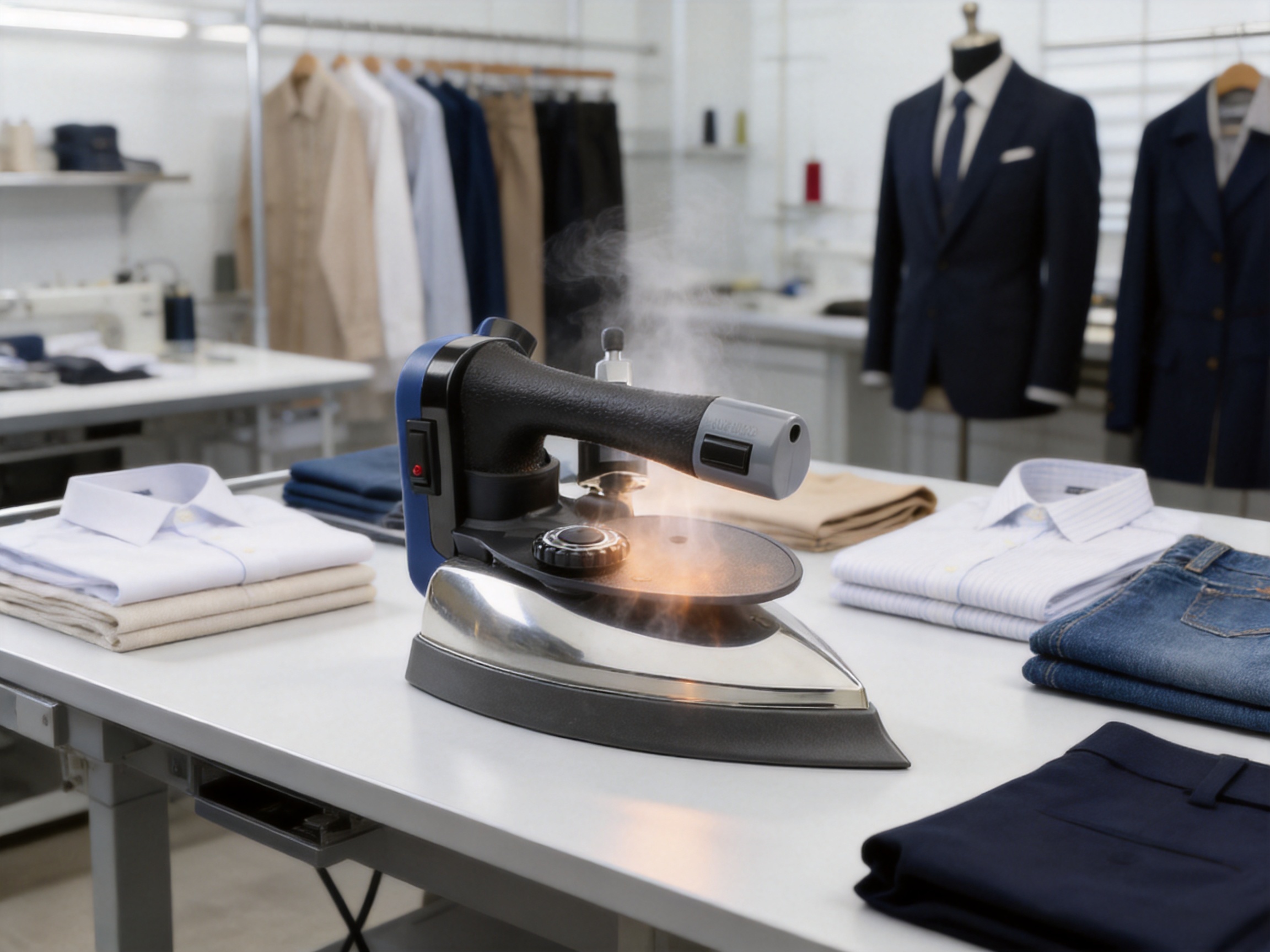
At 1600W, the ST-300L is designed to generate useful heat efficiently for general and professional pressing tasks. A higher power rating can support faster heating, allowing the operator to begin work sooner after switching on the iron. It can also help the soleplate recover heat more effectively when it is repeatedly placed on cooler fabric.
Heat readiness is important in a production setting because waiting time can interrupt workflow. If an iron takes too long to become ready, employees may lose productive minutes between batches. A responsive heating system helps the operator maintain a continuous work rhythm.
Power also matters when working with heavier or more resistant fabrics. Denim, linen, thick cotton, canvas-like textiles, and layered seams may require more heat and pressure than thin synthetic fabrics. A 1600W rating provides a useful performance reserve for these applications, although the correct temperature setting and pressing method must still be selected according to the fabric manufacturer’s guidance.
Uniform heating is as important as high power. An iron that becomes hot quickly but distributes heat unevenly may create inconsistent results, with some areas remaining wrinkled while others risk excessive heat exposure. The ST-300L is intended to provide consistent heat across the working surface so that the operator can produce a more even finish.
Users should understand that electrical power is not the same as guaranteed temperature for every textile. Fabric composition, thickness, moisture content, pressure, and movement speed all influence results. The best performance comes from combining suitable temperature control with the iron’s power and soleplate characteristics.
A 1600W heating system offers several practical benefits. It can shorten initial warm-up time compared with lower-powered irons, support faster recovery during repeated strokes, and provide the heat capacity needed for a wider range of fabrics. It is also suitable for users who require more than occasional light pressing.
For a professional operator, the combination of high power and a larger soleplate can improve productivity in two ways. First, the iron becomes ready for use quickly. Second, each pass covers a larger fabric section. These advantages can be particularly meaningful when processing dozens or hundreds of garments in a working day.
The ST-300L can be configured with a hard anodized aluminum soleplate or a high-quality non-stick coating. Both options are intended to support smooth movement, durability, and reliable heat transfer, but each has different characteristics that may suit different operating preferences.
Hard anodized aluminum is valued for its strength, relatively low weight, and resistance to surface wear. The anodizing process modifies the aluminum surface to create a harder protective layer than untreated aluminum. This can improve resistance to scratches and support long-term use when the soleplate is correctly maintained.
Aluminum is also a useful material for heat transfer. Its thermal characteristics can help distribute heat across the soleplate, supporting more consistent contact with the fabric. In a professional setting, this can be important because operators often move rapidly from one garment section to another.
A hard anodized surface may be appropriate for users who prioritize durability and frequent operation. Tailoring shops, laundries, uniform services, and garment factories may value a soleplate that can tolerate regular use while maintaining smooth movement.
A non-stick coating is designed to reduce friction between the soleplate and the textile. This can be especially useful when working with delicate, coated, blended, or heat-sensitive materials that may be more likely to drag or adhere to a rough surface.
Reduced sticking can help protect fabrics from pulling, glazing, or surface marking. It can also make the iron easier to guide, reducing the force required from the operator. This is beneficial during long ironing sessions, where even small improvements in movement can reduce hand and wrist fatigue.
Although a non-stick surface can offer smooth performance, it should be treated carefully. Users should avoid contact with rough metal objects, adhesive residues, pins, zippers, and other abrasive materials. Proper cleaning and storage help preserve the coating and extend service life.
| Feature | Hard Anodized Aluminum | Non-Stick Coating |
| Primary Strength | Durability and surface hardness | Smooth fabric movement |
| Heat Transfer | Strong and consistent when properly manufactured | Depends on the underlying soleplate and coating system |
| Fabric Protection | Good when the surface is clean and undamaged | Useful for reducing sticking and dragging |
| Recommended Care | Keep free from scratches and residue | Avoid abrasives and sharp contact |
| Suitable Users | High-frequency and demanding operations | Users prioritizing smooth gliding and delicate-fabric handling |
The best choice depends on the intended workload, textile types, operator preferences, and maintenance practices. Offering both options gives buyers greater flexibility than a single fixed soleplate design.
The approximately 2.4 kg weight of the ST-300L is an important part of its performance. Weight supplies pressing force, helping flatten wrinkles and shape seams without requiring the operator to press down aggressively. This can be particularly useful for thick garments, layered materials, and fabrics with deep creases.
An iron that is too light may require additional downward pressure, increasing fatigue and reducing efficiency. An iron that is excessively heavy may be difficult to control, especially when working around small garment areas or during extended shifts. The ST-300L aims to provide a practical middle ground.
Weight distribution also matters. The body should feel stable in the hand, and the soleplate should remain properly aligned with the direction of movement. Balanced construction can make it easier to maintain consistent contact with the fabric and reduce unnecessary wrist movement.
Ergonomic handling is valuable in both professional and domestic environments. Operators may use an iron repeatedly for several hours, and small design advantages can accumulate into meaningful improvements in comfort. A suitable handle shape, clear control placement, balanced body, and smooth soleplate can help reduce strain.
Good technique remains essential. The operator should use controlled movements, avoid excessive force, and allow the iron’s weight to contribute to the pressing action. Work surfaces should also be positioned at a comfortable height to reduce bending and shoulder tension.
The ST-300L offers several advantages over basic household irons that are designed primarily for occasional use. Its larger soleplate increases fabric coverage, while the 1600W power rating supports faster heat readiness and stronger performance on heavier fabrics.
Ordinary irons may have smaller bodies and lighter weights, which can be convenient for storage but less efficient for bulk work. When a user must process a large number of garments, the smaller soleplate may require many more passes. The additional movement can increase operating time and physical fatigue.
The ST-300L’s approximately 2.4 kg weight also gives it more natural pressing force than many lightweight domestic models. This can help the operator remove wrinkles without leaning heavily on the handle. At the same time, it remains more maneuverable than large industrial pressing equipment.
The availability of different soleplate materials is another advantage. Buyers can select a hard anodized aluminum surface for durable daily use or a non-stick version for smooth movement across fabrics that require extra care.
Compared with some highly specialized industrial pressing machines, the ST-300L offers greater flexibility and lower equipment complexity. It does not require the same amount of floor space as a large press, and it can be moved directly to the garment. This makes it suitable for smaller workshops, service counters, mobile operations, and multi-purpose workrooms.
Productivity is determined by more than raw heating power. It also depends on how quickly the operator can move across fabric, reposition the garment, and complete each task with minimal repetition. The large soleplate, smooth surface, stable weight, and responsive heating system work together to improve this process.
In high-volume operations, a small time saving per garment can produce a meaningful increase in daily output. When an iron covers more surface area and requires fewer strokes, workers can devote more time to quality inspection, folding, packaging, or other production tasks.
The iron can be used for a wide range of garments and textiles. It is appropriate for shirts, trousers, skirts, jackets, uniforms, dresses, bedding, curtains, tablecloths, and tailoring components. Its combination of coverage and control allows it to handle both broad panels and detailed areas.
This versatility can reduce the need to purchase multiple irons for different tasks. A workshop may use one product for general pressing, finishing, and seam preparation, while selecting additional specialized equipment only when a particular application requires it.
Tailors and garment manufacturers use irons throughout the production process. Fabric may need to be pressed before cutting, seams may need to be opened or flattened, and finished garments may require final presentation before inspection. The ST-300L can support these tasks with its broad soleplate and controlled handling.
For seam work, the operator can use the front and edges of the soleplate to reach narrow sections. For larger panels, the wide surface helps cover the fabric efficiently. This combination is useful when a single workshop handles different garment styles and materials.
Laundry businesses often process large volumes of shirts, trousers, uniforms, hospitality clothing, and household textiles. A reliable high-power iron can help remove residual wrinkles after washing or drying and improve the appearance of garments before delivery.
The 1600W rating supports repeated operation, while the larger soleplate helps shorten the time required for broad textile sections. When combined with a suitable pressing table or vacuum table, the iron can become part of a productive finishing station.
Hotels, restaurants, and event venues may need to maintain a professional appearance across uniforms, linens, tablecloths, and decorative fabrics. Equipment used in these environments must be efficient, durable, and easy for staff to operate.
The ST-300L can serve as a flexible tool for daily textile maintenance. It can handle small corrections on uniforms as well as larger finishing tasks for fabric items used in guest rooms, dining areas, and meeting spaces.
Although designed with professional performance in mind, the iron can also benefit households that regularly press large quantities of clothing or larger textile items. Users who iron workwear, school uniforms, bedding, curtains, or heavy fabrics may appreciate its combination of power and coverage.
Because the product is heavier than a basic household iron, users should ensure that the ironing board or work surface is stable and suitable for the load. The iron should also be placed securely on its rest when not in use.
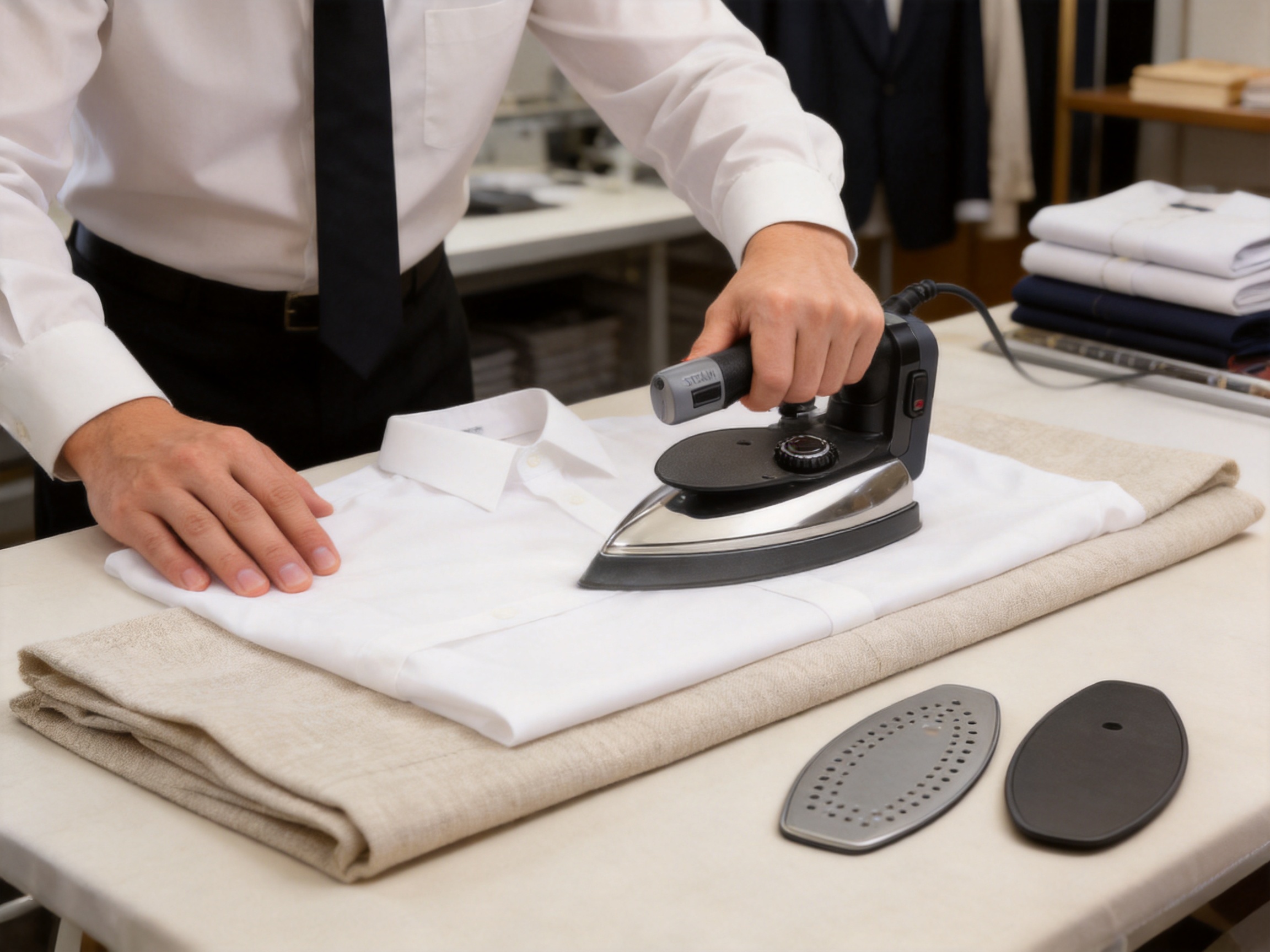
The performance of a professional electric iron depends heavily on the quality of its manufacturing process. A well-designed specification is valuable only when the heating system, soleplate, handle, electrical components, insulation, and assembly are produced with consistency.
Jinyun Shengda Sewing Equipment Co., Ltd. has operated in the garment equipment field since 2003. Its product range includes electric irons, steam irons, hanging irons, spray guns, small steam machines, heat transfer machines, steam boilers, vacuum tables, and related accessories. This broader product experience provides an important foundation for developing equipment that works within complete garment-care systems.
The company emphasizes independent research, development, and production. This approach can give a manufacturer more control over product improvement, component coordination, and response to customer requirements. Instead of relying solely on standardized external products, an experienced manufacturer can adjust designs according to market feedback, application needs, and regional preferences.
Product development in this category requires cooperation between mechanical design, electrical engineering, materials selection, production management, and quality inspection. The soleplate must match the heating system. The electrical structure must be compatible with the selected voltage. The handle and body must support safe operation. Assembly tolerances must be controlled so that the final product performs consistently.
Independent research and development allows a manufacturer to refine existing products and create new versions for different markets. For an electric iron, development may include improvements to heating response, soleplate materials, insulation, handle ergonomics, switch placement, cord arrangement, and serviceability.
Continuous product improvement is especially important because garment materials continue to change. Modern textiles may include synthetic fibers, coatings, blends, stretch materials, and finishes that require careful temperature and surface control. Manufacturers must therefore consider both traditional fabrics and evolving textile applications.
A company with experience across steam equipment, ironing equipment, pressing systems, and heat transfer machines can also understand how individual products interact in a production environment. This broader knowledge is useful when advising distributors or buyers who need a complete equipment solution rather than a single item.
Consistent assembly is necessary for stable product performance. Important production steps may include preparing the soleplate, installing the heating components, fitting the handle and body, connecting electrical parts, securing insulation, checking fasteners, and inspecting the finished unit.
Quality control should not be limited to visual appearance. A professional manufacturer should also evaluate electrical safety, heating behavior, surface condition, mechanical stability, temperature response, and general operation. Appropriate testing helps identify defects before products are packed and shipped.
For export products, manufacturing control is especially important because equipment may travel long distances and operate under different environmental and electrical conditions. Proper packaging, documentation, voltage identification, and pre-shipment inspection can help reduce installation and service problems for overseas customers.
Electrical garment-care equipment must be designed and produced with safety in mind. The company states that its products follow national and industry standards including GB4706.1-2005 and GB4706.2-2007. It also reports that its products have passed CCC and CQC certifications.
Standards and certifications provide an important reference for buyers, distributors, and end users. They indicate that products have been evaluated against specified requirements, although users must still operate and maintain equipment correctly.
Before purchasing, buyers should confirm the exact certification status of the selected model, the rated voltage, plug configuration, available documentation, and any market-specific compliance requirements. Requirements can differ between countries and regions, especially for commercial imports.
Safe operation includes using a properly grounded electrical outlet, avoiding damaged cords, keeping the iron away from water unless the product is specifically designed for that use, and placing it on a stable heat-resistant support. The soleplate should be allowed to cool before cleaning or storage.
Operators should also follow fabric care instructions. Excessive heat can damage certain synthetic fibers, printed materials, coatings, and delicate fabrics. A professional iron provides the capability for effective pressing, but the operator remains responsible for selecting an appropriate method.
Garment equipment buyers often have requirements that differ from standard retail customers. Importers may need specific voltage versions, packaging formats, labels, manuals, plugs, colors, or branding arrangements. Large distributors may also require coordinated product lines that include irons, boilers, vacuum tables, spray guns, and accessories.
The manufacturer offers customization and OEM services, which can support these business needs. OEM cooperation can help distributors develop products under their own market identity while benefiting from an established production system. Customization may also help adapt the product to local regulations, operating preferences, and customer expectations.
Successful OEM work requires clear communication. Buyers should provide information about target markets, electrical requirements, expected order quantities, packaging standards, certification needs, and after-sales expectations. Samples and technical confirmation should be completed before mass production.
A manufacturer with a broad product portfolio can also provide a more unified purchasing experience. Instead of sourcing each piece of garment equipment from a separate supplier, a buyer may be able to coordinate multiple products through one experienced production partner.
The company reports established distribution channels in China and exports to Southeast Asia, Central Asia, South America, Africa, and other regions. International experience can provide several advantages for buyers, including familiarity with different electrical systems, packaging requirements, shipping procedures, and communication practices.
Convenient shipment is particularly important for equipment exporters. An electric iron may be smaller than a large boiler or vacuum table, but packaging must still protect the soleplate, handle, controls, and cord during transportation. A supplier that manages multiple equipment categories may have experience coordinating mixed shipments and complete production-line orders.
Competitive cost is another consideration. Cost should not be evaluated only by the initial purchase price. Buyers should also consider product life, maintenance requirements, energy use, replacement availability, warranty support, and the supplier’s ability to maintain consistent quality over repeated orders.
A stable manufacturer can help reduce supply uncertainty. Consistent models, documented specifications, reliable production scheduling, and professional after-sales communication are all valuable to distributors serving commercial customers.
Routine maintenance can extend the working life of an electric iron and preserve its performance. The soleplate should be kept clean and free from adhesive residue, melted fabric, dust, and other contamination. Cleaning methods should match the soleplate material and should not damage a non-stick coating.
The electrical cord should be inspected regularly for cuts, exposed wires, loose connections, or signs of overheating. If damage is found, the iron should be removed from service until it has been inspected and repaired by a qualified technician.
Operators should avoid dragging the iron across rough surfaces or placing it on unsuitable supports. Sharp objects such as pins, needles, zippers, and metal tools can scratch the soleplate. In a workshop environment, a dedicated rest or heat-resistant station is recommended.
When the iron will not be used for an extended period, it should be unplugged, allowed to cool completely, cleaned, and stored in a dry location. The cord should be arranged without tight bending, and the product should be protected from dust and impact.
Maintenance records can be helpful in professional operations. Recording inspection dates, repairs, and unusual performance can help managers identify recurring problems and plan replacement before equipment failure interrupts production.
Buyers should begin by identifying the local electrical supply. The ST-300L is available for 110V or 220V applications, but the correct version must be selected before ordering. Using an incorrect voltage can create unsafe conditions and damage the equipment.
The next consideration is workload. Occasional household use may require only basic accessories and a stable ironing board. A tailoring shop or laundry may need several irons, spare parts, suitable rests, and a professional table. A larger production facility may wish to integrate the iron with steam equipment, vacuum tables, or centralized workflow systems.
Textile type should also influence the soleplate choice. Users working with a wide variety of fabrics may prefer a configuration that offers smooth movement and reduced sticking. High-volume operators who emphasize durability may prefer hard anodized aluminum. Buyers should discuss their actual materials and operating conditions with the supplier.
Finally, the purchaser should assess supplier capability. Important questions include whether the manufacturer can provide technical documentation, replacement components, packaging support, certification information, OEM services, and after-sales communication. A suitable product from an unreliable supply chain may create more problems than a slightly more expensive product from a dependable manufacturer.
A product specification describes what an iron is supposed to do, but manufacturing depth influences whether it can do so consistently. Companies that understand only one component may struggle to coordinate the heating system, soleplate, body, insulation, handle, and controls. Manufacturers with broader engineering and production experience are often better positioned to manage these relationships.
Experience in related ironing equipment can also support better product matching. For example, a buyer may need an electric iron for final touch-up work beside a vacuum table, while another may need an iron for use with a steam boiler. The supplier’s understanding of complete workflows can help customers avoid purchasing equipment that does not fit their operating process.
Manufacturing strength is also reflected in the ability to improve products over time. Feedback from domestic and overseas markets can reveal opportunities to enhance durability, handling, packaging, electrical compatibility, or user instructions. A supplier committed to ongoing improvement is more likely to provide long-term value than one focused only on short-term sales.
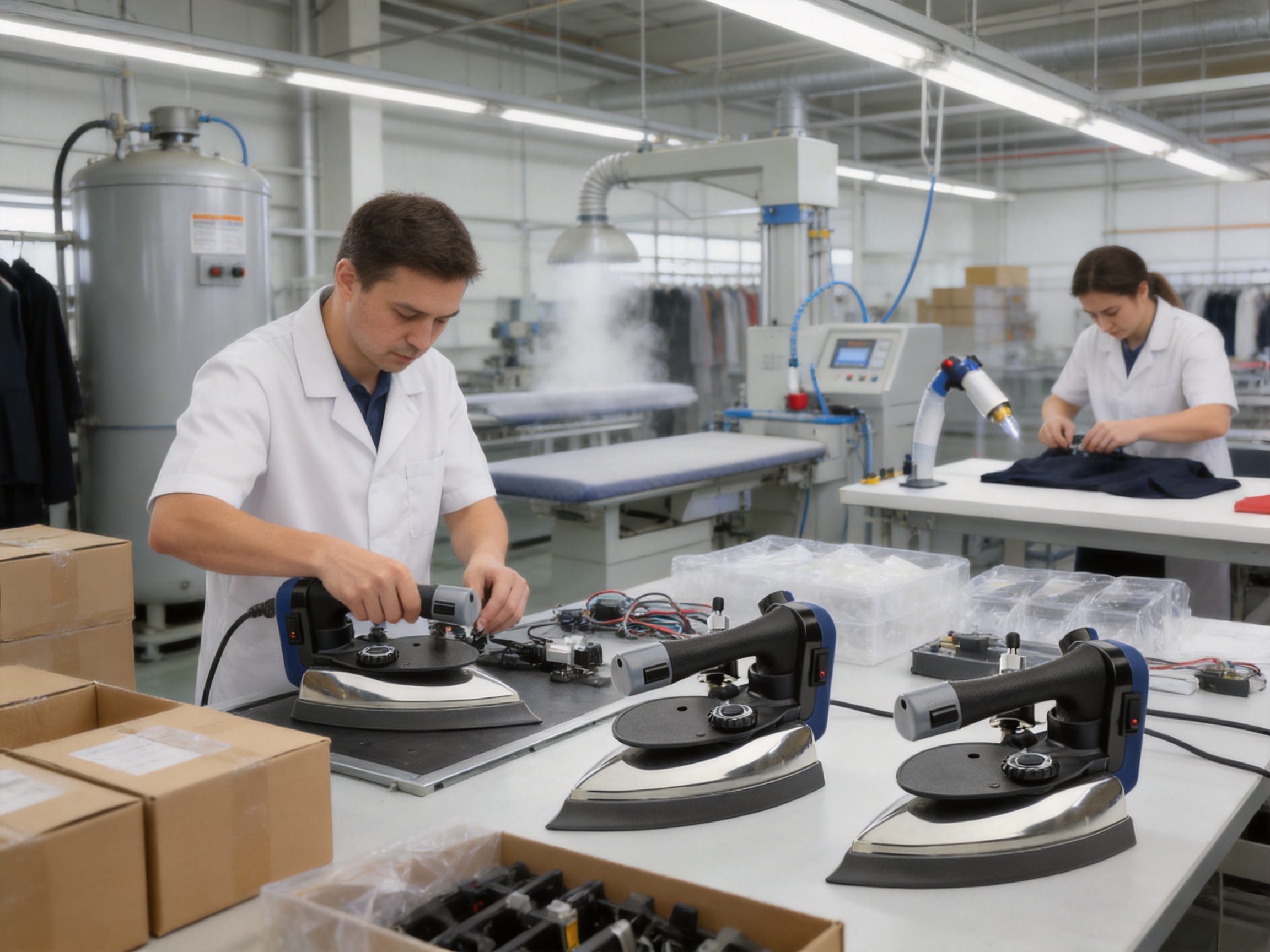
Its main advantage is the balance between power, coverage, and handling. The 1600W heating system supports efficient warm-up and strong working performance, while the 224 x 138 mm soleplate covers more fabric per pass. Its approximate 2.4 kg weight provides useful pressing force without making the product as difficult to control as heavier industrial equipment.
Yes. It is designed for home and professional applications, including tailoring, laundry services, uniform processing, hospitality operations, garment production, and textile finishing. The correct suitability depends on workload, fabric type, work surface, electrical supply, and maintenance practices.
The 1600W power rating and 2.4 kg weight make it suitable for many heavier fabrics, including denim, linen, thick cotton, and layered seams. Operators should still use an appropriate temperature and pressing method for each material.
The product can be supplied with a hard anodized aluminum soleplate or a high-quality non-stick coating. Hard anodized aluminum emphasizes durability and surface hardness, while non-stick coating emphasizes smooth movement and reduced fabric adhesion.
Yes. The listed voltage options are 110V and 220V. Buyers must specify the correct voltage for their destination and confirm plug and certification requirements before ordering.
It can be used on many fabric types when the operator selects the correct temperature and technique. A non-stick soleplate may be helpful for fabrics that are more likely to drag or adhere. Users should always follow the textile manufacturer’s care instructions and test an inconspicuous area when necessary.
The larger soleplate is intended to improve coverage, but its shape also allows the operator to work around collars, seams, edges, and other detailed areas. Technique and garment positioning remain important for precision work.
Tailoring shops, garment factories, laundries, hotels, uniform suppliers, alteration services, textile workshops, and commercial finishing operations can all benefit. It may also suit households that regularly press large or heavy textile items.
Buyers should confirm voltage, plug type, soleplate configuration, order quantity, packaging, certification documentation, delivery requirements, warranty terms, spare parts, and any OEM or customization needs.
Keep the soleplate clean, avoid abrasive contact, inspect the cord, use a stable heat-resistant rest, unplug the iron after use, and store it in a dry location after it has cooled. Any electrical repair should be completed by a qualified technician.
Yes. It can be used alongside steam boilers, vacuum tables, pressing equipment, spray guns, heat transfer machines, and other accessories. The exact setup depends on the workflow and the requirements of the garment operation.
A wider product range suggests experience with different garment-care processes. It may also simplify purchasing, technical communication, spare-parts coordination, and the development of complete equipment solutions.
The ST-300L (ES-300L) electric iron is designed to meet the practical demands of efficient garment care. Its 1600W power rating supports rapid heat readiness and reliable performance across a broad range of fabrics. The 224 x 138 mm soleplate increases coverage, reducing repeated passes across large textile sections. Its approximate 2.4 kg weight supplies pressing force while remaining suitable for controlled manual work.
The availability of hard anodized aluminum and non-stick soleplate options gives buyers a choice based on durability, fabric handling, and operating preference. These features help distinguish the product from basic household irons while preserving more flexibility than large, specialized pressing machines.
The product is also supported by the manufacturing capabilities of Jinyun Shengda Sewing Equipment Co., Ltd., a supplier with experience in electric irons, steam equipment, vacuum tables, spray guns, heat transfer machines, boilers, and related garment-care products. Its emphasis on independent research and development, production experience, quality improvement, customization, OEM services, and export supply provides value for both end users and distributors.
For buyers comparing electric irons, the most important evaluation should include more than power or price. Soleplate size, soleplate material, weight, electrical compatibility, manufacturing consistency, safety documentation, maintenance requirements, and supplier support all contribute to long-term performance. When these factors are considered together, the ST-300L represents a practical and versatile option for users seeking a capable electric iron for household, workshop, and professional garment-care applications.
1. Product specification materials for the ST-300L and ES-300L electric iron, including voltage, power, weight, soleplate dimensions, and soleplate options.
2. Manufacturer-provided company information concerning product development, garment equipment production, export markets, customization, and OEM services.
3. General principles of textile pressing, heat transfer, fabric handling, and garment finishing used in professional apparel-care operations.
4. GB4706.1-2005, General Requirements for Household and Similar Electrical Appliances.
5. GB4706.2-2007, Particular Requirements for Electric Irons.
6. Manufacturer-provided information concerning CCC and CQC certification claims for relevant products.
 +86-578-3158872 / +86-578-3158958
 jyshengda@163.com / caroying@jy-shengda.com
 No. 8 Nanyi Rd, Huzhen Industrial Park, Zhejiang, China
Copyright © Jinyun Shengda Sewing Equipment Co., Ltd. All Rights Reserved.
Ironing Press Machine Equipment Factory
 English
 中文简体
 русский
 عربى