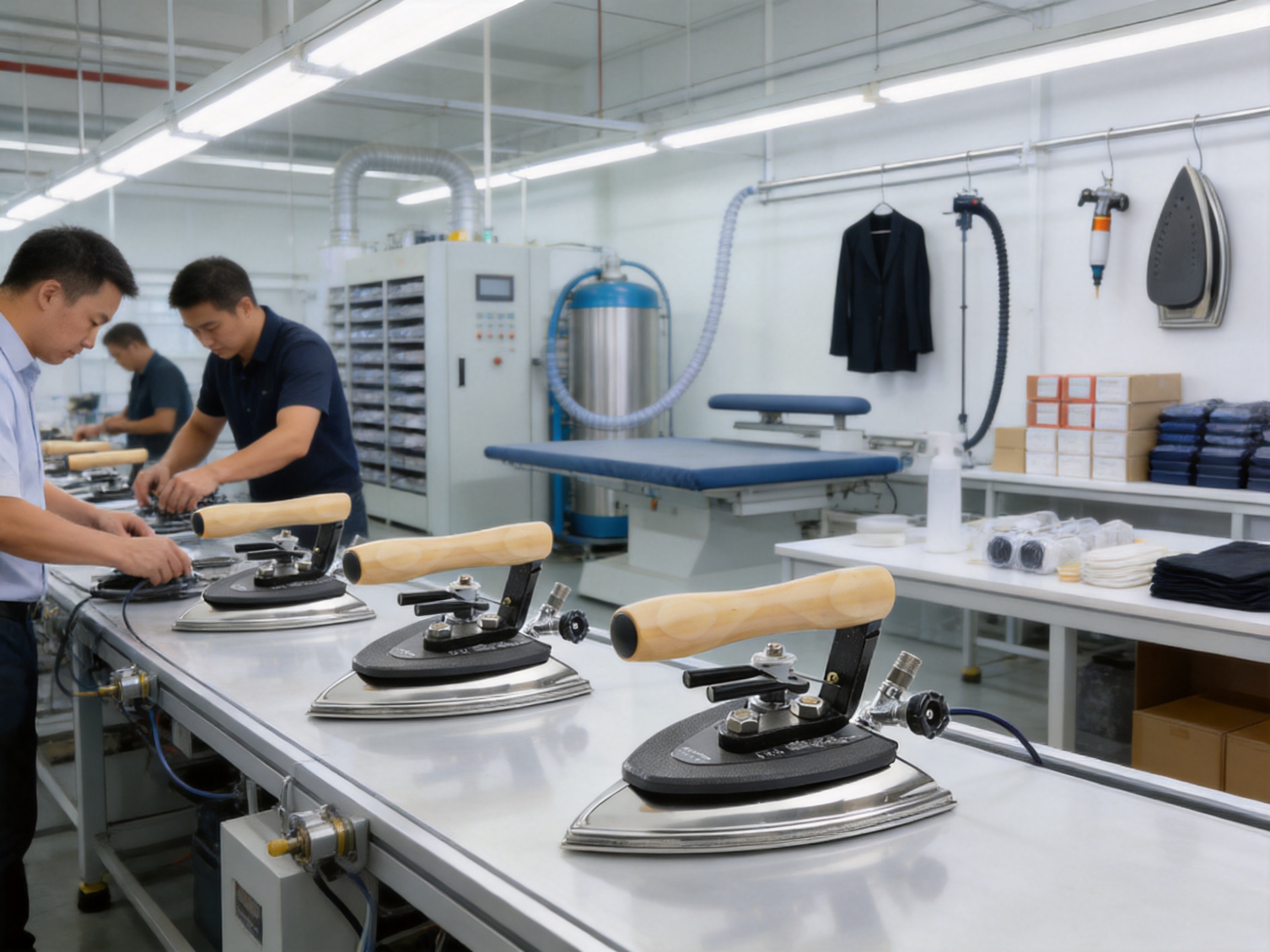
The ST-608 All Steam Iron is designed for users who expect more from an ironing appliance than basic heat generation. It combines a durable stainless-steel soleplate, controlled steam distribution, powerful heating, ergonomic handling, and a refined exterior into one practical solution for household and professional garment-care applications. Its balanced design is intended to make ironing smoother, more consistent, and less tiring, while its robust construction supports dependable performance over an extended service life.
In modern homes, garment workshops, tailoring rooms, laundries, hotels, uniform departments, and small commercial finishing operations, an iron must deliver consistent results across different fabric types. It should heat efficiently, glide smoothly, provide controllable steam, and remain comfortable during repeated use. The ST-608 addresses these requirements through a combination of carefully selected materials and user-focused engineering.
The iron features a stainless-steel soleplate that supports smooth movement over fabric while resisting ordinary wear and corrosion. Its special handle is shaped to provide a stable and comfortable grip, helping reduce strain during longer ironing sessions. The carefully formed cover gives the unit a clean and elegant appearance, allowing it to fit naturally into domestic and professional environments.
Behind the product is Jinyun Shengda Sewing Equipment Co., Ltd., a Chinese manufacturer with experience in the independent development and production of electric irons, steam irons, hanging irons, spray guns, small steam machines, heat transfer machines, steam boilers, vacuum tables, and related accessories. Its broad product range allows the company to understand the full garment-finishing process rather than viewing the iron as an isolated appliance.
This article examines the ST-608 All Steam Iron in detail, including its construction, operating advantages, design philosophy, manufacturing strengths, quality approach, maintenance considerations, and suitability for different users. It also explains why the model can be a practical alternative to ordinary irons that provide limited steam control, less durable soleplates, or less comfortable handling.

ST-608 All Steam Iron
The ST-608 All Steam Iron is an all-steam ironing appliance developed for efficient wrinkle removal and smooth garment finishing. It is built around three essential performance areas: heat, steam, and movement. Heat softens and relaxes fabric fibers, steam helps penetrate and condition the material, and the soleplate transfers controlled heat while gliding across the surface.
Many conventional irons focus mainly on heating speed. However, effective ironing also depends on how evenly heat is distributed, how consistently steam is released, and how easily the user can control the appliance. The ST-608 is designed to combine these functions in a coordinated way. This helps the user work more efficiently and achieve a more uniform finish.
The product is suitable for people who value a blend of function and appearance. Its compact shape allows it to be stored conveniently, while its elegant cover gives it a more polished visual profile than a purely utilitarian appliance. The design is appropriate for laundry areas, clothing-care rooms, tailoring facilities, and other settings where equipment is visible and used regularly.
The model includes a stainless-steel soleplate, a specially designed handle, steam control, and a powerful heating system. The soleplate is intended to resist wear and provide smooth contact with garments. The handle supports control and maneuverability. Steam control permits the user to adjust output according to the fabric and the level of wrinkling, while the heating system is designed to deliver quick heat-up and stable operation.
Because garments differ in thickness, weave, fiber composition, and finishing requirements, a flexible ironing appliance is more useful than one with a single operating pattern. The ST-608 can support routine pressing of everyday clothing as well as more careful work on delicate materials and stubborn creases, provided that the user follows suitable temperature and steam practices for each fabric.
The stainless-steel soleplate is one of the most important features of the ST-608. The soleplate is the working surface that comes into direct contact with the garment, so its smoothness, durability, and resistance to wear strongly influence the user experience.
Stainless steel is valued in ironing equipment because it provides a firm and durable surface. It can withstand repeated heating and cooling cycles and is resistant to ordinary rusting when properly maintained. Its surface supports smooth movement across fabrics, reducing unnecessary friction and making it easier to guide the iron in straight or curved motions.
A durable soleplate also contributes to long-term product value. A surface that wears quickly may develop rough areas or lose its ability to glide smoothly. By contrast, a well-maintained stainless-steel soleplate can continue to support consistent ironing performance over a long period. This is especially important in households with frequent laundry requirements and in professional environments where the appliance is used repeatedly during the day.
The soleplate also supports even heat transfer. Consistent heat distribution helps prevent one part of the iron from producing a different result from another part. When combined with controlled steam, an even soleplate can help the user remove wrinkles more efficiently and reduce the number of passes required over the same area.
Comfort is essential in an appliance that may be held for extended periods. The ST-608 uses a specially designed handle intended to provide a secure and comfortable grip. Its shape supports control while helping the user maintain a natural hand position during ironing.
An ergonomic handle can make a noticeable difference during long sessions. A poorly shaped handle may create pressure points in the palm, force the wrist into an uncomfortable angle, or make the appliance difficult to maneuver. The ST-608 is designed to reduce these problems through a more considered grip profile and balanced handling characteristics.
The handle also contributes to safety and precision. A secure grip gives the user better control when moving around collars, cuffs, seams, pleats, pockets, and other detailed areas. It can also help prevent sudden movement when the soleplate encounters a thicker section of fabric.
For professional users, comfort is directly related to productivity. A worker who can operate the iron with less hand and wrist fatigue may be able to maintain a more consistent pace and produce more uniform results. For home users, comfortable handling makes routine ironing less demanding and more manageable.
Steam is a central part of the ST-608 operating concept. Steam can help relax textile fibers and make wrinkles easier to remove. However, excessive or poorly controlled steam may be unsuitable for some materials. Adjustable steam control therefore provides greater flexibility than a fixed-output system.
The ST-608 is designed to allow precise steam release. Users can tailor steam output to the material being pressed and the severity of the wrinkles. A lower setting may be appropriate for lighter fabrics or minor creases, while a stronger steam application may assist with heavier textiles or more persistent wrinkles.
Controlled steam distribution is also valuable for detail work. When steam is released evenly, the user can work across a garment without creating inconsistent dampness or uneven results. This can be particularly useful when preparing shirts, trousers, uniforms, dresses, household textiles, and other items that require a clean, professional appearance.
Steam control should always be used together with appropriate temperature selection and fabric-care instructions. The ST-608 provides the operating flexibility, while the user remains responsible for selecting a suitable setting for the textile.
The ST-608 includes a powerful heating system designed for quick heat-up and consistent temperature control. Rapid preparation is convenient because it reduces waiting time before ironing can begin. Stable heat is equally important because inconsistent temperature may result in repeated passes, incomplete wrinkle removal, or possible fabric damage.
A well-engineered heating system must work together with the soleplate. Heating elements, temperature control, insulation, and surface construction all influence how the heat reaches the garment. The goal is not simply to reach a high temperature, but to produce useful and controllable heat across the working surface.
Consistent heating supports a more predictable workflow. Users can move from one area of a garment to another with greater confidence that the ironing result will remain uniform. In a professional setting, predictability helps improve output quality and reduces the time spent correcting unsatisfactory finishes.
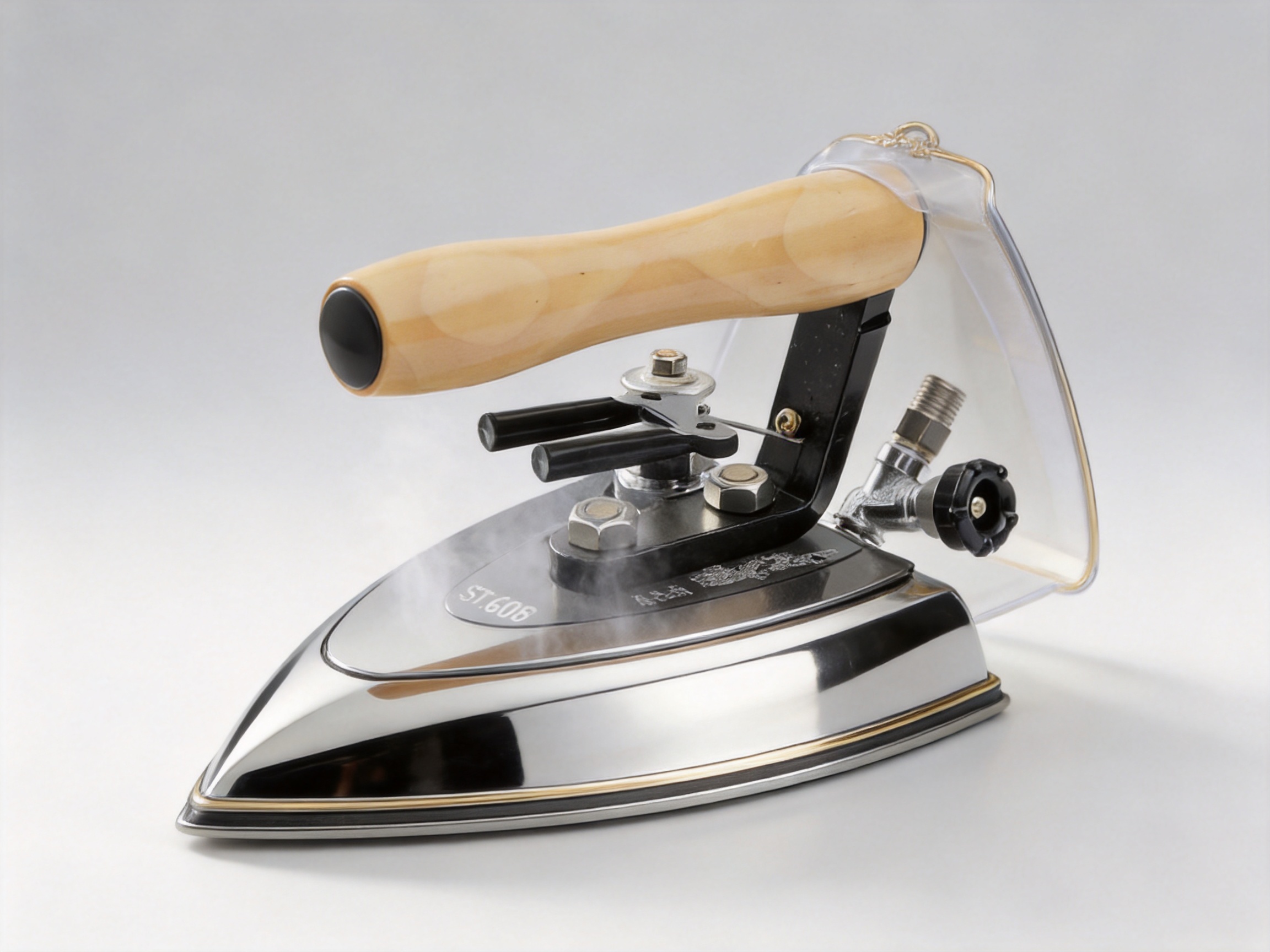
One advantage of the ST-608 over basic irons is its stainless-steel soleplate. Some entry-level products may rely on surfaces that are less resistant to scratching, wear, or long-term deterioration. A durable stainless-steel construction gives the ST-608 a strong foundation for repeated use.
The soleplate is not merely an exterior component. It influences glide, heat transfer, user effort, and the consistency of the finished garment. When the soleplate remains smooth and stable, users can work more efficiently and maintain better control.
Another advantage is the ability to regulate steam output. Fixed steam behavior can limit an iron’s usefulness across different fabrics. The ST-608 offers a more adaptable approach by allowing users to adjust the amount of steam according to the specific task.
This flexibility is useful for households with mixed wardrobes and for professional operators who process garments made from different textiles. It allows the same appliance to be used for everyday cotton clothing, blended materials, heavier garments, and more delicate items with appropriate care.
The specially designed handle gives the ST-608 an advantage over appliances that prioritize low manufacturing cost over user comfort. Repeated ironing can place stress on the hand, wrist, and forearm, especially when the user must apply pressure or work continuously.
A comfortable handle does not eliminate all fatigue, but it can reduce unnecessary strain and help the user maintain a steadier grip. Better handling also improves precision around seams and garment details. This combination of comfort and control is important for both domestic and commercial users.
Some industrial-style ironing products focus almost entirely on function and may appear unsuitable for a home environment. The ST-608 takes a more balanced approach. Its elegant cover and compact form provide a cleaner appearance while retaining the practical features needed for effective ironing.
This makes the appliance suitable for locations where appearance matters, including home laundry rooms, clothing boutiques, small tailoring shops, guest facilities, and garment-care areas. A product that looks refined is more likely to be stored visibly and used conveniently rather than being treated as cumbersome equipment.
The ST-608 is not limited to a single type of garment. Its combination of steam, heat, smooth movement, and adjustable operation gives it broad application potential. It can be used for shirts, trousers, skirts, dresses, jackets, uniforms, household fabrics, and other items that require wrinkle removal.
Its capabilities also make it relevant to small-scale professional users. Tailors, repair shops, fashion sellers, uniform suppliers, and hospitality facilities may benefit from a reliable steam iron that is easier to handle than heavier industrial equipment while offering more performance than a basic household model.
Ironing efficiency depends on more than the rated power of a device. It includes preparation time, movement across the garment, steam effectiveness, handle comfort, and the number of passes needed to achieve a satisfactory result.
The ST-608 is designed to support an efficient sequence. The heating system prepares the iron quickly, the soleplate transfers heat smoothly, steam helps relax wrinkles, and the handle allows controlled movement. When these elements work together, the user may spend less time correcting creases or repeatedly covering the same area.
A smooth soleplate reduces resistance. Lower resistance means the user can move the iron with less effort, particularly across large flat areas such as shirt fronts, trouser legs, table linens, and sheets. It also supports more precise movement when working around buttons, pockets, collars, and cuffs.
Steam can reduce the effort required to deal with stubborn wrinkles. Instead of relying only on pressure and repeated movement, the user can apply a suitable amount of steam and allow heat and moisture to work together. This method may be particularly useful for thicker fabrics and garments that have been stored for a long time.
The handle contributes to efficiency by helping the user maintain a stable direction. When an iron is difficult to grip, the user may compensate with additional pressure or awkward wrist movement. A more comfortable handle supports a smoother rhythm and may help reduce fatigue over a full load of clothing.
For home users, the ST-608 offers a combination of everyday practicality and durable construction. It can support regular garment care without requiring the user to operate complex industrial machinery. Its compact shape also makes it easier to integrate into a laundry area or storage cabinet.
Families may use the iron for school uniforms, work clothing, casual garments, bedding, curtains, and other washable textiles. Adjustable steam helps the user adapt the appliance to different loads, while the stainless-steel soleplate provides a durable surface for repeated household use.
Small garment businesses often need equipment that is reliable, flexible, and reasonably easy to maintain. The ST-608 can serve as a practical finishing tool for tailoring shops, clothing stores, alteration services, uniform suppliers, and sample rooms.
In these environments, appearance is part of product quality. A well-pressed garment can improve customer perception and help clothing look more professional on a display rack or at delivery. The iron’s controlled steam and smooth soleplate can assist operators in preparing garments for fitting, presentation, shipment, or final sale.
Hotels, guesthouses, laundries, and service businesses may also find value in an all-steam iron with durable construction. These operations often require repeated pressing of uniforms, linens, curtains, and guest garments. A comfortable handle and reliable soleplate can support repetitive use, while the refined exterior is appropriate for visible service areas.
The exact application should be matched to the operating volume and the facility’s workflow. For very high-volume industrial finishing, the ST-608 may be used alongside steam boilers, vacuum tables, or other specialized equipment. For smaller operations and detail work, it can function as a flexible standalone tool.
The manufacturer behind the ST-608 has developed a product portfolio covering several connected categories of ironing and garment-finishing equipment. This includes electric irons, steam irons, hanging irons, spray guns, small steam machines, heat transfer machines, steam boilers, vacuum tables, and accessories.
This product breadth supports practical engineering knowledge. Understanding steam generation, heat transfer, fabric treatment, and garment finishing across multiple product categories can help a manufacturer develop more coordinated and useful equipment. It also allows the company to identify common user requirements, including temperature stability, steam consistency, ergonomic operation, durability, and ease of maintenance.
Independent research and development allows the manufacturer to improve product structures rather than depending entirely on external designs. It can evaluate materials, refine component arrangements, adapt product appearance, and respond to changing market requirements. This is especially valuable for customers seeking customized products or OEM cooperation.
Jinyun Shengda Sewing Equipment Co., Ltd. was established in 2003 and operates in Huzhen Town, Lishui City, Zhejiang Province, China. Its location at the junction of Lishui, Jinhua, and Taizhou provides access to transportation networks, manufacturing resources, and information channels.
Long-term operation in a specialized equipment sector can help a manufacturer accumulate experience in component sourcing, assembly, testing, packaging, export preparation, and after-sales communication. It also provides opportunities to improve production procedures through feedback from domestic distributors and overseas customers.
The company has built distribution channels in China and has received positive feedback from customers in international markets. Its products are exported to Southeast Asia, Central Asia, South America, Africa, and other regions. International distribution requires attention to product consistency, packaging, documentation, electrical requirements, shipment planning, and customer support.
The company states that its research and development, management, and sales teams work closely together. This coordination can support a more complete product-development cycle. Technical teams can receive market feedback, sales teams can communicate application requirements, and management can organize production and quality objectives.
For a product such as the ST-608, cooperation among departments is important. User expectations involve both technical and practical considerations. The iron must function properly, but it must also be comfortable, visually acceptable, durable, serviceable, and suitable for the target market.
Cross-functional communication can help reduce the gap between laboratory design and actual use. Feedback from distributors, garment workers, household users, and maintenance personnel may reveal opportunities for improving the handle, cover, soleplate, steam behavior, packaging, or documentation.
The manufacturer follows national and industry standards, including GB4706.1-2005 and GB4706.2-2007. These standards relate to the safety of household and similar electrical appliances and the particular requirements associated with electric irons and similar appliances.
The company also reports that its products have passed CCC and CQC certifications. Such certifications provide evidence that applicable products have been assessed under relevant Chinese conformity and quality systems. Certification does not replace correct operation or maintenance, but it gives buyers an additional basis for evaluating the manufacturer’s quality approach.
For international buyers, standards and certification records are important during supplier assessment. Importers may also need to confirm destination-market electrical requirements, plug configurations, voltage compatibility, labeling rules, and documentation before placing an order.
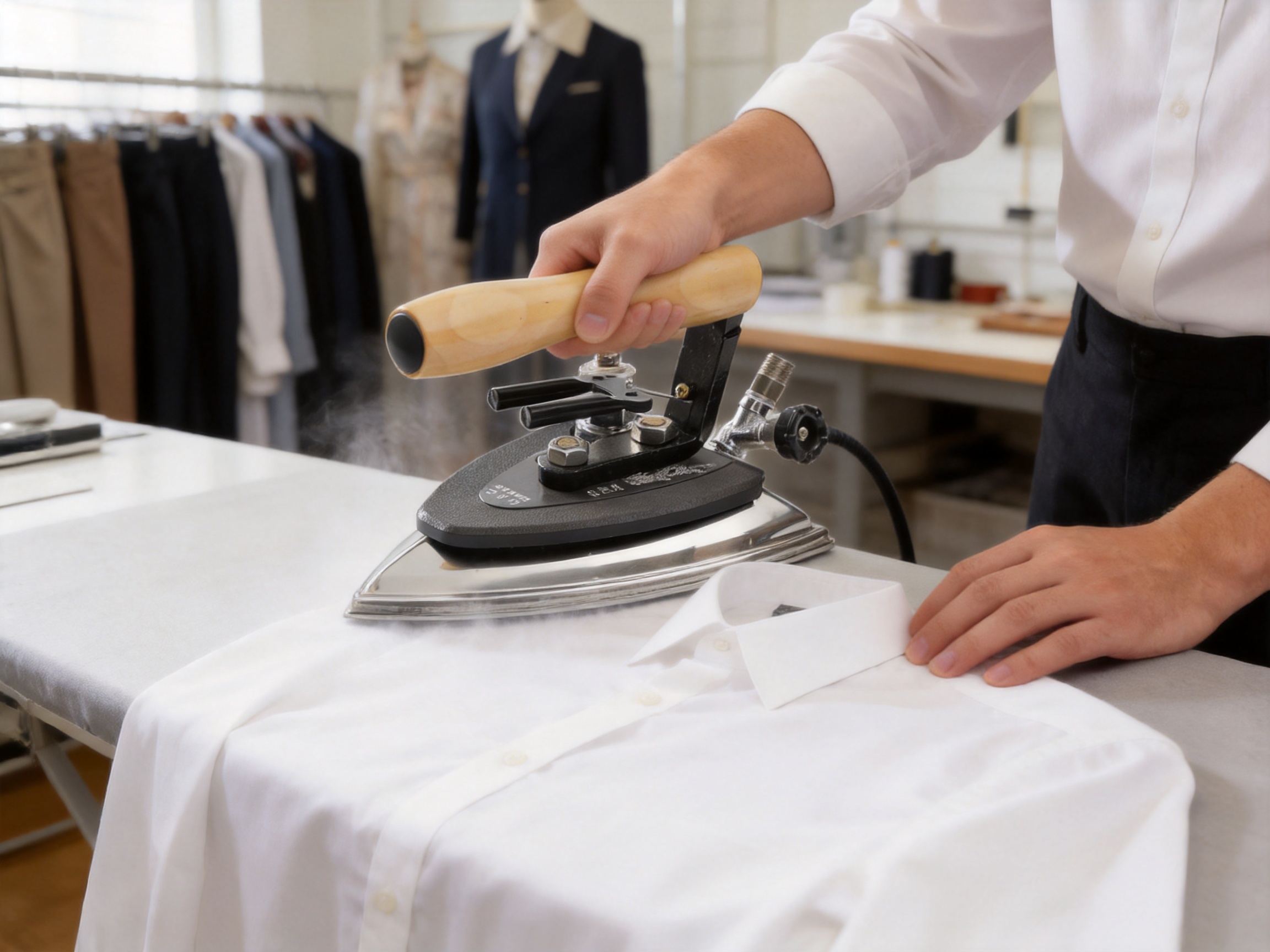
A high-quality steam iron depends on the coordination of multiple manufacturing stages. Although the exact factory process may vary according to production requirements, a reliable product generally requires controlled material selection, component preparation, assembly, electrical inspection, functional testing, appearance inspection, and packaging verification.
The stainless-steel soleplate must be selected and processed to provide a smooth working surface and suitable resistance to heat, wear, and corrosion. The material must also be shaped accurately so that it sits correctly within the product structure.
The cover and handle require materials that support both appearance and daily use. The cover should contribute to a clean exterior while protecting internal components. The handle must be durable enough for repeated gripping and should maintain its shape during normal operating conditions.
Material selection is a balance between performance, manufacturing efficiency, appearance, weight, safety, and cost. A manufacturer with experience in related ironing products can evaluate these factors across different models and applications.
The soleplate must be formed with attention to its profile and contact surface. A properly shaped soleplate can support smoother movement and more predictable contact with garments. Surface finishing is also important because roughness, contamination, or irregularities may affect the ironing experience.
Exterior components require consistent forming and finishing so that the product maintains an attractive appearance. Edges, joints, and visible surfaces should be checked for defects. A clean finish strengthens user confidence and reflects the manufacturer’s attention to detail.
The heating system and electrical components must be assembled carefully to support safe and stable operation. Connections should be secure, insulation should be appropriate, and components should be positioned to manage heat effectively.
Electrical assembly is a critical part of appliance manufacturing. A production process should include checks for wiring, terminals, switches, temperature-control components, insulation, and grounding or other applicable safety features. Functional testing can help identify abnormal heating behavior or electrical inconsistencies before shipment.
The steam-control system must be integrated with the body, heating structure, and user controls. Steam pathways should be designed to support consistent release and minimize the risk of undesirable leakage during normal use.
Testing may include checking steam output, control response, sealing performance, and operation at different settings. A well-integrated system allows the user to adjust steam without excessive delay or unpredictable behavior.
After components are assembled, inspection should confirm that the cover, handle, soleplate, controls, and internal parts are correctly positioned. The unit should feel stable in the hand, and visible components should fit together neatly.
Assembly quality affects both appearance and performance. A loose handle, uneven cover, poorly fitted soleplate, or difficult control can reduce the value of otherwise good internal components. Careful final inspection helps ensure that the completed product reflects the original design intent.
Functional testing is essential for confirming that the iron heats, releases steam, and responds correctly to controls. Testing may also evaluate heat-up behavior, stability during operation, soleplate condition, and general appearance.
Quality control is most effective when it is applied throughout production rather than only at the final stage. Incoming materials, semi-finished components, assembly processes, and finished products can each be checked according to established procedures.
The manufacturer’s experience, certification approach, and product range provide a foundation for systematic quality management. Buyers can strengthen this process by clearly communicating intended use, destination-market requirements, packaging expectations, labeling needs, and inspection standards.
One of the company’s stated advantages is its ability to provide customization and OEM services. This can be useful for distributors, importers, retail chains, equipment dealers, and organizations seeking products adapted to a specific market.
Customization may involve exterior colors, labels, packaging, manuals, electrical configurations, plug styles, product markings, or other agreed requirements. The feasibility of each request depends on order quantity, technical requirements, regulatory conditions, and production planning.
OEM cooperation benefits from clear communication at the beginning of a project. Buyers should provide information about destination countries, expected operating environments, voltage and frequency requirements, packaging dimensions, language needs, branding instructions, and applicable certification requirements.
A manufacturer with in-house product knowledge can be better positioned to discuss practical modifications. For example, changes to the exterior may affect heat management, changes to electrical components may affect certification, and changes to packaging may affect protection during shipment. Technical and commercial teams should evaluate such factors together.
The ST-608 can therefore serve not only as a finished product for direct purchase, but also as a potential platform for market-specific cooperation. Its established design and core features provide a starting point for buyers seeking a reliable all-steam iron with a professional appearance.
Proper use and maintenance help preserve the ST-608’s performance. Before operation, users should read the supplied instructions and confirm that the electrical supply is compatible with the product requirements. The iron should be placed on a stable and heat-resistant surface whenever it is not being actively used.
The soleplate should be kept clean. Residue from treated fabrics, adhesives, starch, or other substances can affect smooth movement and may transfer to later garments. Cleaning should be performed only according to the manufacturer’s recommendations and after the appliance has been disconnected and allowed to cool as appropriate.
Users should avoid dragging the soleplate over rough surfaces, metal fasteners, or contaminated areas unnecessarily. Although stainless steel is durable, careful use helps preserve its finish and reduce the possibility of scratches.
Steam settings should be selected according to fabric requirements. Excessive steam may not be suitable for every material, and some garments may require pressing from the reverse side or using a protective cloth. Fabric-care labels should be followed.
The water or steam system, where applicable, should be managed according to the operating instructions. Water quality and cleaning requirements can vary by product and location. If the equipment requires draining, descaling, or other periodic care, these tasks should be completed at the recommended intervals.
The power cord and plug should be checked regularly for visible damage. If abnormal heating, unusual odor, leakage, electrical interruption, or other irregular behavior occurs, operation should stop and qualified service personnel should be consulted.
Buyers evaluating the ST-608 should consider the intended application, expected usage frequency, destination-market requirements, service arrangements, packaging, and order volume. A household buyer may prioritize comfort, appearance, and ease of storage, while a distributor may focus on product consistency, certification, delivery, and customization.
For professional applications, it is useful to evaluate how the iron fits into the wider workflow. The ST-608 may be used as a standalone tool or together with vacuum tables, steam boilers, hanging irons, spray guns, or other garment-finishing equipment. The best configuration depends on garment volume and the type of finishing required.
Buyers should also confirm technical details before ordering, including rated voltage, frequency, power, steam requirements, plug configuration, packaging dimensions, warranty conditions, and available spare parts. These details should be documented in the purchasing agreement or product specification.
For importers, compliance is especially important. The product may need to meet local electrical safety, labeling, packaging, and energy requirements. Certification available in the manufacturing country may not automatically satisfy every requirement in the destination market, so local verification is recommended.
Supplier communication is another important factor. A responsive manufacturer can help buyers resolve questions about operation, replacement components, shipment preparation, product markings, and technical documentation. The company’s experience in domestic and overseas markets is a useful foundation for this type of cooperation.
| Evaluation Area | ST-608 All Steam Iron | Basic Household Iron | Heavy Industrial Finishing System |
|---|---|---|---|
| Soleplate Material | Durable stainless steel designed for smooth movement and resistance to wear | Material varies by model and may provide less long-term durability | Usually designed for intensive commercial operation and specialized workflows |
| Steam Control | Adjustable steam control for different fabrics and wrinkle levels | May provide limited or less precise steam adjustment | Often connected to a larger steam supply and professional controls |
| Handling | Specially designed ergonomic handle for control and comfort | Comfort varies significantly by product | May be heavier or designed for specialized operators |
| Appearance | Elegant cover and compact form suitable for home or professional environments | Usually focused on household styling and basic storage | Often emphasizes industrial function over compact appearance |
| Application | Home use, tailoring, garment shops, hospitality, uniforms, and small commercial work | Routine household ironing | High-volume industrial garment finishing |
| Flexibility | Balances portability, steam control, durability, and professional performance | Convenient for light-duty work but may be less robust | Highly capable but may require more space, infrastructure, and investment |
| Manufacturer Support | Potential access to customization, OEM cooperation, related equipment, and accessories | Support depends on the individual consumer brand | Usually requires specialized installation and service arrangements |
Product value should be evaluated over the entire period of use rather than by purchase price alone. A less durable iron may appear economical initially but require earlier replacement or produce inconsistent results. A well-constructed model can provide better value by supporting reliable operation, comfortable handling, and reduced maintenance needs.
The ST-608 offers value through the combination of its stainless-steel soleplate, controlled steam, powerful heating, ergonomic handle, and attractive design. Each feature contributes to a different aspect of ownership. The soleplate supports longevity, the steam system supports versatility, the heating system supports efficiency, the handle supports comfort, and the exterior supports product appeal.
For distributors, value also includes supply capability and manufacturer support. The company’s broader product range can make it easier to source complementary equipment from one supplier. Its OEM and customization capabilities may help buyers develop a more consistent product offering for a specific market.
For end users, value is reflected in the daily experience. An iron that heats efficiently, glides smoothly, releases controllable steam, and remains comfortable in the hand can make garment care less time-consuming and less physically demanding.
The ST-608 is an all-steam iron designed for wrinkle removal and garment finishing. It combines a stainless-steel soleplate, adjustable steam control, a powerful heating system, and a specially designed handle.
The stainless-steel soleplate is designed to provide smooth movement, durability, even heat distribution, and resistance to ordinary wear and corrosion. These characteristics support consistent ironing performance over extended use.
Yes. Its compact shape, elegant cover, comfortable handle, and adaptable steam control make it suitable for household laundry areas. Users should always follow fabric-care instructions and the operating guidance supplied with the product.
Yes. The ST-608 may be suitable for tailoring shops, alteration services, clothing stores, uniform departments, hospitality facilities, and other small or medium-scale garment-care applications. Very high-volume operations may combine it with specialized steam and vacuum equipment.
The product is described as having a steam control system that allows precise steam release. Adjustable operation helps users adapt output to different fabrics and wrinkle levels.
The specially designed handle provides a comfortable and secure grip. Its ergonomic form and balanced handling are intended to support maneuverability and reduce hand and wrist strain during extended ironing.
Jinyun Shengda Sewing Equipment Co., Ltd. states that it provides customization and OEM services. Buyers should discuss quantities, technical requirements, packaging, labels, electrical specifications, and destination-market regulations before confirming an order.
The company reports that it follows standards including GB4706.1-2005 and GB4706.2-2007, and that its products have passed CCC and CQC certifications. Buyers should confirm the specific certification status and destination-market requirements for the exact product configuration being purchased.
The company is located at No. 8 Nanyi Road, Huzhen Industrial Park, Zhejiang, China. It operates in Huzhen Town, Lishui City, Zhejiang Province.
The company produces electric irons, steam irons, hanging irons, spray guns, small steam machines, heat transfer machines, steam boilers, vacuum tables, and related accessories. This product range supports integrated sourcing for garment-finishing operations.
Buyers should confirm rated voltage, frequency, power, plug configuration, and applicable safety requirements before ordering. These details are especially important for export shipments because electrical standards differ between markets.
Users should keep the soleplate clean, follow the water and steam-system instructions, avoid rough or contaminated surfaces, store the iron safely, inspect the power cord, and arrange qualified service if abnormal operation occurs.
The ST-608 All Steam Iron is a balanced garment-care product that combines practical performance with a refined appearance. Its stainless-steel soleplate supports smooth movement and long-term durability, while its steam-control system provides flexibility across different fabrics and wrinkle conditions. The powerful heating system supports efficient preparation and stable operation, and the specially designed handle improves comfort and control.
Compared with basic irons, the ST-608 offers a stronger combination of durability, steam adaptability, ergonomic handling, and professional presentation. Compared with larger industrial finishing systems, it provides a more compact and accessible format for homes, small businesses, tailoring rooms, hospitality operations, and other users who need capable steam ironing without a complete industrial installation.
The product is supported by a manufacturer with experience in garment-finishing equipment, independent research and development, export markets, quality standards, certifications, customization, and OEM cooperation. The company’s broader product portfolio also gives buyers access to related equipment such as steam boilers, vacuum tables, spray guns, heat transfer machines, and accessories.
For buyers seeking a dependable all-steam iron, the ST-608 deserves consideration because it addresses the major requirements of effective garment care: reliable heat, useful steam, smooth movement, comfortable handling, durable construction, and practical design. Its overall value lies not in one isolated feature, but in the way these features work together to create a more efficient and pleasant ironing experience.
1. Product specification and description for the ST-608 All Steam Iron, provided by the manufacturer.
2. Manufacturer information for Jinyun Shengda Sewing Equipment Co., Ltd., including company history, product categories, export markets, customization services, and quality commitments.
3. GB4706.1-2005, Safety of Household and Similar Electrical Appliances: General Requirements.
4. GB4706.2-2007, Safety of Household and Similar Electrical Appliances: Particular Requirements for Electric Irons.
5. General principles of textile care, fabric pressing, steam treatment, and safe appliance operation.
6. General manufacturing and quality-control practices for electrical ironing equipment, heating assemblies, stainless-steel soleplates, and steam-control systems.
 +86-578-3158872 / +86-578-3158958
 jyshengda@163.com / caroying@jy-shengda.com
 No. 8 Nanyi Rd, Huzhen Industrial Park, Zhejiang, China
Copyright © Jinyun Shengda Sewing Equipment Co., Ltd. All Rights Reserved.
Ironing Press Machine Equipment Factory
 English
 中文简体
 русский
 عربى