Modern garment-care operations require more than a simple source of heat. Retail stores, tailoring workshops, hotels, laundries, uniform departments, garment factories, and home users all need equipment that can remove wrinkles efficiently while protecting the appearance and feel of different fabrics. A suitable steaming system must provide stable heat, dependable water management, convenient controls, safe operation, and practical maintenance. The ST-2000/ST-518 Garment Steamer is designed around these requirements.
As a compact steam-generating solution, the ST-2000/ST-518 combines a 1.8-kilowatt heating system with automatic water refilling, a built-in pressure gauge, a liquid-level alarm, and continuous dry steam production. These features allow the unit to support regular garment-care work without requiring constant manual water management. The result is a more organized and efficient steaming process for users who need reliable performance over repeated operating cycles.
The steamer is suitable for commercial and domestic environments. Its relatively compact construction allows it to fit into workspaces where a larger industrial boiler may be impractical. At the same time, the unit provides functions that are often associated with more demanding professional equipment, including real-time pressure monitoring and automatic protection against low water levels.
This article examines the operating concept, technical specifications, user benefits, manufacturing strengths, quality considerations, applications, maintenance requirements, and purchasing value of the ST-2000/ST-518 Garment Steamer. It also explains why the product can offer practical advantages over basic garment steamers and less integrated alternatives.

ST-2000/ST-518 Garment Steamer
The ST-2000/ST-518 Garment Steamer is a steam-based garment-care appliance intended to relax fabric fibers, reduce wrinkles, refresh clothing, and improve the presentation of finished garments. It is identified in the product information as model ST-2000/518 and is categorized as a steam boiler product within a broader range of ironing and garment-finishing equipment.
The core operating principle is straightforward. Water is supplied to the internal heating system, where electrical energy converts the water into steam. The steam is then delivered for garment treatment. Because the unit is designed to produce continuous dry steam, it aims to provide a controlled output with minimal unwanted water droplets. This is important when working with finished clothing, uniforms, delicate textiles, and fabrics that may show water marks after contact with liquid moisture.
The product includes an automated water refill system. Instead of relying entirely on frequent manual refilling, the system manages the water supply during operation. This reduces interruptions and helps maintain a more consistent steaming routine. For commercial users, fewer interruptions can translate into smoother workflow and lower staff involvement in routine water management.
A built-in pressure gauge gives the operator a direct indication of steam pressure during use. Although the rated steam pressure field in the supplied specification is marked with a slash, the presence of the gauge remains valuable because it allows operating conditions to be observed rather than judged only by feel. The liquid-level alarm provides another layer of operating awareness by warning the user when the water level becomes low.
| Specification | Details |
|---|---|
| Model | ST-2000/518 |
| Heating power | 1.8 kilowatts |
| Rated steam temperature | 151 |
| Rated steam pressure | Not specified in the supplied information |
| Power supply | 220 volts |
| Packing size | 465 x 265 x 35 millimeters / 410 x 270 x 400 millimeters |
| Water management | Fully automatic water refill system |
| Monitoring features | Built-in pressure gauge and liquid-level alarm |
| Steam output concept | Continuous dry steam without water droplets |
The listed rated steam temperature is recorded as 151 in the provided technical information. Buyers should confirm the exact unit of measurement and operating conditions with the supplier before final installation or technical comparison. The same principle applies to the two listed packing-size entries, which may refer to different packaging configurations or component packages.
Steam is widely used in garment finishing because it can relax wrinkles without requiring the same direct pressure associated with a conventional pressing operation. However, not all steam is equally suitable for finished garments. Steam containing excessive liquid moisture can dampen textiles, leave visible marks, extend drying time, and create additional handling work.
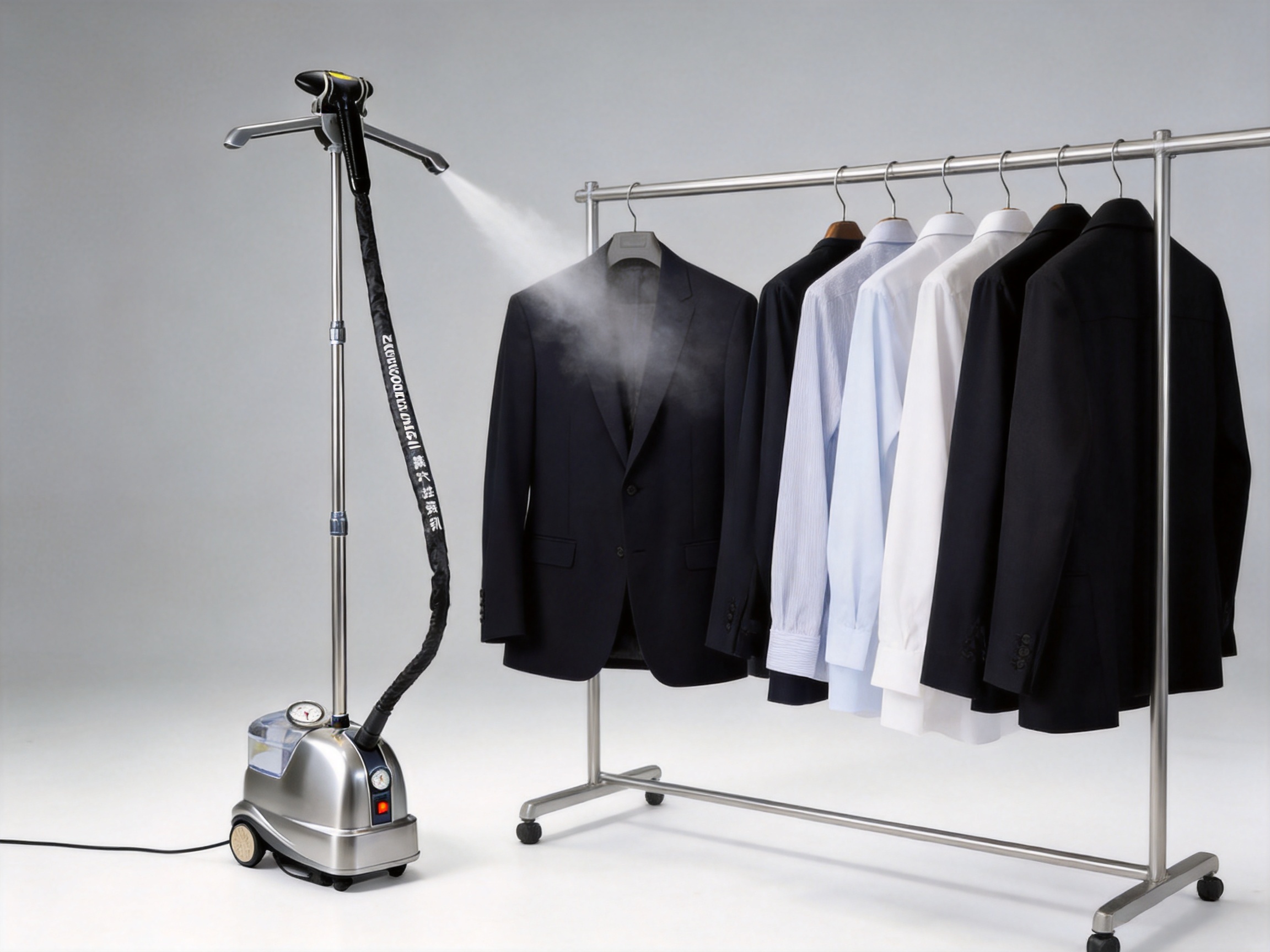
Dry steam is intended to minimize these problems. The ST-2000/ST-518 is designed to deliver continuous steam without water droplets, helping the operator work more confidently across a range of fabrics. This is particularly useful for dark garments, smooth synthetic materials, formal clothing, uniforms, and delicate textiles where moisture marks may be highly visible.
Dry steam can also improve workflow because garments may require less post-treatment drying. A retail employee can steam a garment before displaying it, a hotel laundry can finish uniforms before distribution, and a tailoring workshop can refine the appearance of a completed item without introducing excessive dampness.
The term “dry steam” should not be interpreted as completely moisture-free vapor under every operating condition. Steam quality can be influenced by water quality, operating temperature, internal condition, hose arrangement, ambient conditions, and maintenance. Nevertheless, the product’s design objective is clear: provide a stable steam output while reducing the risk of liquid droplets reaching the garment.
Different fabrics respond differently to heat, pressure, and moisture. Lightweight fabrics may require gentle treatment, while thicker materials may need more sustained steam exposure. The ST-2000/ST-518 supports a flexible approach because the operator can control the distance, movement, and duration of steaming according to the fabric.
For delicate textiles, the user can maintain a suitable distance and use short, controlled passes. For heavier garments, the operator can apply steam more systematically to collars, sleeves, lapels, seams, and larger surface areas. The continuous output helps avoid the uneven results that may occur when a small manual steamer repeatedly runs out of water or requires frequent heating pauses.
Users should always follow the care label and test an inconspicuous area before treating unfamiliar materials. Heat-sensitive coatings, bonded fabrics, plastic decorations, adhesives, and certain synthetic fibers may require special handling even when the steam supply is stable.
One of the most important advantages of the ST-2000/ST-518 is its fully automatic water refill system. In many basic steamers, the operator must stop work, monitor the tank, remove the tank, refill it, and wait for the heating system to recover. These interruptions may appear minor during occasional household use, but they become costly when dozens or hundreds of garments must be processed.
Automatic water management reduces the need for constant manual intervention. The operator can focus on garment positioning and finishing quality while the machine manages the supply of water required for steam generation. This can reduce repetitive tasks and make responsibilities easier to organize in a commercial workplace.
The system also helps reduce the risk of operating with insufficient water. A low water condition can reduce steam quality, interrupt production, or place unnecessary stress on the heating components. By combining automatic refill with a liquid-level alarm, the unit gives users both active water management and a warning mechanism.
For businesses, the value of automation is not limited to labor savings. A more consistent supply can improve production planning. Employees can process garments in a predictable sequence instead of stopping at irregular intervals. Supervisors can also reduce the amount of time spent checking water tanks manually.
A basic manual-fill steamer may be appropriate for occasional household use, but it can be less efficient in a professional setting. Manual filling creates more opportunities for interruption, spillage, inconsistent water levels, and operator error. It also places greater dependence on individual attention.
The ST-2000/ST-518 addresses these limitations through automatic refill and level monitoring. Compared with a simple tank-based appliance, it is better suited to repeated garment-care tasks where continuity and convenience matter. The product is not merely a heating element with a hose; it is a more integrated steam-management system.
Another advantage is the reduced need for staff to remain focused on the water supply. In a store or workshop, one employee may be responsible for steaming while also arranging garments, checking finishing quality, preparing orders, or assisting customers. Automation helps that employee manage several related tasks more efficiently.
The built-in pressure gauge is an important feature for users who want more information than a simple on-and-off indicator can provide. Steam performance is affected by heating conditions and internal pressure. A gauge allows the operator to observe the system’s operating state and identify unusual changes.
Real-time pressure awareness is helpful during start-up, routine operation, and troubleshooting. If the pressure does not develop as expected, the user may recognize a need to inspect the water supply, heating cycle, hose arrangement, or maintenance condition. If the reading behaves unusually, operation can be paused for investigation rather than continuing without information.
A pressure gauge can also support more consistent operator training. New employees can learn to recognize normal operating behavior and understand when the equipment is ready for use. This is more practical than relying entirely on sound, touch, or guesswork.
Because the supplied product information does not provide a numerical rated steam pressure, customers should request the applicable pressure range and operating instructions before commissioning the equipment. The gauge itself is a valuable monitoring tool, but safe use depends on following the manufacturer’s specified limits.
The liquid-level alarm warns the user when the water supply becomes low. This feature is important because a heating system should not operate without an adequate water supply. A low-level condition may lead to reduced steam output, overheating, interruption, or component stress.
The alarm improves user awareness without requiring constant visual inspection of the water system. In a busy work area, operators may not notice a gradual reduction in water level until performance has already changed. An audible or visible alert can provide an earlier indication that attention is required.
Safety features are most effective when combined with proper procedures. The operator should use the correct power supply, keep the unit on a stable surface, follow water-quality recommendations, avoid obstructing ventilation, and allow hot components to cool before maintenance. Hoses, fittings, electrical connections, and external surfaces should be checked regularly.
The liquid-level alarm also contributes to equipment longevity. Preventing repeated low-water operation can help reduce avoidable stress on the heating system. While no alarm replaces inspection and maintenance, it provides useful protection during normal working conditions.
Space is a major consideration in garment-care environments. A large boiler may offer high capacity, but it can be unsuitable for a small tailoring room, retail back area, hotel service room, or home workshop. The ST-2000/ST-518 is designed as a compact unit that can be integrated into a range of workspaces.
The listed packing sizes are 465 x 265 x 35 millimeters and 410 x 270 x 400 millimeters. Since two configurations are supplied, buyers should confirm which measurement applies to the complete machine and which applies to a package, component, or accessory. Even so, the stated dimensions indicate an emphasis on efficient packaging and practical handling.
A compact footprint can provide several operational benefits. The machine can be placed near a garment rack, ironing station, sewing table, or finishing counter. It can also be transported between rooms or work areas more easily than a large fixed boiler. For companies with multiple small production areas, this flexibility may be especially useful.
Compact equipment also helps businesses control initial investment and installation requirements. Users may not need to redesign a workroom or construct a dedicated boiler area. However, adequate clearance, ventilation, electrical capacity, and safe hose routing must still be provided.
Garment-care work is not always performed in one permanent location. A clothing shop may need to steam garments near the sales floor. A hotel may move finishing equipment between housekeeping areas. A tailoring service may operate from different rooms or customer locations. The compact design of the ST-2000/ST-518 makes such arrangements more practical.
Portability should be managed responsibly. The equipment should be moved only when it is safe to do so, with power disconnected and hot surfaces allowed to cool. Water connections should be secured, and the machine should be placed on a level, stable surface before operation.
Flexible placement also supports seasonal or changing business needs. During busy periods, a company may position the machine closer to production. During quieter periods, it can be stored in a designated area without consuming excessive floor space.
Professional equipment does not need to be complicated to be effective. The ST-2000/ST-518 is described as having a straightforward design that requires minimal training. This is valuable in workplaces where employees may have different levels of technical experience.
Simple controls allow users to concentrate on garment quality rather than navigating complicated settings. The pressure gauge and liquid-level alarm provide clear operating information, while the automatic refill system reduces the number of routine actions required from the operator.
A user-friendly design can improve consistency across shifts. When controls and indicators are easy to understand, employees are more likely to follow the same operating sequence. This supports standardized work practices and reduces the chance of incorrect handling.
Training should cover start-up, steam readiness, garment positioning, safe distances, water management, shutdown, and basic cleaning. Operators should also understand the meaning of alarm signals and know when to stop the machine and contact a qualified service person.
Before operation, place the steamer on a stable surface and inspect the power cord, water connections, hose, fittings, and visible controls. Confirm that the working area is clear and that the selected power supply matches the 220-volt specification.
Supply suitable water according to the manufacturer’s instructions. Turn on the machine and allow the heating system to reach its operating condition. Monitor the indicators and pressure gauge rather than applying steam immediately after switching on.
Once steam is available, hold the garment in a suitable position and move the steam outlet in controlled passes. Avoid concentrating heat on one point for too long. Treat collars, cuffs, seams, sleeves, and larger panels according to the fabric and garment construction.
During operation, observe the steam quality and the pressure gauge. If the liquid-level alarm activates, follow the refill or shutdown procedure. At the end of work, switch off the equipment, release or manage residual steam according to the instructions, disconnect power when appropriate, and allow the unit to cool before cleaning or storage.
Steam equipment performs best when it is maintained regularly. Water contains minerals that may accumulate inside heating components, tanks, valves, and passages. The rate of buildup depends on water quality and usage frequency. Regular inspection helps protect steam performance and reduce unexpected downtime.
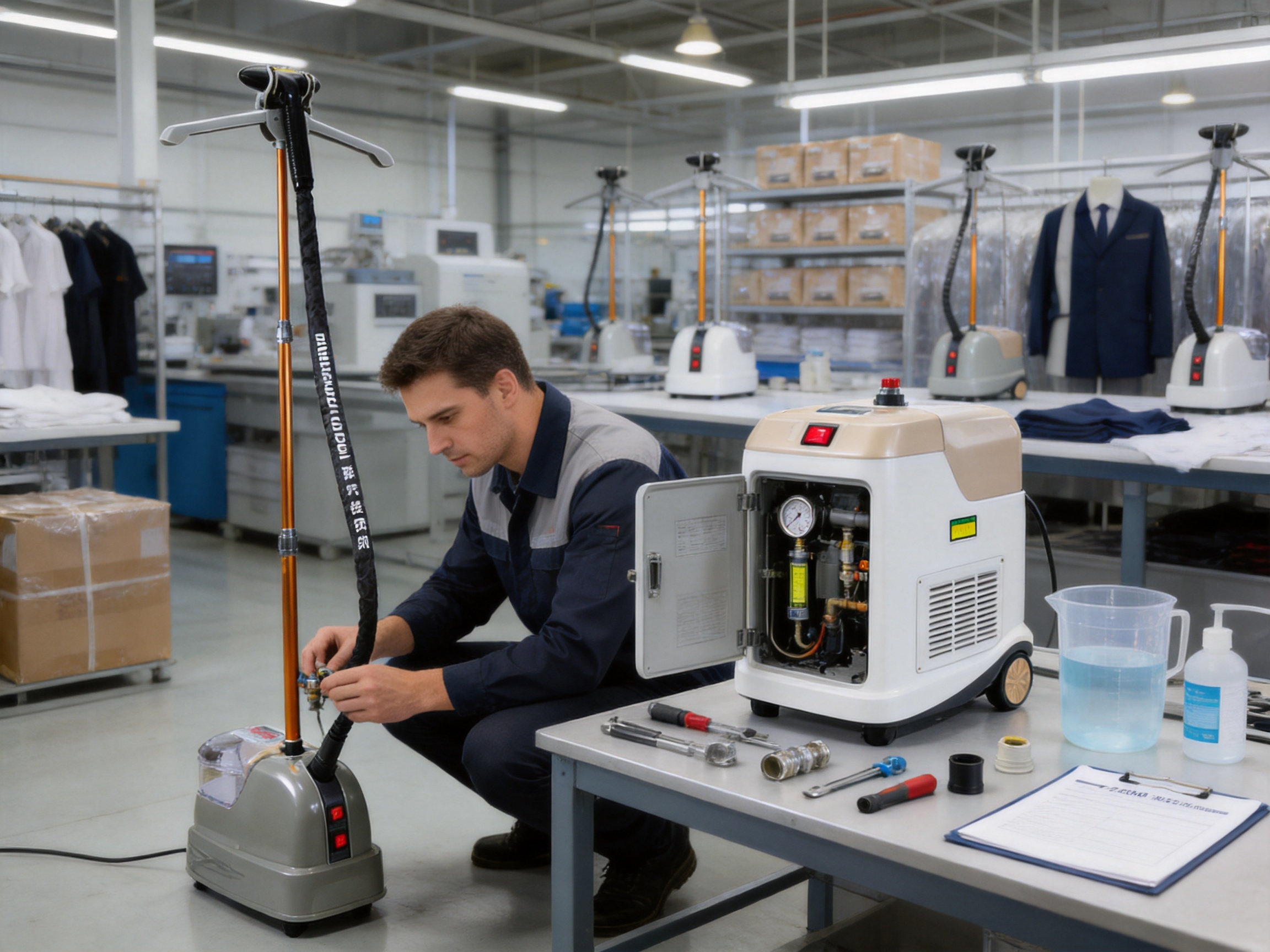
The ST-2000/ST-518 is described as having accessible components that simplify cleaning and servicing. This design approach is valuable because maintenance becomes more practical when service points can be reached without excessive disassembly. Easier maintenance encourages users to perform routine care instead of postponing it.
Basic maintenance may include checking water connections, cleaning accessible surfaces, inspecting the hose and fittings, monitoring the pressure gauge, and following the recommended procedure for removing mineral deposits. The unit should be disconnected from power and cooled before service work begins.
Users should not bypass the liquid-level alarm, pressure gauge, or other protective devices. If a control, alarm, electrical connection, or heating component fails, the machine should be taken out of service until examined by an appropriately qualified technician.
Water quality can influence both performance and service life. Hard water may accelerate scale formation, which can reduce heating efficiency and affect steam quality. The supplier’s recommendations should be followed regarding filtration, treated water, cleaning intervals, and suitable water types.
Using unsuitable water may create deposits, corrosion, or operating problems. Conversely, water treatment should also be selected carefully because certain aggressive or highly purified water conditions may not be appropriate for every system. The correct choice depends on the internal materials and manufacturer’s instructions.
A maintenance record can be useful for commercial users. Recording cleaning dates, inspections, service work, and unusual operating events helps identify recurring problems. It also supports planning for preventive maintenance before peak production periods.
The ST-2000/ST-518 offers several practical advantages when compared with basic garment steamers or separate manual components. Its value comes from the combination of functions rather than from a single feature.
First, the automatic water refill system supports longer and more continuous operation than a small manual tank that must be repeatedly removed and refilled. This is especially important in commercial environments where interruptions affect productivity.
Second, the continuous dry steam concept helps reduce water droplets and the risk of visible marks. A more controlled steam output can be advantageous when finishing dark, delicate, formal, or customer-facing garments.
Third, the pressure gauge gives the operator information about operating conditions. Many simple appliances provide no direct pressure indication, making it harder to identify changes before they affect results.
Fourth, the liquid-level alarm improves awareness and helps protect the heating system from low-water conditions. This feature supports safer, more disciplined operation.
Fifth, the compact format allows the equipment to serve users who need professional-style functionality without installing a large industrial boiler. It can fit into smaller businesses and mixed-use workspaces.
Sixth, the accessible maintenance design can reduce the difficulty of routine cleaning and servicing. Equipment that is easier to maintain is more likely to remain in good operating condition.
These advantages should be evaluated against the user’s workload, available power, required steam capacity, budget, and space. A very large garment factory may require multiple high-capacity systems, while a boutique, workshop, hotel, or home user may benefit from the balance of compact size and integrated controls offered by this model.
Retail garments often need final steaming before they are placed on display or presented to a customer. Folding, packaging, transportation, and storage can create wrinkles even when clothing leaves the manufacturer in good condition. A compact steamer behind the sales area allows staff to improve presentation quickly.
The dry-steam design is useful when garments must return to the sales floor without excessive dampness. The automatic refill system can support repeated preparation during busy periods, while the compact format helps preserve valuable retail space.
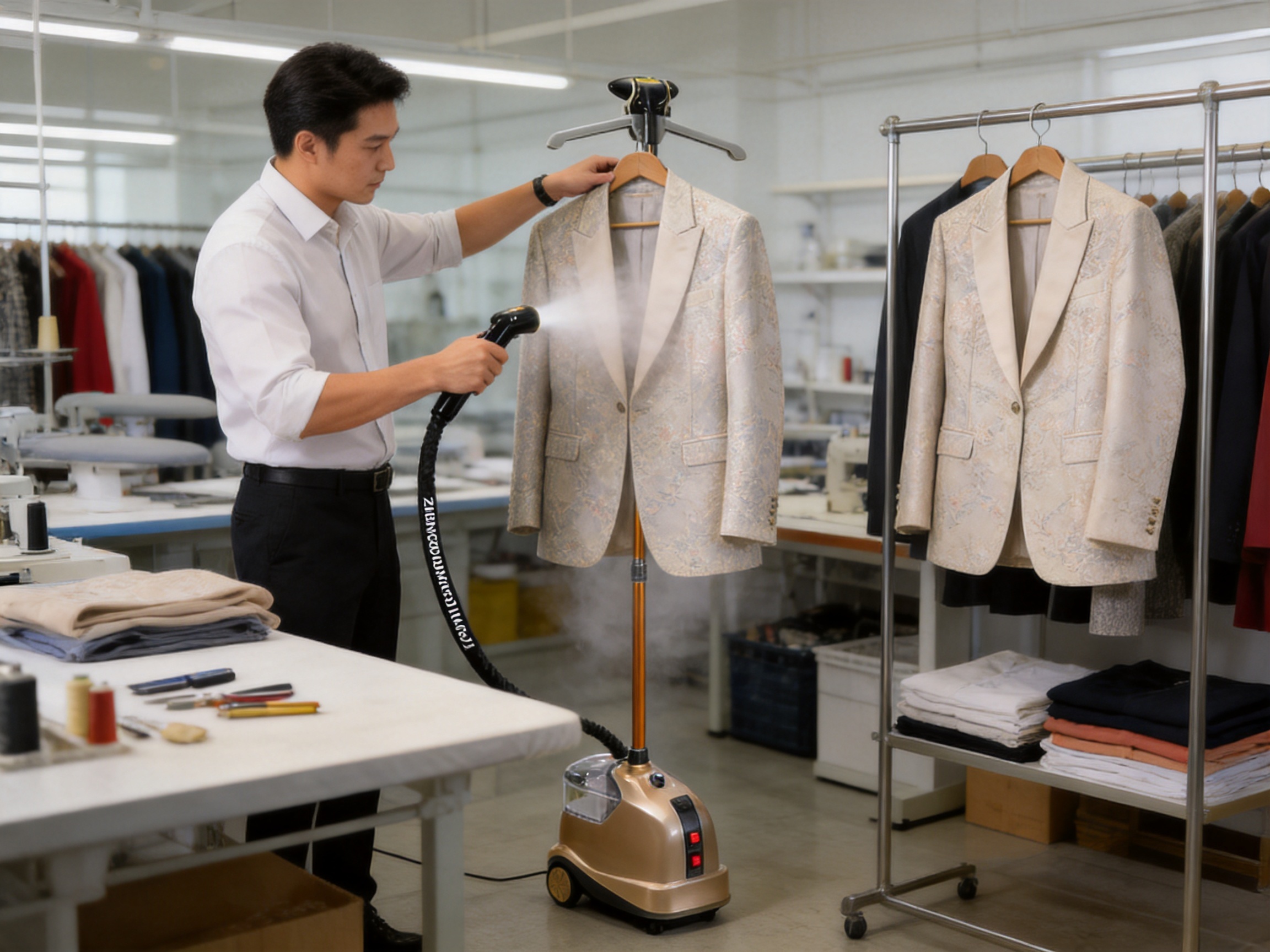
Tailors and alteration specialists frequently need to relax seams, shape finished garments, and improve the appearance of completed work. Steam can assist with final presentation after sewing, pressing, or fitting. The pressure gauge and continuous output provide useful control during repeated workshop tasks.
Because tailoring rooms may have limited space, a compact unit can be easier to position near the finishing table. It can support both routine garment preparation and detailed finishing work when used with suitable fabric-handling techniques.
Hotels may need to prepare uniforms, guest garments, curtains, table textiles, and event clothing. A dependable steaming system can help housekeeping and laundry teams respond to daily needs. Automatic water management reduces the amount of attention required during repeated use.
The unit may also support hospitality presentation by helping staff prepare uniforms before shifts, refresh garments for events, and improve the appearance of textiles used in public areas. Actual suitability depends on the hotel’s volume and operating schedule.
Garment manufacturers often require finishing equipment for samples, inspections, packing, and quality control. Steam can help reveal the final appearance of a garment and assist staff in correcting wrinkles before shipment.
The ST-2000/ST-518 can be useful in smaller production areas, sample rooms, inspection departments, and packing sections. Larger factories may use it as a supplementary machine alongside higher-capacity steam systems.
Schools, hospitals, factories, security companies, and service organizations may need to maintain the appearance of uniforms. A consistent steaming process can help return garments to service in a presentable condition.
The liquid-level alarm and automatic refill system are particularly relevant where staff members must process multiple garments while managing other responsibilities. Proper safety procedures remain essential in any institutional environment.
Home users who sew, customize, resell, or care for formal garments may require more than a small handheld steamer. The ST-2000/ST-518 provides an option for users seeking stable steam production, monitoring functions, and reduced manual refilling.
Before home installation, users should confirm that the electrical circuit, ventilation, floor area, and operating environment are suitable. The machine should be kept away from children, pets, and areas where accidental contact with hot steam is possible.
The manufacturer, Jinyun Shengda Sewing Equipment Co., Ltd., was established in 2003 in Huzhen Town, Lishui City, Zhejiang Province, China. The company operates in a location connected to Lishui, Jinhua, and Taizhou, providing access to transportation and industrial supply networks.
The company specializes in independent research, development, and production of garment-care and sewing-related equipment. Its product scope includes electric irons, steam irons, hanging irons, spray guns, small steam machines, heat transfer machines, steam boilers, vacuum tables, and accessories. This broad product range gives the manufacturer experience across multiple stages of garment finishing.
Product development that covers several related categories can support practical equipment integration. A company familiar with irons, steam boilers, vacuum tables, and accessories can better understand how each machine contributes to the wider garment-care workflow. This knowledge is relevant when designing a steamer intended for commercial users.
The company’s stated approach includes continuous product improvement and quality upgrades. For the ST-2000/ST-518, this is reflected in the combination of automatic water management, pressure monitoring, liquid-level protection, dry steam production, and accessible maintenance features.
Independent research and development allow a manufacturer to adjust products according to market feedback, operating experience, and changing customer requirements. Instead of relying only on standard designs, the company can refine controls, improve internal arrangements, develop new models, and offer solutions for different user groups.
For garment steamers, research and development may involve heating efficiency, water control, steam quality, safety monitoring, component accessibility, packaging, and compatibility with commercial workflows. The product information indicates that the ST-2000/ST-518 has been developed with these practical considerations in mind.
Research capability is especially important for export markets because users in different regions may have different electrical systems, water conditions, operating habits, and compliance expectations. Customers should confirm regional electrical and certification requirements before purchase.
The company states that it follows national and industry standards, including GB4706.1-2005 and GB4706.2-2007. It also states that its products have passed CCC and CQC certifications. These references indicate attention to electrical safety and product conformity within applicable certification frameworks.
Certification information should always be matched to the exact model, production version, voltage configuration, and destination market. Buyers may request current certificates, test reports, manuals, labels, and compliance documentation during the purchasing process.
Following standards contributes to more consistent manufacturing because it establishes requirements for electrical construction, safety protection, insulation, testing, and product identification. For equipment that combines heat, water, pressure, and electricity, this discipline is particularly important.
Although detailed factory process data was not provided, the company’s product range and stated manufacturing focus indicate several important quality-control priorities. These include reliable heating components, secure electrical connections, durable water pathways, accurate level detection, functional alarms, stable pressure indication, and effective final testing.
A robust manufacturing process should include incoming inspection of key components, controlled assembly, electrical safety testing, water and steam function testing, visual inspection, and final packaging checks. These steps help reduce the likelihood of defects reaching customers.
For a product such as the ST-2000/ST-518, quality control should also verify automatic refill behavior and liquid-level alarm response. A machine may heat correctly yet still fail to deliver dependable service if its water-management system is inconsistent. Integrated testing is therefore important.
Packaging is another manufacturing consideration. The listed packaging dimensions suggest that the manufacturer pays attention to product handling and shipment. Appropriate packaging helps protect gauges, fittings, electrical components, and external surfaces during transport.
The company identifies customization and OEM services among its advantages. These services may be relevant to distributors, importers, private-label businesses, uniform suppliers, and regional equipment dealers that require specific labeling, packaging, electrical configurations, or documentation.
Customization should be discussed in detail before production. Buyers may need to confirm minimum order quantities, model identification, voltage and plug requirements, control labels, packaging artwork, spare parts, manuals, warranty conditions, inspection procedures, and delivery schedules.
OEM cooperation can be more effective when the supplier has a broad product portfolio and established manufacturing experience. A distributor may be able to source complementary irons, boilers, vacuum tables, spray guns, and accessories from the same production partner, simplifying product management and after-sales support.
The company reports that its products are exported to Southeast Asia, Central Asia, South America, Africa, and other regions. International experience can help a manufacturer understand shipping requirements, commercial documentation, packaging protection, and communication with overseas customers.
Customers should still verify all destination-specific requirements. Electrical frequency, plug design, language requirements, labeling rules, import documentation, and certification expectations may differ between countries.
Before ordering the ST-2000/ST-518, buyers should evaluate the expected workload. Occasional household users may focus on ease of use and storage, while commercial users should examine operating hours, garment volume, maintenance access, spare parts, and service support.
Confirm the complete technical specification, including the exact rated steam temperature unit, applicable steam pressure range, water capacity or water-source requirements, electrical frequency, dimensions of the assembled machine, net weight, gross weight, hose configuration, and included accessories.
Ask whether the listed packing sizes refer to one complete package or two packaging configurations. Accurate information is important for warehouse planning, freight calculation, installation, and workspace design.
Buyers should also request operating instructions and maintenance recommendations. These documents should explain water selection, cleaning frequency, alarm behavior, pressure-gauge interpretation, safe shutdown, and procedures for addressing abnormal performance.
For commercial installations, discuss warranty coverage, replacement components, technical support, lead times, inspection services, and after-sales communication. A dependable equipment purchase includes not only the machine but also the information and support required to keep it operating.
Efficient water management can contribute to lower waste. The automatic refill system is designed to supply water according to operating needs rather than relying entirely on repeated manual filling. Reduced interruption may also improve labor efficiency and limit unnecessary water handling.
Energy use is an important consideration for any electrically heated appliance. The ST-2000/ST-518 has a listed heating power of 1.8 kilowatts. Actual consumption depends on operating time, heating cycles, ambient conditions, water temperature, maintenance condition, and workload.
Regular cleaning can support energy efficiency by helping the heating system transfer heat more effectively. Scale buildup may increase heating time and reduce performance. Preventive maintenance therefore supports both equipment life and operating economy.
The total cost of ownership should include the purchase price, electricity, water, maintenance materials, labor, replacement parts, shipping, and downtime. A machine with automatic controls may offer better long-term value than a lower-cost alternative that requires frequent manual intervention.
Always sort garments according to fabric type, color, construction, and care instructions. Begin with a lower-risk or less visible area when treating an unfamiliar material. Keep the steam outlet moving and avoid prolonged exposure to a single point.
Hang garments securely so that steam can reach the fabric without creating unnecessary tension. Smooth the garment gradually, working from larger areas toward collars, cuffs, seams, and detailed sections. Allow the garment to settle briefly after steaming before folding or packaging it.
Maintain a clean working environment. Dust, lint, and loose fibers can accumulate around garment equipment and may affect ventilation or fittings. Wipe external surfaces only when the machine is switched off and cool.
Do not use a garment steamer as a substitute for every pressing operation. Some garments require direct pressure, specialized forms, vacuum extraction, or other finishing methods. The ST-2000/ST-518 is best used as part of an appropriate garment-care process.
It is designed for garment care, wrinkle removal, fabric refreshing, and finishing applications in homes, retail stores, tailoring workshops, hotels, laundries, uniform departments, and selected garment-production areas.
The listed heating power is 1.8 kilowatts.
The supplied specification lists a 220-volt power supply. Buyers should confirm the required frequency, plug configuration, and regional electrical compatibility before ordering.
Yes. The product is described as having a fully automatic water refill system, reducing the need for repeated manual refilling during operation.
The liquid-level alarm warns the operator when the water level is low. This helps prevent unsuitable operation and supports protection of the heating system.
The built-in pressure gauge allows users to monitor operating pressure in real time. It provides useful information during start-up, normal operation, and troubleshooting.
The product is designed to provide continuous dry steam without water droplets. Actual steam quality depends on correct operation, water quality, maintenance, and operating conditions.
It can be used with a variety of fabrics, including delicate materials, provided that the user follows the garment care label, uses suitable distance and exposure time, and tests an inconspicuous area first.
Yes. Its automatic water refill, continuous steam concept, pressure gauge, liquid-level alarm, compact design, and maintenance accessibility make it suitable for many commercial applications. Very high-volume facilities should evaluate capacity requirements before purchase.
Maintenance may include checking fittings and hoses, cleaning accessible components, monitoring the pressure gauge, managing mineral deposits, inspecting electrical connections, and following the manufacturer’s recommended service schedule.
Buyers should confirm the rated steam temperature unit, steam pressure range, water requirements, electrical frequency, assembled dimensions, weight, included accessories, packaging configuration, warranty, and destination-market compliance documents.
The company states that it provides customization and OEM services. Specific requirements, minimum quantities, packaging, labels, electrical configurations, and documentation should be confirmed directly before production.
Jinyun Shengda Sewing Equipment Co., Ltd. is located at No. 8 Nanyi Road, Huzhen Industrial Park, Zhejiang, China.
The supplied contact information includes the email addresses jyshengda@163.com and caroying@jy-shengda.com, as well as the telephone number +86-578-3158872.
The ST-2000/ST-518 Garment Steamer is a practical steam-generation solution for users who need consistent garment finishing in a compact format. Its main strengths are the fully automatic water refill system, continuous dry steam concept, integrated pressure gauge, liquid-level alarm, simple operation, accessible maintenance design, and suitability for both commercial and home environments.
Compared with basic manual-fill steamers, the product can reduce interruptions and improve operating awareness. Compared with larger industrial systems, its compact design may make installation and movement easier for small and medium-sized workplaces. Its value is especially clear in retail, tailoring, hospitality, uniform care, sample rooms, and other applications where garment appearance and workflow efficiency are important.
The manufacturer adds value through independent research and development, a broad garment-equipment portfolio, stated compliance with relevant standards, CCC and CQC certifications, customization and OEM capabilities, and export experience. These strengths support the product’s positioning as part of a wider professional garment-care equipment range.
Before purchase, users should confirm the complete technical data, regional electrical requirements, water-management details, service arrangements, and packaging information. With correct installation, appropriate water quality, regular maintenance, and careful fabric handling, the ST-2000/ST-518 can provide dependable steam support for efficient and professional garment care.
1. Product technical information for the ST-2000/ST-518 Garment Steamer, including model, heating power, rated steam temperature, power supply, packing size, and operating features.
2. Manufacturer-provided company information for Jinyun Shengda Sewing Equipment Co., Ltd., including company history, product categories, export markets, customization services, and quality commitments.
3. Manufacturer-provided product advantages and key-feature descriptions for automatic water refill, continuous dry steam, pressure monitoring, liquid-level warning, compact design, maintenance, and garment-care applications.
4. GB4706.1-2005, General Requirements for Safety of Household and Similar Electrical Appliances.
5. GB4706.2-2007, Applicable Safety Requirements for Household and Similar Electrical Appliances Used for Heating Purposes.
6. General professional guidance on garment steaming, textile care, steam equipment maintenance, water-quality management, and electrical appliance safety.
 +86-578-3158872 / +86-578-3158958
 jyshengda@163.com / caroying@jy-shengda.com
 No. 8 Nanyi Rd, Huzhen Industrial Park, Zhejiang, China
Copyright © Jinyun Shengda Sewing Equipment Co., Ltd. All Rights Reserved.
Ironing Press Machine Equipment Factory
 English
 中文简体
 русский
 عربى