
Handheld electric iron users often notice that some fabrics develop a slight shine after ironing, while others keep their original appearance. The difference is not always caused by the iron itself. Fabric structure, ironing pressure, garment finishing, and ironing habits all contribute to the final result. Because of this, manufacturers have gradually shifted attention from heating performance alone to overall fabric care.
Today, many buyers also compare how a garment care appliance performs on different materials instead of asking only how quickly it removes wrinkles.
Some Fabrics React More Easily Than Others
Not every fabric responds to direct heat in the same way.
Cotton usually tolerates pressing well.
Wool blends behave differently.
Synthetic fibres may show surface changes more quickly if excessive pressure is applied.
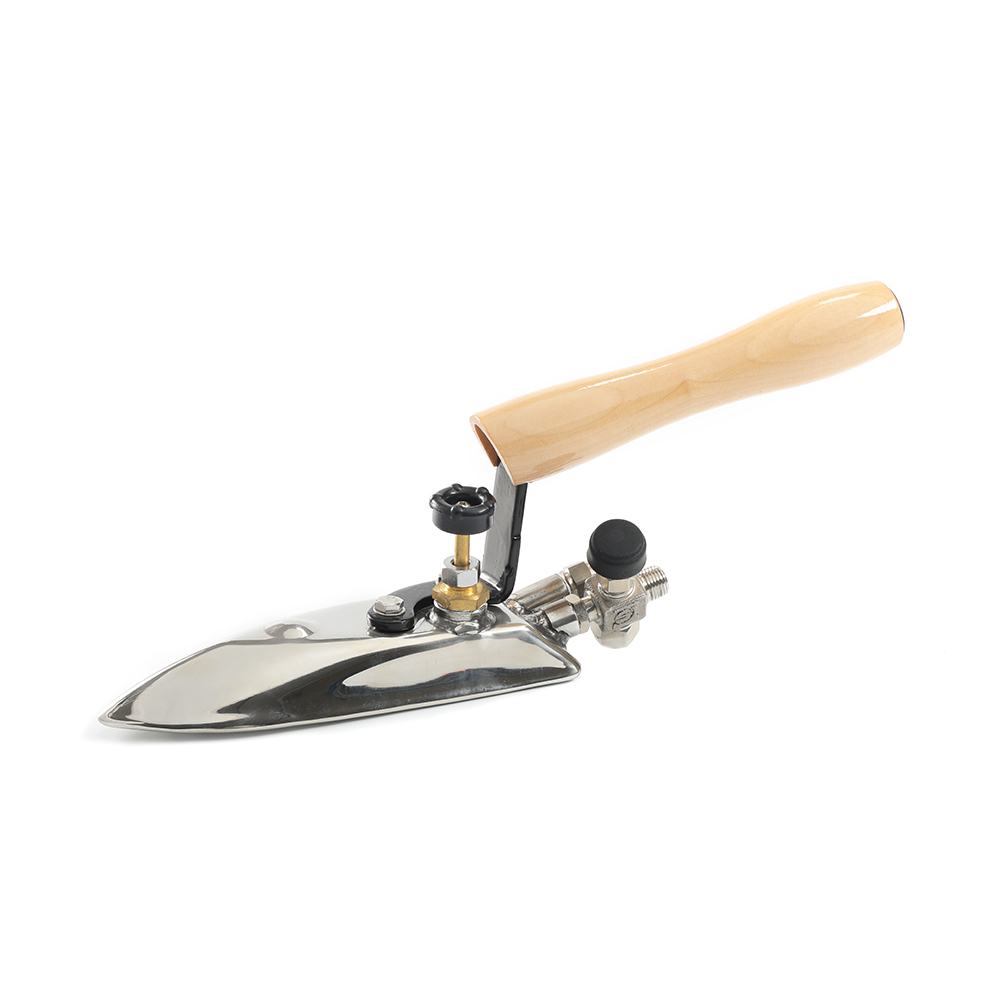
These differences explain why the same handheld electric iron can produce completely different results depending on the garment rather than the appliance itself.
Pressure Can Be As Important As Heat
Many people naturally focus on temperature.
In practice, pressure also changes the appearance of fabric.
Holding the iron in one place for too long or pressing heavily against delicate fibres may flatten the surface, making reflected light appear brighter from certain angles.
Professional garment finishing therefore balances movement, pressure, and contact time instead of relying on force alone.
This is one reason manufacturers continue refining soleplate design on modern handheld electric iron products.
Fabric Surface Determines The Final Finish
The same wrinkle can disappear in different ways.
Some materials recover with only light contact.
Others require several slow passes.
Instead of treating every garment identically, experienced users usually adjust their ironing rhythm according to the fabric.
That approach often produces a cleaner appearance while reducing unnecessary surface stress.
For companies developing a garment care appliance, versatility has become an important design objective because households rarely iron only one fabric type.
Typical Fabric Responses
|
Fabric Type |
Common Observation |
Suggested Approach |
|
Cotton |
Holds sharp creases |
Smooth continuous movement |
|
Wool blend |
Surface may flatten |
Use lighter pressure |
|
Polyester blend |
Sensitive to direct contact |
Short ironing passes |
|
Linen |
Wrinkles release gradually |
Even movement across fabric |
Rather than following one routine, users often adapt their handheld electric iron according to the garment in front of them.
Small Habits Often Make The Difference
Experienced users usually develop simple routines.
They avoid leaving the soleplate still on delicate areas.
They move gradually across seams instead of stopping on one point.
Some garments are turned inside out before ironing when the outer surface requires additional protection.
None of these steps is complicated, yet together they help reduce the chance of visible shine marks.
Product Design Continues To Improve
Modern irons are expected to do more than generate heat.
Users increasingly look for smooth movement, comfortable handling, and stable steam performance where applicable.
Manufacturers therefore spend considerable effort improving soleplate coatings, weight distribution, and overall usability.
For a garment care appliance, these refinements may not be immediately obvious, but they influence everyday ironing far more than dramatic design changes.
Everyday Results Reflect Everyday Technique
A freshly ironed garment is usually judged by its overall appearance rather than by the specifications printed on the product box.
The way the iron moves across the fabric, how long it stays in contact, and how the material responds all contribute to that result.
Because of this, a handheld electric iron is no longer evaluated only by heating speed. Many users pay equal attention to whether it leaves fabrics looking natural after repeated use, especially when working with garments made from different materials.
 +86-578-3158872 / +86-578-3158958
 jyshengda@163.com / caroying@jy-shengda.com
 No. 8 Nanyi Rd, Huzhen Industrial Park, Zhejiang, China
Copyright © Jinyun Shengda Sewing Equipment Co., Ltd. All Rights Reserved.
Ironing Press Machine Equipment Factory
 English
 中文简体
中文简体 русский
 عربى
عربى