In garment production, tailoring, textile care, hospitality, laundry service, and home sewing, the quality of the finishing process has a direct effect on the appearance and perceived value of clothing. Even when a garment has been cut and sewn accurately, it may still require careful pressing to remove wrinkles, shape seams, set pleats, prepare collars and cuffs, and create a clean final presentation. An all steam iron is one of the most practical tools for completing these tasks because it combines controlled heat, mechanical contact, and continuous steam in a single operating process.
The ST-1 All Steam Iron, identified in its technical description as the ST-601A, also referred to as the BS-6PC configuration, is designed for users who need more than a basic household iron. It combines a stainless-steel soleplate, a dedicated outer cover, an ergonomic handle, adjustable steam regulation, and a steam return valve. These features are intended to support stable operation, comfortable handling, efficient maintenance, and reliable results across a wide range of fabrics.
This article examines the product’s design, operating advantages, competitive value, manufacturing background, maintenance requirements, suitable applications, purchasing considerations, and frequently asked questions. It also explains why an all steam iron can be a valuable part of a professional pressing station and how the manufacturing capabilities of Jinyun Shengda Sewing Equipment Co., Ltd. support product consistency and service flexibility.

ST-1 All Steam Iron
An all steam iron is a specialized pressing appliance that uses steam as a central part of the ironing process rather than treating steam as a secondary spray function. Steam softens and relaxes textile fibers, allowing the soleplate to pass over the material with less resistance. Heat helps remove moisture and set the desired appearance, while pressure from the operator shapes the fabric and improves the definition of seams, edges, and surfaces.
This operating principle is especially useful when a garment contains multiple layers, structured areas, or materials that respond better to moisture and controlled heat than to dry ironing alone. Jackets, uniforms, trousers, shirts, dresses, workwear, school clothing, and many types of household textile products can benefit from steam-assisted finishing.
Compared with a simple dry iron, an all steam iron offers more control over moisture and fabric response. Compared with a domestic steam iron designed mainly for occasional use, a professional-style all steam iron is generally more suitable for a dedicated work area where the equipment must be handled repeatedly. The operator can regulate the steam flow according to fabric thickness and the desired finishing effect, while the solid soleplate provides consistent contact across the working surface.
The ST-1 is designed around this professional-use concept. Its components are selected to support repeated operation, straightforward handling, and serviceability. The product is not presented as a complicated digital appliance with numerous electronic settings. Instead, its value comes from a practical mechanical structure, an effective steam system, and a design that allows users to focus on the quality of the finished garment.
The supplied product information gives the commercial title as ST-1 All Steam Iron and identifies the technical model as ST-601A, with BS-6PC also included in the description. Buyers and distributors should confirm the exact model designation, accessories, voltage, connection arrangement, and packaging configuration before placing a production order. Model naming can vary between product catalogs, regional markets, and private-label programs.
At its core, the iron consists of four important functional areas: the outer cover, the stainless-steel soleplate, the handle, and the steam control and return system. Each area contributes to the total user experience. A strong soleplate alone cannot guarantee excellent results if the handle causes fatigue or if steam cannot be controlled accurately. Similarly, a comfortable handle cannot compensate for unstable heat or poor steam management. The product’s advantage is therefore based on the relationship between its components rather than on one isolated feature.
| Product Area | Primary Function | Practical Benefit |
|---|---|---|
| Outer cover | Protects and encloses key components | Supports durability, appearance, and safer routine handling |
| Stainless-steel soleplate | Transfers heat and pressure to the fabric | Provides smooth movement, corrosion resistance, and even contact |
| Ergonomic handle | Allows the operator to guide the iron | Improves grip, control, and comfort during extended use |
| Steam regulation system | Adjusts the amount of steam delivered | Helps match moisture output to different fabrics and tasks |
| Steam return valve | Redirects excess steam within the system | Helps reduce unnecessary moisture accumulation and supports efficiency |
| Serviceable construction | Allows access to components for maintenance | Can reduce repair time and equipment downtime |
These features make the ST-1 suitable for users who value dependable operation, simple adjustment, and a clear maintenance path. The product is particularly relevant where operators need to complete many garments in sequence and where the iron must remain comfortable and manageable throughout the working day.
The soleplate is the primary contact surface between the iron and the garment. Its condition and material have a major influence on movement, heat transfer, and finishing quality. The ST-1 uses a stainless-steel soleplate designed to glide smoothly over textiles while resisting normal wear and corrosion.
Stainless steel is widely used in professional ironing equipment because it offers a practical balance between strength, surface smoothness, heat resistance, and durability. A well-finished stainless-steel surface can move across fabric with relatively low friction, reducing the effort required from the operator. Smooth movement is valuable when pressing large panels, long seams, trouser legs, sleeves, table linens, and other surfaces that require repeated passes.
Another benefit is resistance to corrosion. Steam introduces moisture into the operating environment, and equipment used near boilers, steam generators, or damp textiles must be made from materials that can tolerate this condition. While proper cleaning and drying remain important, stainless steel provides an additional level of protection against rust compared with less suitable metals or poorly protected surfaces.
The soleplate also contributes to even heat distribution. Uniform contact helps reduce the possibility of localized hot spots that may cause unwanted shine, discoloration, or damage to sensitive materials. Operators must still select suitable temperature and steam settings for each fabric, but a stable soleplate gives them a more predictable working foundation.
In competitive terms, the stainless-steel soleplate helps distinguish the ST-1 from low-cost irons that may use less durable contact surfaces or coatings that can deteriorate under frequent use. A coating may provide good performance when new, but scratches, peeling, or surface contamination can affect glide and fabric safety over time. Stainless steel is not maintenance-free, but its solid construction can offer a longer service path in demanding work environments.
To preserve soleplate performance, operators should avoid dragging the iron across metal fasteners, abrasive surfaces, adhesive residues, or contaminated worktables. The soleplate should be cleaned according to the supplier’s recommendations, and users should not use aggressive tools that could create grooves or rough edges. A clean and smooth soleplate supports both appearance quality and operating efficiency.
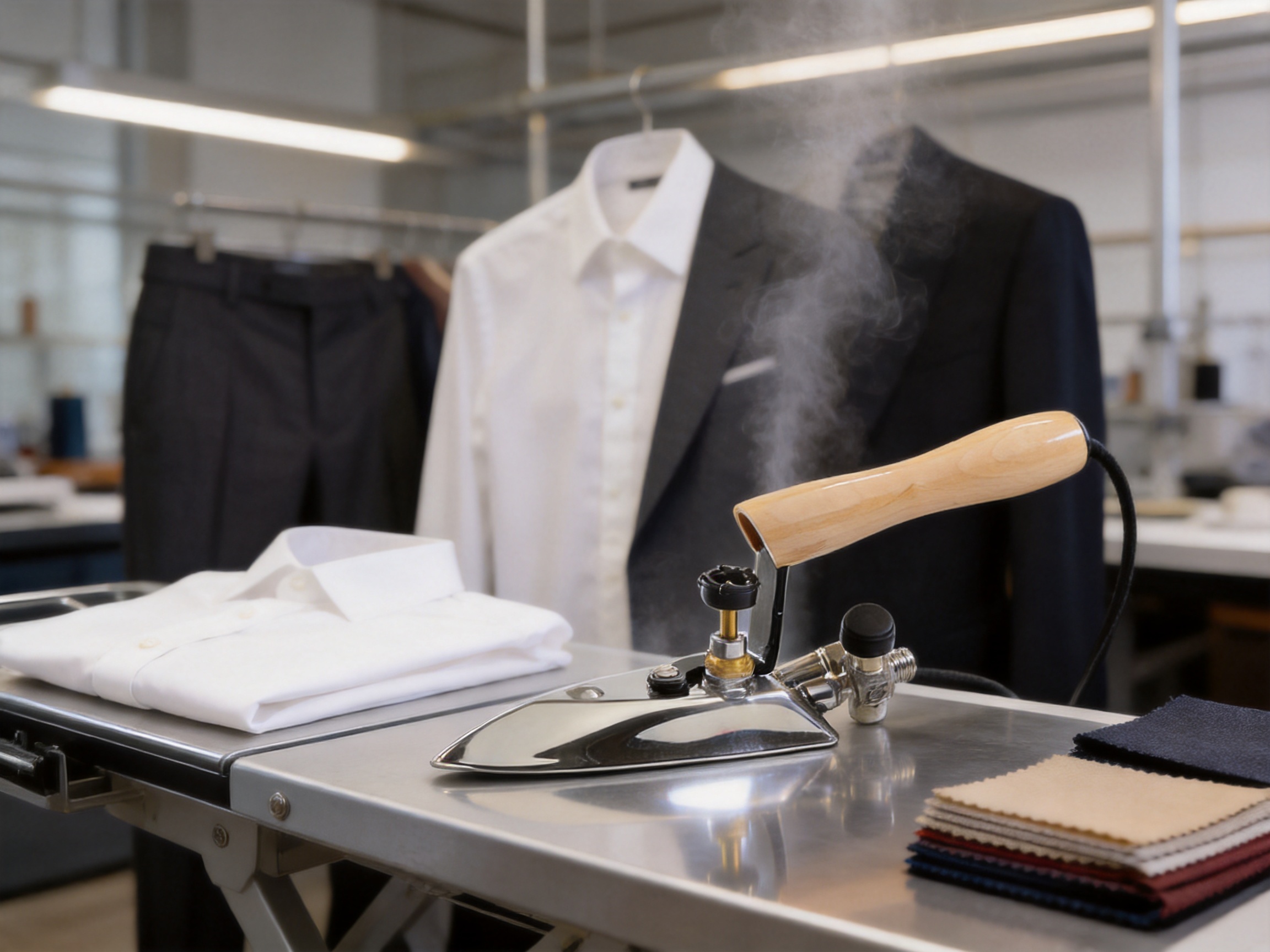
The outer cover of the ST-1 is designed to combine visual appeal with practical protection. In a garment-care environment, equipment is often visible to customers, production managers, quality inspectors, and visitors. A well-designed cover gives the product a professional appearance and allows it to fit naturally into a modern ironing station, tailoring workshop, hotel laundry, or retail alteration area.
Appearance is not merely a marketing detail. A carefully formed cover can help protect internal components from accidental contact, airborne dust, splashes, and routine handling. It can also provide a defined structure for the handle and controls, helping the operator understand how to hold and use the iron. The result is a product that looks organized and purposeful rather than improvised.
The materials used for the cover are intended to withstand ordinary wear associated with repeated handling. Users may place the iron on a rest, move it between workstations, connect or disconnect steam lines, and clean the surrounding area many times during the equipment’s service life. A durable cover helps the iron maintain a professional appearance while protecting the internal assembly from unnecessary impact.
Compared with basic irons with thin or loosely fitted housings, a well-constructed cover can provide a stronger sense of stability. This is especially important in professional environments where equipment is expected to support consistent work routines. A stable external structure also makes it easier to inspect the iron for damage, contamination, or loose parts before beginning a shift.
Pressing is a hands-on process. The operator must lift, guide, turn, and reposition the iron repeatedly. For that reason, handle design has a direct effect on productivity, user comfort, and finishing accuracy. The ST-1 uses a specially designed handle intended to provide a firm, comfortable grip and better control over the soleplate.
The ergonomic shape is intended to reduce unnecessary strain on the hand and wrist. When the grip fits the natural position of the hand, the operator can guide the iron using controlled movements rather than excessive force. This is helpful during long ironing sessions, particularly when working on heavy garments, layered materials, or large fabric panels.
The handle also includes a non-slip surface. Steam, humidity, and workplace activity can make the operator’s hands damp. A textured or secure grip reduces the likelihood of slipping and helps maintain consistent pressure. Better grip control is not only a comfort benefit; it can also improve safety by lowering the chance of accidentally dropping or misdirecting a hot iron.
Different operators have different hand sizes and working habits, so no single handle design can eliminate all fatigue. Correct working height, a suitable ironing board, regular breaks, and proper posture remain important. Nevertheless, a carefully designed handle can significantly improve the usability of the equipment compared with a narrow, poorly balanced, or slippery handle.
The balance between the handle, cover, and soleplate is also important. If the weight is distributed poorly, the operator may need to compensate with the wrist or forearm. A practical professional iron should feel controllable during both short detail work and longer straight passes. The ST-1’s construction is intended to support this type of balanced handling.
Different textiles require different amounts of moisture. Lightweight synthetic fabrics may need a restrained steam setting, while dense cotton, linen, wool blends, workwear, and multiple fabric layers may respond better to a stronger steam flow. The ST-1 includes an adjustable steam regulation system that allows the operator to adapt output to the task.
Adjustable steam provides several practical advantages. First, it helps prevent unnecessary moisture on delicate or thin materials. Excessive steam can slow drying, create temporary water marks, or make the work surface unnecessarily wet. Second, stronger steam can help relax stubborn wrinkles and improve the shaping of thicker fabrics. Third, regulation allows the operator to develop repeatable working methods for different product categories.
Steam control is particularly valuable in commercial operations because a single workstation may process many types of garments. A uniform operator may press shirts in the morning, trousers in the afternoon, and heavier jackets later in the day. A fixed steam output would force the user to adapt the fabric to the machine. Adjustable output allows the machine to be adapted to the fabric instead.
Good results still depend on operator judgment. Fabric labels, supplier instructions, temperature limits, color stability, and construction details should be considered before pressing. A safe procedure is to begin with a moderate setting and test an inconspicuous area when the material is unfamiliar. The operator can then increase or decrease steam according to the fabric response.
In comparison with inexpensive irons that offer only a simple on-or-off steam function, the ST-1 gives the user greater control. This can improve versatility and reduce the need for separate equipment for light and heavy materials. It can also help businesses standardize work methods by defining suitable steam settings for common garment categories.
The steam return valve is an important part of the product’s internal steam management. Its purpose is to redirect excess steam efficiently and help control moisture within the system. In practical use, this can support a more stable ironing process and help prevent unnecessary moisture buildup.
Moisture management matters because excess water can affect both the garment and the equipment. If too much moisture reaches the textile, the fabric may require additional drying time. If condensation accumulates in an uncontrolled way, it may contribute to dripping, uneven steam delivery, or maintenance problems. A return valve helps the system handle steam more effectively instead of allowing all excess output to remain at the point of use.
The valve also contributes to operating consistency. When steam flow is regulated and excess steam is redirected, the operator can work with a clearer understanding of how the iron will respond. Consistency is important in professional finishing because garments are often checked against quality standards, customer expectations, or production specifications.
The durability of the steam valve is another selling point. The valve is designed for long-term use and regular operation, while also allowing cleaning or replacement if necessary. This serviceability is important for businesses that prefer to repair selected components rather than replace the complete iron when a wear part eventually requires attention.
As with all steam equipment, water quality and routine care influence valve life. Mineral deposits can accumulate in steam-related components when unsuitable water is used or when cleaning is neglected. Operators should follow the supplier’s instructions regarding water, draining, cleaning intervals, and storage. A durable valve performs best when supported by an appropriate maintenance routine.
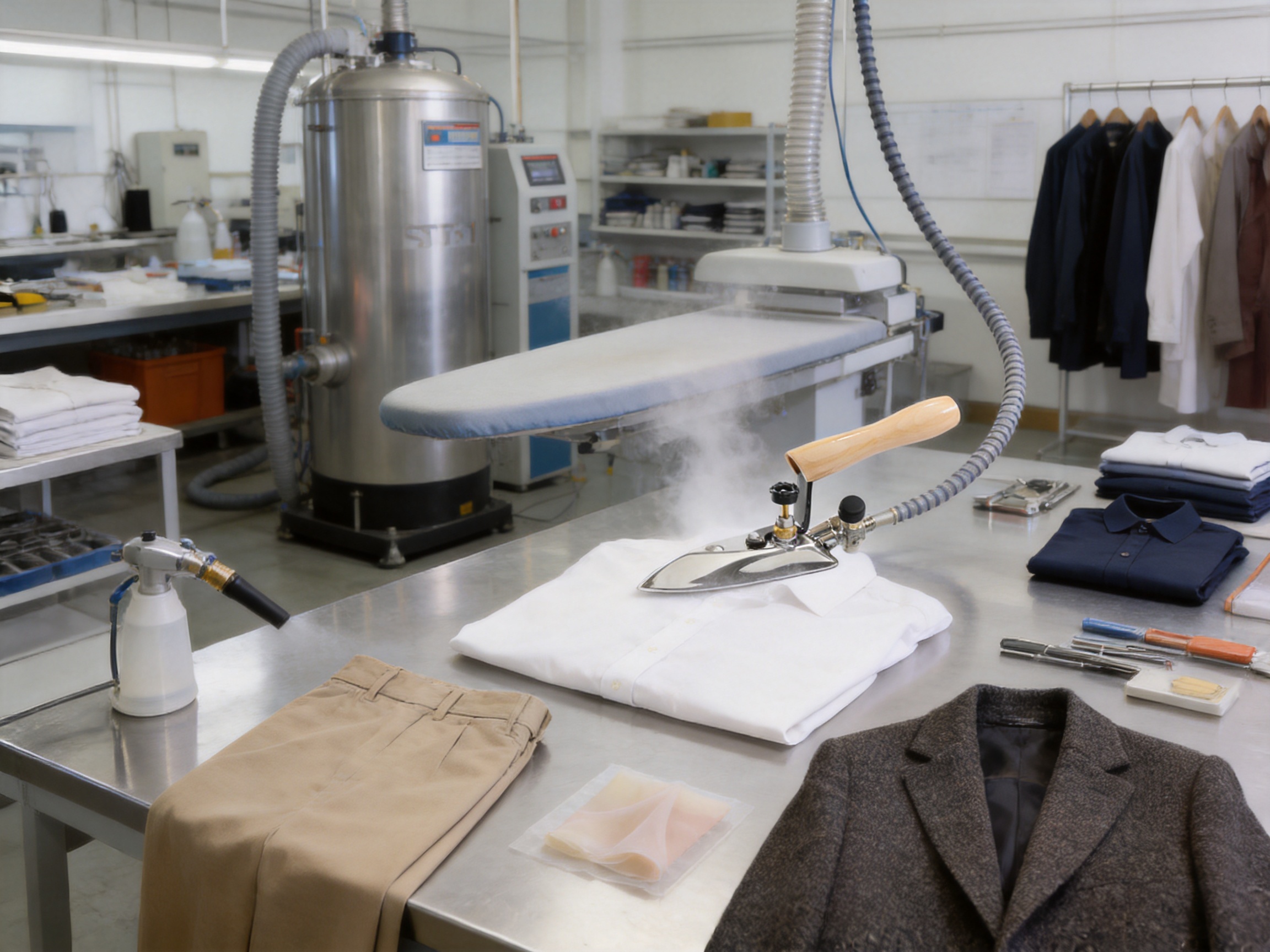
The ST-1 competes in a market that includes household steam irons, basic industrial irons, and more complex electronic pressing systems. Its strongest position is between simple consumer appliances and highly automated finishing machinery. It offers professional-oriented construction and steam control without requiring the cost, space, or training associated with a large automated system.
One advantage is durability-oriented construction. The stainless-steel soleplate, robust outer cover, and long-lasting steam valve are intended to support repeated use. Low-cost alternatives may be suitable for occasional household ironing, but they may not provide the same serviceability or resistance to continuous operating demands.
A second advantage is control. Adjustable steam allows the operator to select a suitable output for the material instead of accepting one fixed setting. This flexibility can reduce fabric handling problems and improve the range of work that can be completed at one station.
A third advantage is comfort. The ergonomic, non-slip handle is designed for longer periods of use. An operator who can maintain a secure and relaxed grip may work more accurately and with less fatigue than an operator using a poorly shaped handle.
A fourth advantage is maintenance access. The product is constructed with simplicity in mind, allowing components that may require occasional service to be accessed more easily. This can reduce downtime and make it more practical for workshops to keep replacement parts available.
A fifth advantage is suitability for different business sizes. A small tailoring shop may use one unit for finishing custom garments. A garment factory may install several units at different stations. A hotel laundry may use the iron for uniforms, guest clothing services, or linen-related tasks. Distributors may also integrate the product into packages that include steam boilers, vacuum tables, spray guns, or other pressing accessories.
| Comparison Factor | ST-1 All Steam Iron | Basic Household Iron | Large Automated Pressing System |
|---|---|---|---|
| Typical use | Professional and household garment finishing | Occasional household ironing | High-volume specialized production |
| Steam control | Adjustable steam flow | Usually limited consumer controls | Integrated automated or station-based control |
| Operator involvement | Direct and flexible manual control | Direct manual control | Lower manual input for defined operations |
| Maintenance approach | Serviceable components and practical access | Often replacement-oriented | Requires specialized technical support |
| Space requirement | Suitable for a compact ironing station | Very compact | Usually substantial |
| Application range | Broad range of garments and fabrics | Light to medium household tasks | High-volume, repeatable operations |
| Investment level | Moderate professional equipment investment | Low initial investment | Higher capital investment |
This comparison does not mean that the ST-1 is suitable for every operation. A high-volume factory with highly standardized shapes may benefit from automated presses, while a household user who irons only occasionally may prefer a small consumer iron. The ST-1 is most competitive where users need professional versatility, direct control, manageable investment, and dependable construction.
The product is manufactured by Jinyun Shengda Sewing Equipment Co., Ltd., a Chinese manufacturer established in 2003 in Huzhen Town, Lishui City, Zhejiang Province. The company is located in an industrial area connected with Lishui, Jinhua, and Taizhou, giving it access to transportation networks, industrial suppliers, labor resources, and communication channels.
The company specializes in the independent research, development, and production of garment-care and sewing-related equipment. Its product range includes electric irons, steam irons, hanging irons, spray guns, small steam machines, heat transfer machines, steam boilers, vacuum tables, and related accessories. This broad portfolio is relevant to the ST-1 because an ironing tool does not always operate alone. Many customers need a complete pressing station, and a manufacturer with knowledge of boilers, vacuum tables, and accessories can better understand the relationship between individual components.
Independent research and development can support product improvement in several ways. Engineers can review feedback from domestic distributors and overseas customers, identify recurring maintenance issues, refine component selection, improve handle design, and adjust steam management systems. Manufacturing experience across several product categories can also help the company recognize how an iron performs within a complete garment-finishing workflow.
The company owns or operates products associated with several brands, including Silver Star, Platinum Dragon, Tingshun, Jiasheng, Shengtai, and Jiangxin. These brand resources indicate experience in serving different market segments and distribution channels. For buyers, the more important point is the manufacturer’s ability to support product development, production, packaging, distribution, and after-sales communication across multiple sales identities.
According to the supplied company information, the manufacturer follows national and industry standards, including GB4706.1-2005 and GB4706.2-2007. Its products have passed CCC and CQC certifications. Certification requirements can vary by destination market, so importers should still verify whether additional regional approvals, electrical tests, labeling requirements, or documentation are needed for their intended country.
Although the supplied information does not provide a detailed factory flow chart, the product category requires several manufacturing stages that influence final quality. A quality-oriented process begins with incoming material control. Stainless steel for the soleplate, materials for the outer cover, handle components, valves, electrical parts, fasteners, seals, and packaging materials should be checked against defined specifications before entering assembly.
The soleplate requires particular attention because its flatness, surface finish, edges, and attachment to the body influence ironing performance. A suitable process may include forming or machining, surface finishing, cleaning, inspection, and assembly. The final surface should be sufficiently smooth for fabric contact and free from burrs, sharp edges, contamination, or defects that could affect movement.
The cover and handle require dimensional consistency. If the cover is not formed accurately, it may interfere with internal components or create gaps that affect appearance and protection. If the handle is poorly aligned, the iron may feel unbalanced. Consistent tooling, process instructions, and inspection points help reduce variation between production batches.
Steam components require attention to sealing and connection quality. The steam valve and return valve must operate reliably, while hose connections, gaskets, and related fittings must resist leakage under normal operating conditions. Assembly personnel should be trained to recognize incorrect positioning, damaged seals, loose fittings, and contamination that could affect the steam path.
Electrical safety is also essential. Wiring, insulation, grounding, switches, heating components, and strain relief must be assembled according to applicable standards. Production testing may include electrical continuity, insulation, grounding, heating response, steam delivery, leakage checks, and visual inspection. The exact tests depend on the product configuration and the requirements of the destination market.
Final inspection should evaluate both function and presentation. A unit may heat correctly but still require correction if the cover is scratched, the handle is loose, the soleplate is contaminated, the control is difficult to operate, or the packaging does not protect the product during transport. A complete quality approach considers the product as the customer receives it, not merely as an assembly that passes one technical test.
Manufacturing strength is therefore not only a matter of having production equipment. It also includes process discipline, quality records, trained workers, supplier management, inspection procedures, product documentation, and the ability to respond when a customer requests a technical change. These capabilities are especially important for international buyers who may need consistent repeat orders over several years.
The company identifies customization and OEM services as important advantages. For distributors and importers, OEM cooperation can include model labeling, packaging design, user manuals, color or cover adjustments, plug configuration, language-specific documentation, and coordinated accessory selection. The exact scope depends on order quantity, technical feasibility, certification requirements, and production planning.
Customization should begin with a clear technical specification. Buyers should define the intended voltage and frequency, plug type, steam source, hose connection, product name, logo requirements, packaging materials, carton markings, spare parts, and inspection standards. Ambiguous requirements can create delays or inconsistencies, particularly when several markets use different electrical systems.
OEM cooperation is most effective when engineering, production, quality, sales, and logistics teams communicate through one approved specification. Sample approval should be completed before mass production, and any changes after approval should be documented. This approach protects both the buyer and the manufacturer by reducing misunderstandings about appearance, function, and packaging.
For distributors, a private-label all steam iron can provide a practical way to build a coherent product line. The ST-1 may be positioned alongside boilers, vacuum tables, spray guns, heat transfer machines, and accessories. A complete range allows distributors to serve tailoring shops, garment factories, laundries, uniform suppliers, educational institutions, and textile service companies with more than one isolated product.
Tailors and alteration specialists require precise control because garments may be unique, expensive, fitted, or made from materials with different heat sensitivities. The ST-1 can support seam opening, sleeve shaping, collar finishing, trouser pressing, hem preparation, and final presentation. Adjustable steam allows the operator to respond to fabric differences, while the smooth soleplate supports controlled movement around details.
In garment factories, ironing may occur at several stages. Intermediate pressing can improve the accuracy of assembly, while final pressing prepares goods for inspection and packing. The ST-1 may be used at stations where direct manual control is preferred or where garment shapes vary too much for a single automated press. Its serviceable construction is useful in production environments where downtime affects schedules.
Uniforms and workwear often contain heavier fabrics, structured seams, pockets, collars, and multiple layers. Steam can help relax dense textiles and make shaping easier. The operator can adjust the steam flow to match the garment and use the ergonomic handle during repeated operations.
Hotels and commercial laundries may need to press uniforms, staff clothing, guest garments, curtains, and selected textile items. Equipment in these environments should be easy to understand because operators may have different levels of technical experience. A direct, practical control system and clear maintenance routine can support efficient staff training.
Fashion designers and sample makers frequently alter construction details during development. They may need to press seams, create temporary shapes, prepare prototypes, or evaluate how a textile responds to steam. A flexible all steam iron allows them to move quickly between fabrics and garment components without depending on a fixed automated process.
Experienced home sewers may choose professional-style equipment when they produce garments frequently or work with challenging fabrics. The ST-1 can offer more robust handling and steam control than a basic household iron. Users should ensure that their workspace, steam source, electrical supply, ventilation, and maintenance capabilities are appropriate for the equipment.
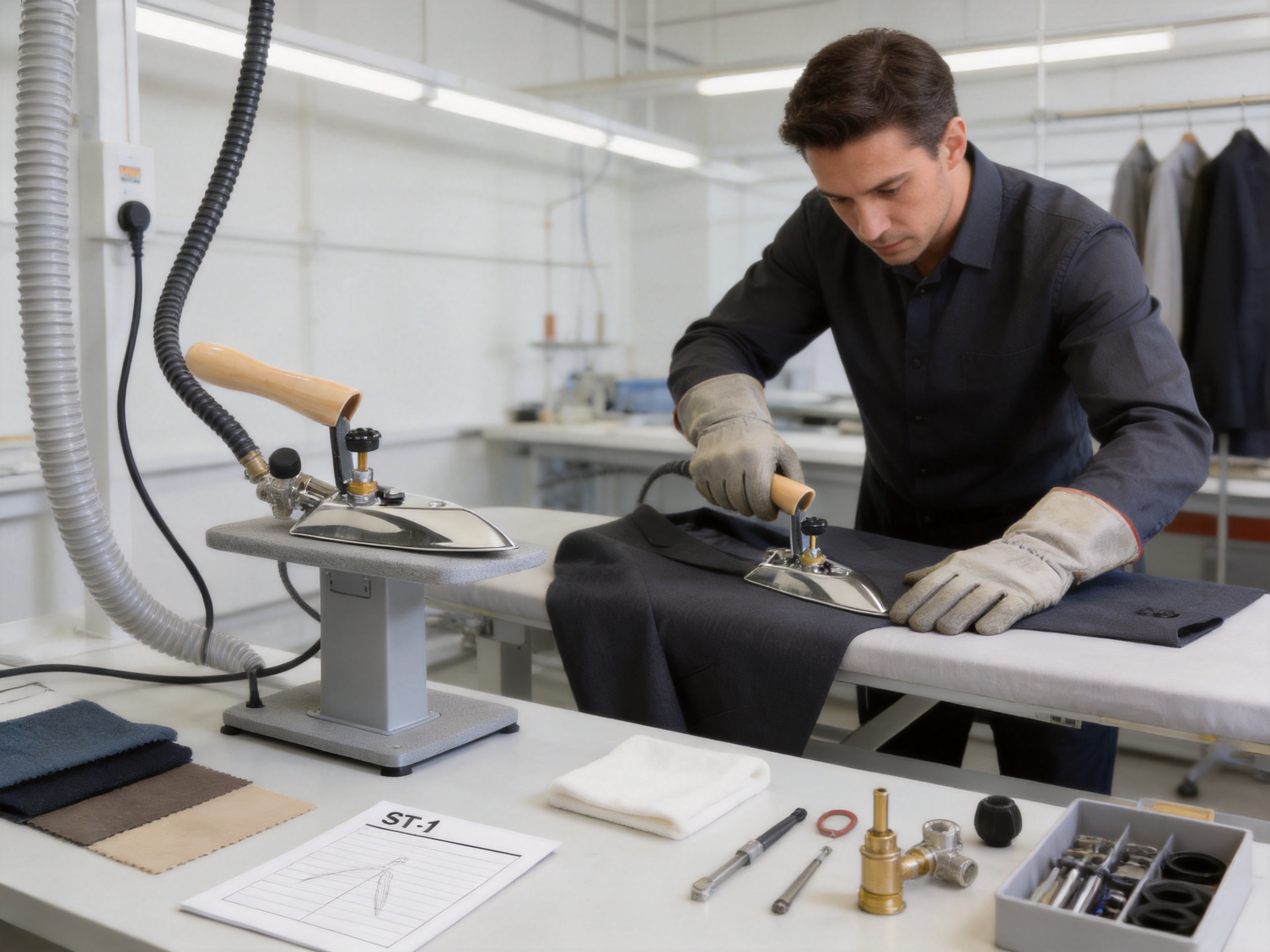
Before operation, place the iron on a stable, heat-resistant rest or suitable ironing station. Inspect the power cord, plug, steam hose, handle, soleplate, cover, and control components. Confirm that connections are secure and that there are no visible signs of damage, leakage, or contamination.
Prepare the steam source according to the approved configuration. If the iron is connected to a steam boiler or generator, verify that the system is installed and operated according to its instructions. The iron should not be connected to an unsuitable source or used with a damaged hose or fitting.
Allow the iron to reach the appropriate operating condition before beginning production work. Do not press delicate fabric immediately after startup without checking temperature and steam behavior. A brief test on a suitable sample or inconspicuous section can help confirm that the setting is appropriate.
Select a moderate steam flow for the first pass. Increase steam gradually for thick or stubborn materials, and reduce it for thin or moisture-sensitive textiles. Use smooth, controlled movements rather than excessive pressure. Let the combination of heat, moisture, and contact do the work.
For shaped garment areas, support the fabric with the appropriate pressing surface. Use the tip and edges of the soleplate carefully around collars, pockets, pleats, and seams. Avoid leaving a hot iron stationary on a fabric unless the procedure specifically requires it and the material is known to tolerate the contact.
At the end of operation, shut down the steam source and electrical supply according to the equipment procedure. Place the iron safely on its rest, allow it to cool, and clean visible residue when appropriate. If the unit will not be used for an extended period, store it in a dry, protected location.
Routine maintenance is one of the most important factors affecting the service life of any steam iron. The ST-1 is designed to make ordinary care and occasional servicing more manageable, but maintenance should still be planned rather than performed only after a failure.
The soleplate should be inspected regularly for fiber residue, adhesive contamination, discoloration, roughness, or damage. Contamination can transfer to garments and increase friction. Clean the surface using a method approved for the material and product configuration. Avoid abrasive cleaning tools that may scratch the stainless steel.
The steam path should be checked for irregular output, reduced flow, dripping, unusual noise, or signs of mineral accumulation. If the steam return valve or steam valve requires cleaning, the work should be performed by a qualified person using suitable procedures. Do not dismantle pressurized or hot components.
Hoses, seals, and connections should be inspected for wear. A small leak can become a larger operational or safety issue if ignored. Replace damaged parts with compatible components. Improvised fittings may change steam pressure, create leakage, or affect the product’s certification status.
The electrical system should be inspected for damaged insulation, loose connections, overheating, or unusual odors. Electrical repairs should be performed by trained technicians. Users should not continue operating equipment that shows signs of electrical failure.
Maintenance records can be useful in professional settings. A simple log may record cleaning, valve inspection, hose replacement, electrical checks, reported faults, and technician work. This helps managers identify recurring problems and plan spare-part purchases before a failure interrupts production.
Steam irons combine high temperature, electricity, pressure, and moisture. Operators should receive basic instruction before use and should follow the equipment manual and workplace safety rules. Appropriate precautions include keeping hands away from the soleplate and steam outlet, avoiding contact with discharged steam, and using protective procedures when handling hot components.
The work area should be dry and organized. Cords and hoses should not create trip hazards, and the ironing station should be stable. Adequate ventilation can improve comfort in areas where several steam devices operate simultaneously.
Never direct steam toward a person, electrical control, or unprotected skin. Do not leave a heated iron unattended. When the product is not in use, place it on a suitable rest rather than on the garment or worktable. Disconnect the power supply before cleaning or servicing, and ensure that steam pressure has been released where applicable.
Safety is also connected to fabric selection. Some synthetic fibers, coatings, prints, adhesives, and treated textiles may react poorly to heat or moisture. Operators should follow garment labels and textile supplier guidance. A professional iron offers control, but it cannot replace correct material identification and safe working judgment.
Equipment quality includes more than the initial product. Buyers also need technical communication, spare-part availability, packaging reliability, documentation, and assistance with troubleshooting. A manufacturer with experience in ironing equipment can help customers select compatible steam boilers, vacuum tables, hoses, rests, and accessories.
Jinyun Shengda Sewing Equipment Co., Ltd. reports that its products are exported to Southeast Asia, Central Asia, South America, Africa, and other regions. International distribution requires attention to different electrical systems, shipping conditions, languages, customs documentation, and market expectations. Experience with overseas customers can help reduce communication difficulties, although every order should still be reviewed against the requirements of its destination.
The company’s stated strengths include reliable quality, diverse products, competitive costs, professional service, convenient shipment, customization, and OEM cooperation. These strengths are particularly useful for buyers who want to develop a product range rather than purchase a one-time replacement unit.
Customers evaluating a supplier should request clear information about lead time, minimum order quantity, warranty terms, spare parts, packaging, inspection procedures, certification documents, voltage options, and after-sales support. They should also confirm whether the supplied ST-1 configuration is the same as the ST-601A or BS-6PC configuration described in technical materials.
Before purchasing, identify the intended application. A home sewing room, alteration shop, garment factory, laundry, hotel, and distributor may require different configurations. The number of working hours, types of fabric, available steam source, operator skill level, and local electrical requirements should all be considered.
Confirm the product model and included components. The commercial name ST-1 and technical references ST-601A and BS-6PC should be matched to the quotation, product label, manual, and packing list. Buyers should ask whether the offer includes a steam hose, electrical cord, plug, rest, valve components, spare parts, or other accessories.
Confirm compatibility with the steam system. Steam pressure, connection dimensions, hose length, and return arrangements should be checked before installation. If the iron is intended to work with a boiler or vacuum table, the complete system should be reviewed rather than evaluating the iron in isolation.
Review certification and market requirements. CCC and CQC information may be useful, but destination markets can require additional documentation. Importers should consult local authorities or compliance specialists when necessary.
Finally, consider total operating cost. A durable iron may have a higher purchase price than a basic consumer product, but longer service life, lower downtime, replaceable components, and improved productivity can provide better value over the entire period of use.
The ST-1 is a steam ironing product designed for household and professional garment finishing. The supplied technical description identifies it as the ST-601A, also associated with the BS-6PC configuration. It includes a stainless-steel soleplate, ergonomic handle, adjustable steam regulation, steam return valve, and durable outer cover.
Yes. Its design is intended to support professional and household applications. The stainless-steel soleplate, serviceable construction, durable steam valve, adjustable steam flow, and comfortable handle make it suitable for tailoring shops, garment production, laundries, hospitality services, sample rooms, and advanced home sewing. The final suitability depends on workload, steam-source compatibility, and correct installation.
The stainless-steel soleplate is designed to glide smoothly, resist corrosion, withstand regular use, and distribute heat evenly across the contact surface. These properties can support consistent pressing and reduce the risk of uneven contact when the soleplate is properly maintained.
Yes. The product includes an adjustable steam flow system. Operators can modify steam output according to fabric thickness, moisture sensitivity, wrinkle severity, and the required finishing effect.
The return valve helps redirect excess steam and manage moisture within the system. It is intended to support more efficient steam handling and reduce unnecessary moisture accumulation. Regular inspection and cleaning are important for reliable performance.
The handle is specially designed with ergonomic shaping and a non-slip surface. These features are intended to improve grip, control, and comfort during prolonged use. Proper workstation height, posture, and rest periods are also necessary to manage fatigue.
The ST-1 is designed with more professional-oriented features, including a durable stainless-steel soleplate, adjustable steam control, a serviceable steam valve, and a construction intended for repeated handling. A household iron may be more appropriate for occasional light ironing, while the ST-1 is better suited to users who need greater versatility and durability.
The product range is associated with steam boilers and other garment-finishing equipment, but compatibility must be confirmed for the exact configuration. Buyers should verify steam pressure, connection type, hose specifications, return arrangements, and installation instructions before connecting the iron to a boiler.
Potential users include tailoring shops, alteration services, garment factories, uniform producers, laundries, hotels, fashion studios, textile workshops, retail clothing operations, and advanced home sewing users. It is especially useful where operators need direct control over heat, pressure, and steam.
Routine care includes cleaning the soleplate, inspecting the steam hose and connections, checking the valve system, monitoring steam output, and inspecting electrical components. The product should be disconnected and cooled before cleaning or service. Qualified technicians should handle electrical or pressurized-system repairs.
The manufacturer identifies OEM and customization services among its business strengths. Possible requirements may include private labeling, packaging, documentation, plug configuration, and accessory arrangements. Buyers should discuss technical feasibility, order quantity, certification, sample approval, and production lead time with the supplier.
They should confirm whether the commercial ST-1 name corresponds to the ST-601A and BS-6PC technical references for the intended order. The model should match the quotation, label, manual, certification documents, photographs, and packing list.
Jinyun Shengda Sewing Equipment Co., Ltd. is located at No. 8 Nanyi Road, Huzhen Industrial Park, Zhejiang, China. The company was established in 2003 and serves domestic and international customers.
The ST-1 All Steam Iron is built around the practical requirements of modern garment finishing. Its stainless-steel soleplate supports smooth movement, corrosion resistance, and even contact. The ergonomic handle improves control and helps reduce fatigue. Adjustable steam regulation gives operators flexibility across different materials, while the steam return valve supports efficient moisture management. The outer cover adds durability and a professional appearance, and the serviceable construction can help reduce maintenance downtime.
Its competitive value comes from combining these features in a manually controlled, compact, and versatile product. It can offer more professional capability than a basic household iron without requiring the space or investment of a large automated pressing system. This makes it relevant to tailoring shops, garment factories, laundries, hotels, fashion studios, uniform suppliers, and serious home sewing users.
The product is supported by a manufacturer with experience in electric irons, steam irons, boilers, vacuum tables, spray guns, heat transfer machines, and related accessories. This broader manufacturing capability can help customers develop complete ironing stations, request OEM cooperation, and obtain coordinated equipment from one supplier. The company’s stated focus on research and development, quality improvement, certification, export service, customization, and customer satisfaction further supports its position in the garment-equipment market.
For the best purchasing decision, users should confirm the exact model designation, technical configuration, steam-source compatibility, electrical requirements, certification documents, maintenance provisions, and after-sales support. When correctly selected, installed, operated, and maintained, the ST-1 can provide a dependable solution for efficient and professional steam ironing.
1. Product technical information supplied for the ST-1 All Steam Iron, including the ST-601A and BS-6PC model references.
2. Product feature information supplied for the stainless-steel soleplate, ergonomic handle, outer cover, adjustable steam control, steam return valve, and serviceable construction.
3. Company information supplied for Jinyun Shengda Sewing Equipment Co., Ltd., including its establishment, product categories, manufacturing capabilities, export markets, OEM services, and certification statements.
4. GB4706.1-2005, Safety of Household and Similar Electrical Appliances: General Requirements.
5. GB4706.2-2007, Safety Requirements for Electric Irons.
6. General textile-care and garment-finishing principles concerning the coordinated use of heat, moisture, pressure, fabric identification, and maintenance.
 +86-578-3158872 / +86-578-3158958
 jyshengda@163.com / caroying@jy-shengda.com
 No. 8 Nanyi Rd, Huzhen Industrial Park, Zhejiang, China
Copyright © Jinyun Shengda Sewing Equipment Co., Ltd. All Rights Reserved.
Ironing Press Machine Equipment Factory
 English
 中文简体
 русский
 عربى