Electromagnetic heat transfer technology is changing the way textile manufacturers, apparel producers, promotional product companies, and technical material converters approach fabric printing and material bonding. By combining rapid induction heating with accurate process control, an electromagnetic heat transfer machine can provide consistent thermal performance while reducing unnecessary energy consumption and protecting sensitive substrates. It is a practical solution for businesses that need reliable results, high productivity, and a flexible production platform.
The Electromagnetic Heat Transfer Machine described in this article is designed for high-precision fabric printing and material bonding. It uses advanced electromagnetic induction technology to generate heat quickly and distribute it evenly across the working area. This allows operators to achieve dependable transfer results with sublimation inks, specialty inks, and other compatible heat-transfer processes.
Unlike conventional heating systems that may require extended warm-up periods or experience uneven heat distribution, electromagnetic induction responds rapidly to temperature changes. The machine can deliver heat where it is needed, when it is needed, while providing precise temperature management throughout the operating cycle. This combination of responsiveness and control makes it suitable for both demanding industrial production and specialized applications involving delicate fabrics.
The machine is produced by Jinyun Shengda Sewing Equipment Co., Ltd., a manufacturer with experience in electric irons, steam irons, hanging irons, spray guns, small steam machines, heat transfer machines, steam boilers, vacuum tables, and related accessories. Established in 2003, the company has developed a broad production and service system serving domestic and international customers.
With a product range covering multiple categories of ironing and textile equipment, the manufacturer can understand heat-transfer applications from a wider operational perspective. This experience supports the design of equipment that is not only effective as a standalone machine but also compatible with broader garment-finishing and textile-production workflows.
An electromagnetic heat transfer machine is a specialized production system that uses electromagnetic induction to create and control heat for printing, transferring, laminating, bonding, or finishing materials. Instead of depending exclusively on traditional resistive heating elements, the system uses an electromagnetic field to induce heat in a suitable heating structure. This process can provide a fast thermal response and a more controlled heating cycle.
In fabric printing, heat is used to activate inks, transfer designs, cure coatings, or bond printed materials to a textile surface. In material bonding, controlled heat and pressure can help join layers, films, labels, or specialty components. The precise requirements vary according to the fabric, ink, transfer medium, pressure, and production speed, but stable temperature remains one of the most important factors in every application.
The Electromagnetic Heat Transfer Machine is engineered to address this requirement. It is intended to provide instantaneous and uniform heating, helping operators maintain consistent processing conditions from one production cycle to the next. The system is suitable for sublimation printing and specialty ink applications, while also supporting work involving delicate fabrics and heat-sensitive materials.
Because the machine is designed for high-volume production, it is appropriate for manufacturers that need repeatable output rather than occasional manual transfer. It can support apparel decoration, technical textile production, promotional products, customized fabric goods, and other applications where visual quality and process stability are essential.
Traditional heating systems commonly rely on resistive elements that gradually warm up and transfer heat through conduction. These systems can be effective, but they may have limitations related to startup time, heat retention, thermal overshoot, or temperature differences across the working surface. When the process involves a large transfer area or a sensitive substrate, even small differences can affect the final result.
Electromagnetic induction offers a different approach. When the induction system is activated, an electromagnetic field generates heat within the designated heating structure. This enables the machine to respond quickly to control commands and reach the target process condition with less delay. The operator can therefore spend less time waiting for the equipment to become ready and more time completing productive work.
Uniform heating is another important advantage. If one area of a transfer surface is hotter than another, the printed image may show inconsistent color, incomplete bonding, uneven gloss, or localized substrate damage. A carefully engineered electromagnetic heating system helps reduce these differences by delivering heat consistently across the intended working area.
Rapid thermal response also improves process control. If the operator changes the target temperature, adjusts the working cycle, or pauses production, the machine can react more promptly than a system with considerable residual heat. This is particularly useful when different materials are processed during the same shift.
Energy efficiency is closely connected with responsive heating. A machine that reaches the required temperature quickly and maintains it accurately can reduce the amount of energy lost during idle periods or excessive heating. The actual energy performance will depend on operating conditions, material type, temperature settings, cycle duration, and production volume, but the induction principle provides a strong foundation for efficient operation.
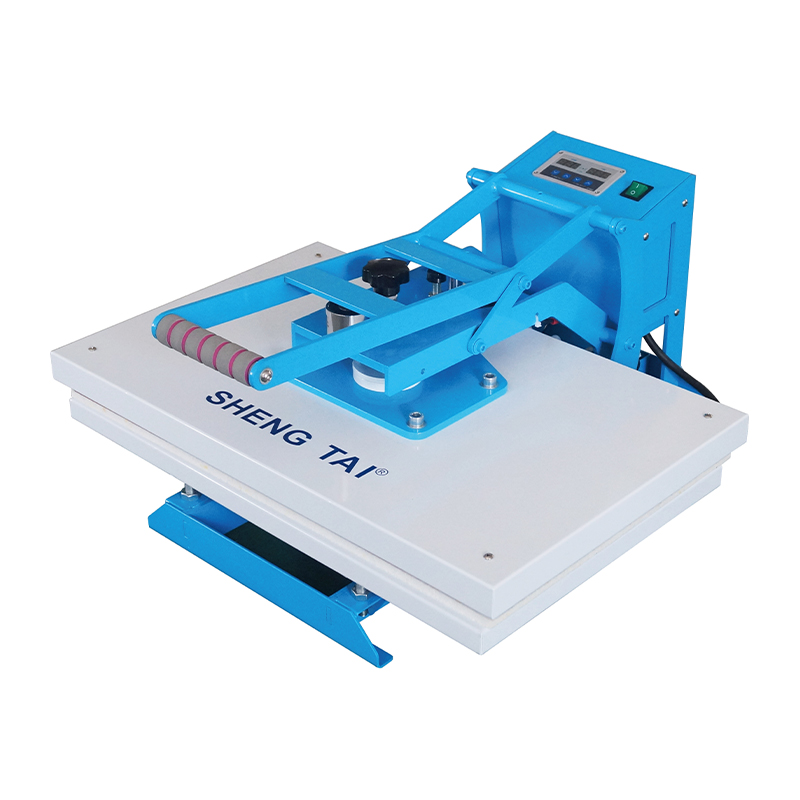
Electromagnetic Heat Transfer Machine
Production delays often begin before the first item is processed. Conventional machines may need a long warm-up period, especially when the working surface is large or the target temperature is high. The electromagnetic system is engineered for instantaneous heating and rapid thermal response, helping reduce preparation time between startup, material changes, and repeated production cycles.
Shorter preparation time is especially valuable in factories with multiple orders or frequent changes in design. Operators can move more efficiently from one task to another without waiting unnecessarily for the machine to stabilize. This supports better utilization of floor space, labor, and production schedules.
Heat uniformity directly affects transfer quality. A printed design must receive sufficient heat for the required period, but excessive heat may distort fabric, alter color, damage coatings, or affect the hand feel of the material. Uniform thermal distribution helps ensure that the entire transfer area receives the intended processing conditions.
The machine is designed to provide even heating for a broad range of fabric-printing and bonding applications. This can help minimize common quality problems such as incomplete transfer, uneven color development, weak adhesion, edge variation, and visible differences between the center and outer portions of a workpiece.
Temperature accuracy is essential when working with sublimation inks, specialty inks, coated fabrics, synthetic fibers, films, and other heat-sensitive materials. Each substrate may have a different tolerance, and a temperature that works well for one product may be unsuitable for another.
Precise temperature control allows operators to establish repeatable process parameters. Once a suitable temperature and cycle have been identified, production staff can reproduce the same conditions across multiple batches. This contributes to stable color, consistent bonding, and more predictable quality inspection results.
Many modern textiles contain lightweight fibers, coatings, laminations, elastic components, or surface treatments that may be affected by excessive heat. Delicate fabrics require a balance between enough thermal energy to complete the transfer and enough restraint to prevent substrate damage.
The rapid response of electromagnetic heating supports this balance. Instead of exposing a material to uncontrolled or prolonged heating, the machine can provide the required thermal energy with more precise timing and management. This makes it suitable for applications where protecting the original appearance, texture, strength, or flexibility of the substrate is important.
Industrial users need equipment that can perform consistently over extended production periods. A machine may be capable of producing excellent results in a short test, but its true value is measured by how well it maintains performance across repeated cycles, multiple orders, and changing operating conditions.
The Electromagnetic Heat Transfer Machine is intended for high-volume manufacturing. Its fast response, stable heating, and controlled operation help create a workflow suited to continuous production. Apparel factories, textile converters, promotional product manufacturers, and technical material suppliers can use this type of equipment to support larger order quantities while maintaining process consistency.
Energy efficiency is becoming increasingly important in textile manufacturing. Electricity costs, environmental targets, production intensity, and factory-management policies all influence the total operating cost of a machine. Heating equipment can consume significant energy when it remains active for long periods or repeatedly compensates for temperature loss.
Electromagnetic induction helps address this issue through direct, responsive heating. The system can focus energy on the heating process rather than relying only on prolonged preheating or excessive thermal storage. Reduced waiting time and more controlled operation may improve energy use over the course of a production day.
Energy efficiency should be evaluated together with actual production conditions. Operators should choose suitable temperatures, avoid unnecessary idle operation, maintain the equipment correctly, and follow the recommended process parameters. Even the most advanced heating technology delivers its best results when integrated into a disciplined production system.
Apparel manufacturers use heat transfer processes for logos, numbers, patterns, decorative graphics, labels, and customized designs. These applications often require accurate color reproduction, strong adhesion, and a clean appearance after repeated handling or washing.
The electromagnetic machine can support apparel production by providing stable heating conditions for suitable transfer media and inks. Its ability to handle delicate fabrics is useful for garments made from lightweight synthetic fibers, performance materials, stretch fabrics, and other substrates that may not tolerate uncontrolled heat.
Sublimation printing depends on carefully controlled heat to convert dye from a solid state into a gas and allow it to penetrate compatible synthetic fibers. Temperature, time, pressure, and material preparation all affect the finished result.
Uniform heating is particularly important for sublimation. If the process temperature varies across the transfer area, the image may show inconsistent color density or visible differences in the final pattern. A heat transfer machine with precise thermal control helps create more dependable sublimation conditions for apparel, flags, sportswear, promotional products, and customized fabric items.
Specialty inks may include formulations designed to create metallic effects, textured surfaces, reflective appearances, soft-touch finishes, raised details, or other visual and functional characteristics. These materials often have specific activation and curing requirements.
The machine’s controlled heating capability allows manufacturers to develop process settings for compatible specialty inks and transfer materials. Operators can adjust the production method according to the technical information supplied for the ink or transfer medium, while using the machine’s stable thermal response to maintain repeatability.
Technical textiles are used in industrial, medical, transportation, construction, sports, and protective applications. They may contain coatings, membranes, reinforcement layers, or functional finishes. The quality requirements can be more demanding than those of ordinary decorative apparel.
For technical textile applications, the process must protect material performance while achieving the required transfer or bond. The electromagnetic heat transfer system can contribute to this objective by providing rapid, controlled, and uniform heating. It may be used for identification markings, functional graphics, labels, component bonding, or other compatible textile processes.
Promotional product manufacturers often process diverse items in relatively short runs. They may need to produce customized designs on garments, fabric bags, banners, accessories, sports products, and event merchandise. Quick changeovers and flexible operation are therefore important.
The fast thermal response of the machine can help reduce downtime between different orders. Its suitability for various inks and transfer applications also supports a broader product mix. By maintaining repeatable conditions, the machine helps promotional manufacturers deliver professional results even when they are handling customized or time-sensitive work.
Heat transfer equipment can also support bonding processes in which heat is used to join a transfer film, label, laminate, coating, or layered material to a substrate. Bonding quality depends on temperature, pressure, dwell time, surface condition, and material compatibility.
Accurate thermal management helps prevent weak adhesion caused by insufficient heat and substrate damage caused by excessive heat. The machine can therefore be considered for compatible bonding applications where a clean, repeatable thermal cycle is required.
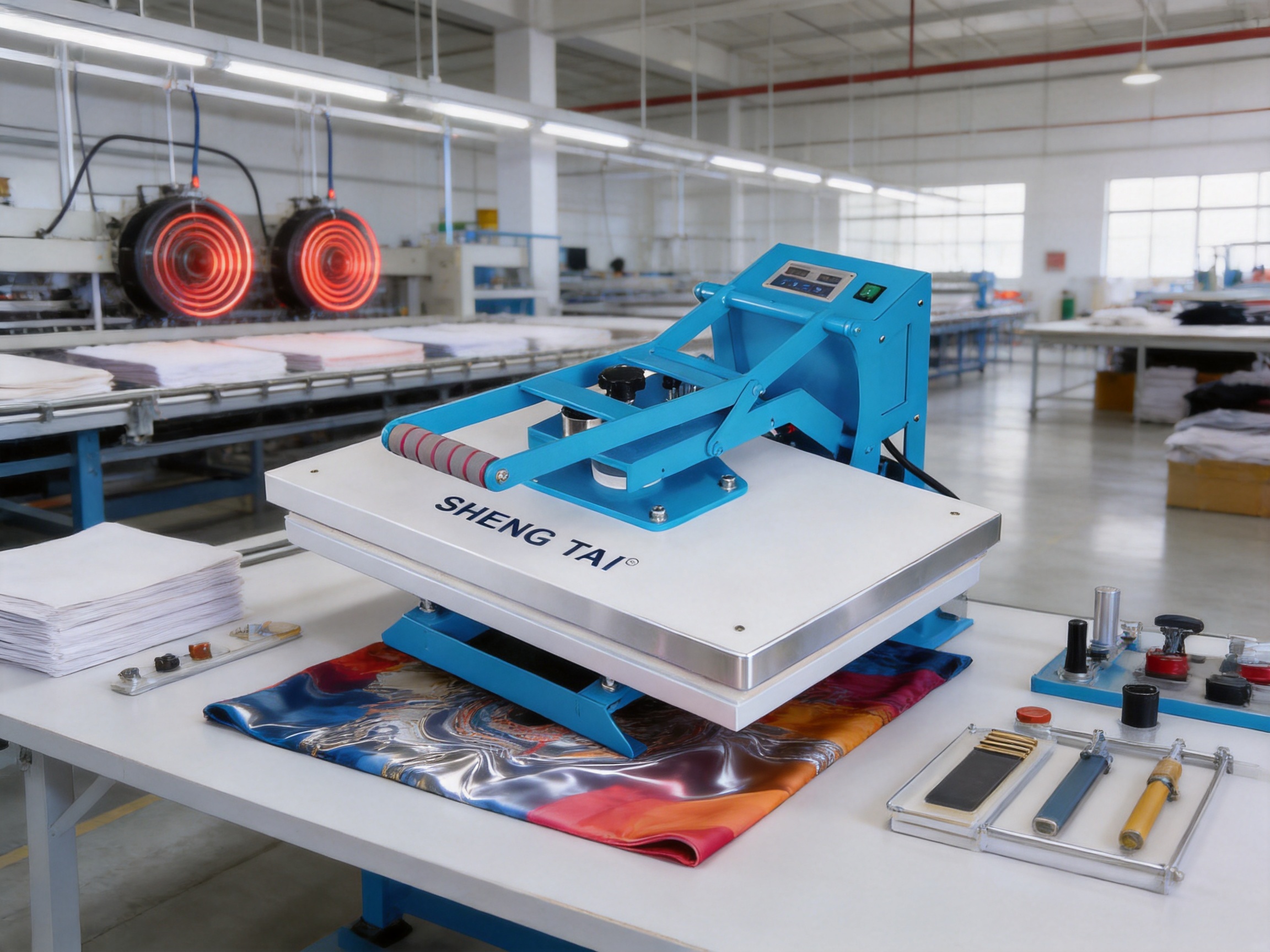
One of the most visible differences between an electromagnetic system and a conventional heating system is the speed of thermal response. Traditional equipment may need considerable time to reach a stable operating condition. During this period, the machine consumes energy without producing finished goods.
Electromagnetic heating is engineered to respond quickly, reducing the time between activation and production readiness. This can improve daily productivity, particularly when the equipment is switched on and off according to order requirements rather than operated continuously.
Some conventional machines continue to release stored heat after the heating cycle has ended. This residual heat may complicate the processing of sensitive materials or make rapid changes between product types more difficult. Electromagnetic induction provides a more responsive heating process, allowing the operator to manage thermal exposure more precisely.
This does not eliminate the need for correct settings or careful testing. Material compatibility remains essential. However, the machine gives operators a more capable platform for controlling the conditions that influence the finished product.
Inconsistent heating can create differences between the first item and the last item in a batch. Customers may notice variations in color, image clarity, adhesion, or surface finish. Such variation increases rework, material waste, and inspection costs.
A machine designed for uniform heating and precise temperature management can improve batch-to-batch consistency. Stable results strengthen customer confidence and make production planning easier because fewer items need corrective processing.
Conventional systems may perform well on robust materials but become less suitable when the production range includes thin, coated, elastic, or heat-sensitive fabrics. Electromagnetic heat transfer technology is advantageous because it combines fast heating with controlled energy delivery.
This flexibility can help manufacturers expand beyond a narrow range of standard products. They may be able to accept more specialized orders, develop higher-value applications, and serve customers who require careful treatment of advanced textile materials.
Rejected or damaged products increase production costs. They also consume fabric, ink, transfer media, labor, packaging materials, and energy without generating saleable output. Better heat uniformity and more accurate process control can reduce the risk of defects associated with improper heating.
Waste reduction depends on the complete production process, including artwork preparation, transfer-material selection, pressure control, fabric preparation, operator training, and inspection. Nevertheless, the heat transfer machine provides an important technical foundation for achieving lower defect rates.
Jinyun Shengda Sewing Equipment Co., Ltd. was established in 2003 and has developed its business around textile ironing and finishing equipment. More than two decades of industry experience provide a practical understanding of the challenges faced by garment factories, textile workshops, distributors, and professional service teams.
The company’s product categories include electric irons, steam irons, hanging irons, spray guns, small steam machines, heat transfer machines, steam boilers, vacuum tables, and accessories. This broad portfolio reflects knowledge of multiple stages in garment finishing and textile processing.
Experience across related equipment categories can support better product development. Engineers and production teams can consider how a heat transfer machine will interact with steam systems, ironing stations, vacuum tables, finishing lines, and other factory equipment. This broader perspective helps create solutions that fit real production environments rather than isolated laboratory conditions.
The manufacturer emphasizes independent research, development, and production. This approach allows the company to improve product structures, refine heating systems, adapt designs to market needs, and respond more directly to customer requirements.
Independent development is particularly valuable for specialized products such as electromagnetic heat transfer machines. The performance of an induction heating system depends on the relationship between the electromagnetic components, heating structure, control system, mechanical frame, working surface, and operating software or controls. These elements must work together as a complete machine.
Continuous development also supports improvements in reliability, safety, operating convenience, energy performance, and compatibility with different materials. As textile technology evolves, manufacturers need equipment suppliers that can adapt rather than depend only on fixed, outdated designs.
The company’s research and development, management, and sales teams work closely together. This coordination helps connect customer feedback with product planning, manufacturing decisions, quality control, and after-sales support.
When production, engineering, and sales teams communicate effectively, recurring customer concerns can be identified more quickly. Information about fabric behavior, ink performance, transfer defects, installation conditions, and user preferences can contribute to future improvements. This type of organizational integration strengthens the manufacturer’s ability to deliver practical equipment for different markets.
A heat transfer machine must be more than visually attractive. Its frame, heating structure, controls, electrical components, insulation, working surface, and operating mechanisms all influence long-term performance. Quality-oriented manufacturing requires attention to materials, assembly accuracy, testing, inspection, and documentation.
Shengda states that it follows national and industry standards, including GB4706.1-2005 and GB4706.2-2007. Its products have also passed CCC and CQC certifications. These standards and certifications demonstrate the company’s commitment to recognized safety and quality requirements. Buyers should confirm the specific certification status and applicable documentation for the exact model ordered.
Different customers may require different working dimensions, electrical configurations, control preferences, production capacities, packaging arrangements, or branding specifications. A manufacturer that provides customization and OEM services can help distributors and industrial users develop equipment suited to their business model.
Customization should be based on clearly defined technical requirements. Customers may need to discuss material types, production volume, transfer area, power supply, installation environment, operator workflow, safety expectations, and maintenance arrangements. Early communication reduces misunderstandings and allows the manufacturer to recommend a more suitable configuration.
The company has established distribution channels in China and serves overseas customers in Southeast Asia, Central Asia, South America, Africa, and other regions. International experience requires more than shipment preparation. It involves understanding different electrical environments, packaging conditions, customs requirements, language needs, service expectations, and application practices.
For overseas buyers, a supplier with export experience can provide practical assistance with order coordination, product documentation, packaging, shipping arrangements, and communication. These capabilities can reduce purchasing risk and support smoother integration into a new factory or distribution network.
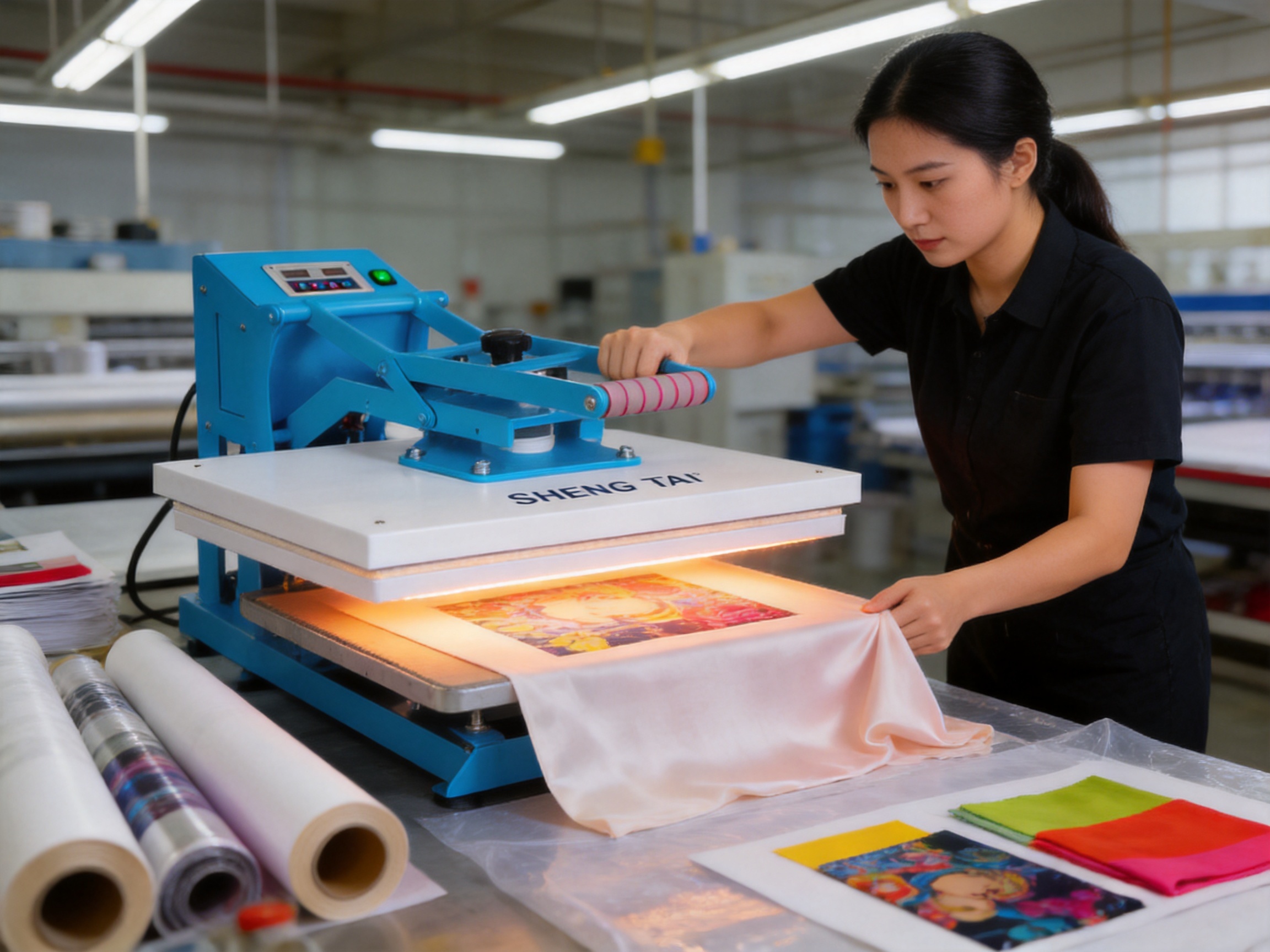
The heating system is the central performance element of an electromagnetic heat transfer machine. Engineering work must consider induction efficiency, heat distribution, temperature sensing, control response, insulation, structural stability, and safe operation.
The heating assembly should be matched to the intended working area and production requirements. If the heating zone is not properly designed, the machine may not deliver consistent results at the edges or during repeated cycles. A carefully planned system helps ensure that the available thermal energy is used effectively.
Thermal performance cannot be separated from mechanical construction. The machine must remain stable while operators position textiles, transfer media, and other materials. A rigid structure helps maintain consistent pressure and alignment, while a well-designed working surface supports even contact between the transfer material and substrate.
Mechanical stability is also important for long-term operation. Repeated opening, closing, loading, unloading, and adjustment can place stress on moving parts. Durable construction and proper assembly help maintain reliable performance over time.
Electromagnetic equipment requires careful electrical design and safe operating procedures. Components should be selected and assembled according to the intended power requirements and operating environment. Protection against overheating, electrical faults, and improper operation is an essential part of responsible machine design.
Operators should follow all instructions relating to grounding, power supply, ventilation, installation clearance, inspection, and maintenance. The machine should be installed by qualified personnel when required, and any abnormal noise, smell, temperature behavior, or control response should be investigated promptly.
Accurate temperature measurement supports repeatable production. Sensors, controllers, and control logic must work together to monitor the heating condition and maintain the selected target. The operator should be able to establish a process setting and observe whether the machine is behaving as expected.
Temperature control should be verified during commissioning and periodically checked as part of preventive maintenance. Calibration requirements depend on the machine design and production standards. Where color accuracy, bonding strength, or substrate protection is critical, buyers may wish to establish documented verification procedures.
Manufacturing quality is strengthened when equipment undergoes systematic inspection and testing before shipment. Such testing may include electrical checks, heating performance verification, control response, mechanical operation, surface condition, packaging inspection, and confirmation of accessories or documentation.
Customers purchasing for industrial use should discuss factory testing arrangements, acceptance criteria, spare parts, installation support, and warranty terms before placing an order. Clear communication at this stage contributes to a smoother installation and reduces the possibility of disputes later.
Throughput depends on cycle time, preparation time, material handling, operator skill, and machine availability. The Electromagnetic Heat Transfer Machine contributes to throughput through rapid heating and reliable repeatability. Faster readiness allows more time for actual processing, while stable operation reduces interruptions caused by inconsistent results.
Manufacturers can improve throughput further by organizing materials in advance, standardizing work instructions, preparing transfer media efficiently, and grouping similar products into production batches. The machine is most productive when it is integrated into a well-planned workflow.
Rework is expensive because it occupies machine time and labor while delaying shipment. Thermal defects can be particularly difficult to correct if the substrate has already been damaged or the image has been permanently altered.
Precise temperature control and uniform heating help reduce the risk of heat-related defects. Operators should still conduct trial transfers when introducing a new fabric, ink, or transfer medium. Once the correct process parameters are confirmed, those settings can be documented for future orders.
Businesses often need to experiment with new fabrics, decorative effects, technical materials, or customized product concepts. A flexible heat transfer machine can support product development by allowing controlled trials across different compatible materials.
Rapid response is helpful during testing because engineers and operators can adjust conditions and observe results efficiently. This may shorten the time required to evaluate new applications and bring marketable products into production.
Customers expect accurate colors, clean graphics, durable bonds, and on-time delivery. Equipment that supports stable quality helps manufacturers meet these expectations more consistently. It also gives sales teams greater confidence when accepting demanding orders involving specialty textiles or customized designs.
Reliable production strengthens long-term customer relationships. It can also help a business compete on quality and service rather than relying only on low price. This is important in markets where buyers are increasingly concerned about durability, appearance, material protection, and production reliability.
Before production begins, the operator should identify the fabric or substrate and review its heat tolerance. Synthetic fibers, coated fabrics, blended materials, films, and specialty textiles may react differently to heat and pressure. The transfer material and ink must also be compatible with the substrate.
A small test should be completed before starting a large batch, especially when the material or transfer medium is new. The test should evaluate temperature, dwell time, pressure, alignment, color development, adhesion, surface appearance, and substrate condition.
Once a satisfactory result is achieved, the production team should record the process parameters. A useful record may include material identification, transfer type, temperature, time, pressure setting, operator, date, and inspection result. This information supports repeatability and simplifies future orders.
Materials should be placed consistently on the working surface. Wrinkles, trapped air, uneven layers, contamination, or incorrect alignment can affect the final result even when the heating system is working correctly. Operators should prepare the work area and handle materials carefully.
Finished products should be inspected for image clarity, color consistency, edge definition, adhesion, surface defects, fabric distortion, and overall appearance. For technical or industrial products, additional performance tests may be required according to the application.
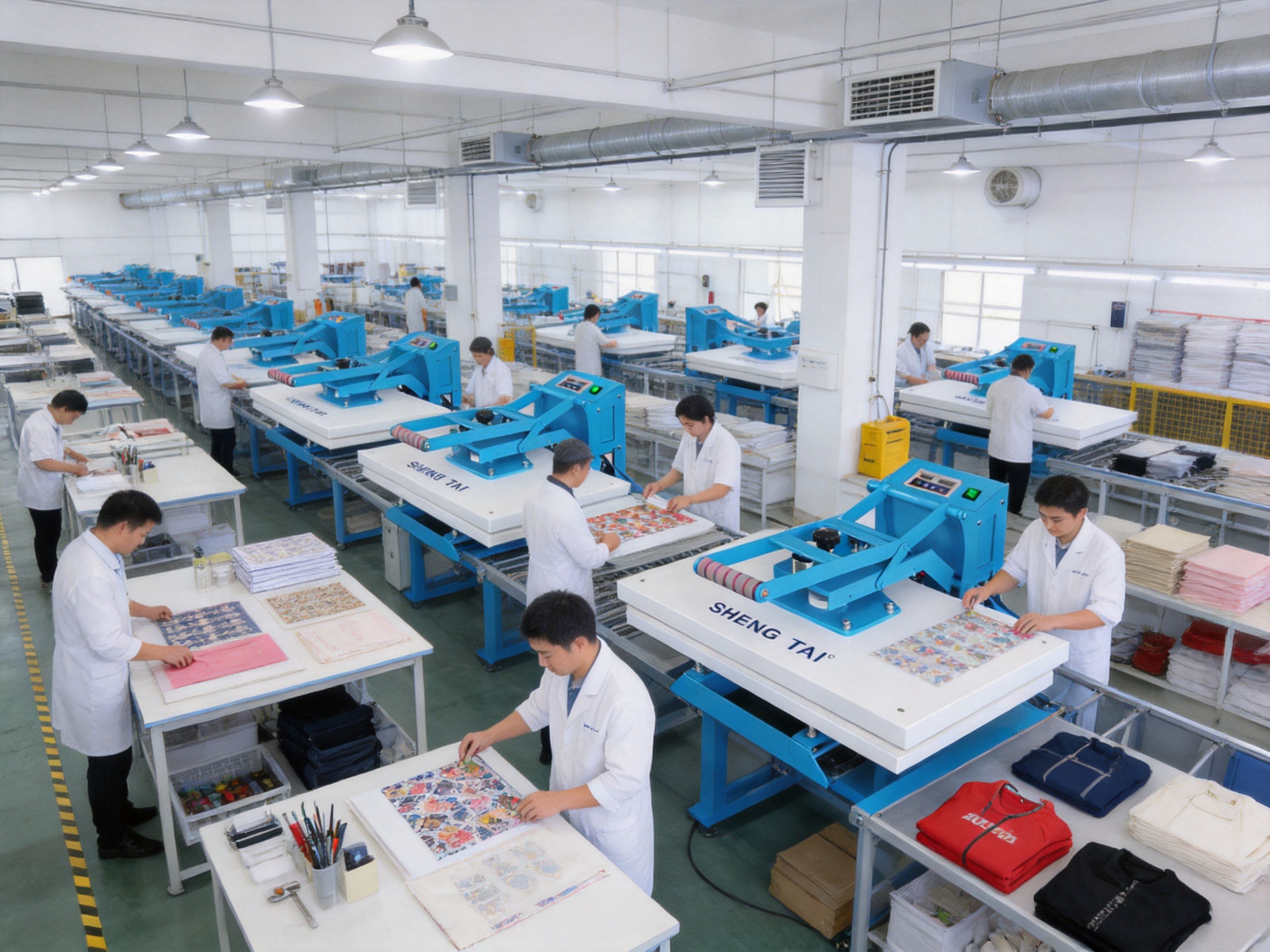
Regular maintenance helps preserve the advantages of electromagnetic heat transfer technology. Operators should keep the working surface clean, remove transfer residue, inspect cables and connectors, check moving components, and follow the manufacturer’s maintenance schedule.
Dust, adhesive residue, fibers, and other contaminants can affect surface contact and product quality. Cleaning should be performed using methods appropriate for the machine’s materials and electrical structure. Abrasive tools or unsuitable chemicals should be avoided unless specifically approved.
Temperature behavior should be monitored over time. If the machine takes longer to heat, shows uneven results, produces unusual odors, or fails to maintain the selected temperature, production should be paused for inspection. Early attention can prevent a minor issue from becoming a major failure.
Preventive maintenance should include inspection of electrical connections, control components, insulation, heating assemblies, structural fasteners, pressure mechanisms, and safety features. Maintenance records are useful for identifying recurring problems and planning service activities before an unexpected breakdown occurs.
Replacement parts should be sourced through the manufacturer or an approved supplier whenever possible. Correct component specifications are important for maintaining safety, performance, and compatibility. Customers should discuss recommended spare parts and service support when purchasing the machine.
The equipment itself is only one part of a successful purchase. The supplier’s engineering capability, manufacturing discipline, communication quality, documentation, packaging, and after-sales service also influence the total value of the investment.
Buyers should evaluate whether the supplier understands the intended materials and application. A company that manufactures multiple categories of textile-finishing equipment may offer broader practical knowledge than a supplier focused on a single isolated product.
Customers should also ask about factory experience, product testing, certifications, customization, OEM services, spare parts, warranty coverage, installation support, and response times. These questions are especially important for overseas buyers who may need assistance after shipment.
Jinyun Shengda Sewing Equipment Co., Ltd. offers a product portfolio that includes several types of textile and garment equipment. Its experience since 2003, independent research and development activities, quality commitments, certification history, export reach, and customization capability position it as a suitable supplier for businesses seeking coordinated equipment solutions.
The company operates from No. 8 Nanyi Road, Huzhen Industrial Park, Zhejiang, China. Its location provides access to manufacturing resources, transportation networks, and industrial support services. The company reports that its products are exported to Southeast Asia, Central Asia, South America, Africa, and other regions.
| Performance Area | Electromagnetic Heat Transfer Machine | Importance to Production |
|---|---|---|
| Heating response | Rapid response designed for quick thermal activation | Reduces waiting time and supports faster changeovers |
| Heat distribution | Uniform heating across the intended working area | Helps maintain consistent image quality and bonding |
| Temperature management | Precise control for repeatable processing conditions | Protects materials and reduces process variation |
| Material compatibility | Suitable for compatible delicate and heat-sensitive materials | Expands the range of products a manufacturer can process |
| Energy use | Responsive induction heating can reduce unnecessary heating periods | Supports lower operating waste and improved efficiency |
| Production scale | Designed for high-volume textile and promotional applications | Supports continuous work and larger order quantities |
| Product development | Controlled conditions support testing of inks and substrates | Helps manufacturers develop new products and services |
| Supplier support | Available from a manufacturer offering research, OEM, customization, and export services | Reduces purchasing and integration risk |
Textile production is becoming more varied and responsive. Customers increasingly request short runs, personalized graphics, specialty finishes, rapid delivery, and products made from advanced materials. Manufacturers therefore need equipment that can handle more than one standard process.
The Electromagnetic Heat Transfer Machine supports this market direction through flexibility, speed, and control. It can help a factory move from basic transfer work toward more specialized applications. This may include performance apparel, technical fabrics, promotional products, decorative labels, and other products that require careful thermal processing.
Competition is also influenced by operating cost. A machine that provides fast heating and efficient process control can contribute to lower production expenses over time. Savings may come from reduced warm-up periods, fewer rejected items, lower rework, better labor utilization, and more efficient order scheduling.
Quality remains the most important competitive advantage. A customer may accept a slightly higher purchase price when the equipment delivers dependable output, protects valuable materials, and reduces the risk of production interruptions. Consistency is especially valuable when a manufacturer supplies brand owners, uniform programs, sportswear companies, or technical textile customers with strict specifications.
In this environment, electromagnetic heat transfer is not simply a new heating method. It is a production strategy that combines thermal performance with operational flexibility. When supported by experienced manufacturing, proper testing, and disciplined use, it can help businesses improve both efficiency and product value.
The machine is designed for fabric printing, heat transfer, and compatible material-bonding applications. It uses electromagnetic induction to provide rapid, uniform heating and precise temperature control.
Yes. The machine is described as suitable for sublimation applications. The exact operating conditions should be determined through material testing and according to the specifications of the sublimation paper, ink, and fabric.
Yes. The machine is intended to support compatible specialty inks and transfer materials. Because specialty formulations have different activation requirements, users should test each application and establish suitable temperature, time, pressure, and handling procedures.
The machine is engineered to handle delicate fabrics and heat-sensitive materials. However, compatibility should always be confirmed with a preliminary test. The correct settings depend on fiber composition, coating, thickness, transfer material, and required finish.
Its main advantages include rapid thermal response, uniform heating, and precise temperature management. These characteristics can reduce warm-up delays, improve process consistency, protect sensitive substrates, and support more efficient energy use.
Yes. It is designed for high-volume production involving apparel, technical textiles, promotional items, and other demanding applications. Actual output will depend on the working area, material handling, cycle settings, operator workflow, and order requirements.
Apparel factories, textile printers, promotional product manufacturers, technical textile producers, garment-finishing businesses, transfer specialists, and distributors of textile equipment may all benefit from the machine.
Users should test image clarity, color development, transfer adhesion, temperature, dwell time, pressure, alignment, fabric distortion, surface appearance, and resistance to the intended end-use conditions.
The company states that it provides customization and OEM services. Customers should discuss working requirements, electrical specifications, production capacity, packaging, control preferences, and branding details before confirming an order.
The company states that it follows standards including GB4706.1-2005 and GB4706.2-2007, and that its products have passed CCC and CQC certifications. Buyers should request current documentation for the exact product model and destination market.
The manufacturer is located at No. 8 Nanyi Road, Huzhen Industrial Park, Zhejiang, China. It serves domestic customers and exports products to several international regions.
Buyers can contact the company through the provided business email addresses, jyshengda@163.com or caroying@jy-shengda.com, or by telephone at +86-578-3158872. The listed fax number is +86-578-3158958.
The Electromagnetic Heat Transfer Machine is a practical solution for manufacturers that need fast, uniform, and accurately controlled heating. Its electromagnetic induction technology supports efficient fabric printing, sublimation transfer, specialty ink applications, and compatible material-bonding processes.
Its primary advantages include rapid heating, reduced preparation time, uniform thermal distribution, precise temperature control, improved suitability for delicate materials, and reliable performance in high-volume production. Compared with conventional systems, these characteristics can help manufacturers reduce process variation, limit material waste, improve productivity, and respond more flexibly to changing orders.
The product is supported by the experience and manufacturing capabilities of Jinyun Shengda Sewing Equipment Co., Ltd. Since 2003, the company has focused on textile and garment equipment, including ironing systems, steam equipment, heat transfer machines, vacuum tables, spray guns, and accessories. Its independent research and development, collaborative management structure, certification commitments, customization capability, OEM services, and international distribution experience add value beyond the machine itself.
For businesses evaluating new heat transfer equipment, the most important step is to match the machine with the intended fabrics, inks, transfer media, production volume, electrical environment, and quality requirements. Proper testing, operator training, preventive maintenance, and process documentation will help the equipment deliver its full potential.
With the right application planning, electromagnetic heat transfer technology can become an important part of a modern textile-production system. It provides manufacturers with a strong foundation for consistent quality, efficient operation, material flexibility, and continued product development.
1. Product information supplied for the Electromagnetic Heat Transfer Machine, including its intended applications, electromagnetic induction heating method, and performance characteristics.
2. Company information supplied for Jinyun Shengda Sewing Equipment Co., Ltd., including its establishment in 2003, product categories, manufacturing activities, export markets, and service capabilities.
3. General principles of electromagnetic induction heating and its application in controlled industrial thermal processes.
4. General technical guidance for sublimation transfer, specialty ink activation, heat-sensitive textile handling, and material-bonding process control.
5. GB4706.1-2005, applicable general safety requirements for household and similar electrical appliances as referenced in the supplied company information.
6. GB4706.2-2007, applicable safety requirements as referenced in the supplied company information.
7. General quality-management practices for textile machinery manufacturing, including assembly inspection, temperature verification, electrical safety checks, preventive maintenance, and pre-shipment testing.
 +86-578-3158872 / +86-578-3158958
 jyshengda@163.com / caroying@jy-shengda.com
 No. 8 Nanyi Rd, Huzhen Industrial Park, Zhejiang, China
Copyright © Jinyun Shengda Sewing Equipment Co., Ltd. All Rights Reserved.
Ironing Press Machine Equipment Factory
 English
 中文简体
 русский
 عربى