
ST-ⅡA Electric Iron
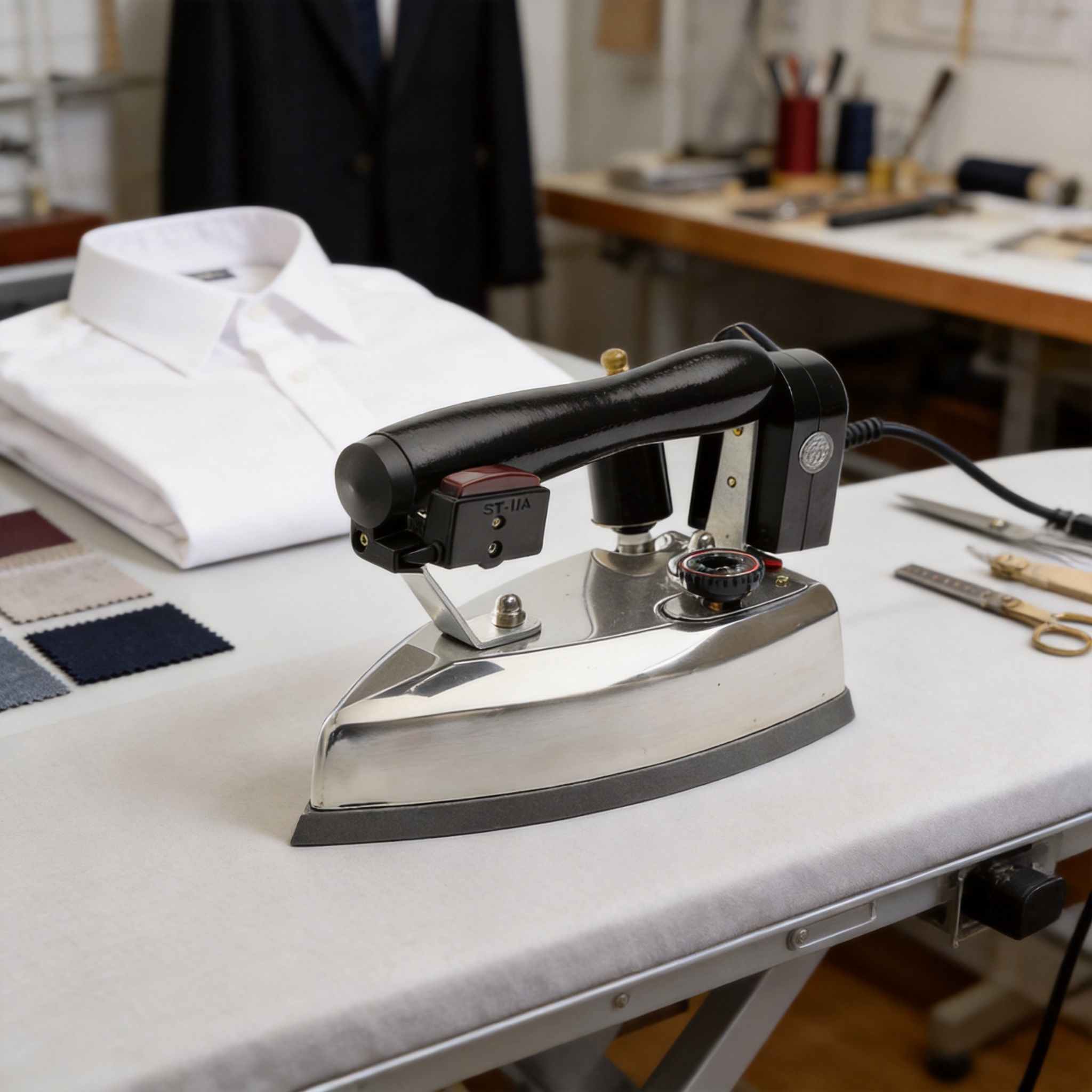
The ST-IIA Electric Iron is a practical pressing solution designed for household, tailoring, garment-care, laundry, retail, and professional sewing applications. Combining a 1200W heating system, a compact 205 × 108 mm soleplate, a balanced 1.7 kg structure, and 110V/220V operating options, this electric iron is built to provide dependable results across a wide range of fabrics and working environments.
Although the electric iron has a compact appearance, it is designed to meet demanding daily requirements. Its heating performance supports fast preparation, its soleplate dimensions offer precise control, and its balanced weight helps users apply effective pressure without excessive fatigue. These characteristics make it suitable for both detailed garment finishing and general fabric pressing.
In professional environments, an iron must do more than become hot. It must maintain stable performance, move smoothly, respond easily to temperature adjustments, and withstand repeated use. The ST-IIA Electric Iron addresses these needs with a durable construction, efficient heat distribution, accessible temperature control, and adaptable voltage configuration.
The ST-IIA Electric Iron is a conventional heated pressing tool developed for users who require direct control over fabric finishing. Unlike large pressing systems that occupy substantial floor space, this compact iron can be used at a dedicated ironing table, workbench, sewing station, garment-production line, or household ironing area.
The design focuses on a balance between coverage and maneuverability. A very large soleplate can cover broad areas quickly but may be difficult to guide around buttons, collars, pockets, pleats, and narrow seams. A very small soleplate may provide precision but require more strokes on larger surfaces. With its 205 × 108 mm soleplate, the ST-IIA provides a useful middle ground for efficient pressing and accurate handling.
The 1200W power rating gives the iron sufficient heating capacity for everyday and professional pressing tasks. Rapid heating helps reduce preparation time, while consistent heat across the soleplate supports even results. The 1.7 kg weight adds pressing force while remaining manageable for repeated operation.
| Product | ST-IIA Electric Iron |
| Product Category | Electric Iron |
| Voltage | 110V/220V |
| Power | 1200W |
| Weight | 1.7 kg |
| Soleplate Size | 205 × 108 mm |
| Primary Application | Garment pressing, tailoring, sewing, household ironing, and professional fabric finishing |
Many electric irons appear similar when judged only by basic power ratings. However, actual performance depends on the relationship between heating capacity, soleplate design, weight, control layout, materials, and manufacturing quality. The ST-IIA is designed as a complete pressing tool rather than simply a heated metal plate with a handle.
Its most important advantage is balanced usability. The iron is powerful enough to heat efficiently, compact enough for detailed work, and heavy enough to support effective pressing. This balance helps reduce the need for excessive force and allows users to work more naturally across different types of garments and fabric sections.
The dual-voltage option is another practical advantage. Equipment intended for international distribution, workshops with different electrical systems, hotels, schools, and mobile service providers benefits from compatibility with both 110V and 220V environments. This feature simplifies product selection and supports use across multiple regions, subject to the correct local connection and operating requirements.
The ST-IIA also offers advantages in workspace efficiency. It does not require the floor area associated with a large industrial pressing machine. A user can position it on a suitable ironing board or work surface, making it appropriate for small workshops, clothing alteration businesses, sample rooms, homes, and production areas where available space is limited.
Heating speed directly affects productivity. When an iron takes too long to reach the required temperature, users must wait between garments or interrupt their workflow. The ST-IIA uses a 1200W heating system to support quick warm-up and efficient operation.
Once the iron reaches the selected temperature, stable heat distribution helps users achieve consistent results from one stroke to the next. Uniform heat is important because uneven temperature can leave some fabric sections insufficiently pressed while exposing other areas to unnecessary heat.
The 1200W rating is also appropriate for a broad range of pressing tasks. It provides useful thermal capacity without making the iron unnecessarily large or difficult to handle. Users can press shirts, trousers, uniforms, collars, cuffs, seams, household fabrics, and many other garment sections with a practical combination of power and control.
Efficient heating can contribute to improved workflow management. A tailor may complete finishing work more quickly, a laundry operator may process garments with fewer interruptions, and a household user may reduce the time required for regular ironing. In each situation, faster readiness supports a smoother working routine.
Heat distribution is as important as nominal power. A powerful iron with inconsistent heat may produce irregular results, while a well-balanced heating system can improve pressing quality across the entire working surface. The ST-IIA is designed to provide consistent heat across its compact soleplate.
Uniform soleplate temperature helps reduce repeated passes. When the fabric responds evenly to each stroke, the operator can work more efficiently and avoid excessive handling. Fewer repeated passes may also help protect delicate materials from prolonged exposure to heat and friction.
Consistent heating is particularly useful when pressing seams and garment details. Professional finishing often depends on controlled, even pressure rather than aggressive contact. A stable soleplate allows the user to make deliberate movements and achieve a neater appearance.
The soleplate is the main contact surface between the iron and the fabric. Its shape and dimensions influence speed, precision, maneuverability, and user comfort. The ST-IIA soleplate measures 205 × 108 mm, providing practical coverage while retaining control in narrow areas.
The compact format is useful for navigating around buttons, pockets, zippers, collars, cuffs, pleats, and decorative details. These areas often require careful movement rather than broad sweeping strokes. A manageable soleplate helps the user approach edges and seams accurately without pressing adjacent sections unintentionally.
At the same time, the soleplate is large enough to handle general garment surfaces. The user can press front panels, sleeves, trouser legs, skirts, uniforms, and household textiles without relying entirely on small repeated movements. This balance makes the iron suitable for both detail work and routine pressing.
A smooth soleplate surface supports easy gliding over fabric. Reduced friction helps the iron move with less resistance and can minimize snagging when the operator uses the correct temperature for the material. Smooth movement also contributes to a more comfortable experience during long working sessions.
Garment construction includes many areas where precision is essential. Collars need clean edges, cuffs require controlled pressure, seams must be opened or flattened, and pleats may need to retain their intended shape. The ST-IIA’s compact working surface helps users manage these tasks without sacrificing general productivity.
Tailoring professionals can use the iron for pressing seam allowances, shaping components, preparing fabric before stitching, and completing final garment presentation. Home users can benefit from the same control when working around buttons, pockets, collars, and narrow sections that are difficult to reach with a larger pressing tool.
Precision does not mean slow operation. With appropriate technique, the operator can use the front and central sections of the soleplate for detailed work and the broader surface for larger panels. This allows one tool to support multiple stages of garment care.
Weight influences pressing performance and physical comfort. An iron that is too light may require additional downward force, while an excessively heavy model may cause fatigue during repeated use. The ST-IIA weighs 1.7 kg, offering a practical balance between pressure and maneuverability.
The weight helps the soleplate maintain contact with the fabric. This can be useful when flattening seams, removing ordinary wrinkles, or shaping garment sections. Because the operator does not need to press down heavily, the working motion can remain smoother and more controlled.
Balanced weight distribution is also important. A well-designed handle and body arrangement allow the user to guide the iron naturally. The hand can move forward, backward, and sideways without constantly correcting the position of the tool.
For professional operators, ergonomic balance can contribute to sustained productivity. Pressing may involve hundreds of movements during a working day, so a comfortable tool can help reduce unnecessary strain on the wrist, forearm, shoulder, and hand. For home users, manageable weight makes occasional ironing easier and less tiring.
The ST-IIA is designed to support direct control. The user can guide the iron to a precise location, apply pressure through its balanced mass, and adjust the temperature according to the fabric. This combination is useful for both broad pressing and delicate finishing.
A controlled ironing motion generally produces better results than rapid, excessive movement. The operator can place the soleplate on the target area, allow the heat to work, and move across the surface in an organized way. The manageable body size helps the user maintain this technique.
Different fabrics require different heat levels. Delicate materials may need a lower setting, while thicker cotton, linen, uniforms, or heavy garment components may require more heat. The ST-IIA includes a user-friendly temperature adjustment mechanism that allows the operator to select an appropriate setting.
Accessible temperature control supports versatility. The same iron can be used for a range of garments instead of being restricted to one fabric category. This is valuable in tailoring shops, laundries, apparel workshops, schools, hotels, and households where different materials are processed throughout the day.
Correct temperature selection is also essential for fabric protection. Excessive heat can damage fibers, affect color, create shine, or leave marks on certain materials. By choosing the appropriate setting and using suitable pressing methods, operators can reduce the risk of heat-related problems.
Temperature control also supports finishing quality. Some fabric structures respond better to gradual heat and controlled movement, while others require more direct pressure. The adjustable setting allows the user to adapt the ironing method instead of relying on a single fixed operating condition.
Users should always consider the care instructions of the fabric before ironing. Garment labels, fabric composition, color, surface finish, and construction can influence the correct setting. When the material is unfamiliar, testing on an inconspicuous area is a sensible precaution.
Delicate synthetic materials generally require careful temperature selection and short contact time. Cotton and linen may tolerate higher settings, but the operator should still follow garment-care guidance. Blended fabrics should be treated according to the most heat-sensitive component unless the manufacturer specifies otherwise.
Professional users can establish consistent temperature practices for common garment groups. This can improve workflow and help new operators learn safe and repeatable procedures. A clear operating routine also supports quality control in commercial pressing environments.
An electric iron used regularly must withstand heat, movement, handling, storage, and repeated changes between garments. The ST-IIA is constructed with durability in mind, making it suitable for household and professional applications.
Durability begins with the selection of materials and continues through component design, assembly, inspection, and testing. The body must maintain its structural integrity, the handle must remain comfortable, the heating system must operate reliably, and the soleplate must retain a smooth working surface under normal use.
A robust construction can improve the total value of the product. Buyers are not only purchasing the initial heating performance; they are also investing in a tool that should support regular work over time. Reliable construction can reduce disruptions, maintenance concerns, and the need for frequent replacement.
For commercial operators, durability is closely connected to productivity. Equipment failure can delay orders, interrupt garment finishing, and increase labor costs. A dependable electric iron provides greater confidence that routine pressing work can continue according to schedule.
Basic household irons may be suitable for occasional personal use, but they do not always provide the balance required in tailoring, garment production, or commercial finishing. The ST-IIA is positioned as a more task-focused solution with specifications suited to repeated pressing work.
Compared with an overly lightweight iron, the 1.7 kg structure offers more natural pressing force. The operator may need less downward pressure when flattening seams or smoothing fabric. This can make the working motion more efficient and reduce fatigue during repeated tasks.
Compared with an oversized pressing tool, the 205 × 108 mm soleplate provides greater maneuverability. Users can work around details and narrow sections with greater accuracy. The compact format also makes the iron easier to store and more suitable for smaller workspaces.
Compared with a fixed-voltage model, the 110V/220V configuration provides broader adaptability. This is useful for international buyers, distributors, workshops that operate in different regions, and organizations that need equipment suitable for more than one electrical environment.
Compared with an iron that offers limited control, the adjustable temperature mechanism helps users work with different fabric categories. This flexibility supports more applications and can improve the consistency of finished garments.
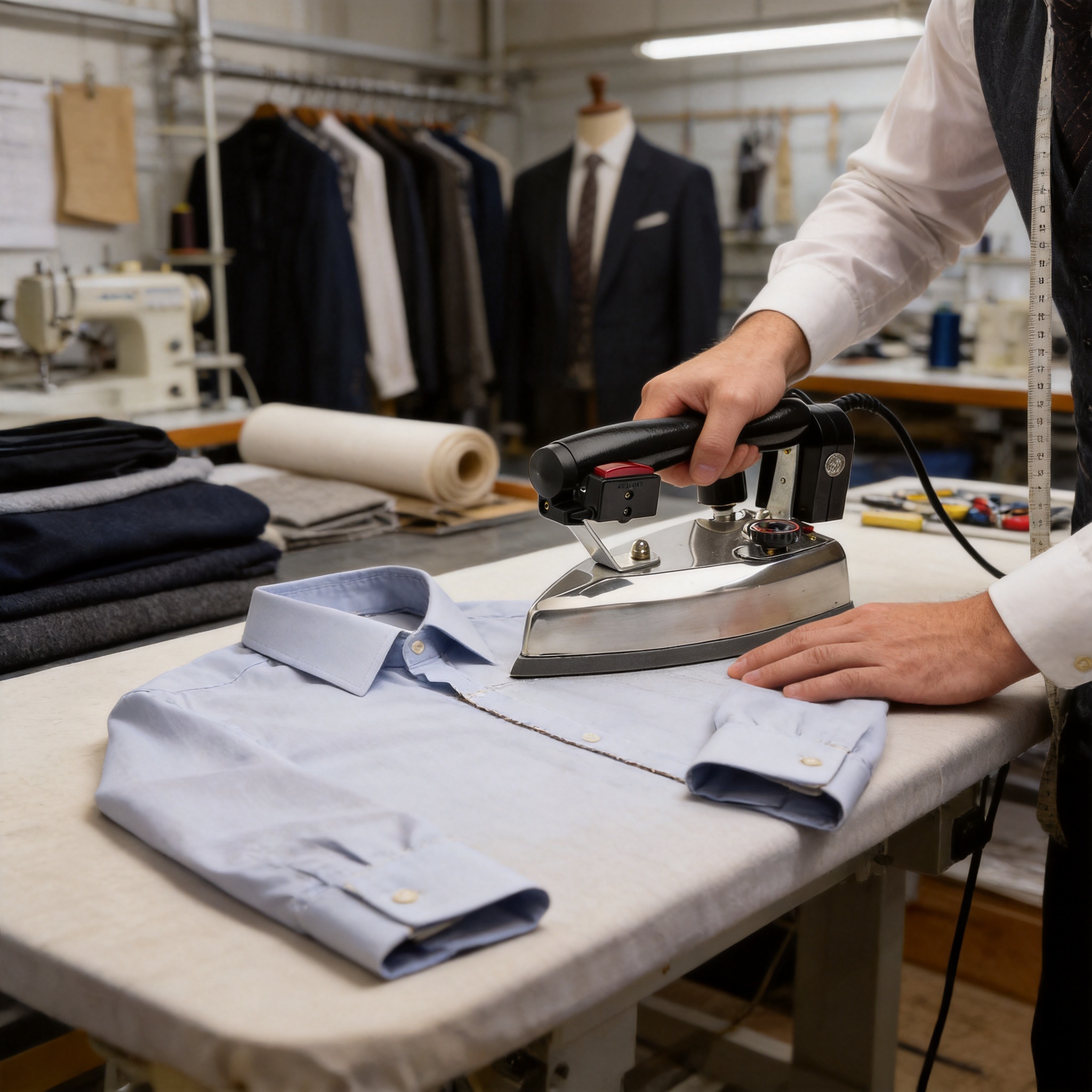
Tailoring shops require tools that support accuracy at many stages of production. The ST-IIA can be used during fabric preparation, component construction, seam opening, garment shaping, and final presentation.
Before sewing, fabric may need to be flattened or prepared to ensure accurate cutting and alignment. During construction, seams and edges may require pressing to establish the correct shape. After assembly, the garment may need final pressing to create a professional appearance.
The compact soleplate is especially helpful for small garment components. Sleeves, collars, cuffs, pocket openings, and narrow seam areas often require a tool that can be positioned precisely. The operator can use the iron to approach these sections without applying unnecessary pressure to surrounding areas.
In sample development, the iron can help designers and pattern makers evaluate how fabric behaves after pressing. It may also assist with shaping prototypes and preparing samples for review. Because the iron is compact and adaptable, it can be kept close to the sewing or pattern-making station.
Laundry and garment-care businesses process different materials and garment types. Their equipment must be practical, dependable, and easy to operate. The ST-IIA provides a direct pressing solution for shirts, trousers, uniforms, dresses, workwear, and other garments.
The 1200W heating system supports efficient operation during daily workloads. The balanced weight allows operators to press garments with controlled pressure, while the soleplate size supports both broad surfaces and detailed areas.
For businesses that handle uniforms or hospitality garments, appearance is an important part of service quality. Clean, smooth, and properly pressed garments create a positive impression. A reliable electric iron can contribute to the final stage of garment presentation.
The iron may also be useful as a supplementary tool in facilities that already use larger steam or pressing equipment. Larger machines can handle high-volume operations, while a compact electric iron can address collars, cuffs, seams, repairs, touch-ups, and areas that require manual precision.
The ST-IIA is not limited to industrial settings. Its compact dimensions and straightforward operation make it suitable for households, vocational schools, sewing classrooms, community workshops, and small apparel businesses.
Home users can use the iron for normal garment care, clothing alterations, craft projects, curtains, uniforms, and household textiles. The 1.7 kg weight provides useful pressing power without making the appliance unnecessarily difficult to move.
In schools and training centers, the iron can support instruction in sewing, tailoring, textile handling, and garment finishing. Students can learn how temperature, pressure, movement, and fabric structure influence final results. The straightforward design makes it suitable for practical training environments.
Small workshops often need equipment that offers professional usefulness without requiring a large investment in space. A compact electric iron can be installed at an individual work station, allowing each operator to carry out pressing tasks without waiting for a centralized machine.
The manufacturer behind the ST-IIA Electric Iron has been engaged in the independent research, development, and production of ironing equipment since 2003. Its product range includes electric irons, steam irons, hanging irons, spray guns, small steam machines, heat transfer machines, steam boilers, vacuum tables, and related accessories.
This broad product experience supports a deeper understanding of garment-care applications. An electric iron is not an isolated product; it is part of a wider pressing system that may include steam generation, vacuum tables, spray equipment, heat transfer processes, and specialized accessories.
Experience across these categories can help inform product development. Engineers and production teams can study how operators use different equipment, identify common workplace requirements, and improve the practicality of individual products. The result is a product portfolio designed around real garment-processing environments.
The company maintains research and development, management, and sales teams that work together. Coordination among these functions can improve communication between customer needs, technical design, manufacturing planning, and after-sales service.
Independent research and development gives a manufacturer greater control over product improvement. Instead of relying only on external designs, the company can evaluate its own products, modify structures, refine operating features, and respond to feedback from domestic and overseas customers.
For the ST-IIA, this development approach is reflected in the combination of practical power, compact dimensions, balanced weight, adjustable temperature control, and dual-voltage adaptability. These features address common requirements in real pressing operations rather than focusing on specifications that have little practical value.
Continuous development is important because garment materials, production methods, and customer expectations change over time. Improvements in product design, quality control, packaging, and service can help equipment remain relevant in a competitive market.
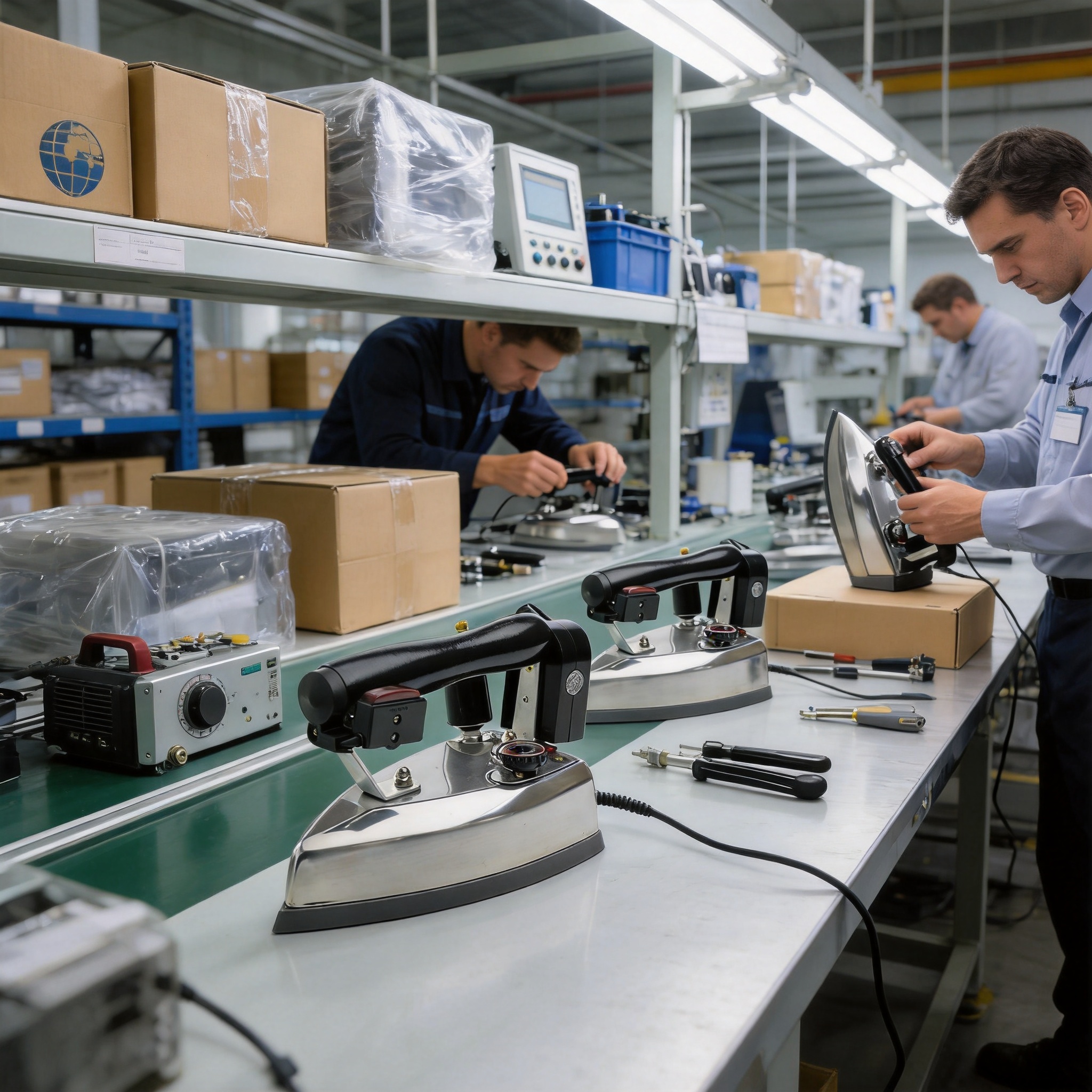
A reliable electric iron depends on many production stages. These may include material preparation, component manufacturing, heating-element assembly, body assembly, handle installation, soleplate fitting, electrical connection, temperature-control integration, inspection, and final testing.
Each stage must be coordinated carefully. The heating system must be securely installed, electrical components must be correctly connected, the handle must be firmly attached, and the soleplate must be properly aligned with the body. Inspection helps identify defects before the product reaches the customer.
Manufacturing discipline is especially important for heating appliances. The product must perform consistently while managing heat and electrical power. Appropriate testing and adherence to applicable standards help support safe and reliable operation when the iron is used according to instructions.
The company follows national and industry standards, including GB4706.1-2005 and GB4706.2-2007, and its products have passed CCC and CQC certifications. These certifications and standards demonstrate the importance placed on product compliance and quality management.
Quality is not limited to the appearance of a finished product. It includes functional reliability, material consistency, electrical performance, temperature control, structural durability, packaging, documentation, and service support.
A manufacturer with established production experience can build quality checks into multiple points of the process. Incoming materials may be reviewed, components may be inspected during assembly, and finished products may be tested before shipment. This layered approach helps reduce the risk of inconsistent performance.
Customer confidence is also strengthened when a supplier provides a broad product range and professional service. Buyers may need different equipment for different stages of garment production. Working with an experienced manufacturer can simplify sourcing, product selection, customization discussions, and shipment coordination.
The manufacturer serves domestic distribution channels and exports products to Southeast Asia, Central Asia, South America, Africa, and other regions. International experience requires attention to voltage requirements, packaging, documentation, product configuration, and communication with customers in different markets.
Different customers may require different product configurations, branding arrangements, packaging formats, voltage specifications, or accessory combinations. The company provides customization and OEM services to support such requirements.
OEM cooperation can be useful for importers, distributors, regional brands, wholesalers, garment-equipment suppliers, and large organizations. A customer may need a specific product identity, packaging design, user documentation, or product assortment for a target market.
Customization should be managed carefully because changes can affect component selection, production planning, testing, labeling, and delivery schedules. An experienced manufacturer can coordinate these details more effectively by combining engineering knowledge with established production processes.
For buyers considering the ST-IIA as part of a larger product program, OEM support may provide a way to develop a consistent equipment range. The electric iron can be combined with related steam, pressing, and garment-care products to create a more complete offering.
International buyers often evaluate more than product specifications. They also consider supplier reliability, export experience, communication, production capacity, compliance, packaging, and shipment convenience. The manufacturer’s experience in overseas markets supports these broader purchasing requirements.
The 110V/220V configuration is particularly relevant to international distribution. Electrical systems differ between countries, and a product that supports the required voltage can be easier for distributors to introduce into multiple markets. Buyers should still confirm the correct configuration before ordering and follow local electrical requirements.
Convenient shipment is another stated company advantage. A supplier with experience serving different regions is more familiar with the practical requirements of export orders, including product preparation, packaging coordination, documentation, and communication throughout the order process.
International customers can also benefit from the company’s broad product portfolio. Instead of sourcing every type of pressing equipment from separate suppliers, buyers may be able to coordinate electric irons, steam irons, spray guns, boilers, vacuum tables, heat transfer machines, and accessories through one established manufacturer.
Good operating technique helps users obtain the best results from any electric iron. Before beginning work, the user should inspect the power cord, plug, handle, soleplate, and temperature control. The ironing surface should be stable, clean, and suitable for the garment being pressed.
The operator should read the garment-care instructions and select a suitable temperature. When working with a new or sensitive material, testing a concealed section can help confirm that the selected setting is appropriate.
Pressing should generally be organized from larger areas to smaller details, or according to the construction requirements of the garment. The user can guide the iron smoothly rather than forcing it rapidly across the fabric. Seams and edges should be handled with controlled movements.
The iron should not be left unattended on a fabric surface. When temporarily resting the iron, the user should place it in a safe position that is appropriate for the product design and workplace. After use, the iron should be switched off, unplugged when required, allowed to cool, and stored safely.
Routine care helps preserve performance. The soleplate should be kept clean and free from adhesive residue, fibers, and deposits. If cleaning is necessary, the user should follow the recommended method and avoid abrasive materials that could damage the working surface.
The power cord should be stored without sharp bending or crushing. The iron should be protected from impact during storage and transport. Regular inspection can help identify loose components, damaged wiring, unusual heating behavior, or other conditions that require attention.
Professional users may benefit from establishing a simple maintenance schedule. A designated operator can check the iron at the beginning or end of each shift, record any concerns, and remove the equipment from service if safe operation cannot be confirmed.
Efficiency includes speed, quality, physical comfort, and reliability. The ST-IIA supports these elements through its integrated design. Its 1200W power helps reduce warm-up delays, while the compact soleplate supports accurate movement. Its 1.7 kg weight helps provide pressure without excessive manual effort.
In a tailoring workshop, the iron can be positioned near the sewing machine or finishing table. This reduces unnecessary movement between workstations. In a laundry or clothing-care facility, it can serve as a dedicated touch-up tool or support a larger pressing system.
Organized workstation placement can further improve productivity. The iron, garment rack, pressing surface, and accessories should be arranged so that the operator can work without twisting or reaching unnecessarily. A clean and stable workspace also supports safer operation.
When several operators use the product, standard procedures can help maintain consistent quality. These procedures may cover temperature selection, pressing direction, garment handling, inspection, cooling, and storage. Consistency is particularly important when garments are processed for customers or sold as finished products.
Product value includes the relationship between purchase cost, performance, service life, maintenance, and operating efficiency. A durable electric iron that supports reliable daily work may offer better long-term value than a lower-cost product that requires frequent replacement or causes workflow interruptions.
The 1200W heating system is designed to provide effective performance without requiring a large industrial installation. Efficient heat transfer and reduced repeated passes can help users manage operating time. Actual energy consumption will depend on usage patterns, temperature settings, duty cycle, and local electrical conditions.
Durable construction can also support more responsible equipment use. Extending the useful life of a product reduces the frequency of replacement and helps organizations make better use of materials and resources. Proper maintenance, safe operation, and timely servicing all contribute to longer product life.
Buyers should evaluate the ST-IIA according to their intended application. Important considerations include the type of garments being processed, daily operating volume, available workspace, local voltage, required temperature range, operator comfort, and compatibility with existing pressing equipment.
For home users, the compact format and balanced weight may be attractive because the iron is practical to store and easy to move. For tailoring businesses, the soleplate dimensions and temperature control support detailed garment finishing. For commercial users, durability, power, and supplier service become more important.
International buyers should confirm whether the required 110V or 220V configuration is available for their market. They should also discuss order quantities, packaging, labeling, certifications, accessories, delivery arrangements, and any OEM requirements before finalizing a purchase.
Distributors may evaluate the ST-IIA as part of a wider ironing-equipment portfolio. Its combination of professional functionality and compact form can complement steam irons, boilers, vacuum tables, spray guns, and heat transfer machines.
The ST-IIA is a versatile standalone tool, but it can also work alongside other equipment. A steam boiler and steam iron may be preferred for operations requiring continuous steam. A vacuum table can improve garment positioning and moisture management. A spray gun may support localized dampening, while a heat transfer machine serves specialized decoration or transfer tasks.
In such environments, the electric iron provides a useful dry-heat and precision option. It can handle detail work, quick corrections, seam pressing, and final touch-ups without requiring the operator to move every garment to a larger machine.
This complementary role makes the product valuable for production lines with multiple stages. Each machine can be assigned to the work for which it is best suited, improving overall workflow and reducing unnecessary equipment changes.
The ST-IIA Electric Iron has a rated power of 1200W. This power level supports efficient heating and practical performance for household, tailoring, garment-care, and professional pressing applications.
The iron is available for 110V and 220V electrical systems. Buyers should confirm the correct configuration for their location before ordering and operate the product according to local electrical requirements.
The ST-IIA weighs 1.7 kg. This provides a useful balance between pressing force and maneuverability, helping users work effectively without relying on excessive downward pressure.
The soleplate measures 205 × 108 mm. Its compact design supports both general garment pressing and detailed work around collars, cuffs, buttons, pleats, pockets, and seams.
Yes. Its 1200W heating capacity, durable construction, balanced weight, compact soleplate, and adjustable temperature control make it suitable for tailoring shops, garment workshops, laundry services, sample rooms, and other professional environments.
Yes. The iron is also suitable for household garments and fabrics. Users should select the correct temperature for each material and follow garment-care instructions to help prevent damage.
Not necessarily. The 205 × 108 mm soleplate provides practical coverage while improving control in narrow and detailed areas. It can be used efficiently on larger garment surfaces and is particularly helpful for precision pressing.
A 1.7 kg structure can provide sufficient contact pressure while remaining manageable. The operator may need less manual force to flatten ordinary wrinkles, seams, and garment sections, which can improve comfort during repeated use.
The ST-IIA includes a user-friendly temperature adjustment mechanism. This allows users to select a suitable setting for different fabric types and garment requirements.
Potential users include tailoring shops, apparel manufacturers, alteration services, dry-cleaning and laundry businesses, hotels, uniform suppliers, textile schools, sample rooms, small workshops, and garment retailers.
The manufacturer provides customization and OEM services. Buyers should discuss branding, packaging, product configuration, documentation, order quantities, and other requirements with the supplier before production.
Yes. Its product range includes electric irons, steam irons, hanging irons, spray guns, small steam machines, heat transfer machines, steam boilers, vacuum tables, and related accessories.
The company follows national and industry standards including GB4706.1-2005 and GB4706.2-2007. Its products have passed CCC and CQC certifications as stated in the supplied company information.
Users should keep the soleplate clean, inspect the power cord and plug, avoid impact and improper storage, follow the recommended cleaning method, and switch off the iron after use. Professional workplaces may establish routine inspection procedures.
The 110V/220V voltage options and the manufacturer’s export experience support international applications. Buyers should verify the required voltage, compliance documentation, packaging, and shipping details for their destination market.
The ST-IIA Electric Iron combines practical power, precise control, compact dimensions, balanced weight, and durable construction in one versatile pressing tool. Its 1200W heating system supports efficient operation, while the 205 × 108 mm soleplate allows users to move accurately across broad fabric surfaces and detailed garment sections.
The 1.7 kg weight provides useful pressing force without making the iron unnecessarily difficult to handle. Adjustable temperature control expands its suitability across different fabrics, and the 110V/220V configuration supports use in a variety of electrical environments.
For households, the iron offers dependable everyday garment care. For tailoring shops, apparel workshops, laundry services, schools, and professional garment-care businesses, it provides a compact tool for construction pressing, seam finishing, touch-ups, and final presentation.
Its value is further supported by the manufacturer’s experience in independent research, development, and production of ironing equipment. A broad product range, export capability, OEM support, quality standards, certifications, and professional service strengthen the product’s position for both individual buyers and commercial distributors.
When operated correctly and maintained regularly, the ST-IIA Electric Iron can provide a reliable and efficient solution for users seeking controlled, comfortable, and consistent fabric pressing performance.
1. Product specification sheet for the ST-IIA Electric Iron, including voltage, power, weight, and soleplate dimensions.
2. Manufacturer-provided product information concerning electric iron applications, design features, temperature control, heating performance, and construction.
3. Manufacturer company profile describing research and development, production capabilities, OEM services, export markets, and related ironing-equipment categories.
4. GB4706.1-2005, General Requirements for Household and Similar Electrical Appliances.
5. GB4706.2-2007, Particular Requirements for Irons.
6. Manufacturer-provided information regarding CCC and CQC certification.
 +86-578-3158872 / +86-578-3158958
 jyshengda@163.com / caroying@jy-shengda.com
 No. 8 Nanyi Rd, Huzhen Industrial Park, Zhejiang, China
Copyright © Jinyun Shengda Sewing Equipment Co., Ltd. All Rights Reserved.
Ironing Press Machine Equipment Factory
 English
 中文简体
 русский
 عربى