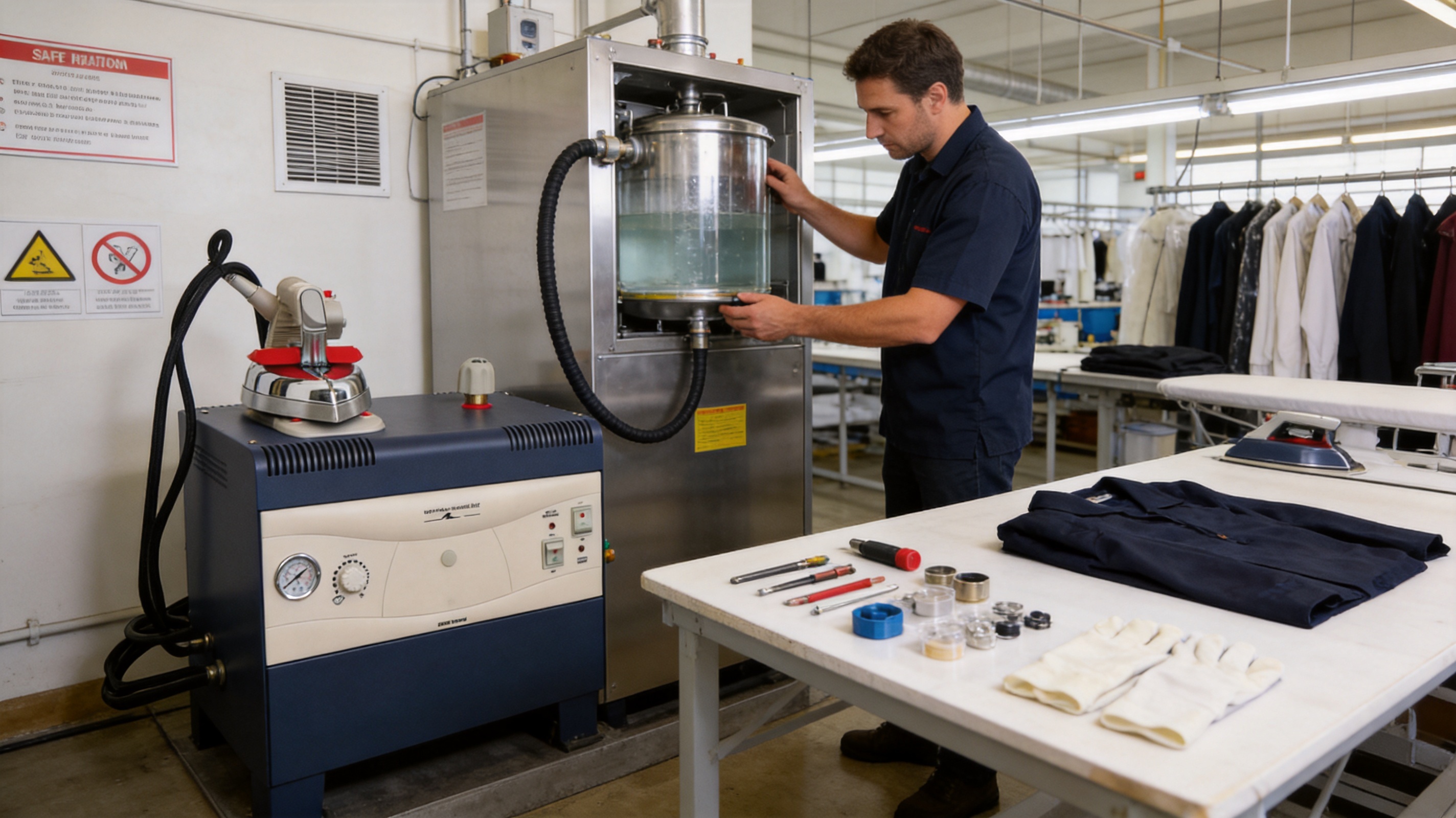
Industrial garment finishing depends on a stable combination of heat, moisture, pressure, operator control, and equipment reliability. When any one of these factors is inconsistent, production slows down and the finished appearance of garments can suffer. Wrinkles may remain visible, seams may not lie flat, and operators may need to repeat the same operation several times. For commercial laundries, tailoring workshops, garment factories, uniform suppliers, hotels, hospitals, and textile service providers, a dependable steam source is therefore more than a convenience. It is a core part of daily productivity.
The ST-2075 220V Voltage Steam Boiler is designed for applications that require powerful and continuous steam. It combines a 2400W boiler with a 900W iron and a 7.5-liter water capacity in one industrial-oriented system. This configuration gives operators a practical balance between steam generation, ironing control, operating duration, and workplace efficiency. Its 220V electrical design makes it suitable for facilities equipped with compatible commercial power systems, while its relatively large water tank helps reduce interruptions caused by frequent refilling.
This article examines the product’s working value, technical structure, application advantages, manufacturing background, quality approach, maintenance requirements, and purchasing considerations. It also explains why the ST-2075 can be a strong choice for users who need more capacity than a small domestic or light-duty steam system can provide.
A steam boiler for garment finishing produces heated water vapor that softens textile fibers and helps release wrinkles. When steam is applied to a garment, the fibers become more flexible. The operator can then use an iron or pressing surface to shape the material, flatten seams, remove creases, and improve the overall presentation of the garment.
In professional environments, steam must be available repeatedly and consistently. A household iron may be adequate for occasional personal use, but it is not normally designed for the workload of a commercial laundry or a production line. Industrial users may process uniforms, shirts, trousers, coats, dresses, workwear, bedding, hospitality textiles, or other fabric products for many hours each day. A suitable boiler must therefore support repeated operation without requiring constant pauses.
The ST-2075 addresses this requirement through its 2400W boiler power and 7.5-liter water capacity. Boiler power influences how quickly the system can heat water and replenish steam during use. Water capacity influences how long the equipment can operate before the tank needs attention. Together, these specifications are important for facilities that value continuity and want to reduce unnecessary downtime.
The integrated 900W iron adds a controlled finishing tool to the steam source. This means the system is not only a steam generator; it is also arranged for direct garment treatment. The operator can apply steam and use the iron to refine the surface of a textile, helping achieve a more professional result than steam alone may provide.
| Specification | ST-2075 Value | Practical Meaning |
|---|---|---|
| Product type | Industrial steam boiler with iron | Provides a dedicated steam source and direct ironing capability |
| Operating voltage | 220V | Designed for compatible 220V commercial electrical environments |
| Boiler power | 2400W | Supports rapid heating and sustained steam production |
| Iron power | 900W | Provides controlled heating for garment finishing |
| Water capacity | 7.5L | Allows extended use between refilling cycles |
| Packaging dimensions | 595 × 385 × 340 mm | Useful for shipping, warehouse planning, and installation preparation |
These specifications show that the ST-2075 is positioned between small portable steam systems and larger centralized industrial boiler installations. It offers more working capacity than equipment intended for occasional ironing, while remaining compact enough for many individual workstations and small-to-medium production environments.
The boiler is the central power source of the system. A 2400W rating provides substantial heating capability for a unit in this category. In practical terms, a higher boiler power rating can help the system heat water more quickly and maintain a useful steam supply when the operator is working continuously. The actual operating performance will depend on factors such as ambient temperature, water quality, steam demand, garment material, and electrical installation, but the rating indicates that the equipment is designed for serious rather than occasional use.
Fast heat-up is especially valuable in commercial settings. Employees often begin work according to a fixed schedule, and equipment that takes too long to become ready can delay the entire workflow. A powerful boiler can shorten the waiting period between startup and operation, allowing staff to begin garment finishing sooner.
Continuous steam is equally important. Wrinkle removal is rarely a one-step process. An operator may need to steam a collar, press a sleeve, shape a shoulder, flatten a pocket, and finish the garment body. If steam delivery stops repeatedly, the worker must change methods, wait for recovery, or repeat the task later. A properly sized boiler helps create a smoother rhythm and can make the operator’s work more predictable.
Compared with lower-powered systems, the ST-2075 offers a stronger reserve for repeated garment finishing. This can be an advantage in laundries and workshops where equipment is used by several operators or where garments must be processed in batches. It may also be useful for businesses that want one versatile unit to handle different textile weights rather than using separate equipment for light and medium-duty work.
Water capacity directly affects operating convenience. A 7.5-liter tank provides a substantial reserve for a steam boiler of this type. The exact operating time will vary according to steam consumption, work style, and fabric requirements, but a tank of this size is intended to support extended use rather than frequent small refills.
Fewer refilling cycles create several practical benefits. First, they reduce interruptions. An operator can complete more garments or larger batches before stopping to add water. Second, they help maintain a consistent workflow. Repeatedly leaving the workstation to refill a small tank can reduce productivity and make scheduling more difficult. Third, fewer interruptions can improve operator comfort because the employee does not need to repeatedly handle a hot or recently used machine.
A large tank can also be valuable when the equipment is installed in a location where water access is limited. In a production room, laundry area, alteration shop, or mobile service environment, the nearest suitable water source may not be immediately beside the workstation. A higher-capacity tank gives the user more flexibility in arranging the workspace.
However, capacity should always be combined with correct water management. Users should follow the manufacturer’s operating guidance, avoid overfilling, and use water of suitable quality. Hard water may cause mineral deposits inside heating components over time. Regular cleaning and appropriate descaling procedures are therefore important for preserving heating efficiency and extending equipment life.

ST-2075 220V Voltage Steam Boiler
The 900W iron is a major part of the product’s practical value. The boiler supplies steam, but the iron gives the operator a direct instrument for shaping and smoothing fabric. Its power rating supports heated pressing and allows the user to work with the steam supply in a coordinated way.
Different garments require different finishing techniques. A shirt may need careful work around the collar and cuffs. Trousers may require sharp creases along the legs. Jackets may need attention around the lapels, sleeves, and shoulder areas. Bedding and uniforms may require broad, efficient smoothing. An integrated iron allows one system to address these varied requirements without requiring a separate household iron or an additional independent steam generator.
The iron also improves control. Steam can soften a wrinkle, while the heated soleplate and operator pressure can flatten and shape the fabric. This combination is useful for professional presentation because it supports both wrinkle release and surface refinement. Skilled operators can adjust their technique according to fabric thickness, garment construction, and desired appearance.
The 900W rating is suitable for a product intended to combine steam generation and direct pressing. As with any heated tool, users should choose temperature settings carefully and follow textile care labels. Synthetic fibers, delicate fabrics, and coated materials may require lower heat or a protective cloth. Good equipment performance is most effective when paired with correct operator training.
The ST-2075 is specified for 220V operation. This configuration is widely used in many commercial and industrial markets, but electrical compatibility must always be confirmed before installation. The facility should verify the available voltage, frequency, socket configuration, protective devices, grounding arrangement, and local electrical requirements.
A properly matched electrical supply helps the boiler and iron operate according to their intended design. Using an unsuitable voltage can cause poor heating performance, component damage, nuisance tripping, or safety risks. Installation should be completed by qualified personnel, particularly in commercial laundries and factories where several high-power appliances may share the same electrical system.
For international buyers, voltage confirmation should be part of the purchasing process. The buyer should communicate the destination market, electrical standard, expected operating environment, and any required documentation before shipment. This simple step can prevent avoidable installation problems and help ensure that the equipment is correctly prepared for its intended market.
The most important advantage of the ST-2075 is its balance of boiler power, iron power, and water capacity. Some smaller steam systems are easy to move and may have a low purchase cost, but they can require frequent refilling or may not recover steam quickly enough for intensive work. A domestic iron may be inexpensive, yet it generally lacks the continuous steam support and water capacity expected in a commercial operation.
Against these lighter alternatives, the ST-2075 offers a more production-oriented specification. The 2400W boiler is designed for sustained steam generation, the 7.5-liter tank supports longer working intervals, and the 900W iron provides direct pressing capability. This combination can reduce the need to combine several unrelated appliances at one workstation.
The product can also be advantageous compared with systems that prioritize only one feature. A high-power boiler with an undersized tank may heat quickly but interrupt work frequently for refilling. A large tank with insufficient heating power may offer capacity but struggle to maintain steam availability under heavy use. The ST-2075 seeks a practical middle ground by pairing its water reserve with a substantial boiler rating.
Another advantage is workflow simplicity. When the steam source and iron are designed to operate as one system, the operator can focus on garment handling rather than coordinating separate equipment. This may help reduce clutter, simplify training, and improve the use of limited floor space.
Of course, product selection should be based on the actual workload. A very small tailoring service may not need the full capacity of a 7.5-liter boiler, while a large centralized plant may require multiple boilers or a larger steam infrastructure. The ST-2075 is particularly relevant for users who need more than light-duty equipment but do not necessarily require a building-scale boiler room.
Commercial laundries process garments and textiles for hotels, restaurants, hospitals, schools, factories, uniform programs, and individual customers. Their workload often includes large volumes, strict turnaround times, and high expectations for appearance. Steam finishing is used after washing and drying to restore a clean, smooth, professional look.
The ST-2075 can support the final finishing stage in such facilities. Its water capacity can reduce the frequency of interruptions during batch processing, while its boiler power helps provide steam for repeated work. Operators can use the iron for shirts, trousers, uniforms, table linens, and other items that require a polished appearance.
In a laundry environment, workflow layout is important. The boiler should be positioned on a stable surface with adequate clearance and convenient access for water filling, inspection, and maintenance. Garments should move logically from washing and drying to finishing, inspection, folding, and packing. When the equipment is integrated into a well-planned process, its steam capacity can contribute to faster order completion.
Cleanliness is also essential. Laundry facilities may operate in humid environments and handle fabrics carrying lint, detergent residue, or other particles. Operators should keep the equipment exterior clean, prevent debris from entering openings, and inspect connections regularly. A clean machine is easier to monitor and more likely to provide dependable service.
Factories producing apparel, uniforms, workwear, and textile goods often need finishing equipment near the end of the production line. Garments may emerge from sewing or assembly with seam impressions, fold marks, or shaping requirements. Steam ironing can improve presentation before quality inspection, packaging, and shipment.
The ST-2075 can be used as a dedicated finishing station in smaller factories or as part of a distributed production layout. Instead of moving every garment to one central area, a factory may place suitable equipment near specific production sections. This can reduce unnecessary movement and allow workers to correct appearance issues earlier in the process.
Manufacturers should consider operator training when introducing a steam boiler. Staff should understand startup and shutdown procedures, water filling, safe handling of the iron, fabric temperature limits, and basic fault reporting. Standardized procedures help maintain product consistency and reduce the risk of avoidable equipment damage.
For factories serving export markets, appearance and consistency are particularly important. Buyers may evaluate garments not only by construction and measurements but also by folding, pressing, and presentation. A stable steam and ironing system supports the final quality stage and can contribute to a more professional finished product.
Tailoring workshops often work with a broad variety of garments and fabrics. They may alter formalwear, finish custom garments, prepare uniforms, or repair clothing for individual customers. Because each item may have different construction details, the ability to control steam and pressing is valuable.
The integrated design of the ST-2075 can help a workshop create a dedicated finishing area without installing a complex central steam network. The 7.5-liter tank offers a practical reserve for daily work, while the boiler and iron combination supports both shaping and wrinkle removal.
Uniform suppliers may also benefit from the equipment. Before delivery, shirts, jackets, trousers, and other work garments often need to be pressed, inspected, folded, and packed. Reliable steam availability helps maintain consistent presentation across large orders, especially when the garments must be ready within a short period.
In these settings, the product may also support sample preparation. Designers and production teams can use steam finishing to evaluate how fabric behaves, how seams lie, and how the garment looks after pressing. This can help identify construction or finishing issues before a larger order is completed.
The product is manufactured by Jinyun Shengda Sewing Equipment Co., Ltd., a company established in 2003 in Zhejiang, China. The company focuses on the independent research, development, and production of ironing equipment and related machinery. Its product range includes electric irons, steam irons, hanging irons, spray guns, small steam machines, heat transfer machines, steam boilers, vacuum tables, and accessories.
This product breadth is significant because a manufacturer working across several related equipment categories can develop a broader understanding of garment finishing workflows. Steam boilers, irons, vacuum tables, and heat transfer machines are often used in connected production environments. Experience in one category can inform product development in another, particularly in areas such as heat management, operator ergonomics, garment handling, and equipment compatibility.
The company reports that it carries out independent research and development rather than relying only on external product sourcing. Independent development can help a manufacturer adapt products to customer requirements, refine technical details, and respond to feedback from different markets. It also supports the creation of product families that address different capacity levels and application needs.
The company maintains research and development, management, and sales teams that work together. Cooperation between these functions can improve the connection between market demand and production decisions. Sales teams understand customer needs and regional conditions, technical teams evaluate design solutions, and management teams coordinate quality, delivery, and commercial planning.
Customization and OEM services are also identified as company strengths. For distributors, importers, and equipment brands, OEM capability can provide flexibility in product labeling, packaging, documentation, and market positioning, subject to technical and commercial confirmation. Customization may be useful when a customer requires a specific configuration, destination-market preparation, or coordinated product range.
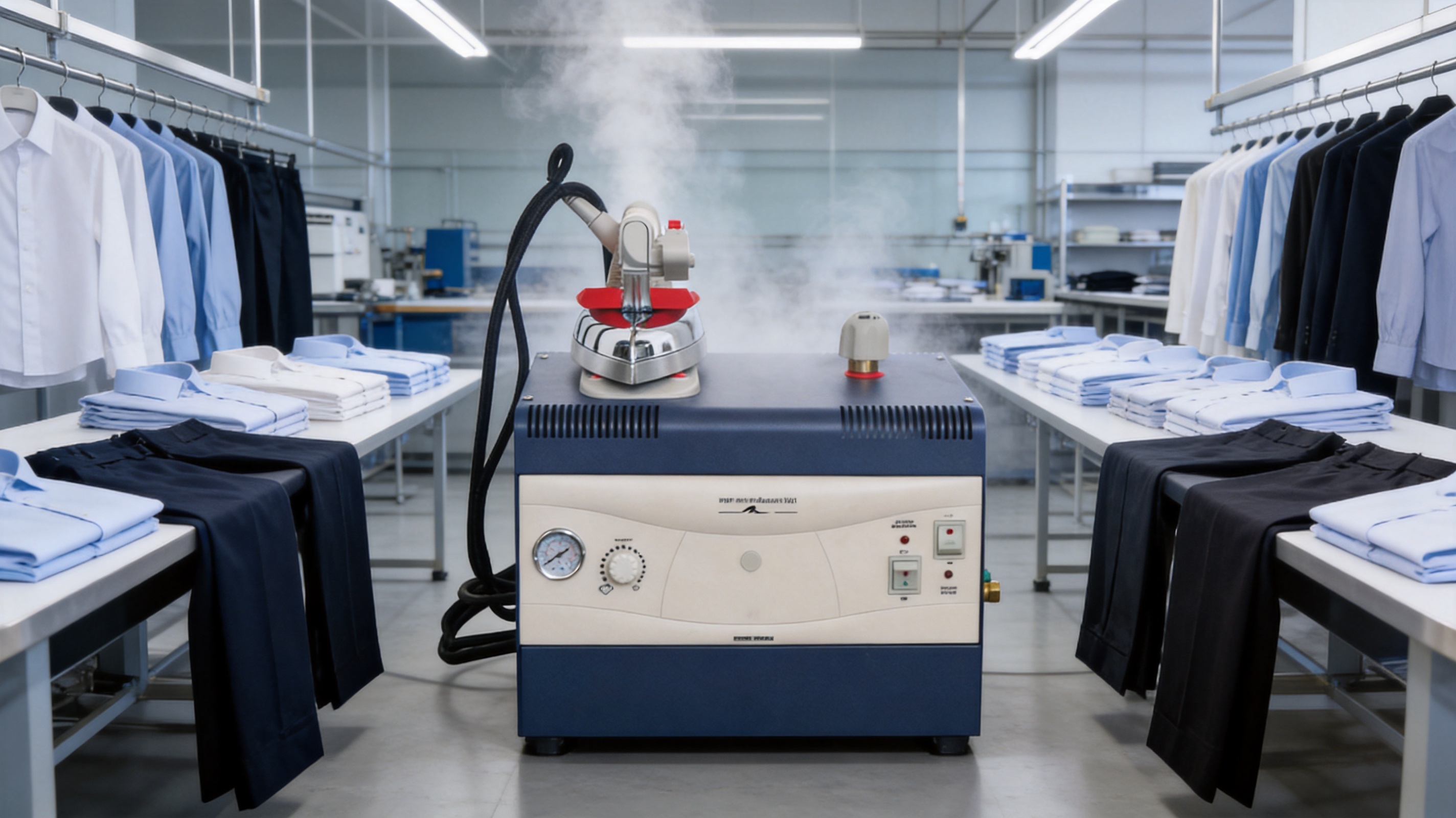
The company states that its products follow national and industry standards, including GB4706.1-2005 and GB4706.2-2007. These standards relate to safety requirements for household and similar electrical appliances and particular appliance categories. The company also reports that its products have passed CCC and CQC certifications.
Certification and standards compliance are important considerations for electrical heating equipment. A steam boiler combines water, heat, electricity, pressure-related operation, and manual handling. Responsible design and production must therefore address insulation, grounding, component selection, thermal management, mechanical integrity, and user protection.
Standards do not replace correct installation or maintenance, but they provide a structured framework for product safety and testing. Buyers should request the current applicable certificates and technical documents for the exact model and destination market. Certification requirements may vary by country, and documents should be checked for validity, scope, and model correspondence.
Manufacturing quality also depends on process discipline. A reliable product requires consistent incoming-material inspection, accurate assembly, electrical testing, functional testing, and final inspection. Although specific internal production steps may vary, these principles are central to producing equipment that performs consistently from one unit to the next.
For an industrial steam boiler, quality attention is particularly important in the water system, heating elements, electrical connections, control components, steam pathways, seals, housing, and iron assembly. Each part must work as part of a complete system. A strong component in one area cannot compensate for poor assembly or unsuitable materials elsewhere.
Product development begins with identifying a practical user requirement. In the case of the ST-2075, the requirement is continuous steam and controlled ironing for demanding environments. The design must then balance power, water capacity, operating voltage, size, usability, safety, packaging, and cost.
Independent research and development allows a manufacturer to evaluate this balance systematically. Engineers and product specialists can review customer feedback, examine common operating conditions, and adjust the design to suit different workflows. A product intended for a commercial laundry may need a different balance from one intended for a small tailoring workshop, even if both use steam ironing.
Prototype evaluation and product improvement are also important. Steam equipment must function under heat and repeated use, so development should consider warm-up behavior, steam stability, water handling, operator access, and ease of maintenance. Refinement may involve adjustments to the layout, control method, insulation, connections, or supporting components.
The company’s history of continuous product improvement and quality upgrades indicates an ongoing approach rather than a one-time design effort. This is valuable in a competitive equipment market because user expectations change. Customers increasingly seek lower downtime, easier maintenance, reliable export documentation, and equipment that integrates smoothly into existing workshops.
The company reports stable distribution channels in China and positive feedback from overseas customers. Its products are mainly exported to Southeast Asia, Central Asia, South America, Africa, and other regions. Experience in multiple markets can help a manufacturer understand differences in voltage systems, logistics, climate, packaging, local service expectations, and commercial documentation.
International sales require more than producing the machine. The equipment must be packaged for transport, labeled accurately, accompanied by appropriate documents, and prepared for the conditions of the destination market. The stated packaging dimensions of 595 × 385 × 340 millimeters provide buyers and logistics providers with a basic reference for shipment planning.
Export customers may also need guidance on installation, spare parts, maintenance, and user training. A manufacturer with established sales and service communication can help distributors support end users after delivery. Clear communication is particularly important when customers operate in different languages, time zones, and regulatory environments.
The company’s listed contact channels provide a direct route for technical and commercial inquiries. Buyers should use these channels to confirm current specifications, available configurations, shipping details, warranty conditions, spare parts, certification documents, and recommended water quality before placing an order.
Productivity is not determined only by a machine’s maximum power. It also depends on how easily employees can use the equipment, how often the process is interrupted, and how consistently the machine performs. The ST-2075 supports productivity in several connected ways.
Its boiler power helps establish a strong steam supply. Its water capacity reduces the frequency of refilling. Its integrated iron allows steaming and pressing to be completed at one station. Its 220V configuration is suitable for compatible commercial electrical systems. Together, these features can make garment finishing more organized and reduce unnecessary movement.
A smoother workflow can also improve labor efficiency. Operators spend less time waiting for steam, searching for separate equipment, or repeatedly walking to a water source. The exact labor benefit will depend on the type of work, operator skill, garment volume, and facility layout, but equipment that reduces avoidable interruptions generally supports better use of working hours.
Consistent finishing can reduce rework as well. If garments are pressed effectively the first time, workers may spend less time correcting remaining wrinkles or uneven shaping. This does not eliminate the need for inspection, but it can help the inspection stage proceed more efficiently.
Industrial equipment should be selected with both performance and resource use in mind. The ST-2075 has a 2400W boiler and a 900W iron, so users should plan the electrical installation according to the combined requirements and actual operating practices. The equipment should be switched off during extended periods of non-use, provided that doing so is consistent with the workplace process and manufacturer guidance.
Efficient operation also depends on avoiding unnecessary steam loss. Operators should use only the steam required for the fabric and task. Excessive steam may increase water and energy consumption without improving the result. Correct temperature and pressing technique can help achieve good finishing with a reasonable operating cycle.
Water management is another resource consideration. A 7.5-liter tank provides useful capacity, but users should not leave water standing for unnecessarily long periods if the operating instructions recommend draining or cleaning. Regular maintenance helps prevent scale buildup that can reduce heating efficiency and shorten component life.
Facility managers should consider the total operating environment, including ventilation, work scheduling, electrical demand, water quality, and employee training. A well-managed installation can obtain more value from the machine than an installation where the equipment is overloaded, poorly maintained, or operated with unsuitable water.
Before installation, confirm that the floor or work surface is stable, level, and capable of supporting the equipment. The area should provide enough space for the operator to handle garments safely and move the iron without striking nearby objects. Hot surfaces, steam, and electrical connections should be kept away from unnecessary obstructions and unauthorized access.
Ventilation may be useful in rooms where several steam appliances operate continuously. Steam can increase humidity and condensation, especially in enclosed spaces. Adequate ventilation helps maintain a more comfortable environment and can reduce moisture accumulation on walls, ceilings, and nearby equipment.
The power supply should be checked by a qualified electrician. The circuit must be compatible with the product’s 220V requirement and capable of supporting the operating load. Grounding and protective devices should comply with local regulations. Extension cords and temporary connections should be avoided unless they are specifically rated and approved for the load.
Water access should be convenient but should not create a trip hazard or expose electrical components to splashing. If the unit is installed in a busy production area, clear procedures should identify who is responsible for filling, cleaning, inspection, and shutdown.
Routine maintenance is essential for any steam boiler. Before cleaning or servicing the equipment, the operator should switch it off, disconnect the power according to the instructions, allow hot components to cool, and release residual heat or pressure safely. Maintenance should never be performed while the equipment is hot or energized unless a qualified technician is following an approved procedure.
The water tank should be inspected and cleaned at suitable intervals. Mineral deposits can accumulate when hard water is heated repeatedly. Descaling frequency depends on water quality and usage, so operators should monitor the condition of the tank and steam performance. Only approved cleaning products and procedures should be used.
Steam hoses, connections, seals, and electrical cables should be checked regularly for wear, damage, leakage, or unusual heating. A damaged cable or leaking connection should be addressed immediately. Operators should not continue using equipment that shows signs of electrical fault, uncontrolled leakage, abnormal noise, or unexpected performance.
The iron should be kept clean and free from residue. A contaminated soleplate can mark garments and reduce the quality of the finished result. Users should follow the appropriate cleaning method for the iron’s surface and avoid abrasive treatment that could cause damage.
Maintenance records can help commercial users manage the equipment more effectively. Recording cleaning, inspection, repairs, and operating issues makes it easier to identify patterns and schedule service before a minor issue becomes a major interruption.
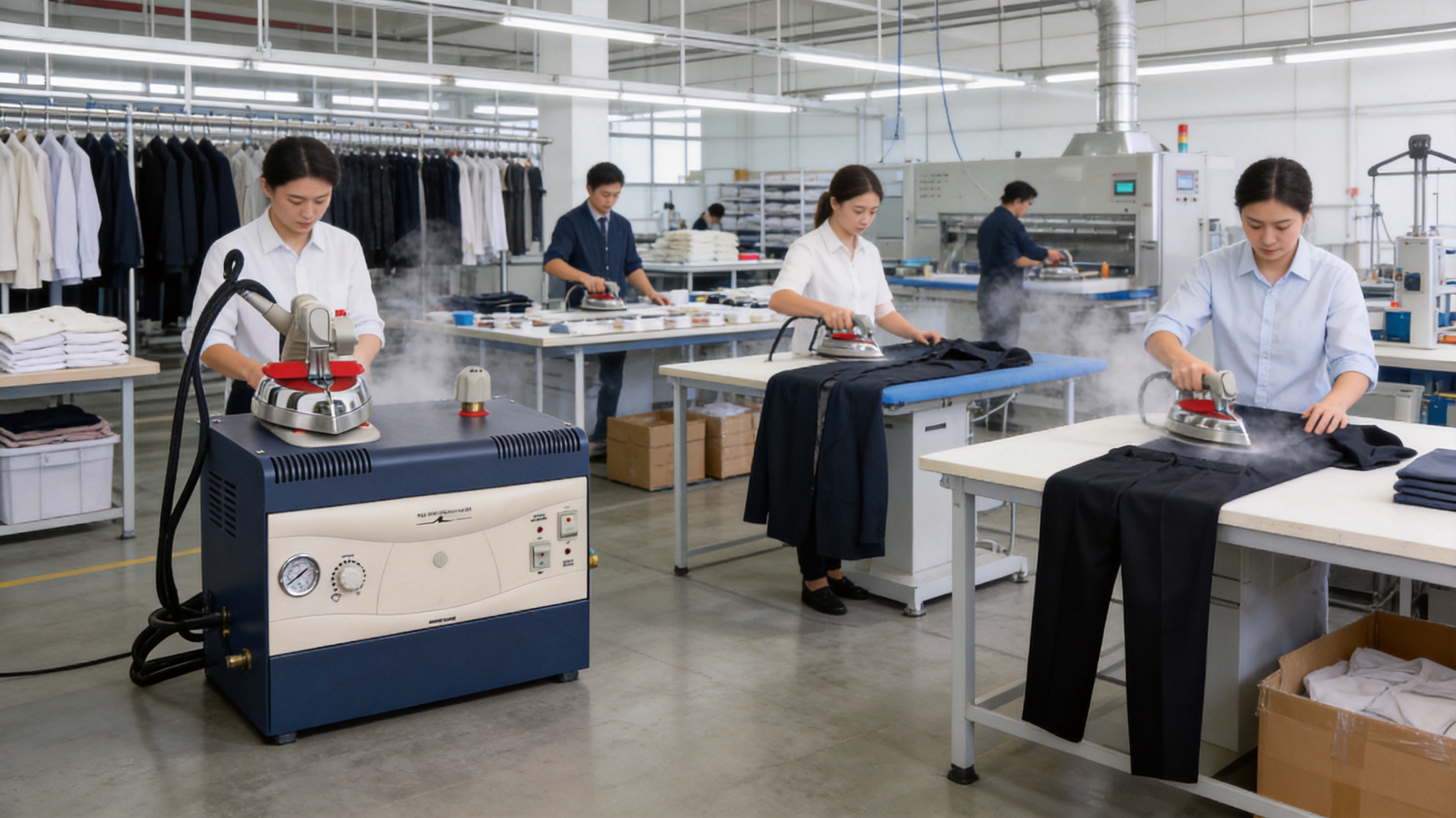
Steam and heated surfaces can cause burns, so operators must receive clear training before using the machine. The iron should be placed securely when not in use, and the steam outlet should never be directed toward a person. Loose clothing, unprotected hands, and exposed skin should be kept away from hot surfaces and steam discharge.
Operators should understand the correct startup sequence, water filling procedure, steam release method, and shutdown process. They should know how to identify abnormal conditions and who to contact if the equipment requires service. New employees should practice with supervision before working independently.
Garment materials also require attention. Some synthetic fabrics can melt or become glossy under excessive heat, while delicate materials may be damaged by strong steam or pressing pressure. Textile care labels and internal workplace guidelines should be followed. A test area can be used when the fabric response is uncertain.
Children and unauthorized personnel should not have access to the equipment. The working area should remain dry and uncluttered, and water spills should be cleaned promptly. Safe operation protects employees, garments, equipment, and production schedules.
When evaluating the ST-2075, buyers should begin by defining their workload. Important questions include the number of garments processed per day, the average operating duration, the types of fabrics handled, the number of operators, and the availability of water and electrical power. These details help determine whether the product’s capacity matches the application.
Buyers should also confirm destination-market requirements. The 220V specification must be compatible with the site. Certification and labeling requirements should be reviewed before shipment. If the product will be resold, distributors may need product photographs, technical data, operating instructions, packaging information, and replacement-part support.
For OEM customers, it is useful to discuss packaging, labeling, documentation, color or appearance requirements, order quantities, inspection procedures, and delivery schedules at the quotation stage. Customization should be clearly documented so that both parties share the same understanding of the final product.
After-sales support is another important consideration. Ask about warranty terms, service procedures, common spare parts, technical guidance, and troubleshooting support. A well-supported product can deliver greater value over its service life than a cheaper product with limited assistance.
Industrial equipment is a long-term operational purchase. The initial price is only one part of the total cost. Buyers should also consider durability, maintenance, availability of parts, technical support, production consistency, packaging quality, and the manufacturer’s ability to continue supplying the product.
A company established in 2003 has substantial experience in the garment equipment sector. Its specialization in ironing and related machinery provides a focused foundation for product development. A broad product range can also help the manufacturer understand how individual machines fit into complete garment finishing operations.
Its reported advantages include customization, OEM services, reliable quality, diverse products, competitive costs, professional service, and convenient shipment. These capabilities can be valuable to importers and distributors that want to build a coordinated range of garment equipment rather than purchasing unrelated products from multiple sources.
The company’s export presence across several regions suggests experience with international business requirements. Nevertheless, each buyer should verify current product information and commercial terms directly. Technical specifications, certifications, delivery schedules, and available services can change over time and should be confirmed for every order.
Large garment factories and institutional laundries may use centralized steam systems that distribute steam through fixed piping to multiple workstations. These installations can support very high production volumes, but they usually require greater investment, more complex engineering, dedicated space, and specialized maintenance.
The ST-2075 offers a different approach. It is a self-contained unit with its own boiler, water tank, and iron. This can be advantageous for businesses that need independent workstations, flexible installation, or a moderate level of production without constructing a centralized steam network.
A self-contained system can also be easier to relocate or add to an expanding workshop. A business may begin with one unit and add additional stations as demand increases. This modular approach can help distribute investment over time, although the facility must ensure that the electrical supply can support additional equipment.
The correct choice depends on scale. Centralized systems may be appropriate for very large operations with consistent high-volume demand, while a self-contained boiler can be more practical for small and medium-sized users, specialized finishing rooms, alteration businesses, and distributed factory stations.
A typical operating sequence begins with checking the water level, confirming that the unit is positioned safely, and verifying the electrical connection. The operator then starts the equipment according to the instructions and waits for the boiler to reach the required operating condition.
Once steam is available, the garment is placed on the appropriate work surface. The operator may first apply a controlled amount of steam to relax fibers and soften wrinkles. The 900W iron can then be used to press collars, cuffs, seams, panels, or other areas requiring additional control.
After finishing, the garment is inspected under suitable lighting. Remaining wrinkles or shape issues can be corrected before the garment moves to folding, hanging, packaging, or the next production stage. The operator should return the iron safely to its holder or designated location and follow the correct shutdown procedure at the end of the work period.
This workflow illustrates how the boiler and iron work together. Steam improves fabric flexibility, while the iron provides shaping and surface control. The larger water capacity helps the operator maintain the sequence across more garments before a refill is necessary.
The ST-2075 is designed for commercial and industrial garment finishing applications that require a continuous steam supply and direct ironing capability. Typical environments include commercial laundries, garment factories, tailoring workshops, uniform services, and other professional textile operations.
The unit is specified for 220V operation. Buyers must confirm that the destination facility has a compatible electrical supply and should arrange professional installation when required by local regulations.
The boiler has a rated power of 2400W. This substantial rating supports rapid heating and sustained steam generation for demanding garment finishing work, subject to operating conditions and correct installation.
The water capacity is 7.5 liters. This capacity is intended to reduce the frequency of refilling and support longer working intervals than many small steam systems.
The integrated iron has a rated power of 900W. It provides heated pressing and direct control for smoothing, shaping, and finishing garments.
Yes. Its industrial-oriented boiler power, 7.5-liter water capacity, and integrated iron make it suitable for many commercial laundry workflows. The facility should confirm that the expected workload, electrical supply, water quality, and workspace are appropriate.
Yes. The ST-2075 can serve as a finishing station for apparel, uniforms, workwear, and other textile products. It may be used near the end of a production line or in a dedicated pressing area.
No single ironing system is automatically suitable for every fabric under every condition. Operators must follow textile care labels, select suitable heat and steam settings, and test unfamiliar or delicate materials before full production use.
Users should follow the recommended water-quality and cleaning procedures, inspect the tank regularly, and perform approved descaling at suitable intervals. The correct maintenance frequency depends on local water hardness and the amount of use.
Buyers should confirm the 220V electrical requirement, boiler and iron power, water capacity, packaging dimensions, destination-market certifications, warranty terms, spare parts, delivery conditions, and technical support. OEM buyers should also confirm packaging and labeling requirements.
The manufacturer identifies customization and OEM services among its capabilities. Specific options, minimum quantities, packaging arrangements, labeling, documentation, and production schedules should be confirmed directly for each project.
The company states that its products follow standards including GB4706.1-2005 and GB4706.2-2007 and have passed CCC and CQC certifications. Buyers should request current documentation for the exact model and verify any additional requirements in the destination country.
The listed packaging dimensions are 595 × 385 × 340 millimeters. These dimensions are useful for freight planning, warehouse arrangements, and estimating shipment space.
Maintenance includes appropriate water management, tank cleaning, approved descaling, inspection of hoses and connections, cleaning of the iron, checking electrical cables, and safe shutdown. All maintenance should follow the applicable instructions and safety procedures.
Buyers can contact the manufacturer through the listed business email addresses and telephone number to confirm specifications, quotations, certifications, OEM requirements, shipment details, and after-sales support.
The ST-2075 220V Voltage Steam Boiler is designed for users who need dependable steam and controlled ironing in a professional environment. Its 2400W boiler provides a strong foundation for rapid heating and continued steam production. Its 7.5-liter water capacity helps reduce interruptions caused by frequent refilling. Its 900W iron gives the operator direct control over pressing, shaping, and wrinkle removal.
Compared with small domestic systems or low-capacity alternatives, the product offers a more practical configuration for commercial laundries, garment factories, tailoring workshops, uniform services, and other medium-duty professional applications. It combines the essential elements of a productive finishing station without requiring the complexity of a centralized steam network.
The product is supported by a manufacturer with experience in independent research, development, and production of ironing equipment and related machinery. The company’s broad product range, OEM and customization capabilities, international distribution experience, stated compliance with relevant standards, and focus on product improvement provide additional value for both end users and equipment distributors.
To obtain the best results, buyers should match the unit to their actual workload, confirm electrical compatibility, provide suitable water, plan a safe installation, train operators, and maintain the equipment consistently. When these factors are managed properly, the ST-2075 can help create a more continuous, organized, and professional garment finishing process.
1. Product specification sheet for the ST-2075 220V Voltage Steam Boiler, including voltage, boiler power, iron power, water capacity, and packaging dimensions.
2. Manufacturer-provided company information concerning product development, production capabilities, export markets, OEM services, and quality commitments.
3. GB4706.1-2005, General Safety Requirements for Household and Similar Electrical Appliances.
4. GB4706.2-2007, Safety Requirements for Electric Irons and Similar Appliances.
5. General commercial steam ironing and garment finishing practices for laundries, tailoring workshops, textile factories, and uniform services.
 +86-578-3158872 / +86-578-3158958
 jyshengda@163.com / caroying@jy-shengda.com
 No. 8 Nanyi Rd, Huzhen Industrial Park, Zhejiang, China
Copyright © Jinyun Shengda Sewing Equipment Co., Ltd. All Rights Reserved.
Ironing Press Machine Equipment Factory
 English
 中文简体
 русский
 عربى