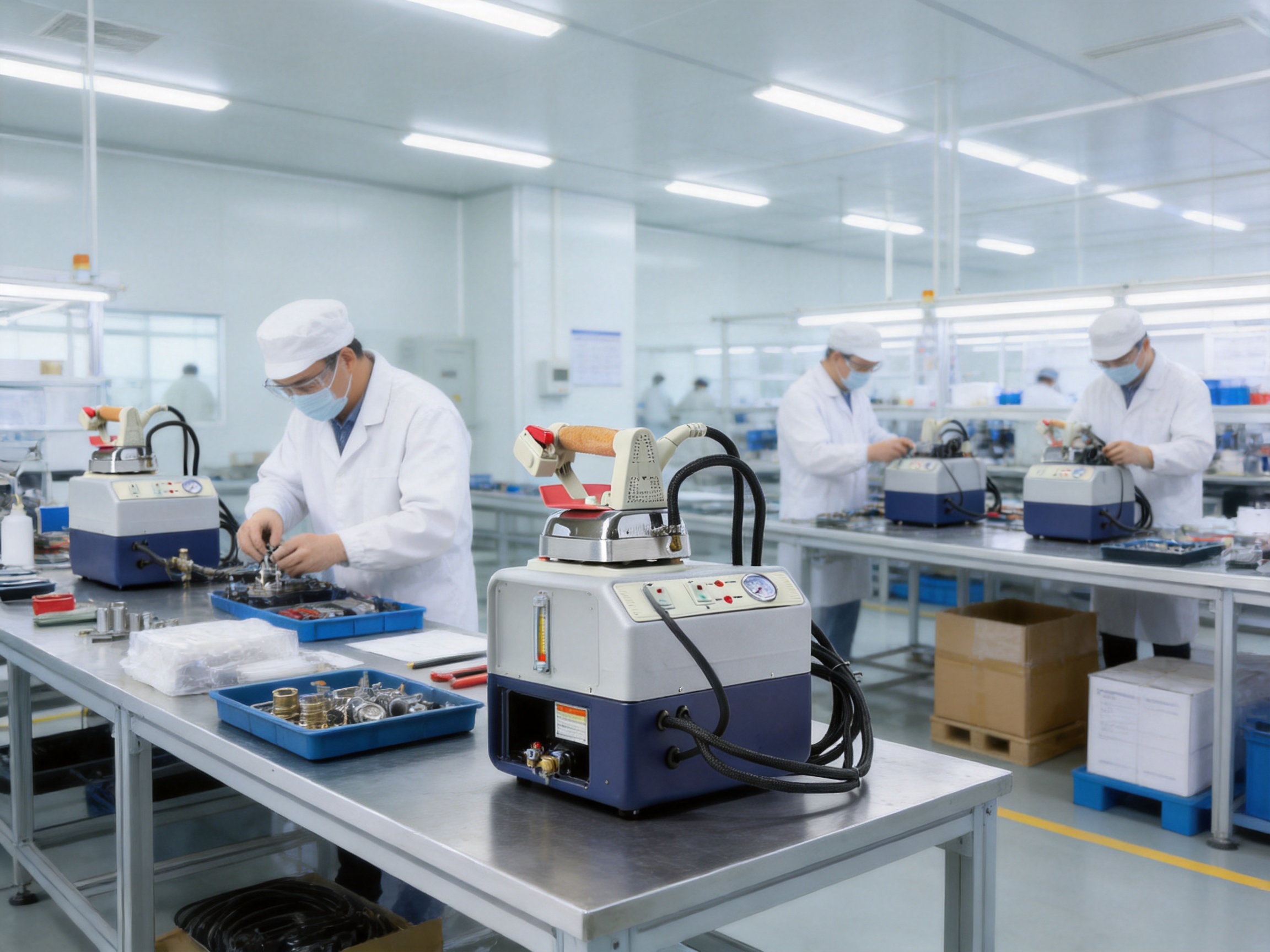
Reliable steam generation is essential in garment care, tailoring, textile production, hospitality, cleaning, and many other professional applications. A steam boiler must deliver consistent output, operate safely, fit into the available workspace, and remain practical to transport and maintain. The SPR-MN2035 Steam Boiler has been developed to address these requirements through a combination of useful water capacity, efficient heating performance, compact construction, and built-in operating safeguards.
With a 3.5-liter water tank, a 1600W boiler heating system, a 900W iron connection, and a compact packing size of 355 x 320 x 450mm, this model offers a balanced solution for users who need extended steam availability without installing a large stationary boiler. It is suitable for garment finishing, ironing stations, small workshops, domestic professional use, cleaning tasks, and other operations that require dependable steam in a limited space.
Unlike basic steam generators that require frequent refilling or oversized systems that are difficult to relocate, the SPR-MN2035 is designed to provide practical working capacity while preserving portability. Its pressure gauge and liquid level alarm further improve operational awareness, helping users monitor the boiler and respond before unsafe or inefficient conditions develop.
This article examines the product’s design, performance, safety features, application value, manufacturing background, quality philosophy, and competitive advantages. It also explains why a compact steam boiler can be a valuable investment for businesses seeking stable performance, manageable operating costs, and flexible installation.
The SPR-MN2035 Steam Boiler is a compact steam-generation unit designed for continuous or intermittent use. Its main purpose is to heat water and provide a steady supply of steam for connected ironing equipment, garment-care tools, spray guns, and other compatible applications.
The boiler has a water capacity of 3.5 liters. This capacity is large enough to reduce the number of interruptions caused by refilling, yet compact enough to preserve a relatively small footprint. For many small and medium-sized work environments, this balance is more useful than either a very small portable steamer or a large industrial boiler.
The boiler power is rated at 1600W, supporting efficient steam generation. The product information also lists a 900W iron power rating, allowing the system to work with an appropriate electric iron or ironing accessory. This integrated configuration is particularly valuable in garment-care environments where steam generation and pressing must operate together.
The SPR-MN2035 is available for 220V or 110V electrical systems, helping it serve customers in different markets. Voltage selection should be confirmed before ordering and installation, because the machine must be connected to a power supply that matches its specified configuration.
| Product Item | Specification |
| Model | SPR-MN2035 |
| Product Type | Steam Boiler |
| Voltage Options | 220V / 110V |
| Boiler Power | 1600W |
| Iron Power | 900W |
| Water Capacity | 3.5L |
| Packing Size | 355 x 320 x 450mm |
| Primary Applications | Garment care, ironing, textile work, cleaning, and general steam use |
| Monitoring Features | Built-in pressure gauge and liquid level alarm |
The specifications show that this boiler is designed as a practical working appliance rather than a high-volume factory boiler. Its strength lies in providing useful steam capacity in a compact, easy-to-manage format. It can be positioned beside an ironing table, installed in a small workshop, or moved between workstations when required.
Water capacity directly affects workflow. A boiler with an insufficient tank may require repeated refilling during a working session. Each refill interrupts production, delays garment completion, and may require the operator to wait for the water to heat again. These interruptions are especially inconvenient in commercial settings where work is organized around customer deadlines or production schedules.
The 3.5-liter capacity of the SPR-MN2035 helps extend the operating period between refills. This is useful when pressing multiple garments, finishing textile products, performing repeated cleaning tasks, or handling work that requires steady steam output. The user can focus on the task instead of constantly monitoring a very small reservoir.
A larger tank also supports better workflow planning. Operators can fill the boiler before a work session, inspect the water level, and begin work with a reasonable supply available. When the liquid level becomes low, the alarm provides an additional reminder. This combination of capacity and notification is more convenient than relying only on visual inspection or waiting until steam performance declines.
At the same time, the boiler does not use the excessive amount of water associated with large industrial systems. A smaller tank can reduce unnecessary water storage, lower the space required around the equipment, and make the unit easier to relocate. The 3.5-liter capacity is therefore a practical middle ground between convenience and portability.
Frequent refilling can reduce productivity in both professional and domestic environments. In a tailoring shop, the operator may need to stop while working on a garment. In a hotel laundry room, repeated interruptions can slow the finishing process. In a small manufacturing workshop, refilling may create an avoidable break in the production line.
By providing a relatively generous capacity for a compact boiler, the SPR-MN2035 helps reduce these interruptions. The benefit is not simply convenience. Fewer interruptions can support more consistent work rhythms, improve operator concentration, and make the equipment easier to integrate into a daily operating procedure.
The boiler is appropriate for operations that require sustained or repeated steam use. Garment pressing, seam shaping, wrinkle removal, textile finishing, and certain cleaning applications can all benefit from an appliance that is ready to provide steam over a longer period.
Actual operating duration will depend on steam demand, working pressure, connected equipment, water quality, and the way the unit is operated. Nevertheless, the 3.5-liter tank gives the SPR-MN2035 a practical advantage over compact steam units with very small reservoirs.

SPR-MN2035 Steam Boiler
Space is often limited in garment workshops, tailoring rooms, laundry areas, retail alteration departments, and domestic workspaces. A large boiler may offer high capacity but can be difficult to install or store. The SPR-MN2035 addresses this problem with a compact packing size of 355 x 320 x 450mm.
The compact dimensions allow the unit to fit into smaller work areas. It can be placed near an ironing table, beside a garment rack, or in a dedicated equipment corner without occupying the same floor area as a large industrial steam system. When the working area must be reorganized, the boiler can be moved more easily than a permanently installed system.
Portability is another important advantage. Businesses may need to move equipment between rooms, production stations, temporary event locations, or service areas. A portable steam boiler can also be useful for mobile garment services, sample-making spaces, small training rooms, and businesses that do not operate from a single fixed production line.
The compact design does not mean that the product is limited to occasional domestic use. Many small professional operations prefer equipment that is appropriately sized to their actual workload. Purchasing a large boiler when the workload is moderate may increase acquisition cost, installation complexity, energy requirements, and maintenance demands. A compact unit can offer a more efficient match between equipment size and business needs.
Workspace efficiency affects both productivity and safety. When equipment occupies excessive room, operators may have less space to move garments, position tables, or organize accessories. A smaller boiler leaves more room for the tasks that directly generate value.
The SPR-MN2035 can be installed as part of a compact ironing station. The boiler, iron, vacuum table, garment rack, and work surface can be arranged to reduce unnecessary movement. Such an arrangement can help improve operator comfort and make the workflow easier to repeat.
A portable unit is easier to transport during business relocation, workshop rearrangement, maintenance, or seasonal storage. The compact structure may also reduce packaging and handling challenges during shipment. For distributors and importers, a manageable product size can simplify warehouse organization and delivery planning.
Before moving the boiler, users should switch off the power, allow the unit to cool, release pressure according to the operating instructions, and handle remaining water appropriately. Safe handling procedures protect both the equipment and the operator.
The 1600W boiler heating system is designed to generate steam efficiently for compatible ironing and steam applications. Heating power is an important factor because it affects how quickly water can be converted into usable steam and how effectively the boiler can recover during continued use.
A well-matched heating system should provide a balance between output and energy consumption. Excessive power may create unnecessary electrical demand, while insufficient power may lead to slow steam production or unstable performance. The 1600W rating gives the SPR-MN2035 a useful level of heating capability for a compact steam boiler.
The product is intended to provide quick steam output and consistent performance for both continuous and intermittent work. In garment care, consistent steam is important because uneven steam can make wrinkle removal more difficult and may require repeated passes over the fabric. Stable steam availability can help improve finishing quality and reduce wasted motion.
Steam softens fibers and helps operators shape, smooth, and finish garments. It can assist with removing wrinkles, setting seams, refreshing clothing, and preparing garments for presentation. In tailoring and apparel production, steam is often used throughout the process rather than only at the final stage.
A boiler-based system can be more suitable for repeated professional work than a small household iron with a limited internal water chamber. The separate boiler arrangement allows a larger water supply and can support a more continuous working routine.
Although garment care is a primary application, compact steam boilers may also be used for selected cleaning and maintenance tasks when compatible accessories are connected. Steam can be useful for loosening residues, refreshing surfaces, and treating certain areas where moisture and heat are appropriate.
Users should always confirm that the material, surface, accessory, and working method are suitable for steam. Delicate fabrics, electrical components, heat-sensitive plastics, and moisture-sensitive materials require special care.
Safety is a central consideration in any appliance that combines water, heat, pressure, and electricity. The SPR-MN2035 includes a built-in pressure gauge and a liquid level alarm to provide important operating information.
The pressure gauge allows the operator to monitor the internal pressure of the boiler in real time. This information helps the user understand whether the unit is operating within the expected range and can provide an early indication of unusual conditions.
Monitoring pressure is valuable because steam performance depends on the relationship between heating, water level, pressure, and the connected equipment. An operator who can see the pressure status is better positioned to use the machine correctly and recognize when inspection or service may be necessary.
The gauge should be checked during operation, particularly when the boiler is first started, when the connected equipment is changed, or when steam output appears different from normal. Users should follow the supplied operating guidance and should not attempt to alter pressure-control components without authorization.
The liquid level alarm alerts the operator when the water level falls below a certain threshold. This feature helps prevent dry operation, which can lead to overheating, reduced component life, or damage to the heating system.
Without a liquid level warning, an operator may continue working until steam output falls significantly or the boiler becomes excessively hot. The alarm offers an earlier notification and supports better operating discipline. It is especially helpful in busy workshops where the operator must focus on garment handling and may not be able to inspect the water level constantly.
The alarm does not eliminate the need for routine inspection. Users should still fill the boiler correctly, use suitable water, observe the operating instructions, and stop the machine if abnormal noise, odor, leakage, or temperature occurs.
Safety features are most effective when combined with correct operating procedures. The boiler should be placed on a stable, level surface with adequate ventilation. Electrical connections should be suitable for the selected voltage and power rating. Hoses, irons, fittings, and accessories should be inspected before use.
Operators should avoid opening or refilling a pressurized boiler unless the equipment has been switched off, cooled, and depressurized according to the manufacturer’s instructions. Protective clothing and appropriate workplace procedures should be used where hot steam presents a risk.
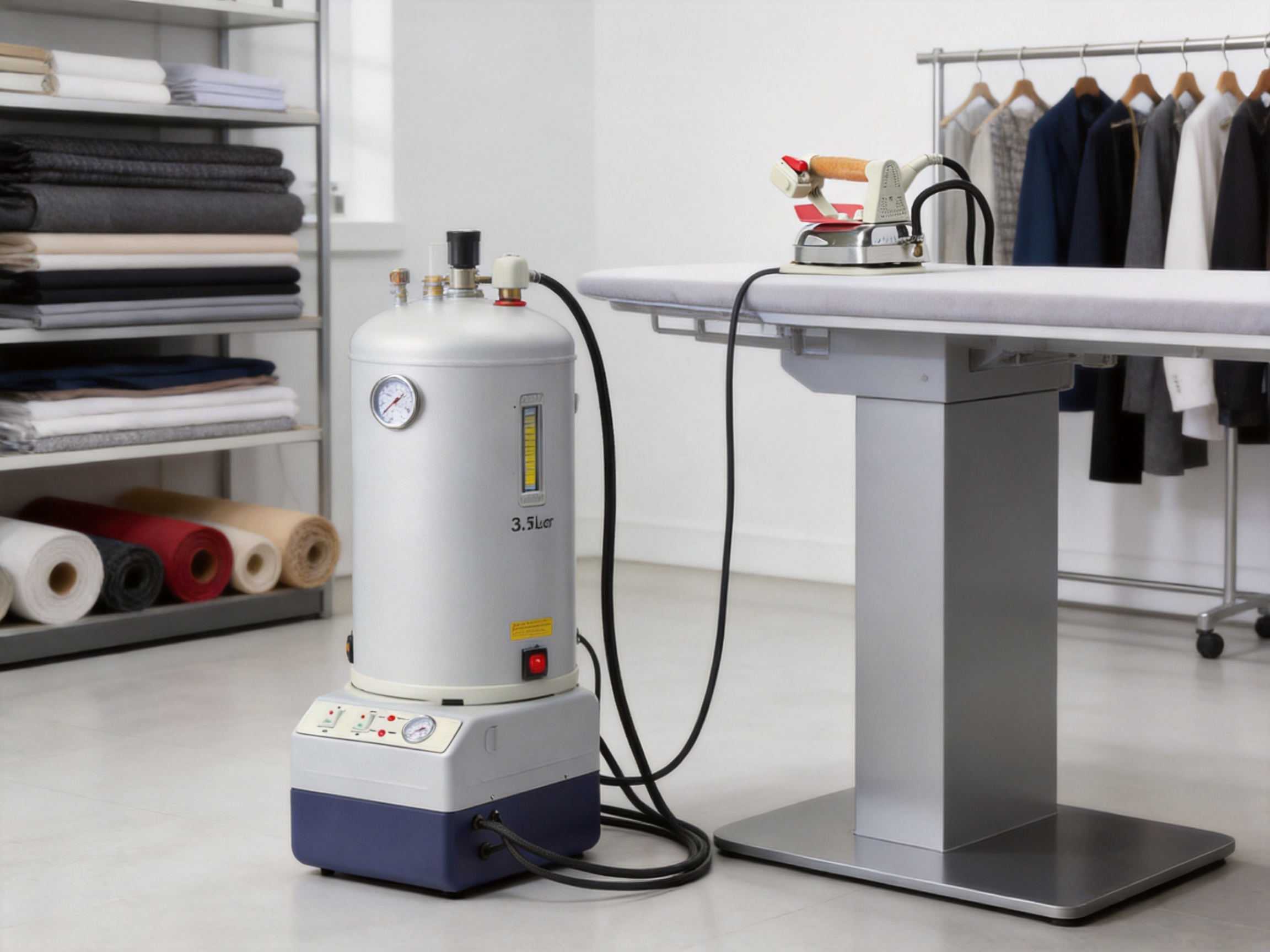
The SPR-MN2035 competes in a market that includes small steam generators, household steam irons, portable garment steamers, and larger professional boiler systems. Its advantage is not based on being the largest or most powerful machine. Instead, it offers a combination of features that can be more valuable for many users.
Some compact steam products have very small water chambers. They may heat quickly, but they require frequent refilling during professional use. Other systems have large tanks that increase size, weight, cost, and installation requirements. The 3.5-liter capacity of the SPR-MN2035 offers a balanced alternative.
This capacity supports longer operation while preserving a compact format. It is suitable for users who want more working time than a household steamer can provide but do not need a large central steam system.
The product combines a professional steam-boiler arrangement with dimensions that are suitable for small workspaces. This gives it an advantage over bulky systems when floor area is limited. It also offers more structured steam generation than a basic handheld steamer.
For small tailoring businesses, alteration shops, sample rooms, boutiques, home-based clothing businesses, and compact laundry areas, a space-saving boiler may be easier to install and operate than a larger commercial model.
The pressure gauge and liquid level alarm give the operator greater awareness than a simple heating unit without monitoring functions. These features support safe operation, help prevent low-water operation, and make it easier to recognize changes in performance.
Clear monitoring can also assist staff training. New operators can learn to observe pressure, water level, steam behavior, and alarm conditions as part of a standard work routine.
The availability of 220V and 110V configurations improves the product’s suitability for different electrical environments. This is important for international distribution and for buyers who need to match the machine to local power standards.
Voltage must be confirmed before purchase. Using the wrong electrical configuration can create a serious safety risk and may damage the equipment.
The listed 900W iron power rating allows the boiler to support a connected ironing solution. Rather than treating the boiler as an isolated appliance, users can integrate it with an ironing station and related accessories.
This makes the machine more valuable in practical work environments. The operator can arrange the boiler, iron, table, garment supports, and accessories as a coordinated workstation instead of relying on separate, unrelated household devices.
The product is manufactured by Jinyun Shengda Sewing Equipment Co., Ltd., a Chinese manufacturer specializing in ironing and steam-related equipment. The company was established in 2003 and is located in Huzhen Town, Lishui City, Zhejiang Province.
Its product range includes electric irons, steam irons, hanging irons, spray guns, small steam machines, heat transfer machines, steam boilers, vacuum tables, and related accessories. This broad product range is important because it demonstrates experience across multiple parts of the garment-care and textile-equipment chain.
A manufacturer that produces boilers, irons, vacuum tables, and accessories can develop a more complete understanding of how equipment works together in real workplaces. This product knowledge can support better compatibility, more practical accessory selection, and more responsive technical communication.
The company emphasizes independent research, development, and production. Independent product development enables a manufacturer to adjust designs according to market requirements, user feedback, and changing application needs.
For a compact steam boiler, product development may involve improving heating efficiency, refining the water-level monitoring system, optimizing the layout of internal components, strengthening the external structure, and making the equipment easier to operate. Even small design improvements can have a meaningful effect on daily reliability.
Research and development also support customization and OEM services. Different markets may require different voltages, packaging, labeling, accessories, or product configurations. A manufacturer with internal development and production capabilities is generally better positioned to coordinate these requirements than a company that only resells standard products.
The company’s research and development, management, and sales teams work together to support product improvement and customer service. This type of cooperation can help transfer market feedback into product decisions.
For international buyers, communication is especially important. Distributors may need technical documentation, packaging information, product photographs, spare parts, or guidance about local applications. A coordinated manufacturer can help reduce misunderstandings and improve order preparation.
A broad product range creates opportunities for coordinated purchasing. A buyer may need a steam boiler together with an electric iron, vacuum table, spray gun, heat transfer machine, or replacement accessory. Sourcing related items from one experienced manufacturer can simplify product selection and logistics.
It can also make it easier to create complete equipment packages for garment factories, tailoring schools, commercial laundries, retailers, and service providers. The SPR-MN2035 can serve as the steam-generation component in a broader ironing or finishing solution.
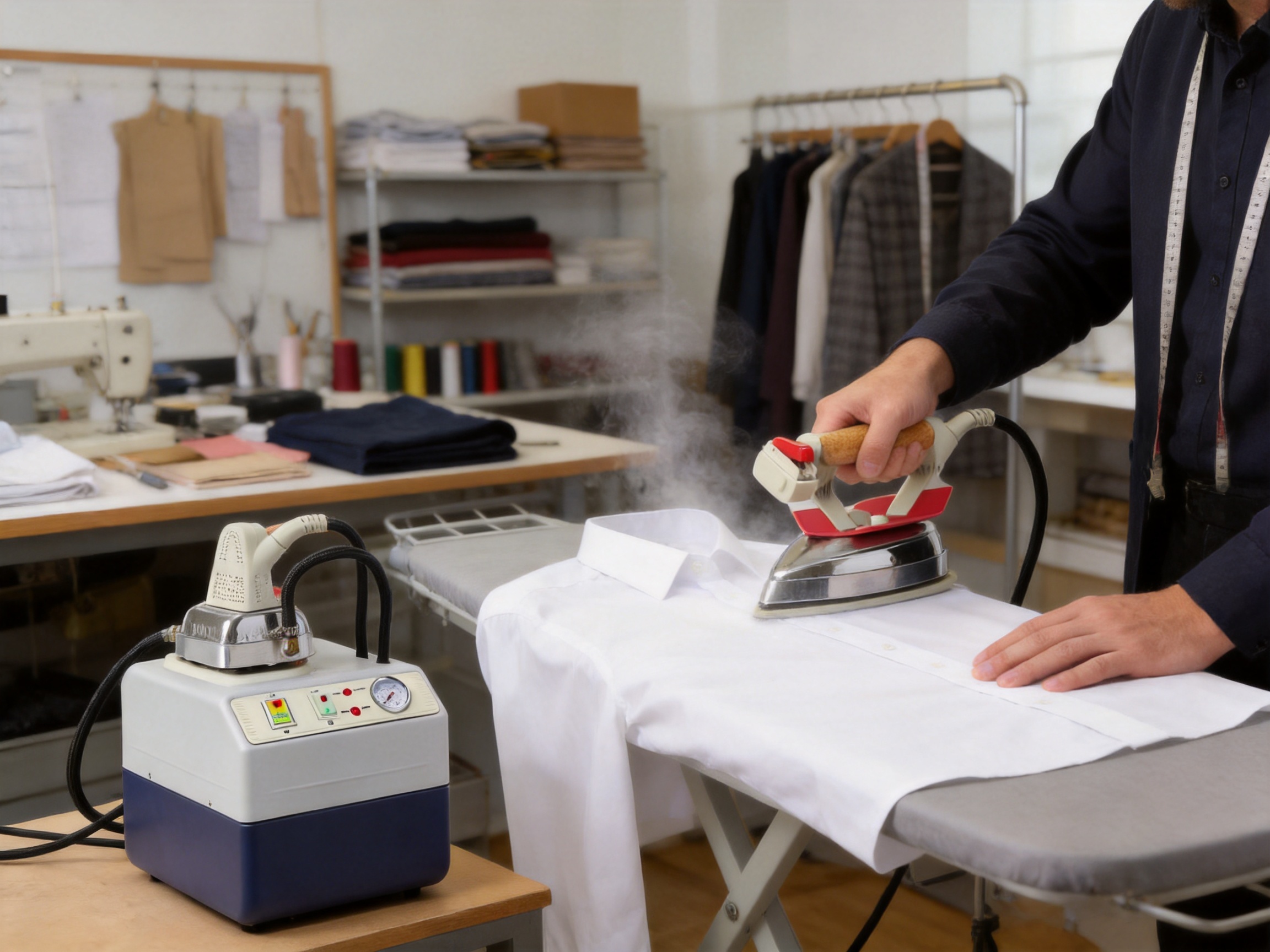
According to the provided company information, the manufacturer follows national and industry standards, including GB4706.1-2005 and GB4706.2-2007. These standards relate to safety requirements for household and similar electrical appliances and particular appliance categories.
The company’s products have also passed CCC and CQC certifications as stated in the supplied information. Certification can provide buyers with additional confidence that applicable assessment and compliance procedures have been addressed.
Certification should not replace correct installation, responsible operation, or routine maintenance. However, it is an important part of supplier evaluation. Buyers should request current certificates, test documentation, and product-specific compliance information when required for their market.
The reliability of a steam boiler depends on more than its heating element. Water-contact parts, pressure-related components, electrical wiring, switches, alarms, insulation, connectors, hoses, and external housing all influence performance and service life.
A responsible manufacturing process should include attention to component compatibility and assembly quality. Electrical connections must be secure, water pathways must be properly sealed, and monitoring components must be positioned so that they can provide useful information to the operator.
Consistent assembly is important when producing equipment for domestic and international markets. Standardized procedures can help ensure that units of the same model have consistent specifications, appearance, and operating behavior.
Process consistency also supports after-sales service. When product construction is standardized, replacement parts, troubleshooting procedures, and operator training can be managed more efficiently.
Long-term manufacturing strength is supported by attention to customer feedback. Users often identify practical improvements that may not be obvious during initial design, such as better hose routing, clearer controls, easier filling, improved packaging, or more convenient accessory storage.
Continuous product improvement helps a manufacturer maintain relevance in a competitive market. It also supports the long-term value of products already in use by encouraging better documentation, service methods, and replacement-part planning.
Tailoring shops need equipment that can support precise finishing without occupying excessive floor space. The SPR-MN2035 can provide steam for shaping seams, removing wrinkles, preparing fabric, and finishing completed garments.
Its compact format is suitable for shops where the sewing, cutting, pressing, and storage areas are arranged close together. The operator can position the boiler near the ironing surface and maintain an efficient movement pattern.
Alteration businesses often process individual garments and require dependable finishing after hems, repairs, resizing, or structural changes. The ability to use steam repeatedly can improve the appearance of the finished garment and help the operator present work professionally to customers.
Because alteration shops may operate in small retail units or home-based spaces, a compact boiler can be more appropriate than a large industrial installation.
Small garment manufacturers may use the boiler for sample preparation, final pressing, quality inspection, and limited production finishing. The 3.5-liter water capacity can support repeated tasks while the compact dimensions allow the unit to fit within a flexible production layout.
Hotels, guesthouses, uniform services, and small laundry departments may use steam equipment to finish uniforms, linens, staff garments, or customer clothing. The boiler can be considered where the workload requires more steam availability than a standard household iron but does not justify a large central boiler system.
Training institutions that teach tailoring, fashion production, garment care, or textile finishing can use compact equipment to create practical workstations. A portable boiler can be moved between classrooms or used in demonstration areas.
Individuals who operate a home-based tailoring business, costume studio, fashion workshop, or clothing-care service may need professional performance in a domestic environment. The SPR-MN2035 offers useful capacity without the spatial requirements of a large commercial machine.
Before installation, users should verify the voltage, available electrical capacity, workspace ventilation, surface stability, and compatibility of the connected iron or accessory. The machine should be positioned away from flammable materials and in a location where hot steam cannot contact people, exposed wiring, or sensitive surfaces.
The boiler should be filled with suitable water according to the operating instructions. Water quality can affect the formation of scale inside heating and water-contact components. Where local water is hard, users should follow the manufacturer’s recommendations regarding filtration, treatment, or cleaning intervals.
After filling, the operator should ensure that all caps, connections, hoses, and fittings are correctly installed. The machine should be switched on according to the recommended start-up sequence. Pressure and liquid-level indicators should be observed while the boiler reaches operating condition.
During use, the operator should avoid directing steam toward skin, exposed electrical equipment, or materials that may be damaged by heat and moisture. The iron or accessory should be placed securely when not in use. Hoses should be arranged to avoid sharp bends, tripping hazards, and contact with excessively hot surfaces.
At the end of a work session, the boiler should be switched off and allowed to cool. Pressure should be released only through the approved procedure. Cleaning and draining should be performed as recommended, particularly if the equipment will remain unused for an extended period.
Regular maintenance helps preserve performance and extend service life. The most important maintenance tasks generally include checking water quality, removing scale when necessary, inspecting hoses and fittings, testing alarms, reviewing electrical connections, and keeping the external surfaces clean and dry.
Scale can reduce heating efficiency and restrict water pathways. The severity of scale formation depends on local water conditions and the frequency of use. A maintenance schedule should therefore be adapted to the operating environment rather than applied blindly.
The pressure gauge should remain visible and readable. If the gauge behaves unusually, becomes damaged, or shows unexpected readings, the boiler should be removed from service until it has been inspected by a qualified technician.
The liquid level alarm should also be checked as part of routine maintenance. A safety alarm is valuable only if it is functional. Operators should not bypass or disable the alarm because doing so can increase the risk of dry operation.
Good maintenance supports long-term value in several ways. It helps preserve steam output, reduces the likelihood of avoidable repairs, protects the heating system, and supports consistent garment-finishing quality. For commercial users, reliable maintenance can also reduce unexpected downtime.
Businesses evaluating the SPR-MN2035 should begin by identifying their actual steam demand. The model is well suited to compact professional applications, but users with very high-volume production may require a larger boiler or multiple units. Matching product capacity to workload is essential for both performance and cost control.
Buyers should confirm the required voltage before placing an order. They should also clarify whether the product is supplied with an iron, hose, fittings, or other accessories, as package contents may vary according to the order configuration.
Importers and distributors should review packaging, shipping dimensions, labeling, manuals, certification requirements, and spare-parts availability. Because the company offers multiple product categories, distributors may also consider building a product line that includes boilers, irons, vacuum tables, spray guns, and accessories.
OEM and customization capabilities may be valuable for businesses that sell under their own labels or require market-specific packaging. Such projects should be discussed in advance, including minimum order quantities, artwork, technical specifications, lead times, inspection procedures, and after-sales support.
Supplier evaluation should consider more than the purchase price. Manufacturing experience, product range, quality systems, certifications, technical communication, export experience, and service support all influence the total value of the equipment.
A steam boiler is a technical product that requires coordination between heating, water management, pressure control, electrical safety, and user interaction. Manufacturer experience in related ironing equipment can therefore be an important advantage.
Since its establishment in 2003, the manufacturer has developed products for different garment-care and textile applications. Its experience includes electric irons, steam irons, hanging irons, spray guns, heat transfer machines, vacuum tables, boilers, and accessories.
This specialization provides a foundation for understanding the practical requirements of garment professionals. The company is familiar with the need for smooth steam delivery, suitable workstations, compact equipment, convenient accessories, and dependable day-to-day operation.
The company also serves domestic and overseas customers, with products exported to Southeast Asia, Central Asia, South America, Africa, and other regions. International market experience can contribute to better awareness of different voltage requirements, documentation expectations, packaging conditions, and customer applications.
The main purpose is to generate steam for garment care, ironing, textile finishing, cleaning, and other compatible applications. It can be integrated with an electric iron or suitable steam accessory.
The water capacity is 3.5 liters. This capacity helps reduce refilling frequency compared with smaller steam devices while maintaining a compact design.
The boiler power is 1600W. The listed iron power is 900W, allowing the product to support a compatible professional ironing setup.
Yes. The supplied specifications list 220V and 110V options. Buyers should confirm the correct voltage configuration before ordering and installation.
Yes. The product includes a built-in pressure gauge and a liquid level alarm. The gauge helps monitor internal pressure, while the alarm warns when the water level becomes low.
Yes. Its compact 355 x 320 x 450mm packing size and portable format make it suitable for small workshops, tailoring shops, alteration businesses, training areas, and other locations where space is limited.
The boiler is designed for both continuous and intermittent use. Actual operating duration depends on steam demand, connected equipment, water conditions, and operating procedures.
Suitable applications include garment pressing, tailoring, apparel finishing, clothing alterations, textile work, small laundry operations, hospitality uniforms, cleaning tasks, and domestic professional use.
The alarm warns the user when the water level falls below a certain point. This helps reduce the risk of dry operation, overheating, and damage to the heating system.
A pressure gauge provides real-time information about the boiler’s internal pressure. It helps the operator observe operating conditions and identify unusual pressure behavior more quickly.
Users should follow the operating instructions, use suitable water, control scale buildup, inspect hoses and fittings, keep the alarm functional, maintain electrical connections, and perform cleaning or draining as recommended.
The company information states that customization and OEM services are among its advantages. Specific requirements, quantities, packaging, labels, and technical details should be discussed directly with the manufacturer.
Buyers should confirm voltage, package contents, compatible accessories, certification requirements, packing information, delivery conditions, warranty terms, spare parts, and after-sales support.
It may be useful for specific workstations, sample rooms, maintenance areas, or small production sections in a large factory. However, very high-volume operations should compare the model’s capacity with their actual steam demand and consider larger systems if necessary.
The SPR-MN2035 Steam Boiler provides a practical combination of capacity, portability, monitoring, and application flexibility. Its 3.5-liter tank supports longer work periods than many small steam devices, while the 355 x 320 x 450mm format helps it fit into compact workspaces.
The 1600W boiler heating system is suited to efficient steam generation, and the 900W iron power rating supports integration with a compatible ironing appliance. The pressure gauge and liquid level alarm add useful operating awareness and help promote safer use.
Its strongest competitive position is the balance between professional functionality and manageable size. It is not designed to replace every large industrial boiler, but it can be an effective choice for tailoring shops, alteration businesses, small garment workshops, hospitality applications, training centers, and home-based professionals.
The manufacturer strengthens the product’s value through experience in ironing and garment-care equipment, independent research and development, a broad product range, customization capability, international market experience, and stated compliance with relevant standards and certifications.
For buyers seeking a compact steam solution that reduces refilling interruptions, supports organized garment-care work, and can be integrated into a professional workstation, the SPR-MN2035 is a well-balanced option. Its practical design makes it suitable for users who value reliable steam availability without the space and complexity associated with larger systems.
1. Product specification sheet for the SPR-MN2035 Steam Boiler, including voltage, power, water capacity, dimensions, and monitoring features.
2. Manufacturer-provided company profile for Jinyun Shengda Sewing Equipment Co., Ltd., including company history, product categories, manufacturing activities, export markets, and service capabilities.
3. GB4706.1-2005, Safety of Household and Similar Electrical Appliances: General Requirements.
4. GB4706.2-2007, Safety Requirements for Household and Similar Electrical Appliances: Particular Requirements.
5. General operating and maintenance principles for compact steam boilers, garment-ironing equipment, and professional steam appliances.
6. Manufacturer-provided product advantages and feature descriptions concerning water capacity, portability, pressure monitoring, liquid-level protection, and steam generation.
 +86-578-3158872 / +86-578-3158958
 jyshengda@163.com / caroying@jy-shengda.com
 No. 8 Nanyi Rd, Huzhen Industrial Park, Zhejiang, China
Copyright © Jinyun Shengda Sewing Equipment Co., Ltd. All Rights Reserved.
Ironing Press Machine Equipment Factory
 English
 中文简体
 русский
 عربى