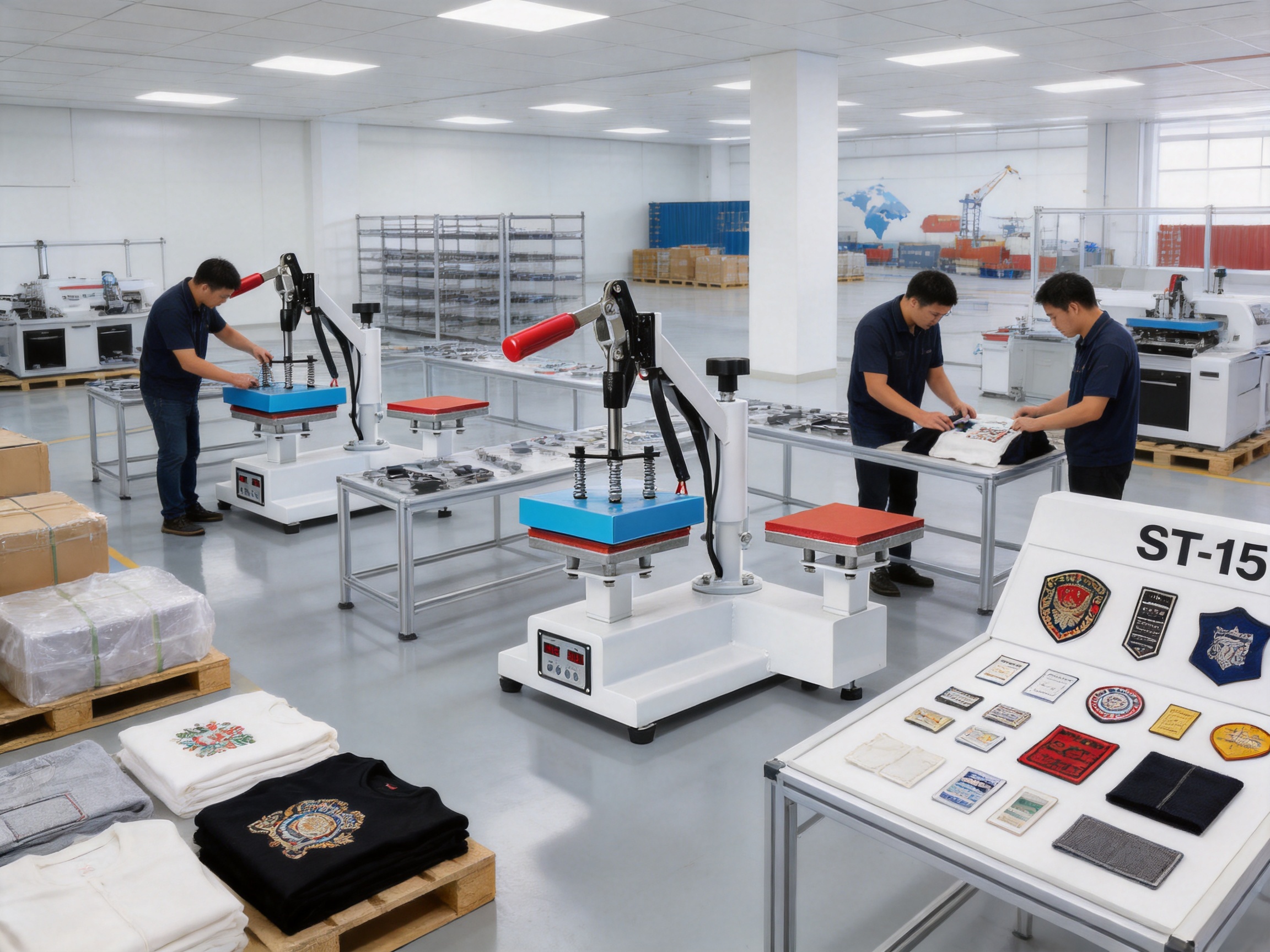
The ST-15 Double-Station Heat Transfer Machine is a compact and productive solution for fabric printing, textile bonding, garment decoration, and customized merchandise production. Designed with two working stations, the machine helps operators improve output without requiring a large production area. Its combination of controlled temperature, adjustable timing, consistent pressure, straightforward operation, and durable construction makes it suitable for apparel businesses, promotional product suppliers, textile workshops, garment factories, and small-to-medium production facilities.
Heat transfer equipment must do more than generate heat. It must distribute temperature evenly, apply pressure consistently, protect the material being processed, and provide operators with enough control to repeat the same result from one item to the next. The ST-15 is designed around these practical requirements. It supports applications involving sublimation and solvent-based inks and can be used with cotton, linen, synthetic fibers, and other textile materials when the correct transfer settings are selected.
With a 15 x 15 cm work table, 0.75 kW power rating, a working temperature range of 50–300°C, and a time setting range of 1–60 seconds, the machine provides an adaptable platform for a wide range of small-format transfer tasks. The dual-station structure further improves workflow by allowing one station to be prepared while the other is being operated or unloaded.
The ST-15 belongs to the ST-15 Series of heat transfer machines. It is engineered for operations that need reliable heat transfer performance in a relatively compact format. The machine can be used for printing designs, logos, text, labels, decorative graphics, and other transfer materials onto suitable textile surfaces.
Unlike a single-station press, a double-station machine gives the operator access to two work positions. This arrangement can reduce idle time because preparation, loading, unloading, and pressing activities can be organized between the two stations. When one station is undergoing a transfer cycle, the operator may prepare the next garment or textile item at the other station, depending on the selected operating method and workplace arrangement.
The machine is particularly appropriate for short-run and repeat-order production. It can support customized apparel, promotional merchandise, sample development, small-batch textile production, and fabric bonding work. Its adjustable temperature and time settings allow operators to adapt the pressing process to different transfer materials and fabric characteristics.
| Product | ST-15 Double-Station Heat Transfer Machine |
| Series | ST-15 Series |
| Work table size | 15 x 15 cm |
| Voltage | 220V~ |
| Power | 0.75 kW |
| Temperature range | 50–300°C |
| Time delay range | 1–60 seconds |
| Primary applications | Fabric printing, garment decoration, fabric bonding, promotional items, customized textiles |
The double-station configuration is one of the most important advantages of the ST-15. In a traditional single-station workflow, the operator may need to wait for one item to complete before removing it and preparing the next item on the same work surface. This can create pauses between cycles, particularly when garments need to be aligned carefully or transfer materials need to be positioned before pressing.
With two stations, preparation and pressing can be coordinated more efficiently. While one work area is being used for the active transfer, the operator can place the next textile item on the second station. This reduces unnecessary movement and helps maintain a smoother production rhythm. The improvement is especially valuable when producing multiple identical items, such as team shirts, uniforms, event garments, tote bags, or promotional textiles.
The two-station arrangement can also make the machine more flexible for mixed orders. An operator may use one station for a particular fabric or transfer material and the other for a different job, provided the required settings and procedures are managed correctly. This can be useful in workshops handling customized products, where orders often vary in size, design, material, and quantity.
Compared with a single-station machine of a similar working size, the ST-15 can provide a more productive use of operator time. Its advantage does not depend solely on higher heating power. Instead, it comes from better workflow organization, fewer interruptions, and the ability to prepare work continuously. For businesses seeking a practical increase in output without investing in a larger industrial system, this design offers a balanced solution.
Small-batch production often requires frequent changes. Operators may need to switch between colors, garments, transfer sheets, or customer orders. A machine that is difficult to adjust can lose valuable time during these changes. The ST-15 is designed with user-friendly controls so that temperature and time can be set according to the requirements of each project.
The two workstations also support a more organized production sequence. One station can be used for placing and aligning the textile, while the second station is used for the next stage of production. This helps operators divide their movements into repeatable actions, which can improve consistency and reduce handling errors.
Many garment decorators and textile workshops operate in compact rooms. A large production press may offer high output but may also require substantial floor space, additional electrical capacity, and a more complex layout. The ST-15 provides two working stations in a compact machine format, helping businesses increase working capacity without occupying the space required by larger equipment.
Its compact footprint can be beneficial for tailoring shops, sample rooms, school or community workshops, small garment factories, promotional product businesses, and production areas where floor space must be shared with sewing, cutting, packaging, or inspection equipment.

ST-15 Double-Station Heat Transfer Machine
The ST-15 operates across a temperature range of 50–300°C. This range gives users the ability to select lower-temperature settings for materials that may be sensitive to excessive heat. Low-temperature capability is important because different fabrics and transfer media react differently during pressing. Excessive heat can cause discoloration, shrinkage, surface changes, adhesive problems, or damage to delicate materials.
By allowing operators to work at a lower temperature when appropriate, the machine supports a broader range of textile applications. Cotton, linen, synthetic fibers, and blended materials may require different combinations of heat, pressure, and dwell time. The operator can adjust the settings based on the transfer material supplier’s instructions, the fabric construction, and the desired result.
Low-temperature operation is also useful for materials where preserving surface appearance is important. Delicate textile finishes, coated materials, thin fabrics, and certain synthetic surfaces may need careful handling. A machine that offers a broad adjustment range gives users greater control than equipment designed only for high-temperature operation.
The machine is particularly suited to the transfer of sublimation and solvent-based inks onto appropriate textiles. Sublimation transfers are commonly used for custom graphics, sportswear, promotional goods, and polyester-based products. Solvent-based transfer applications may be selected for particular printing systems and materials. Operators should always verify compatibility between the transfer paper, ink, fabric, and pressing conditions before beginning production.
The ST-15 can also be applied to fabric bonding tasks when suitable bonding materials are used. Heat-activated films, adhesives, interlinings, patches, labels, and layered textile components may be processed with the correct settings. The ability to adjust both temperature and time helps users manage different bonding requirements.
Compared with equipment that has a narrow temperature range, the ST-15 offers more freedom when handling varied materials. This versatility can help a workshop serve more customers and accept more types of orders without needing separate machines for every textile application.
Transfer quality depends heavily on process control. Temperature that is too low may produce incomplete adhesion or weak color development. Temperature that is too high may damage the textile or transfer layer. Similarly, insufficient pressing time may lead to poor bonding, while excessive dwell time may affect the fabric surface or reduce production efficiency.
The ST-15 provides a temperature range of 50–300°C and a time delay range of 1–60 seconds. These settings allow the operator to establish a repeatable combination for each material and transfer type. Once an appropriate procedure has been tested, the same settings can be used for subsequent batches, supporting more consistent production.
Time control is particularly useful in repetitive work. Operators do not need to rely entirely on personal estimation when determining how long a transfer should be pressed. A controlled time setting can make training easier for new employees and help reduce variation between operators.
Customers purchasing customized garments or promotional items generally expect all pieces in an order to have a similar appearance. Differences in pressing time, heat, or pressure can result in uneven color, inconsistent adhesion, or variations in design clarity. A machine with controllable operating parameters gives the production team a stronger foundation for repeatability.
The ST-15’s adjustable controls can be used to develop a simple production standard. The standard may identify the fabric type, transfer material, temperature, pressing time, placement method, and inspection criteria. By recording these settings, a workshop can reproduce successful results when the same product is ordered again.
Every fabric and transfer material combination should be tested before full production. The ST-15’s broad temperature and time ranges make it suitable for controlled sample testing. Operators can begin with the transfer supplier’s recommended settings and make measured adjustments based on the test result.
A structured test may examine adhesion, color strength, design edges, fabric distortion, wash resistance, and surface appearance. Once the best combination has been identified, the settings can be recorded for future use. This approach helps reduce material waste and encourages more professional process management.
Temperature alone does not determine the quality of a heat transfer. Pressure must also be applied evenly across the working area. Uneven pressure can cause part of a graphic to bond correctly while another section remains weak or incomplete. It may also create differences in color intensity or image definition.
The ST-15 is designed to provide accurate and consistent pressure during operation. This is important for small graphics, lettering, logos, labels, patches, and detailed designs. Consistent pressure supports better contact between the transfer material and the textile surface, helping preserve fine details and clean edges.
High-precision pressing is also valuable when working with layered materials. A garment may include fabric, transfer paper, protective sheets, adhesive film, or other components. These layers must remain properly aligned during the pressing cycle. A stable working platform and consistent pressure help reduce shifting and incomplete contact.
Intricate graphics and small text require careful processing. If the pressure is inconsistent or the transfer is not fully bonded, narrow lines may appear broken, edges may lift, or small letters may lose definition. The ST-15 supports the controlled pressing needed to maintain detail when the transfer material and fabric are suitable for the application.
For businesses producing branded apparel, personalized gifts, sports uniforms, and event merchandise, design clarity directly affects customer satisfaction. A clean and accurately transferred design can improve the perceived value of the finished product.
Experienced operators may be able to compensate for small process variations through personal judgment. However, relying entirely on experience can make production difficult to standardize. The ST-15’s straightforward controls help convert individual experience into repeatable operating procedures.
New operators can be trained to follow a documented sequence: prepare the textile, position the transfer, select the temperature and time, complete the pressing cycle, and inspect the result. This reduces dependence on informal knowledge and helps businesses maintain quality as staff members change or production volume increases.
Production equipment should be practical as well as technically capable. Complex controls can slow down work, increase training time, and create opportunities for mistakes. The ST-15 is equipped with intuitive controls that allow operators to set the desired temperature and time without an unnecessarily complicated operating process.
Clear and accessible adjustments are especially helpful in mixed production environments. One order may require a different temperature from the next, while different fabrics may require different dwell times. Quick adjustments allow the operator to move between jobs with less interruption.
User-friendly operation also contributes to workplace efficiency. When operators can understand the controls quickly, they can focus more attention on alignment, material handling, inspection, and safe working practices. This balance between machine control and operator attention is important for achieving reliable results.
Many customization businesses process a combination of individual orders and short production runs. The machine must therefore support frequent changeovers. The operator may need to replace a transfer design, change the textile size, or select a different processing profile.
The ST-15 is suited to this type of work because the temperature and time can be adjusted according to the new application. Businesses can improve changeover efficiency by keeping common settings documented and by organizing transfer materials near the machine in a logical sequence.
The compact design of the ST-15 helps it fit into different working environments. A machine’s physical size affects more than floor space. It also influences the distance operators must move, the location of nearby materials, and the overall organization of the production area.
A compact heat transfer machine can be placed near sewing equipment, cutting tables, inspection areas, or packaging stations. This makes it easier to create a connected workflow. For small businesses, the ability to use one area for multiple production stages can be a major operational advantage.
Compact construction does not mean that the machine is limited to occasional use. The double-station design allows it to support regular production while remaining suitable for workshops that cannot accommodate a large industrial press. Its 0.75 kW power rating also reflects a practical balance between working capability and equipment requirements.
The ST-15 can serve businesses at several stages of development. A new apparel decoration business can use it to produce samples and fulfill customized orders. A growing promotional merchandise supplier can use it for repeat orders and small production batches. An established garment workshop can use it as a dedicated machine for labels, patches, prototypes, or special designs.
This flexibility gives the machine a broader market value than equipment designed for only one production scale. It can become part of a small workshop’s main production system or operate as a supplementary machine in a larger facility.
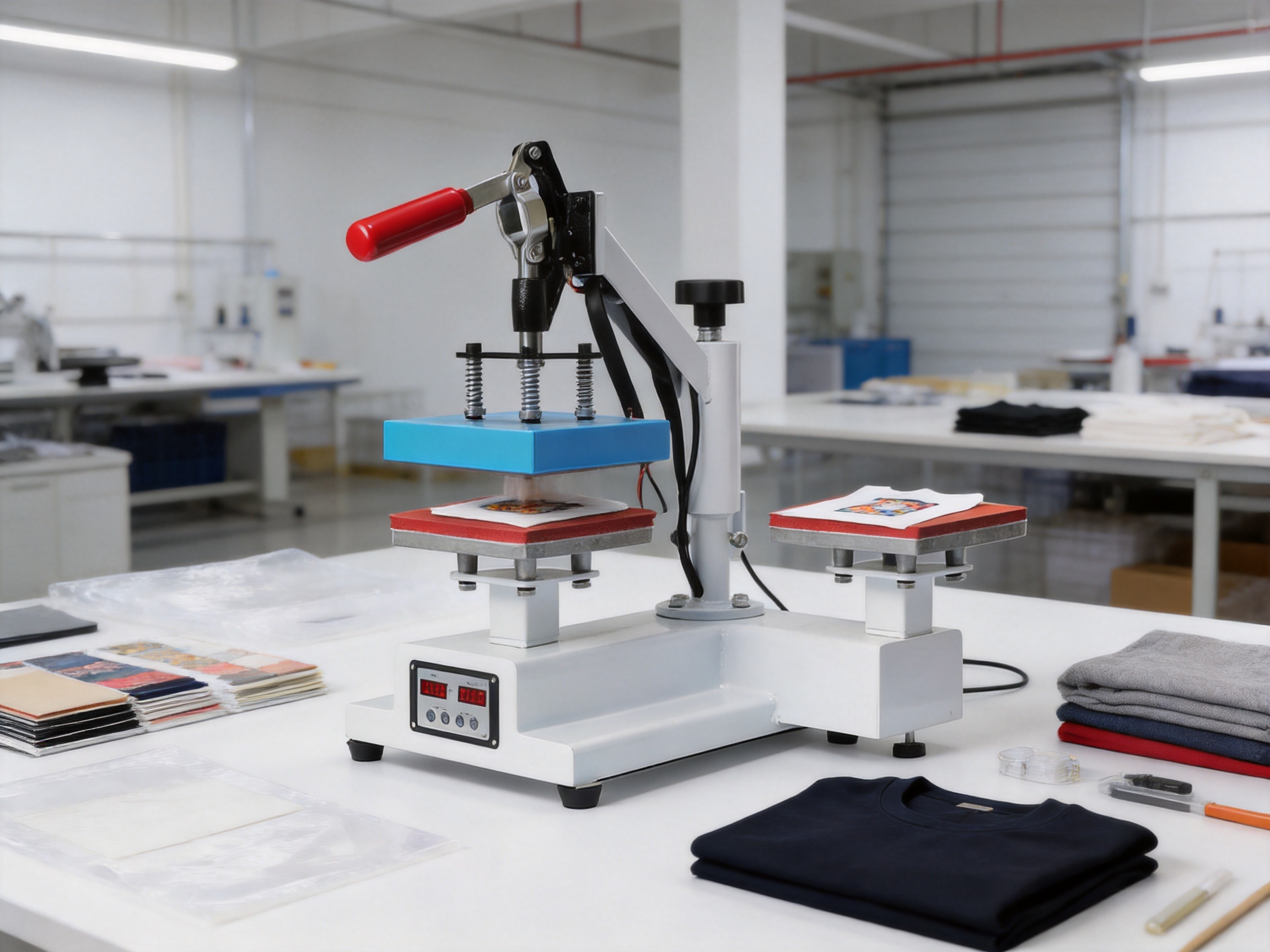
Heat transfer machines are exposed to repeated heating, cooling, pressure, loading, unloading, and adjustment. A durable construction is therefore important for maintaining reliable performance over time. The ST-15 is constructed with high-quality materials and is intended for regular use in production settings.
Durability can lower the total cost of ownership in several ways. A robust machine may require fewer interruptions, provide a longer useful service life, and reduce the need for frequent repairs. Reliable construction also helps protect production schedules, particularly when customers require delivery by a fixed date.
The machine’s construction is complemented by a practical design that emphasizes usability and maintenance. When controls, working areas, and operating components are straightforward, operators can identify unusual conditions more easily and keep the equipment in good working order.
Regular maintenance remains necessary for any heat transfer machine. Operators should keep the working surface clean, inspect electrical connections as required, maintain safe ventilation, and follow the relevant operating instructions. However, durable construction can reduce the frequency of major maintenance interventions.
Lower maintenance requirements allow businesses to devote more time to production rather than repair. This is especially valuable for small operations where one machine may represent a significant part of total production capacity.
Heat transfer equipment operates at elevated temperatures and must be used responsibly. The ST-15 includes safety features intended to protect users during operation and reduce the risk of accidents in the working environment.
Safety begins with correct installation and proper operator training. The machine should be positioned on a stable surface with sufficient space around it. Operators should understand the hot areas, moving components, electrical requirements, emergency procedures, and recommended protective practices.
The adjustable time function can also support safer and more orderly operation. When a cycle is controlled by a selected time, the operator can concentrate on preparing the next item rather than estimating the end of the process manually. This helps reduce unnecessary contact with heated components and contributes to a more consistent workflow.
Operators should confirm that the voltage supply is appropriate for the machine before use. The ST-15 is specified for 220V~ operation, so the electrical installation should meet applicable local requirements. The machine should not be operated with damaged cables, loose connections, or signs of electrical malfunction.
Users should keep hands clear of heated or moving areas, use suitable protective methods when handling recently pressed materials, and allow the machine to cool before cleaning or servicing. Transfer materials should be used according to their technical instructions, and unsuitable combustible materials should not be placed near the heated equipment.
The ST-15 is well suited to printing designs on shirts, uniforms, sportswear, workwear, jackets, and other garments. Businesses can use it to produce personalized names, numbers, logos, illustrations, slogans, and decorative graphics.
The double-station structure is valuable when producing multiple garments for teams, schools, clubs, companies, and events. Operators can prepare successive garments efficiently while maintaining a repeatable pressing procedure.
Fabric bonding involves joining textile layers or attaching compatible materials with heat-activated adhesives. Applications may include attaching labels, patches, interlinings, decorative elements, reinforcement pieces, or other components.
The low-temperature capability is helpful when working with materials that require careful handling. However, the correct temperature, time, and pressure must always be established through material testing because bonding requirements vary significantly among adhesive products and fabrics.
Promotional merchandise businesses can use the machine for branded tote bags, caps where the work area is suitable, textile accessories, small fabric products, and customized garments. Companies often require short runs with multiple designs, making an adaptable machine more useful than equipment dedicated to a single high-volume product.
The ST-15 supports this market by combining a relatively small work area with adjustable operating conditions. It allows businesses to accept different orders without maintaining a separate machine for every transfer application.
Consumers increasingly request personalized products for celebrations, sports events, family activities, organizations, and commercial promotions. The ST-15 can support customized textile production by transferring names, dates, images, messages, and other designs onto suitable fabric products.
Customization requires attention to detail because each order may be unique. Precise positioning, consistent pressure, and controlled temperature help improve the appearance of individual products and reduce the risk of costly rework.
Garment manufacturers and designers often need to test a graphic, label, bonding method, or fabric combination before committing to larger production. The ST-15 is suitable for this development work because its compact design is easy to integrate into a sample room or product development area.
By testing a design on the actual fabric, teams can evaluate color, placement, scale, adhesion, and visual appearance before approving a full production run. This can help reduce waste and improve communication between designers, production staff, and customers.
The most direct advantage of the ST-15 over basic single-station equipment is workflow capacity. A single-station machine may perform the pressing operation effectively, but the operator must often complete more preparation and unloading activities sequentially. The double-station design creates more opportunities for parallel work.
The ST-15 also offers a broad temperature range rather than limiting users to a narrow operating window. This can be useful when processing different fabrics and transfer media. Its adjustable time range provides further control for applications that require short or moderate pressing cycles.
Another advantage is the balance between productivity and space efficiency. Larger industrial systems may deliver greater output, but they may also involve higher investment, greater floor-space requirements, and more complex installation. The ST-15 is positioned as a practical alternative for businesses that need improved capacity but do not require a large-scale automated line.
The machine’s precision, compact construction, safety features, and user-friendly controls further distinguish it from simple equipment intended only for occasional use. It is designed as a production tool rather than merely a basic heating device.
The ST-15 is manufactured by Jinyun Shengda Sewing Equipment Co., Ltd., a company established in 2003 in Zhejiang, China. The company specializes in the independent research, development, and production of ironing and garment equipment.
Its product range includes electric irons, steam irons, hanging irons, spray guns, small steam machines, heat transfer machines, steam boilers, vacuum tables, and related accessories. This broad product coverage gives the company experience across several connected areas of garment finishing and textile processing.
A supplier with knowledge of multiple equipment categories can better understand the practical relationships between pressing, steaming, ironing, vacuum finishing, and heat transfer operations. This broader perspective can support product development and help customers source complementary equipment from a single manufacturer.
The company emphasizes independent research, development, and production. This capability is important because textile equipment must continue to evolve in response to changing fabrics, transfer materials, workplace requirements, energy considerations, and customer expectations.
Independent development allows a manufacturer to improve product structures, operating functions, safety features, and production methods based on accumulated experience. It also supports customization and OEM services for customers who require particular specifications, branding, or market adaptations.
The company’s research and development, management, and sales teams work together to provide equipment and professional services. Cooperation between these functions can improve communication from product design through manufacturing, sales, shipment, and customer support.
For international buyers, this coordination is valuable because equipment purchases often involve technical confirmation, electrical specifications, packaging, documentation, delivery arrangements, and after-sales communication. A supplier that can manage these elements in an organized way may reduce purchasing complexity.
The company follows national and industry standards, including GB4706.1-2005 and GB4706.2-2007, and its products have passed CCC and CQC certifications according to the provided company information. Compliance with recognized standards demonstrates a commitment to electrical safety, product quality, and regulated manufacturing practices.
Certification should always be confirmed for the exact model, configuration, and destination market before purchase. Importers may also need to verify local electrical, safety, labeling, and documentation requirements. Nevertheless, a manufacturing system organized around standards provides a stronger foundation than an unverified production source.
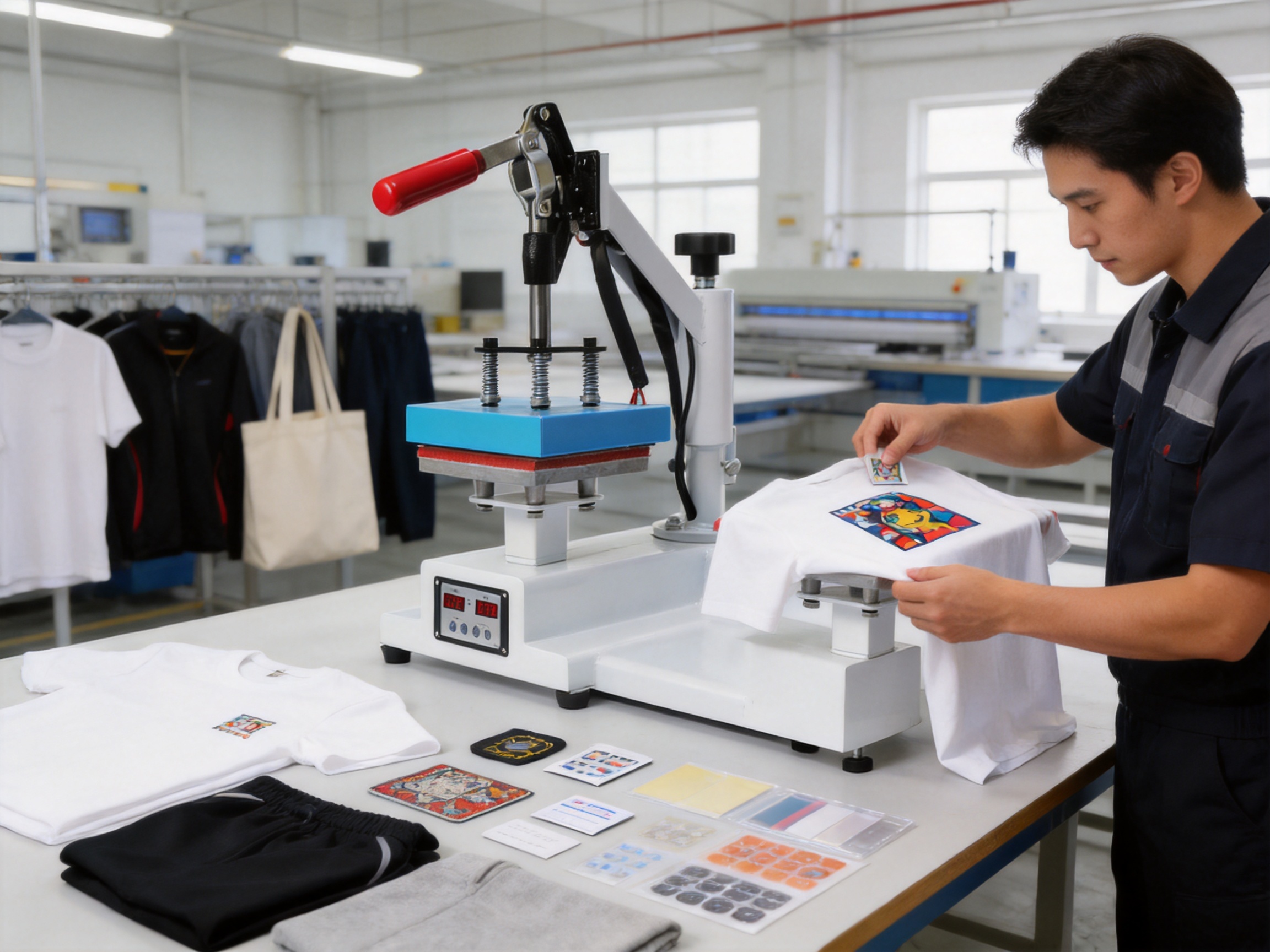
The company has established distribution channels in China and has received positive feedback from overseas customers. Its products are exported to Southeast Asia, Central Asia, South America, Africa, and other regions.
International market experience can help a manufacturer understand differences in voltage requirements, shipping practices, customer expectations, packaging, and documentation. It may also support communication with distributors and end users across different regions.
The company identifies customization, OEM services, reliable quality, product diversity, competitive costs, professional service, and convenient shipment as key strengths. These capabilities are relevant to importers, wholesalers, distributors, garment factories, and businesses seeking equipment for their own production.
OEM and customization services may be useful for distributors that require specific product identification, packaging, operating language, electrical configuration, or market positioning. Buyers should discuss customization requirements at the quotation stage, including minimum order quantities, approval procedures, production schedules, certification documents, spare parts, and packaging specifications.
Customization can also help businesses create a more consistent equipment portfolio. A distributor may combine the ST-15 with other ironing and garment finishing products from the same supplier while maintaining coordinated purchasing and service arrangements.
A well-organized workflow can help users obtain the best performance from the ST-15. The first step is to inspect the textile and transfer material. The fabric should be clean, dry, and suitable for the selected transfer process. Any wrinkles should be removed or managed before positioning the design.
The operator should then place the textile accurately on the work table and align the transfer material according to the design requirements. A protective sheet may be used when recommended by the transfer material supplier. The temperature and time should be selected based on previous testing or documented technical guidance.
After pressing, the operator should follow the appropriate cooling or peeling procedure. Some transfer materials require hot peeling, while others require cold or warm peeling. The correct method depends on the transfer system and should not be assumed solely from the machine settings.
Finally, the finished item should be inspected. The operator should check design position, adhesion, color, edges, surface appearance, and any signs of fabric damage. Defects should be recorded so that temperature, time, pressure, alignment, or material handling can be adjusted for future work.
A practical quality control checklist may include fabric type, transfer material, temperature, pressing time, pressure condition, design placement, peeling method, and final inspection result. Recording these details makes it easier to reproduce successful results and identify the cause of defects.
For repeat orders, a sample should be approved before the entire batch is processed. This is especially important when using a new fabric, a new transfer supplier, or a new design. A short approval process can prevent larger quantities of defective products.
When evaluating the ST-15, buyers should consider the type and size of products they plan to process. The 15 x 15 cm work table is suitable for small-format designs and selected textile components. Businesses requiring very large graphics may need a machine with a larger working area or may use the ST-15 for smaller elements such as labels, logos, names, and patches.
Electrical requirements should also be confirmed. The machine is specified for 220V~ operation and has a power rating of 0.75 kW. Buyers should verify compatibility with the intended installation and confirm whether any regional electrical adaptation is required.
Production volume is another important consideration. The double-station design improves workflow and can support small-batch production, but the actual output will depend on fabric preparation, transfer positioning, pressing time, operator skill, cooling or peeling requirements, inspection, and packaging.
Buyers should also request operating instructions, warranty information, spare parts availability, packaging details, certification documents, and recommended maintenance procedures. These documents contribute to responsible ownership and help operators use the equipment correctly.
The machine is used for fabric printing, garment decoration, textile bonding, promotional merchandise, customized textiles, and sample development. It is suitable for applying compatible transfer materials to cotton, linen, synthetic fibers, and other fabrics according to the requirements of the specific transfer process.
The double-station design allows operators to organize preparation, pressing, unloading, and loading more efficiently. While one station is being used for an active transfer cycle, the other can be prepared for the next item, helping reduce idle time and improve production flow.
The ST-15 provides a working temperature range of 50–300°C. This broad range supports both lower-temperature applications for sensitive materials and higher-temperature applications when required by compatible transfer products.
The time delay range is 1–60 seconds. Operators can select a suitable pressing time based on the transfer material, fabric, design, and tested production procedure.
The work table size is 15 x 15 cm. This makes the machine suitable for small-format graphics, logos, labels, names, patches, and other textile applications that fit within the working area.
The low-temperature capability can support applications involving sensitive fabrics, but suitability depends on the exact material and transfer system. Users should conduct a test before production and follow the recommendations supplied with the transfer material.
Yes. Its compact design, two-station workflow, adjustable temperature and time, and broad application range make it suitable for small garment decorators, promotional product suppliers, tailoring businesses, sample rooms, and small textile workshops.
Yes. The machine can be used for fabric bonding when compatible heat-activated adhesives, films, labels, patches, or interlinings are selected. The correct temperature, time, and pressure must be established through testing because bonding conditions vary among materials.
The company identifies customization and OEM services among its business strengths. Specific requirements, order quantities, packaging, electrical configuration, documentation, and production schedules should be discussed directly before placing an order.
Buyers should check the work table size, voltage, power, temperature range, time range, intended materials, production volume, certification requirements, operating instructions, warranty terms, spare parts, packaging, and shipping arrangements.
The ST-15 Double-Station Heat Transfer Machine offers a practical combination of productivity, precision, flexibility, and compact construction. Its two-station layout helps improve workflow, while the 50–300°C temperature range and 1–60-second time range provide control for different textile and transfer applications.
The machine is designed to support apparel printing, fabric bonding, promotional products, customized textiles, and sample development. Its user-friendly controls make adjustment straightforward, and its precision pressing performance helps preserve design details and improve repeatability. Durable construction and safety-oriented features further support regular use in production environments.
Compared with basic single-station equipment, the ST-15 provides a more efficient working arrangement without requiring the space or complexity of a large industrial system. This makes it a suitable choice for businesses seeking to increase output, improve process consistency, and accept a broader range of textile orders.
The manufacturing strengths of Jinyun Shengda Sewing Equipment Co., Ltd. add further value to the product. The company’s experience in ironing, steaming, heat transfer, vacuum finishing, and related equipment supports a broad understanding of garment production requirements. Its independent research and development, product diversity, standards commitment, OEM capability, export experience, and professional service provide a solid foundation for domestic and international customers.
For businesses that need a compact heat transfer solution with two-station productivity and adjustable operating conditions, the ST-15 presents a balanced option for modern textile decoration and bonding work.
1. Product specification sheet for the ST-15 Series Double-Station Heat Transfer Machine.
2. Manufacturer-provided product description and application information for the ST-15 Double-Station Heat Transfer Machine.
3. Manufacturer-provided company profile for Jinyun Shengda Sewing Equipment Co., Ltd.
4. Manufacturer-provided information concerning product development, manufacturing, export markets, OEM services, and quality certifications.
5. General technical guidance for heat transfer printing, textile bonding, temperature control, pressure application, and production quality inspection.
 +86-578-3158872 / +86-578-3158958
 jyshengda@163.com / caroying@jy-shengda.com
 No. 8 Nanyi Rd, Huzhen Industrial Park, Zhejiang, China
Copyright © Jinyun Shengda Sewing Equipment Co., Ltd. All Rights Reserved.
Ironing Press Machine Equipment Factory
 English
 中文简体
 русский
 عربى