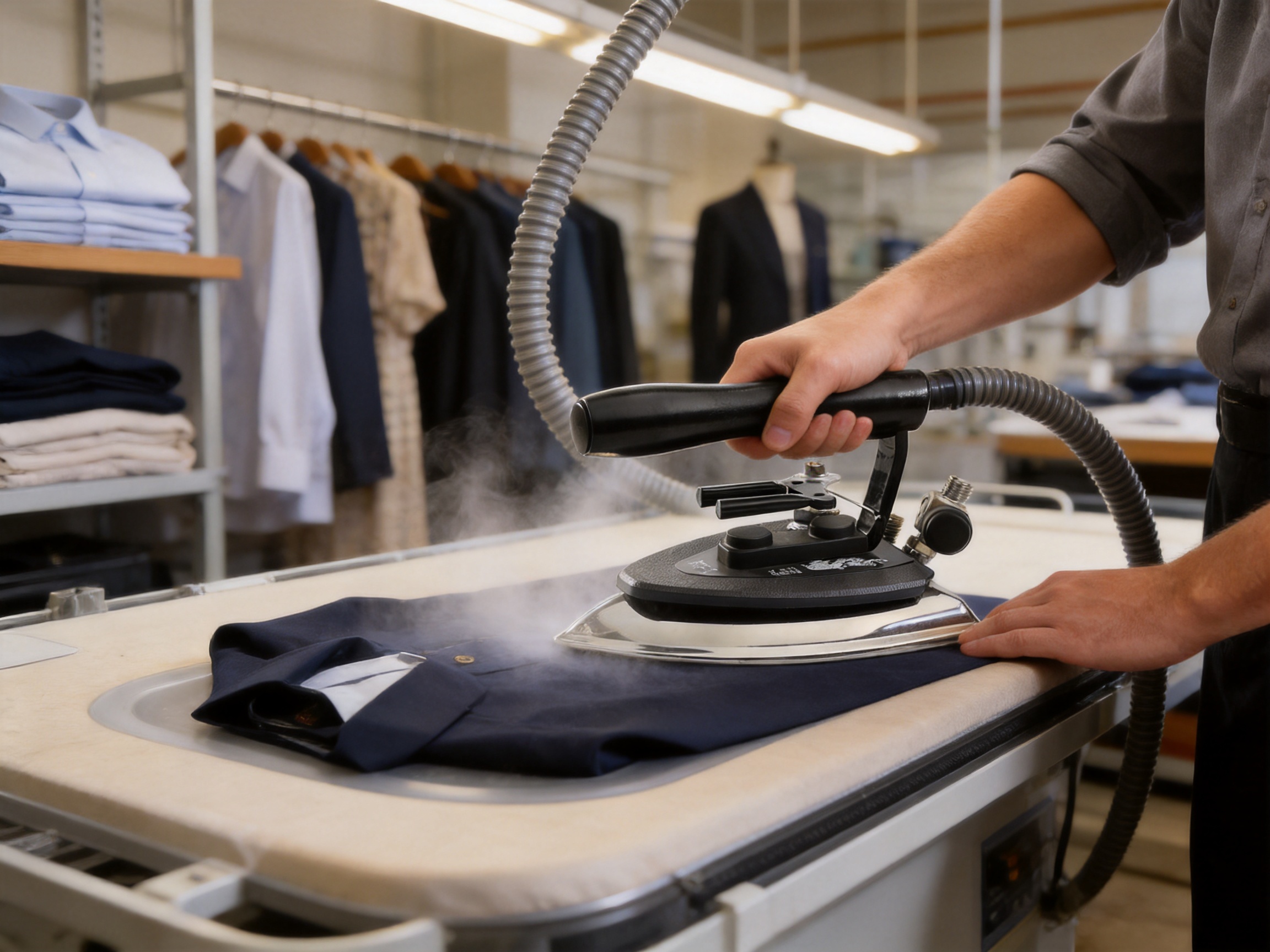
In modern garment care, ironing equipment must do more than produce heat. It must deliver controlled steam, consistent pressure, smooth movement, operator comfort, durability, and dependable performance across many fabric types. These requirements are especially important in homes, tailoring workshops, garment production facilities, laundry services, hotels, uniform departments, and professional pressing environments. A reliable all-steam iron can significantly improve finishing quality while reducing the physical effort and time required for daily ironing work.
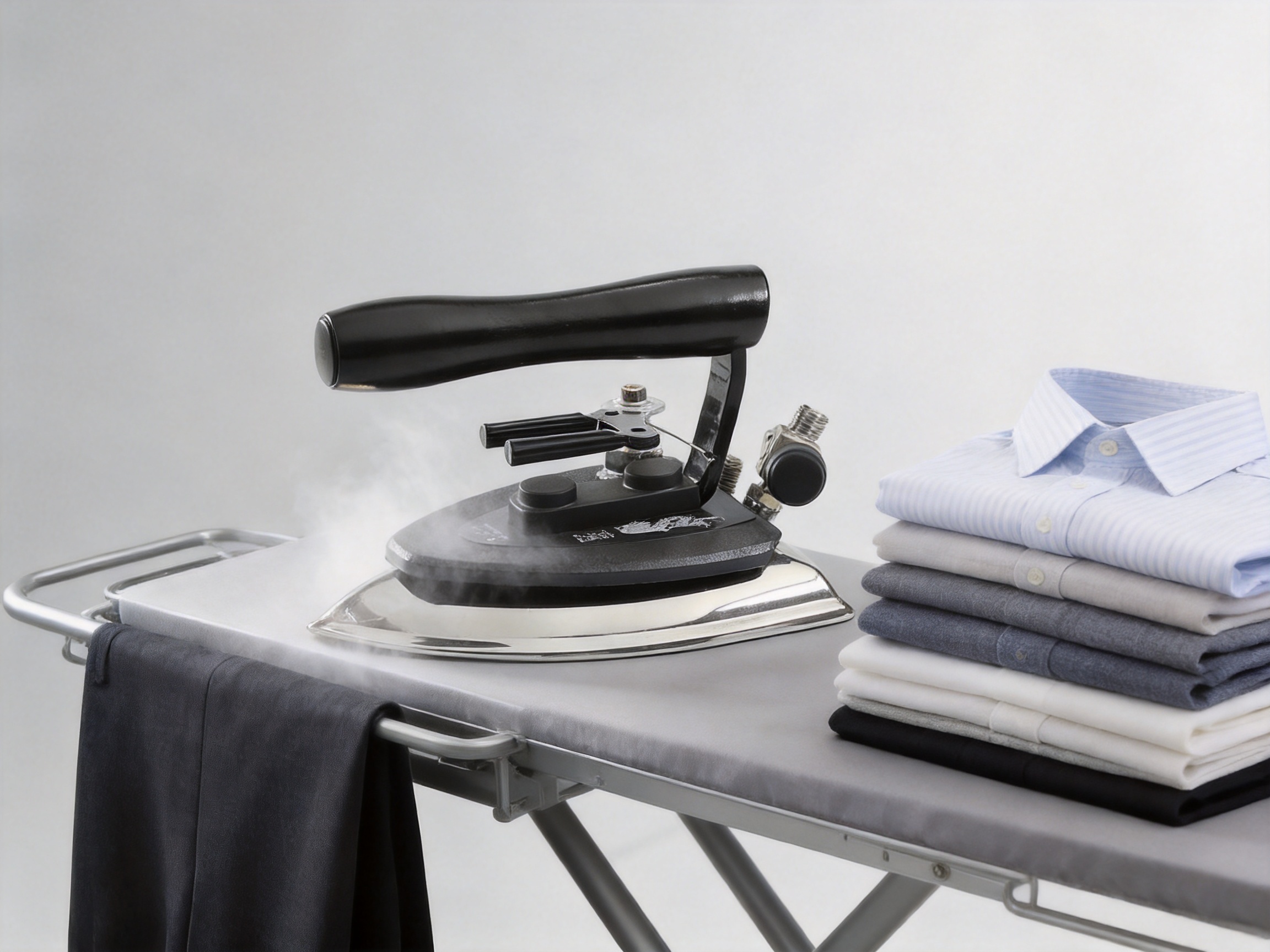
The ST-Z All Steam Iron is designed around these practical requirements. It combines a stainless steel soleplate, adjustable steam flow, an ergonomic handle, a return air valve, protected steam hose construction, and a compact body. Together, these features provide a balanced solution for users who need professional ironing results without an unnecessarily complicated machine.
Behind the product is a manufacturer with long-term experience in electric irons, steam irons, spray guns, steam boilers, vacuum tables, heat transfer equipment, and related accessories. Its product development approach combines independent research and development, production experience, quality control, certification compliance, customization capabilities, and export-oriented service. This combination allows the ST-Z All Steam Iron to compete not only through its visible design but also through the manufacturing systems that support its reliability.
Traditional dry irons depend primarily on the contact between a heated soleplate and the fabric. Heat softens fibers, while pressure and movement help remove wrinkles. Although this method can be effective, it may require more physical effort and may not provide the same level of flexibility when working with thick, layered, delicate, or heavily creased materials.
An all-steam iron adds moisture and controlled steam to the process. Steam penetrates fabric fibers, helping them relax before the soleplate applies heat and pressure. This can make wrinkles easier to remove and can improve the smoothness of the finished garment. Steam also supports more efficient pressing because the operator does not always need to apply excessive downward force.
However, steam performance must be carefully controlled. Excessive moisture can leave a garment damp, while insufficient steam may not adequately relax the fibers. Uneven steam distribution can also lead to inconsistent results. The ST-Z All Steam Iron addresses these concerns through adjustable steam flow and a return air valve designed to support a stable and efficient steam supply.
The value of an all-steam iron is therefore determined by more than the presence of steam alone. The steam must arrive consistently, the soleplate must distribute heat evenly, the handle must remain comfortable, and the hose must withstand repeated movement. A well-designed product must coordinate all of these functions in one practical tool.
The ST-Z All Steam Iron is a compact professional ironing tool developed for users who require controlled steam and convenient handling. Its design combines a durable imported stainless steel soleplate with an ergonomic handle and a series of steam-related components intended to support safe, efficient operation.
The iron is suitable for a wide range of common ironing tasks. It can be used for household garments, shirts, trousers, uniforms, workwear, dresses, textiles, and other fabric products that benefit from steam treatment. Its adjustable steam flow allows users to change the steam output according to fabric weight, construction, and wrinkle severity.
Although the product is compact and lightweight, it is designed with professional functionality in mind. The body is easy to maneuver, the handle provides a stable grip, and the protected hose allows the operator to move the iron without unnecessary restrictions. The result is a tool that can fit comfortably into both home and commercial ironing workflows.
| Product Element | Primary Function | User Benefit |
|---|---|---|
| Stainless steel soleplate | Transfers heat and pressure to fabric | Smooth movement, even heating, and long service life |
| Adjustable steam flow | Controls the amount of steam released | Better adaptation to different fabrics and ironing tasks |
| Return air valve | Supports consistent steam pressure and helps reduce leakage | More stable steam performance and a cleaner work area |
| Ergonomic handle | Provides comfortable control during movement | Reduced hand fatigue during extended use |
| Steam hose protection sleeve | Protects the hose from wear and repeated bending | Improved durability and greater flexibility |
| Compact construction | Reduces storage and handling demands | Easy maneuverability, transportation, and maintenance access |
The soleplate is one of the most important parts of any steam iron. It is the surface that directly contacts the fabric, so its material and construction influence heat distribution, sliding performance, durability, and maintenance requirements. The ST-Z All Steam Iron uses an imported stainless steel soleplate to provide a reliable foundation for daily ironing.
Stainless steel is valued for its strength, resistance to corrosion, and ability to maintain a smooth working surface. In an ironing application, these properties are important because the soleplate is repeatedly exposed to heat, steam, fabric fibers, and movement across different textile surfaces. A durable soleplate helps maintain consistent operation over time.
Even heat distribution is also essential. If certain areas of the soleplate become excessively hot while others remain cooler, the result may be uneven pressing or a greater risk of fabric damage. The stainless steel construction is intended to support stable heat retention and distribution, allowing the operator to work across a garment more consistently.
The soleplate is also designed to resist ordinary scratching during use. This does not eliminate the need for proper care, but it helps preserve the surface when the iron is operated correctly. Users should avoid dragging the iron across hard objects, placing it on abrasive surfaces, or allowing foreign materials to accumulate on the soleplate.
Maintenance is straightforward. When the iron is cool and disconnected according to the applicable operating procedure, the soleplate can be wiped clean. Regular cleaning helps prevent residue from transferring to garments and supports smooth movement during future ironing sessions.
Different fabrics require different combinations of heat, moisture, pressure, and movement. A thin or delicate textile may need a lighter steam setting, while a thick cotton, uniform material, or layered garment may benefit from a stronger steam output. A fixed steam setting cannot respond equally well to every application.
The ST-Z All Steam Iron includes steam flow adjustment so that the user can adapt output to the job. This feature provides greater control over the ironing process and allows one tool to serve a broader range of fabrics. Instead of treating every garment in the same way, operators can select a suitable steam level based on the textile and the degree of wrinkling.
Controlled steam can also improve productivity. When the correct steam level is selected, fibers relax more efficiently, reducing the number of passes required over a garment. Fewer passes may mean less heat exposure, less physical effort, and shorter finishing time. In a commercial environment, these small improvements can accumulate across hundreds of garments.
Steam adjustment is particularly useful in applications where several fabric categories are handled in sequence. A tailoring workshop, hotel laundry, uniform supplier, or garment factory may work with cotton, polyester blends, wool-like materials, synthetic fabrics, and decorative textiles. The ability to regulate steam output gives operators more flexibility without changing equipment.
Users should always consider the care instructions for the fabric being processed. Steam control improves versatility, but correct temperature, movement speed, and testing on an inconspicuous area remain important. The best results come from matching the iron setting to the textile rather than using maximum steam for every garment.

ST-Z All Steam Iron
A steam iron depends on a stable relationship between the steam source, hose, valves, and iron body. If pressure fluctuates excessively, the operator may experience inconsistent steam output. If condensation or excess water is not properly managed, leakage may occur and could affect the garment or surrounding work area.
The built-in return air valve in the ST-Z All Steam Iron is designed to support steam efficiency by helping maintain consistent steam pressure during operation. This contributes to a steadier flow of steam and can make the ironing action more predictable.
The return air valve also helps reduce the possibility of water leakage. Keeping water away from the fabric is particularly important when working with finished garments, light-colored textiles, delicate materials, and products that must be delivered immediately after pressing. A cleaner steam process improves both product quality and workplace convenience.
Steam stability is not only a performance issue; it is also an operator comfort issue. When steam delivery is predictable, the user can establish a consistent rhythm. This reduces the need to stop repeatedly, adjust the equipment, or compensate for sudden changes in output.
The effectiveness of any valve system depends on proper installation, suitable steam supply conditions, and regular inspection. Users should follow the operating instructions associated with the complete ironing system, including the steam boiler, hose connection, and related accessories. Correct system matching helps the iron perform as intended.
The steam hose is exposed to repeated bending, movement, heat, and handling. In a busy ironing environment, the hose may be repositioned hundreds of times in a working day. Without suitable protection, repeated motion can contribute to surface wear, loss of flexibility, or damage that affects steam performance.
The ST-Z All Steam Iron uses a protective sleeve around the steam hose. This sleeve is designed to reduce wear and tear while allowing the hose to remain flexible. It protects an important connection between the iron and the steam source without making the tool difficult to move.
Flexible hose movement is valuable because operators must approach garments from different angles. A rigid or poorly managed hose can interfere with the ironing path, create unnecessary tension, or slow the user down. The protected design supports greater maneuverability and helps the operator maintain a natural working position.
Hose protection can also contribute to longer service life. When the hose is shielded from routine abrasion and excessive bending, the entire ironing system may experience fewer interruptions. This is especially helpful in commercial workplaces where equipment downtime can affect delivery schedules and labor efficiency.
Although the sleeve offers protection, users should still avoid sharp bends, pulling the iron by the hose, placing heavy objects on the hose, or operating with visibly damaged components. A simple visual inspection before use can help identify wear early and support safer maintenance decisions.
Ironing is a repetitive activity. Operators may hold, lift, slide, and reposition the iron continuously for extended periods. An uncomfortable handle can contribute to hand fatigue, reduced precision, and slower production. Ergonomic design is therefore a functional requirement rather than merely a cosmetic feature.
The ST-Z All Steam Iron includes a specially designed ergonomic handle that provides a more comfortable grip. Its shape is intended to support stable control while reducing unnecessary strain during repeated operation. A comfortable handle enables the user to guide the soleplate accurately across collars, cuffs, seams, panels, and other garment sections.
Intuitive controls are positioned for convenient access. This allows the operator to manage the iron without interrupting the ironing flow or changing grip unnecessarily. Easy access to controls can be especially valuable when steam output must be adjusted several times during a work cycle.
Comfort also influences consistency. When an operator experiences less fatigue, it becomes easier to maintain steady pressure and movement. This can improve the uniformity of finished garments and reduce variations between different workers or production batches.
The lightweight and compact construction complements the ergonomic handle. A smaller, manageable body is easier to lift and reposition, particularly when pressing vertical areas, narrow garment sections, or complex shapes. The balance between compactness and professional functionality makes the iron suitable for a range of working environments.
Professional ironing equipment must often be moved between workstations, stored at the end of a shift, or transported to different locations. A bulky iron can consume valuable workspace and may be inconvenient for smaller businesses or mobile service providers.
The ST-Z All Steam Iron has a compact design that supports simple handling and storage. Its lightweight construction helps users move the tool with less effort and makes it easier to place in an organized equipment area when not in use.
Compact size does not mean that the product is limited to occasional household use. In many professional environments, compact equipment is preferred because it can be integrated into existing workstations without requiring major layout changes. A small iron can be paired with a vacuum table, steam boiler, or other pressing equipment according to the requirements of the application.
Portability may also benefit businesses that provide garment finishing services at different locations. Tailors, uniform service providers, clothing retailers, and alteration specialists may need equipment that can be moved between rooms or transported for on-site work.
Storage should be carried out in a dry, clean location with the hose and power-related components arranged without sharp bends. Proper storage helps preserve the product’s appearance, protects its working components, and reduces preparation time before the next use.
The ST-Z All Steam Iron offers several advantages compared with basic dry irons or steam irons that provide limited adjustment and protection features. The most significant difference is the integration of steam control, pressure management, hose protection, soleplate durability, and operator-focused ergonomics in one product.
A simple dry iron may perform adequately on lightweight garments but can require more pressure and repeated passes on thick or heavily wrinkled materials. The adjustable steam function of the ST-Z model gives users more options when working with different textile structures.
Steam stability contributes to predictable performance. The return air valve is designed to help maintain consistent pressure and reduce leakage, supporting a cleaner and more controlled ironing process than an unregulated steam arrangement.
The stainless steel soleplate and protected steam hose are selected to withstand repeated use. These features help address two common areas of wear: the surface that contacts fabric and the hose that moves continuously during operation.
The ergonomic handle, compact construction, and accessible controls make the iron easier to use during extended work. Reduced fatigue can support higher productivity and more consistent finishing quality.
The design provides access to key components for cleaning and service. The soleplate can be wiped clean, while the overall construction is intended to make routine maintenance more manageable. Simplified maintenance can reduce downtime and extend useful service life.
Because the product is designed as part of a wider range of steam and ironing equipment, it can be selected for use alongside steam boilers, vacuum tables, spray guns, and related accessories. This makes it suitable for businesses seeking coordinated equipment solutions rather than isolated tools.
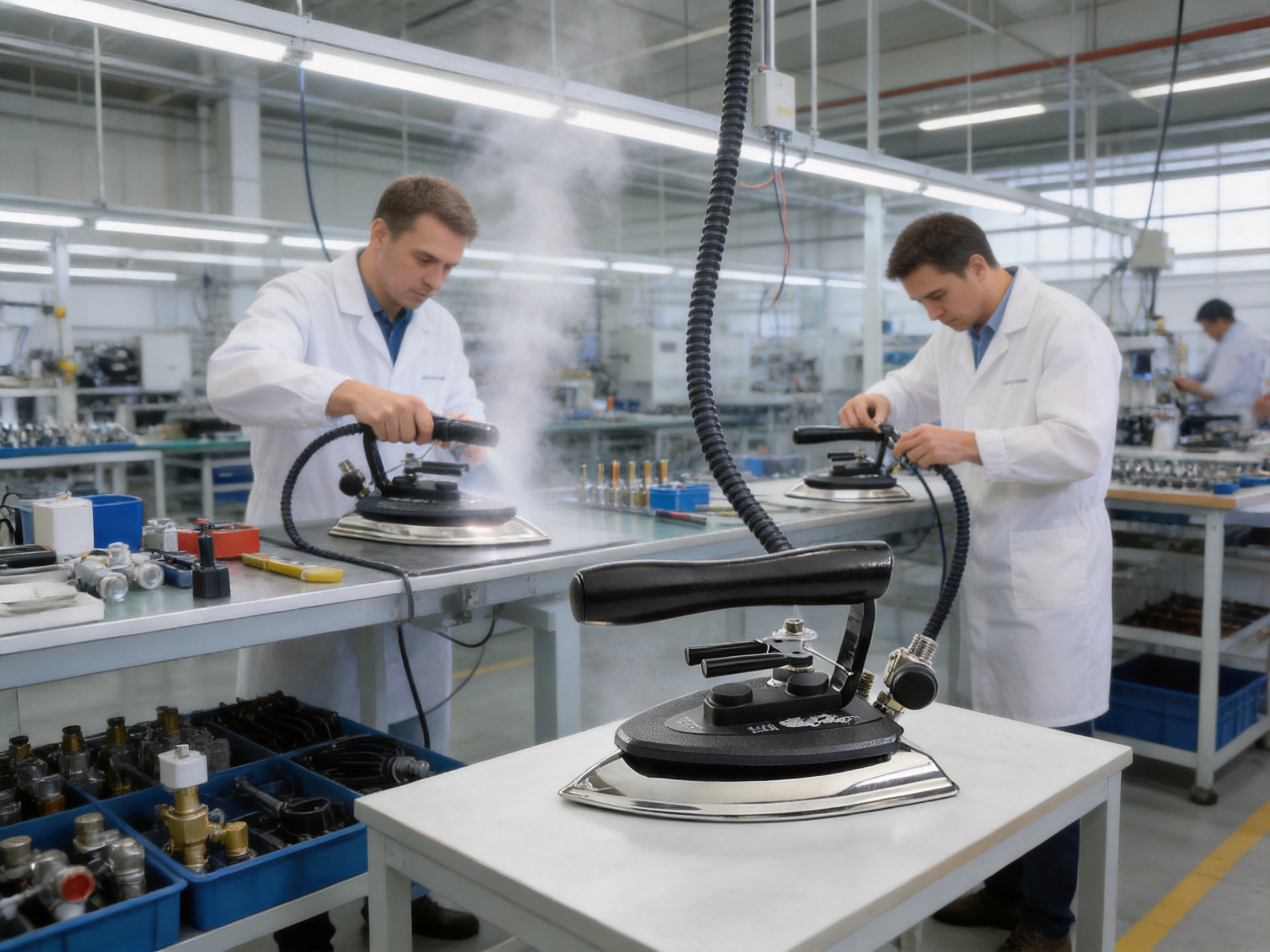
Product performance depends on more than the visible features of an iron. It also depends on how the product is researched, assembled, tested, inspected, and supported. The manufacturer of the ST-Z All Steam Iron has operated in the sewing and ironing equipment sector since 2003, building experience across a broad product range.
Its manufacturing activities cover electric irons, steam irons, hanging irons, spray guns, small steam machines, heat transfer machines, steam boilers, vacuum tables, and accessories. This broad product portfolio provides an understanding of how individual equipment components work together in real pressing systems.
For example, an all-steam iron must be compatible with the behavior of a steam source, hose assembly, and worktable. Experience in producing boilers and vacuum tables gives the manufacturer a wider perspective on steam delivery, garment positioning, moisture management, and workflow design.
The company also emphasizes independent research and development. This is important because ironing requirements change according to market needs, fabric trends, workplace expectations, and customer preferences. Independent development allows the manufacturer to improve existing structures and create product variations for different applications.
The ST-Z model incorporates patented design elements intended to distinguish its performance and construction. Patented features can reflect focused development work in areas such as steam efficiency, component arrangement, user handling, or durability. The practical value of these innovations is measured through the product’s ability to operate reliably in everyday conditions.
Research and development in ironing equipment involves more than designing an attractive body. Engineers and product teams must consider heat transfer, steam flow, pressure stability, handle ergonomics, hose movement, material selection, cleaning access, electrical safety, and production consistency.
The manufacturer’s research and development, management, and sales teams work together to support product improvement. This connection between technical and market teams helps ensure that design decisions respond to real customer requirements. Feedback from domestic distributors and overseas users can reveal opportunities to improve handling, reliability, serviceability, or product configuration.
Continuous improvement is especially important for equipment used frequently. A product that performs adequately during occasional use may require further strengthening or refinement before it can satisfy commercial users. Repeated feedback and regular testing help identify areas where a design can be made more efficient or durable.
Independent development also supports customization and OEM services. Different customers may request particular colors, labels, packaging arrangements, technical configurations, or combinations with other equipment. A manufacturer with its own development and production capabilities is better positioned to manage these requirements than a company that relies entirely on external sourcing.
Material selection has a direct effect on product life and operating performance. The imported stainless steel soleplate is chosen for heat distribution, resistance to corrosion, smooth movement, and durability. The protective hose sleeve is selected to help withstand repeated movement and contact. The handle materials and body structure must also support comfortable use while maintaining a practical weight.
Production consistency is equally important. Even high-quality materials cannot guarantee a dependable product if components are assembled inconsistently. For this reason, the manufacturing process must include attention to component fitting, electrical connections, steam pathway integrity, handle installation, surface finishing, and final inspection.
A professional manufacturer must balance quality with cost. The objective is not simply to use the most expensive material in every component, but to apply suitable materials where they create the greatest functional benefit. This approach helps deliver a reliable product at a competitive cost for distributors, businesses, and end users.
Experience across multiple product categories helps the manufacturer understand the relationship between materials and production conditions. Steam boilers, electric irons, vacuum tables, and spray guns each involve different technical requirements, but they share common concerns such as safety, durability, user control, and serviceability.
Quality assurance should be present throughout the manufacturing process rather than being limited to a final visual inspection. Incoming materials, component preparation, assembly, functional testing, packaging, and shipment preparation all affect the final customer experience.
The manufacturer states that its products follow national and industry standards, including GB4706.1-2005 and GB4706.2-2007. These standards relate to safety requirements for household and similar electrical appliances and specific electric heating appliances. Compliance supports a structured approach to electrical and operational safety.
The company’s products have also passed CCC and CQC certifications. Such certifications provide additional evidence that applicable products have undergone recognized conformity and quality assessment procedures. Buyers should confirm the certification scope and model details for the specific product and market before placing an order.
Testing and feedback contribute to ongoing product improvement. Testing may involve checking steam output, temperature behavior, hose connections, handle stability, surface condition, leakage resistance, electrical performance, and general operation. The exact test procedures may vary according to product type and customer requirements.
For importers and distributors, quality assurance is especially important because product reliability affects warranty costs, customer satisfaction, reputation, and repeat business. A manufacturer with established production systems and documented standards can provide a stronger foundation for long-term cooperation.
The company operates in Huzhen Town, Lishui City, Zhejiang Province, China, at No. 8 Nanyi Road in Huzhen Industrial Park. The location benefits from connections among Lishui, Jinhua, and Taizhou, supporting transportation and information exchange.
Manufacturing location can influence procurement efficiency, component availability, logistics coordination, and communication with supply-chain partners. Zhejiang is known for extensive manufacturing networks, and an industrial park environment can provide access to supporting industries and transportation channels.
The company serves domestic distribution channels and exports to Southeast Asia, Central Asia, South America, Africa, and other regions. Experience with overseas customers can help support requirements related to packaging, shipment coordination, product communication, and market-specific cooperation.
For international buyers, the ability to combine manufacturing, product development, quality management, and shipment support is a major advantage. It reduces the need to coordinate with multiple unrelated suppliers and creates a clearer path from product selection to delivery.
Not every buyer needs an identical product program. Importers may require private labeling, distributors may need market-specific packaging, and professional equipment suppliers may want to combine the iron with boilers, tables, or accessories. Customization capabilities help buyers create a product offering that fits their commercial strategy.
The manufacturer provides OEM and customization services. These services may be relevant to branding, packaging, product combinations, order quantities, technical preferences, or other agreed requirements. The precise scope should be confirmed during the quotation and product approval process.
A successful OEM relationship requires clear communication. Buyers should provide expected market standards, voltage and frequency requirements, packaging language, labeling needs, certifications, delivery schedules, and any special technical specifications. Early confirmation reduces the risk of misunderstandings and supports smoother production planning.
Customization should not compromise essential safety or performance requirements. Product changes must be reviewed for compatibility with the iron’s steam pathway, electrical system, thermal behavior, handle structure, and hose connection. Experienced technical coordination helps ensure that customized versions remain reliable.
The manufacturer’s diverse product portfolio can also support bundled purchasing. A customer may source all-steam irons together with steam boilers, vacuum tables, spray guns, heat transfer machines, or accessories. Consolidated sourcing can simplify procurement and help create a more complete garment-care solution.
At home, the ST-Z All Steam Iron can help users manage shirts, trousers, dresses, uniforms, bedding, and other washable textiles. Its adjustable steam output allows household users to select a more suitable setting for different garment types, while the compact design supports convenient storage.
Tailors and alteration specialists often need precision. They may work around seams, darts, collars, cuffs, hems, and shaped sections. A manageable iron with stable steam and a comfortable handle can help improve control during detailed finishing work.
In garment production, finishing quality affects the appearance of completed products. The ST-Z model can be integrated into pressing stations where operators handle repeated batches of clothing. Its protected hose and ergonomic design are useful in high-frequency work environments.
Hotels, laundries, and uniform service providers process many garments and often require dependable equipment. Consistent steam, simple maintenance, and reduced operator fatigue can contribute to workflow efficiency and customer satisfaction.
Retail stores and clothing showrooms need garments to look presentable before display or customer fitting. A compact steam iron can be used for touch-ups, removing storage creases, and preparing products for presentation.
Organizations that issue uniforms may use steam ironing equipment to maintain a professional appearance. The product’s ability to handle different fabric weights and its suitability for repeated use make it relevant to schools, hospitality groups, service businesses, and industrial workplaces.
Before use, operators should inspect the iron, steam hose, connections, handle, and visible surfaces. Any sign of damage, loose connection, unusual odor, or leakage should be addressed before continued operation. The iron should be connected only to a suitable system that matches its technical requirements.
Users should allow the equipment to reach the appropriate operating condition before beginning intensive ironing. Steam should be applied according to the fabric and garment construction. When working with an unfamiliar textile, testing on a hidden or less visible section is a sensible precaution.
The iron should be moved smoothly rather than held stationary on one area for an excessive period. Excessive heat or steam in one location may affect some materials. Operators should also avoid unnecessary pressure when steam has already relaxed the fibers.
At the end of use, the operator should follow the recommended shutdown procedure. The iron should be placed safely, allowed to cool as required, and stored in a clean, dry area. Steam system maintenance should be performed according to the instructions for the complete equipment configuration.
Regular maintenance may include wiping the soleplate, inspecting the hose sleeve, checking connections, removing residue, and reviewing the general condition of controls. Preventive attention is usually more efficient than waiting for a performance problem to interrupt production.
Efficiency is not defined only by maximum speed. It also includes the number of passes required, the ease of handling, the frequency of interruptions, the time spent on cleaning, and the consistency of finished results. The ST-Z All Steam Iron addresses each of these factors through its combined design.
Adjustable steam can reduce unnecessary passes when the correct level is selected. The stainless steel soleplate supports smooth movement and even heat distribution. The ergonomic handle helps operators maintain control, while the protected hose reduces restrictions during movement.
Maintenance access can also influence efficiency. If cleaning and inspection are simple, users are more likely to perform them regularly. A clean soleplate and well-maintained steam pathway support predictable operation and reduce the likelihood of avoidable problems.
For business owners, these benefits can translate into better labor utilization and more consistent output. For household users, they can mean less time spent on ironing and a more convenient daily routine. In both cases, the practical value comes from the interaction of several features rather than from a single component.
Buyers should evaluate the ST-Z All Steam Iron according to the intended application. Important factors include the number of garments processed, fabric categories, available steam equipment, workspace design, operator experience, local electrical requirements, and maintenance capabilities.
Commercial buyers should also consider the broader equipment system. If the iron will be used with a steam boiler or vacuum table, the compatibility of steam pressure, connections, work surface, and accessories should be confirmed before purchase. A complete system review helps avoid performance limitations caused by mismatched equipment.
Importers should verify product specifications, packaging, certifications, voltage configuration, order quantity, lead time, spare parts, warranty terms, and after-sales support. These details are especially important when the product will be distributed across multiple markets.
Customers interested in OEM or customized solutions should provide a clear project brief. The manufacturer can then evaluate the requested configuration, confirm technical feasibility, prepare samples if necessary, and establish an appropriate production plan.
The ST-Z All Steam Iron is designed to remove wrinkles using controlled steam, heat, and pressure. It is suitable for household, tailoring, garment production, laundry, hospitality, retail, and other garment-finishing applications.
Adjustable steam flow allows the operator to adapt steam output to different fabrics and levels of wrinkling. Lighter materials may need less steam, while thicker or more heavily creased materials may benefit from a stronger output.
The stainless steel soleplate provides heat retention, even heat distribution, smooth contact with fabric, corrosion resistance, and good durability. It is also designed for convenient wiping and routine maintenance.
The return air valve is designed to help maintain consistent steam pressure and improve steam efficiency. It also assists in reducing water leakage, supporting a cleaner and more stable ironing process.
The sleeve helps protect the steam hose from wear caused by repeated movement, bending, and handling. It supports longer hose life while maintaining flexibility and maneuverability.
Yes. Its steam control, stainless steel soleplate, ergonomic handle, protected hose, compact design, and maintenance-focused construction make it suitable for professional environments as well as home use.
It can be incorporated into a broader ironing system that may include a steam boiler, vacuum table, spray gun, or related accessories. Compatibility should be confirmed according to the technical requirements of the complete system.
The soleplate should be wiped clean after the iron has been safely shut down and cooled according to the operating procedure. Abrasive tools and unsuitable cleaning products should be avoided because they may damage the working surface.
The manufacturer provides OEM and customization services. Buyers should discuss labeling, packaging, technical configuration, certifications, order quantity, and other requirements before production.
The company states that its products follow standards including GB4706.1-2005 and GB4706.2-2007, and that its products have passed CCC and CQC certifications. Buyers should verify the applicable certification information for the specific model and destination market.
Buyers can contact Jinyun Shengda Sewing Equipment Co., Ltd. through the company’s sales channels for product specifications, quotations, OEM discussions, technical compatibility, shipment arrangements, and service information.
The ST-Z All Steam Iron is a practical combination of controlled steam performance, durable materials, ergonomic operation, and maintenance-friendly construction. Its adjustable steam flow supports different fabric requirements, while the return air valve helps maintain stable steam delivery and reduce leakage. The stainless steel soleplate provides a durable working surface, and the protected steam hose supports flexible movement and long-term use.
These product features are strengthened by the manufacturer’s broader capabilities. Since 2003, the company has developed and produced a wide range of ironing and garment-care equipment, including electric irons, steam irons, spray guns, steam boilers, vacuum tables, heat transfer machines, and accessories. Its independent research and development, quality assurance systems, certification experience, customization services, and international distribution support provide a strong foundation for professional cooperation.
For users seeking a versatile steam iron, the product offers convenience and control. For distributors, garment factories, laundries, hotels, and equipment integrators, it provides a reliable component for a broader pressing solution. Its competitive advantage comes from the way its features work together: steam control improves versatility, stainless steel supports durability, ergonomic design improves comfort, hose protection supports reliability, and manufacturing experience reinforces product consistency.
1. Product information supplied for the ST-Z All Steam Iron, including product advantages, features, construction, and maintenance design.
2. Company information supplied for Jinyun Shengda Sewing Equipment Co., Ltd., including manufacturing history, product categories, research and development, export markets, OEM services, and quality commitments.
3. General principles of textile care, steam ironing, fabric relaxation, heat transfer, and garment finishing.
4. GB4706.1-2005, Safety requirements for household and similar electrical appliances.
5. GB4706.2-2007, Safety requirements for electric irons and related heating appliances.
6. General quality-management practices for electrical appliance production, component inspection, functional testing, maintenance, and shipment preparation.
7. General guidance on ergonomic design for repetitive garment-finishing tasks and professional ironing workstations.
 +86-578-3158872 / +86-578-3158958
 jyshengda@163.com / caroying@jy-shengda.com
 No. 8 Nanyi Rd, Huzhen Industrial Park, Zhejiang, China
Copyright © Jinyun Shengda Sewing Equipment Co., Ltd. All Rights Reserved.
Ironing Press Machine Equipment Factory
 English
 中文简体
 русский
 عربى