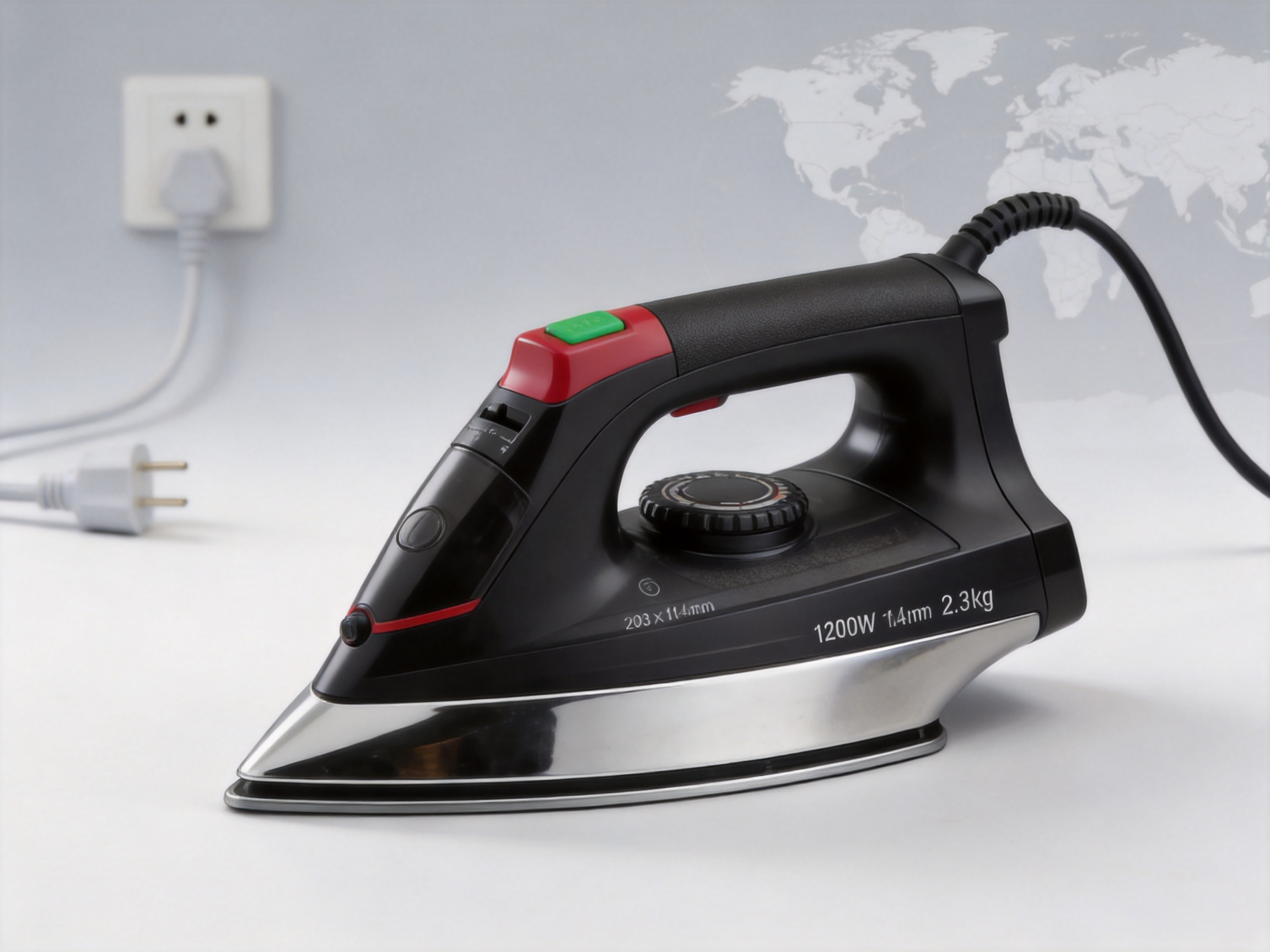
Effective garment care depends on more than simply applying heat to fabric. A reliable iron must heat quickly, distribute temperature evenly, move comfortably across different materials, and provide sufficient control for both everyday clothing and more demanding textile work. The ST-530 Electric Iron is designed around these practical requirements, combining 1200W heating power, dual-voltage operation, a manageable 2.3 kg body, a 203 x 114 mm base plate, adjustable temperature control, steam functionality, and a non-stick soleplate.
These characteristics make the ST-530 suitable for a broad range of users. It can support daily household ironing, help small garment shops prepare clothing for customers, and assist tailors with pressing garments before fitting, alteration, or sale. Its design also makes it useful in work environments where equipment must be straightforward, durable, and easy to operate.
The product is manufactured by Jinyun County Shengda Sewing Equipment Co., Ltd., a Chinese producer specializing in electric irons, steam irons, hanging irons, spray guns, small steam machines, heat transfer machines, steam boilers, vacuum tables, and related accessories. Since its establishment in 2003, the company has developed an integrated approach covering product research, manufacturing, quality management, distribution, and customer service.
This article examines the ST-530 Electric Iron in detail. It explains the product’s main advantages, operating characteristics, suitability for different applications, and the manufacturing capabilities behind it. It also considers how the ST-530 compares with common alternatives—not by relying on exaggerated claims, but by examining the practical combination of power, versatility, portability, and production support that it offers.

ST-530 Electric Iron
The ST-530 Electric Iron is a compact garment-care appliance intended to remove wrinkles and improve the appearance of clothing, linens, curtains, and other textile products. Its 1200W power rating provides a strong heating capacity for a product of this type. Rapid heating reduces the time users must wait before beginning work, while steady heat supports more consistent pressing results during operation.
A notable feature is its dual-voltage design. The iron can operate at 110V or 220V, allowing it to serve users in regions with different electrical standards. This is valuable for international buyers, distributors, hotels, garment professionals, and travelers who need equipment that can be adapted to local power conditions. Correct voltage selection remains essential, but the dual-voltage capability gives the product a wider operating range than a single-voltage iron.
The ST-530 weighs approximately 2.3 kg. This weight provides a balance between pressing force and maneuverability. An iron that is too light may require excessive downward pressure to flatten stubborn wrinkles, while an excessively heavy model can cause fatigue during extended use. The ST-530 is designed to provide useful contact pressure while remaining manageable for routine ironing.
Its base plate measures approximately 203 x 114 mm. This surface area is large enough to cover practical sections of shirts, trousers, skirts, uniforms, linens, and similar items while remaining compact enough for controlled work around collars, cuffs, seams, and other detailed areas. The combination of surface size and body weight supports both broad pressing movements and more precise garment finishing.
| Specification | ST-530 Electric Iron |
|---|---|
| Product type | Electric garment iron |
| Voltage | 110V/220V |
| Power | 1200W |
| Weight | 2.3 kg |
| Base plate size | 203 x 114 mm |
| Temperature control | Adjustable |
| Steam function | Included |
| Soleplate | Non-stick design |
| Primary applications | Households, tailors, garment shops, clothing preparation |
The 1200W heating system is one of the ST-530’s central performance advantages. Power directly influences how quickly an iron reaches its working temperature and how effectively it can recover heat while being moved over fabric. In daily use, this means less waiting before ironing begins and a more efficient workflow when several garments must be prepared in succession.
For household users, faster heating can make short ironing tasks more convenient. A user can prepare the appliance while arranging garments and then begin work without a lengthy delay. For tailors and small garment shops, heating efficiency is even more important because pressing is often integrated into a broader production or service process. Delays between garments can reduce productivity, particularly when clothing must be finished before delivery or display.
The ST-530’s power rating is also suitable for fabrics that require more than light surface contact. Thicker cotton garments, workwear, school uniforms, table linens, and layered sections may require a combination of heat, pressure, and steam. The 1200W system gives the operator a useful foundation for addressing these materials while still allowing lower temperature settings for more delicate textiles.
Heating performance should not be judged only by the initial warm-up period. An effective garment iron must continue to provide stable working conditions as it moves across multiple garments. The ST-530 is designed for consistent operation, helping users maintain a regular rhythm instead of repeatedly stopping to compensate for weak or uneven heating.
Stable performance is especially useful in commercial settings. A tailor may need to press seams, sleeves, collars, and garment panels in sequence. A small clothing shop may need to prepare new stock before placing it on display. In both cases, predictable heating allows the operator to focus on fabric positioning and finishing quality rather than constantly adjusting the process.
The product’s adjustable temperature control further supports consistency. Different textiles respond to different levels of heat. By selecting a suitable temperature, the user can balance wrinkle removal with fabric protection. This flexibility is more practical than using one fixed heat level for every garment.
The 110V/220V voltage configuration expands the ST-530’s usefulness across international markets. Electrical standards vary among countries and regions, and equipment designed for only one voltage may require a transformer, replacement configuration, or separate model. A dual-voltage appliance gives distributors and users greater flexibility when supplying or operating the product in different locations.
For importers, this feature can simplify product planning. Instead of managing completely separate product versions for every market, a dual-voltage model can support a broader customer base, subject to correct local configuration and safety requirements. It may also be attractive to hospitality businesses, garment professionals, and international customers who move between regions.
Travelers and expatriates can also benefit from the product’s voltage adaptability. Although users must always verify the local electrical system and follow operating instructions, the dual-voltage design reduces one common limitation associated with portable ironing equipment. It makes the ST-530 more adaptable than a single-voltage iron intended for only one national market.
This flexibility is one area where the ST-530 can compare favorably with basic domestic irons that are manufactured for a single electrical standard. The advantage is not merely technical. It affects purchasing, distribution, replacement, and everyday use. A product that can be supplied to more locations has broader commercial potential and may be easier for an international buyer to standardize across multiple sites.
At approximately 2.3 kg, the ST-530 offers a practical balance between pressing force and handling comfort. Weight helps the soleplate maintain contact with fabric, but too much weight can make long ironing sessions uncomfortable. The product is intended to provide enough mass for effective pressing without becoming unnecessarily difficult to control.
A manageable body is particularly important when working on detailed sections. Collars, cuffs, pockets, pleats, seams, and narrow garment panels require changes in direction and careful positioning. The operator must be able to lift, rotate, and reposition the iron without excessive strain. The ST-530’s compact format supports these movements.
For household users, ergonomic handling can make routine work less tiring. For professional users, it can contribute to steadier results over a longer shift. Reduced strain may help the operator maintain better control, particularly when pressing several garments consecutively or when the work involves repeated movements of the wrist and arm.
The product’s physical design also supports different working environments. It can be used on a conventional ironing board, a vacuum table, or another suitable pressing surface. When paired with additional garment-care equipment, the iron can become part of a more complete finishing station for small-scale production or professional service operations.
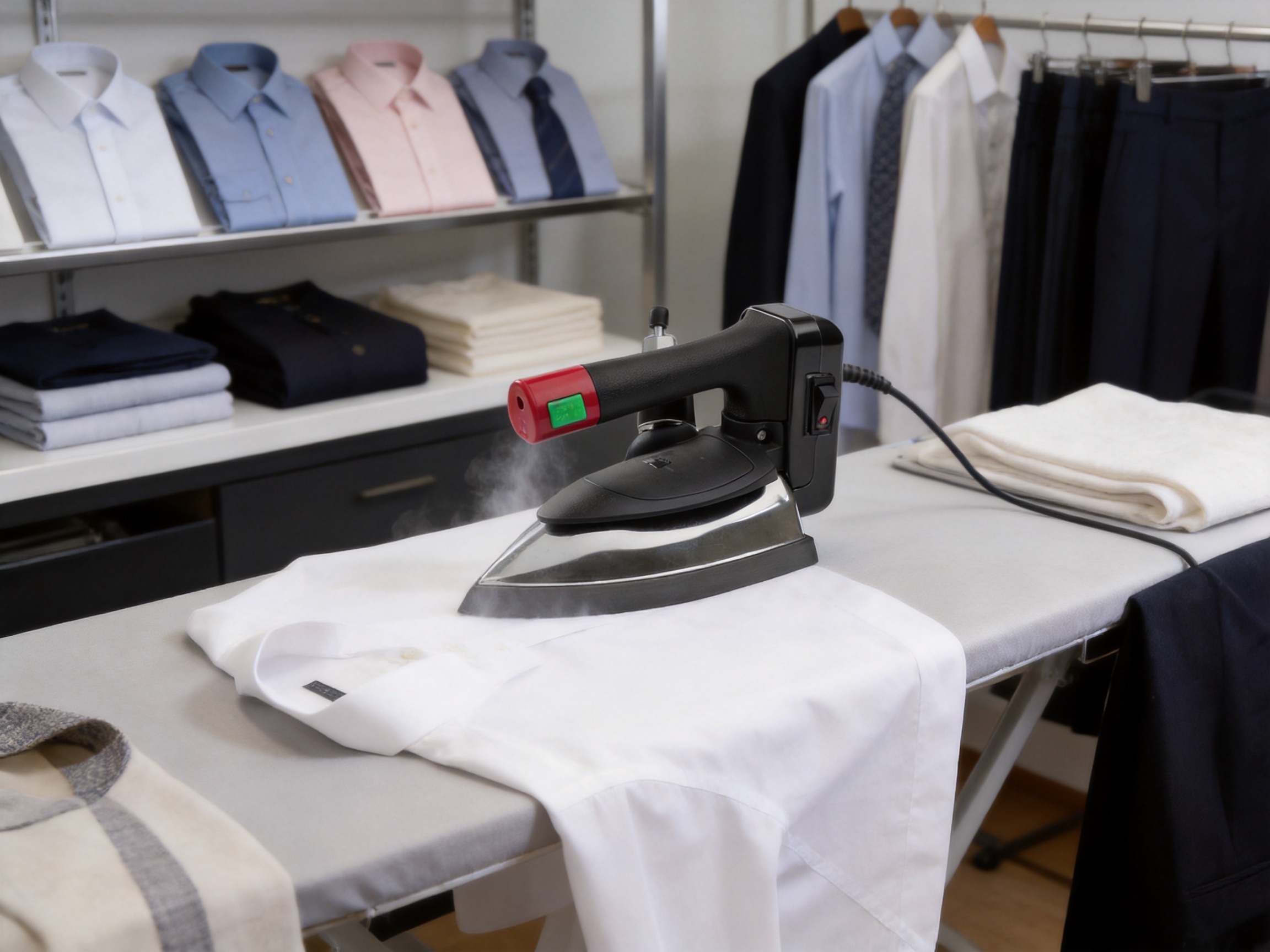
The ST-530 includes a non-stick soleplate designed to glide smoothly over fabric. Smooth movement is important because an iron that drags, catches, or snags can slow the operator and may create unwanted marks or distortion. A low-friction soleplate allows users to move through garment sections with more confidence.
The soleplate is also intended to distribute heat across the contact area. Even distribution supports a more uniform finish and reduces the need to repeatedly pass over the same section. This can help shorten working time and reduce unnecessary exposure of fabric to heat.
Different textiles require different handling techniques. Cotton and linen may tolerate higher temperatures, while synthetic or delicate materials often need more cautious settings. The non-stick surface, combined with adjustable temperature control, gives the operator a more adaptable tool for handling a variety of garments.
A base plate measuring 203 x 114 mm provides a useful compromise between coverage and control. A larger plate can cover broad areas quickly, but an overly large plate may be inconvenient around buttons, seams, narrow sleeves, and shaped garment sections. The ST-530’s dimensions support both general pressing and detailed finishing.
Tailors and alteration shops can use the iron to open seams, shape garment panels, press hems, prepare collars, and improve the presentation of completed work. Clothing retailers can use it to remove creases from stored or transported garments before display. Household users can apply the same advantages to shirts, trousers, dresses, bedding, curtains, and table linens.
For professional results, the soleplate should always be kept clean and used at a suitable temperature. Operators should follow care instructions for the iron and the fabric. These practices preserve smooth movement and help maintain the product’s working condition over time.
Temperature control is essential because fabrics vary in thickness, composition, finish, and heat tolerance. The ST-530 allows users to adjust the working temperature according to the material being pressed. This gives the operator greater control than a simple appliance with a single fixed heat setting.
When working with cotton or linen, a higher temperature may help relax deep wrinkles and create a crisp finish. Medium settings may be appropriate for many blended fabrics, uniforms, and everyday clothing. Synthetic or delicate materials generally require more cautious heat management. The user should always refer to the garment’s care label and test an inconspicuous area when uncertain.
Adjustable control also benefits professional users who work with mixed orders. A tailor may process a cotton shirt, a polyester garment, and a lined jacket within the same working period. A shop may handle products made from different textile blends. Rather than relying on one generalized setting, the operator can adapt the iron to the specific garment.
This versatility can reduce the risk of shine, scorching, deformation, or other heat-related problems when the product is used correctly. It also contributes to a more polished appearance because the operator can select a setting appropriate to the fabric instead of applying excessive heat and pressure.
The ST-530 includes a steam function to assist with difficult wrinkles and fabric relaxation. Steam can penetrate textile fibers and make them more responsive to heat and pressure. This is useful when ordinary dry ironing does not sufficiently remove creases, especially in thicker fabrics, folded garments, and clothing that has been stored or transported.
Steam is also helpful for improving the finish of garments with complicated shapes. Sleeves, curved seams, collars, and layered areas can benefit from moisture combined with controlled heat. The operator can work gradually, allowing the fabric to relax before smoothing it with the soleplate.
The steam function adds another level of flexibility to the ST-530. Users can select a dry-pressing approach for materials or situations where steam is unnecessary, then use steam when additional wrinkle-removal support is required. This makes the appliance more adaptable than a basic dry iron.
Proper water handling is important for any steam-enabled iron. Users should follow the applicable instructions for filling, emptying, cleaning, and storage. The appliance should be allowed to cool before maintenance, and water should not be left inside for extended periods when the product is not in use. Correct care supports reliable operation and helps reduce the possibility of residue or blockage.
The ST-530 is equipped with a long, flexible cord intended to improve movement during ironing. A suitable cord length allows the user to reach different parts of a garment without constantly repositioning the appliance or work surface. This is especially helpful when the iron is used on a larger board, vacuum table, or professional pressing station.
Flexibility can also reduce interruptions caused by tangling. A cord that moves naturally with the operator helps maintain a smoother workflow. This matters in repetitive tasks, where unnecessary adjustments can slow productivity and interrupt concentration.
Good cord management remains important. The cord should be kept away from hot surfaces, sharp edges, water, and areas where it may be pulled or crushed. When the work is complete, the user should allow the iron to cool and store it safely according to the operating guidance.
From an operational perspective, the cord design complements the product’s manageable weight and compact soleplate. Together, these features make the ST-530 easy to position, move, and return to a safe resting location during a garment-care task.
Many basic irons are designed for one voltage market. While this may be sufficient for local household use, it can create limitations for international distributors and users who relocate between regions. The ST-530’s 110V/220V configuration provides greater adaptability and can support wider market distribution.
Dual-voltage operation is particularly useful for importers serving several territories. It can reduce the need to stock separate voltage-specific models, although local compliance and configuration requirements must always be confirmed. This broader compatibility is a practical advantage rather than a purely promotional feature.
Lower-powered irons may consume less electricity under certain conditions, but they can take longer to heat and may recover temperature more slowly during demanding work. The ST-530’s 1200W rating is designed for faster readiness and consistent garment-care performance.
For users who iron only one light garment occasionally, power may not be the primary concern. However, for families, tailors, retailers, and small workshops, the ability to begin work quickly and continue through several garments can improve productivity. The ST-530 is positioned for this broader range of use.
A dry-only iron can provide useful results, but it lacks the additional wrinkle-relaxing capability of steam. The ST-530 combines dry heat with steam functionality, allowing the operator to choose the method appropriate to the garment and the crease.
This does not mean steam is required for every application. Some fabrics and tasks are best handled with dry pressing. The advantage is that the ST-530 gives the user both options within one appliance, making it more versatile for mixed garment-care requirements.
Large industrial pressing systems can provide high output and specialized performance, but they may require more space, higher investment, and more complex installation. For households, small garment shops, and tailoring businesses, such equipment may be unnecessary for routine work.
The ST-530 offers a more compact approach. It can support professional-quality garment preparation without demanding the same footprint as a large pressing line. Its manageable size makes it suitable for businesses that need dependable ironing capability but operate in limited spaces or handle moderate production volumes.
For households, the ST-530 can handle daily clothing and household textiles. Shirts, trousers, dresses, uniforms, curtains, pillowcases, tablecloths, and bed linens can all benefit from controlled heat and smooth pressing. The adjustable temperature function allows the user to respond to different materials, while the steam feature assists with stubborn creases.
The 2.3 kg weight gives the product sufficient contact pressure without making it excessively difficult to maneuver. Its compact base plate is practical for both broad surfaces and detail work. Families that regularly iron several garments may also value the 1200W heating system because it supports a more efficient routine.
Tailors need accurate garment preparation at several stages of production. Seams may need to be opened, hems may need to be shaped, and panels may require pressing before final assembly. After alterations are complete, the garment often needs a clean presentation before it is returned to the customer.
The ST-530 can serve these needs as a flexible pressing tool. Its adjustable temperature and steam function support different textiles, while the non-stick soleplate allows controlled movement around shaped sections. The product is also suitable for small workrooms that cannot justify a large industrial press for every task.
Clothing can develop creases during storage, packaging, or transportation. A small garment shop can use the ST-530 to improve the appearance of merchandise before placing it on display or presenting it to a customer. A smoother garment generally creates a more professional impression and helps customers evaluate the cut, drape, and finish of the item.
The iron can also support basic in-store services, such as preparing uniforms, formalwear, or special-order garments. The dual-voltage feature may be valuable for retailers operating in international markets or sourcing equipment through cross-border supply channels.
Hotels, guesthouses, laundry services, and other hospitality businesses often require dependable equipment for garments and linens. The ST-530 may be suitable for supplemental pressing stations, staff uniforms, guest-use ironing areas, or smaller laundry operations.
Its usefulness in these settings depends on the volume of work and the organization’s equipment requirements. For moderate workloads, the combination of heating power, steam support, manageable weight, and compact dimensions can provide a practical solution.
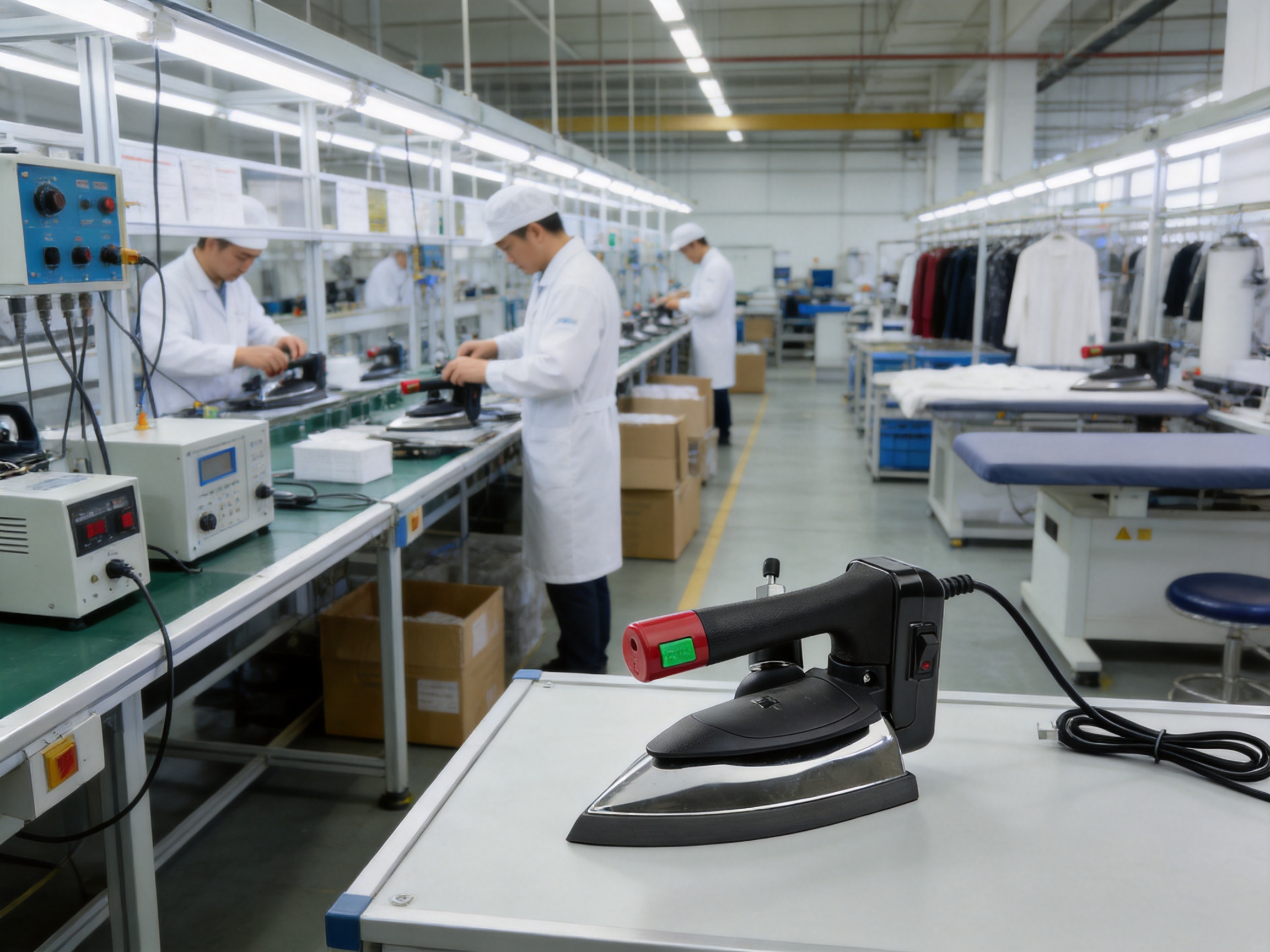
The ST-530 is supported by a manufacturer with experience in sewing and garment-care equipment. Jinyun County Shengda Sewing Equipment Co., Ltd. was established in 2003 in Huzhen Town, Lishui City, Zhejiang Province, China. Its location at the junction of Lishui, Jinhua, and Taizhou provides access to transportation networks and developed information channels.
The company focuses on independent research, development, and production. Its product portfolio includes electric irons, steam irons, hanging irons, spray guns, small steam machines, heat transfer machines, steam boilers, vacuum tables, and related accessories. This breadth is important because it gives the manufacturer a broad understanding of garment-finishing workflows rather than limiting its expertise to one isolated appliance.
Knowledge across several product categories can support more coordinated product development. For example, an electric iron may be used alongside a vacuum table, steam boiler, spray gun, or heat transfer machine. A manufacturer that produces equipment across these categories is better positioned to understand the practical requirements of tailoring shops, garment factories, clothing retailers, and professional pressing stations.
The company’s independent research and development approach also supports ongoing product improvement. Product design can be reviewed in response to user feedback, market requirements, manufacturing experience, and quality objectives. This provides a foundation for refining performance, usability, durability, and compatibility with different markets.
Manufacturing strength is not limited to the assembly of individual products. It also includes quality control, process organization, technical management, supply coordination, and after-sales support. The manufacturer’s research and development, management, and sales teams work together to support product delivery and customer service.
This cooperation can improve communication between market demand and production planning. Feedback from distributors and end users may help identify areas for product improvement, while technical teams can evaluate how changes affect manufacturing and reliability. A coordinated structure is especially valuable for export products because customers may have different operating environments and application requirements.
The company states that it follows national and industry standards, including GB4706.1-2005 and GB4706.2-2007. Its products have also passed CCC and CQC certifications. These references indicate attention to electrical safety and product conformity. Buyers should still confirm the exact certification status and documentation applicable to the specific model, destination market, and purchase order.
Quality standards are particularly significant for heated electrical appliances. An electric iron combines heating elements, electrical insulation, a hot soleplate, a power cord, and—in steam models—water handling. Manufacturing discipline is therefore essential. Appropriate material selection, assembly control, electrical testing, safety inspection, and final product evaluation all contribute to dependable operation.
The company’s experience since 2003 provides a long-term manufacturing foundation. Its established distribution channels in China and positive feedback from overseas customers also indicate experience serving different market expectations. For buyers, this may reduce the uncertainty associated with selecting a supplier that has limited production history.
The manufacturer identifies customization and OEM services among its business advantages. These services can be important for importers, distributors, retailers, and companies seeking products under their own brand or with market-specific configurations.
Potential customization areas may include packaging, labeling, documentation, plug configuration, voltage requirements, product appearance, and order-related specifications. Exact options, minimum order quantities, certification needs, and technical feasibility should be confirmed directly during procurement.
OEM capability can also help distributors build a more consistent product portfolio. Rather than selecting unrelated products from several suppliers, a buyer may be able to source multiple garment-care categories from one experienced manufacturer. The company’s range includes irons, steam equipment, spray guns, boilers, vacuum tables, heat transfer machines, and accessories, which may support broader purchasing programs.
The company’s products are mainly exported to Southeast Asia, Central Asia, South America, Africa, and other regions. Experience in these markets may support practical export arrangements, including shipment coordination, documentation, product communication, and regional customer service. Buyers should evaluate each order individually, including shipping terms, local regulations, spare parts, warranty provisions, and inspection requirements.
The manufacturer owns several brands, including Silver Star, Platinum Dragon, Tingshun, Jiasheng, Shengtai, and Jiangxin. This brand experience reflects participation in different segments of the ironing and garment-equipment market.
A multi-brand structure can allow a manufacturer to address varied customer preferences and price ranges while maintaining production expertise across related products. It may also support distributors that need differentiated product lines for different sales channels.
For the ST-530 specifically, the most important consideration remains the product’s technical suitability, operating requirements, quality documentation, and service support. Brand portfolio information is useful as an indicator of market experience, but buyers should base procurement decisions on verified specifications and application needs.
Before using the ST-530, the operator should verify the voltage setting, inspect the power cord and plug, prepare a stable ironing surface, and review the fabric-care instructions for the garment. The iron should be placed securely when not in use, and the soleplate should be kept away from people, combustible materials, and unprotected surfaces.
Temperature should be selected according to the fabric. When handling an unfamiliar textile, testing a hidden area is a prudent practice. Garments with prints, coatings, decorations, or heat-sensitive fibers may require special handling. A pressing cloth can be used when appropriate to provide an additional layer of protection.
When steam is used, the water system should be filled and maintained according to the product instructions. The user should avoid overfilling and should follow recommended procedures for emptying and cleaning. After use, the appliance should be allowed to cool before storage.
For commercial environments, operators should establish routine inspection procedures. Cords, plugs, soleplates, controls, and steam-related components should be checked regularly. Any sign of electrical damage, unusual heating, leakage, or unstable operation should be addressed before the product is returned to service.
Regular care helps preserve ironing performance. The soleplate should be cleaned using an appropriate method that does not scratch or damage its surface. Adhesive residue, melted fibers, and mineral deposits should not be allowed to accumulate because they may affect smooth movement and transfer marks to garments.
Water quality can influence steam equipment performance. Where local water contains high mineral content, users should follow the manufacturer’s recommendations regarding suitable water and cleaning. The iron should not be stored with water remaining inside unless the instructions specifically permit it.
Professional users may benefit from maintaining a simple service record. Recording cleaning, inspections, and reported issues can help identify recurring problems and support timely maintenance. This is particularly valuable when several operators share the same equipment.
Replacement parts and technical support should be discussed with the supplier before purchase, especially for export orders. Buyers may wish to confirm the availability of cords, controls, heating components, soleplate-related parts, packaging, manuals, and warranty assistance. A dependable service relationship can be as important as the initial product specification.
A small tailoring shop may begin with one ST-530 for general pressing and finishing. The required quantity depends on the number of operators, daily garment volume, working hours, and whether pressing takes place continuously or intermittently.
Retail stores may need one appliance for a fitting or preparation area and an additional unit for back-room use. Hotels or service businesses should consider whether the iron is intended for occasional guest use, staff uniforms, linens, or dedicated laundry operations.
When purchasing several units, buyers should standardize voltage, plug type, documentation, packaging, and spare-part requirements. They should also consider the availability of suitable ironing boards, vacuum tables, water supplies, electrical outlets, and storage areas.
For larger orders, OEM or customized arrangements may be appropriate. The buyer should provide clear information about destination markets, expected applications, certifications, labeling, target production schedule, and inspection requirements. Early technical communication helps reduce misunderstandings during manufacturing and delivery.
The ST-530 has a power rating of 1200W. This supports rapid heating and consistent performance for household and small-scale professional garment care.
Yes. The product is specified for 110V/220V operation. Users must verify the correct voltage configuration and comply with local electrical requirements before operation.
The ST-530 weighs approximately 2.3 kg. This provides useful pressing pressure while remaining manageable for routine ironing and professional garment preparation.
The base plate measures approximately 203 x 114 mm. Its size is intended to combine practical coverage with control around seams, collars, cuffs, and other detailed garment areas.
Yes. The ST-530 includes a steam function to assist with stubborn wrinkles and fabric relaxation. Users should follow the operating and maintenance instructions for water filling, cleaning, and storage.
Yes. The product is described as having a non-stick soleplate designed to glide smoothly across fabrics and reduce snagging during operation.
Yes. Adjustable temperature control allows the operator to select a suitable heat level for different fabric types. Garment-care labels and safe testing practices should always be followed.
The ST-530 is suitable for households, tailors, alteration shops, small garment stores, clothing retailers, hospitality businesses, and other users who need compact garment-finishing equipment.
The ST-530 combines 1200W heating, dual-voltage operation, adjustable temperature control, a non-stick soleplate, steam functionality, and a manageable 2.3 kg design. A basic dry iron may not provide the same combination of features.
The ST-530 is best understood as a versatile electric iron for household, tailoring, retail, and moderate garment-care applications. Large industrial operations should evaluate their required output and determine whether additional specialized pressing equipment is necessary.
The manufacturer identifies customization and OEM services among its capabilities. Buyers should discuss available options, order quantities, packaging, labeling, voltage, certification, and technical requirements directly with the company.
The company specializes in electric irons, steam irons, hanging irons, spray guns, small steam machines, heat transfer machines, steam boilers, vacuum tables, and related accessories.
Jinyun County Shengda Sewing Equipment Co., Ltd. is located at No. 8 Nanyi Road, Huzhen Industrial Park, Zhejiang, China. The company is based in Huzhen Town, Lishui City, Zhejiang Province.
The ST-530 Electric Iron is designed to provide a balanced solution for efficient garment care. Its 1200W heating capacity supports quick readiness and stable operation, while the 110V/220V configuration provides useful flexibility for international markets. The 2.3 kg weight and 203 x 114 mm base plate combine pressing force with manageable movement, making the product suitable for both broad surfaces and detailed garment work.
Its non-stick soleplate, adjustable temperature control, steam function, and flexible cord further strengthen its practical value. These features allow the iron to handle everyday household garments, linens, curtains, uniforms, tailored clothing, retail merchandise, and moderate professional workloads.
Compared with basic single-voltage, dry-only, low-power, or oversized alternatives, the ST-530 offers a useful balance of versatility, portability, heating performance, and operating control. It is not intended to replace every specialized industrial press, but it can provide an efficient and adaptable tool for users who need dependable garment finishing without excessive equipment complexity.
The product is supported by a manufacturer with experience dating back to 2003, independent research and development capabilities, a broad garment-equipment portfolio, export experience, OEM and customization services, and stated compliance with relevant national and industry standards. The company’s range of related equipment also enables customers to consider more complete garment-care solutions from a single manufacturing source.
For buyers evaluating the ST-530, the most important steps are to confirm voltage requirements, target applications, certification documentation, operating instructions, service arrangements, and order specifications. When properly selected, operated, and maintained, the ST-530 can serve as a practical garment-care appliance for homes, tailoring businesses, clothing shops, hospitality environments, and other professional settings.
1. Product specification and technical information supplied for the ST-530 Electric Iron.
2. Manufacturer profile and company information for Jinyun County Shengda Sewing Equipment Co., Ltd.
3. General principles of textile care, fabric temperature selection, and garment pressing practice.
4. GB4706.1-2005, Safety of Household and Similar Electrical Appliances—General Requirements.
5. GB4706.2-2007, Safety Requirements for Household and Similar Electrical Appliances—Particular Requirements for Electric Irons.
6. General electrical appliance quality-control and product-safety practices for heated garment-care equipment.
 +86-578-3158872 / +86-578-3158958
 jyshengda@163.com / caroying@jy-shengda.com
 No. 8 Nanyi Rd, Huzhen Industrial Park, Zhejiang, China
Copyright © Jinyun Shengda Sewing Equipment Co., Ltd. All Rights Reserved.
Ironing Press Machine Equipment Factory
 English
 中文简体
 русский
 عربى