
Garment pressing becomes a production issue when operators have to process large numbers of finished pieces within a fixed workflow. A suitable Clothes Press Machine can reduce repeated manual handling and give production teams a dedicated station for shaping, smoothing, and preparing garments before inspection or packing.
For apparel manufacturers and equipment distributors, the purchasing question is not simply whether a press can remove wrinkles. The equipment needs to match garment construction, production volume, available floor space, operator workflow, and the rest of the finishing line.
Pressing usually follows several earlier manufacturing stages. Sewing may leave seams, collars, cuffs, and garment panels requiring shaping before the product reaches inspection. The pressing station therefore has to work with garments that have already passed through cutting and sewing rather than treating ironing as a standalone task.
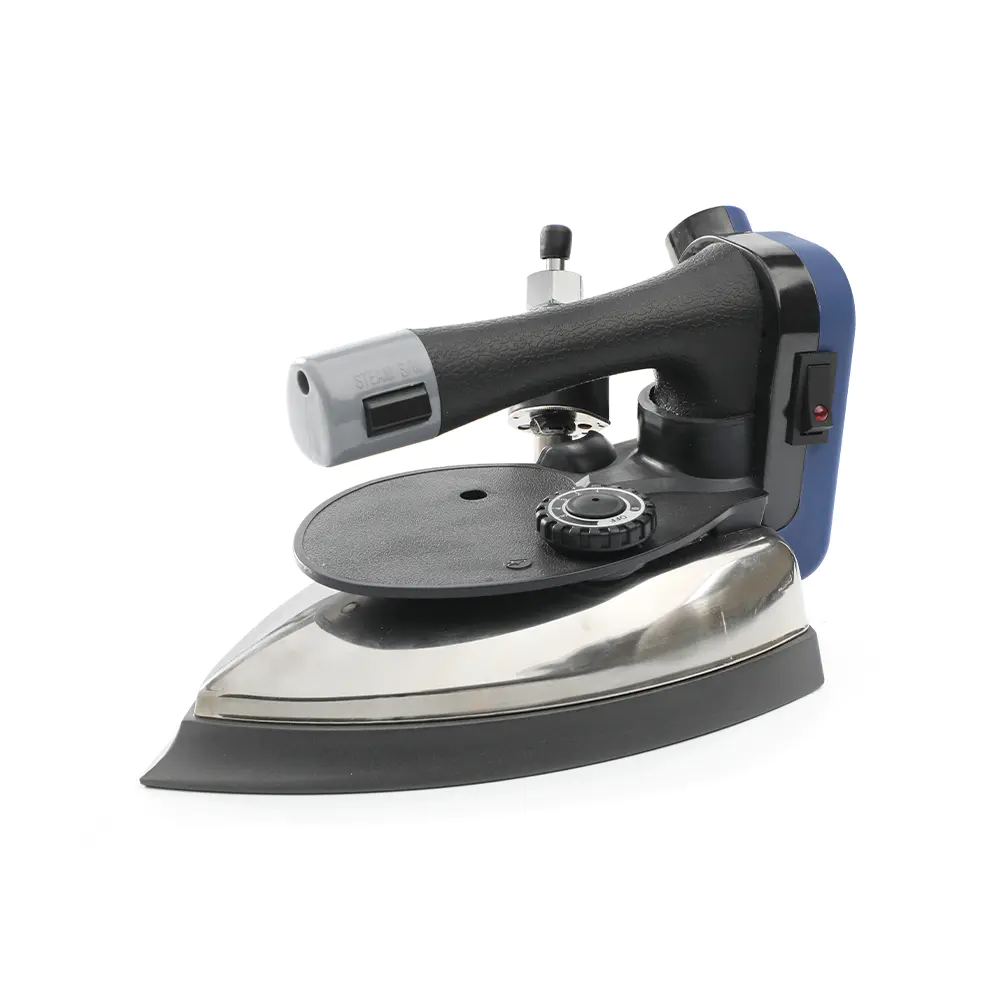
A Clothes Press Machine can serve this stage by providing a defined pressing operation instead of relying entirely on handheld irons. For factories processing repeated garment styles, dedicated pressing equipment can also make workstation planning easier because operators work with a fixed machine rather than changing between different manual tools.
The appropriate machine configuration depends on the garment category. Shirts, uniforms, trousers, jackets, and other apparel products can have different pressing requirements. Buyers should identify the areas that require mechanical pressure before choosing the machine structure.
Production volume is one purchasing factor, but it should not be considered alone. Buyers should also examine the type of garments, pressing areas, operator access, heating requirements, and installation conditions.
For a Clothes Press Machine, procurement teams can compare:
These details are more useful than comparing equipment only by its external appearance or rated power.
Different finishing tasks call for different equipment arrangements. A handheld iron provides direct control over small areas, while a pressing machine creates a dedicated mechanical pressing operation.
|
Production Task |
Handheld Iron |
Clothes Press Machine |
Vacuum Ironing Table |
|
Small seam correction |
Direct operator control |
Less suited to isolated touch-up work |
Suitable for controlled manual pressing |
|
Repeated pressing operations |
Operator-dependent |
Dedicated pressing workflow |
Operator-dependent |
|
Garment shaping |
Flexible |
Depends on press configuration |
Flexible around the work surface |
|
Floor-space planning |
Minimal |
Requires dedicated machine space |
Requires dedicated table space |
|
Production planning |
Flexible workstation |
Fixed pressing station |
Fixed ironing station |
This distinction helps buyers avoid selecting equipment simply because it has a higher nominal power rating. The machine should fit the actual operation taking place at the workstation.
Jinyun County Shengda Sewing Equipment Co., Ltd. has focused on ironing equipment since its establishment in 2003. The company integrates design, development, production, sales, and service, with product categories covering electric irons, steam equipment, vacuum tables, spray guns, and heat transfer machines. Shengda states that 90% of its parts are made in-house.
For B2B buyers, in-house component production can be relevant when evaluating manufacturing control. It provides a basis for discussing component consistency, assembly requirements, replacement parts, and production arrangements with the supplier.
The company reports more than 300 employees, including more than 70 management and technical personnel. These resources support a manufacturing operation that serves both domestic distribution channels and overseas customers.
A factory ordering one machine for sampling has different requirements from a distributor purchasing equipment for repeated export orders. Buyers should therefore provide the supplier with clear information before requesting a quotation.
For a Clothes Press Machine, useful purchasing information includes the garment categories involved, expected production environment, required voltage, available installation area, target quantity, and any preferred machine configuration.
Distributors can also evaluate whether the machine complements other equipment in their existing product range. Shengda manufactures several types of garment and textile equipment, allowing buyers to discuss related ironing and finishing equipment within the same supplier relationship.
A Clothes Press Machine becomes easier to evaluate when buyers start with the pressing operation rather than the machine name. The key question is which garment sections need controlled pressure, how often the operation is repeated, and where the machine will sit within the production line.
For factories with established finishing procedures, equipment selection can then focus on technical specifications, electrical configuration, workstation layout, component supply, and production quantities. This approach gives the supplier clearer information for preparing a quotation and reduces the risk of choosing equipment that does not match the intended workflow.
For Shengda, the Clothes Press Machine belongs within a broader range of garment finishing equipment rather than functioning as an isolated product category. Its manufacturing base also covers vacuum ironing tables, steam equipment, irons, and heat transfer machines, giving overseas buyers several related equipment options when planning a complete sourcing program.
 +86-578-3158872 / +86-578-3158958
 jyshengda@163.com / caroying@jy-shengda.com
 No. 8 Nanyi Rd, Huzhen Industrial Park, Zhejiang, China
Copyright © Jinyun Shengda Sewing Equipment Co., Ltd. All Rights Reserved.
Ironing Press Machine Equipment Factory
 English
 中文简体
中文简体 русский
 عربى
عربى