
Not every garment requires a fixed pressing station. Sampling rooms, alteration departments, retail preparation areas, hotel operations, and small apparel workshops may need equipment that can move between garments and work surfaces. A Handheld Ironing Machine suits these situations because the operator can bring the heating or steam function directly to the section being processed.
For B2B buyers, however, portability should not be the only purchasing criterion. The machine needs to match the expected working frequency, fabric range, steam requirements, electrical market, and maintenance arrangements.
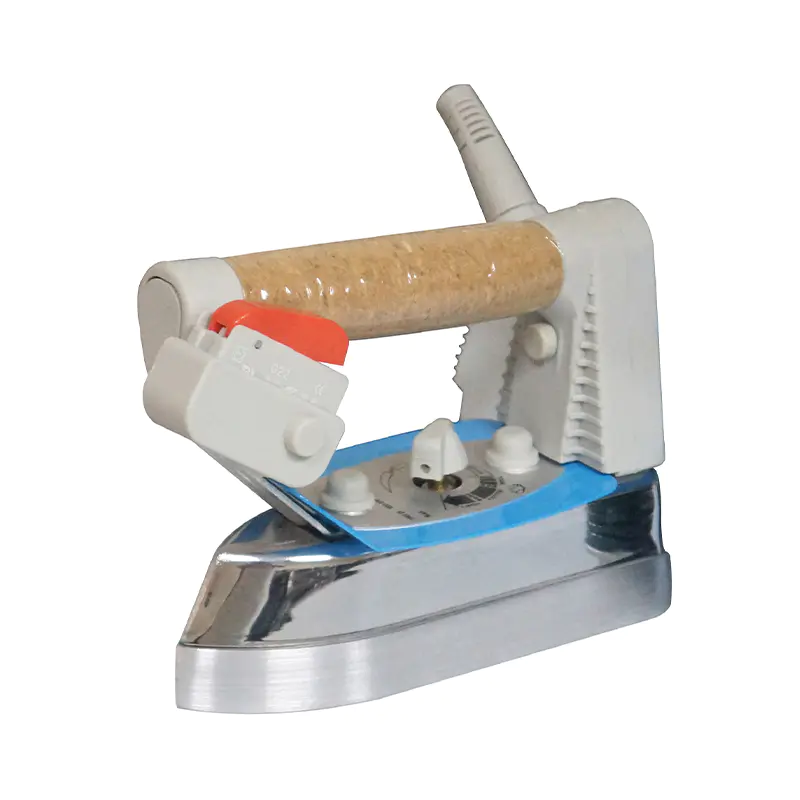
A fixed ironing table works well when the same type of operation is repeated at a dedicated workstation. Handheld equipment takes a different approach. The operator controls the position of the machine and can move around the garment as the job requires.
This makes a Handheld Ironing Machine relevant to smaller production batches and tasks that vary from one garment to another. It can also complement larger equipment rather than replace it. A factory may use fixed pressing machinery for repetitive operations and handheld equipment for finishing details that require closer operator control.
Sampling departments are another practical application. Samples often change in style, fabric, and construction, making a flexible workstation useful when production has not yet reached a standardized bulk process.
Steam equipment should be evaluated according to the type of work rather than a general claim about fabric compatibility. Different textiles respond differently to heat, moisture, and pressure, so buyers should review the operating requirements of their target products.
The Handheld Ironing Machine category listed by Shengda emphasizes compact construction, portability, steam operation, and operator-oriented handling. The company's product range also includes steam irons, electric irons, garment steamers, and other ironing equipment.
When sourcing for overseas markets, buyers should confirm the exact model before placing a purchase order. Specifications such as rated voltage, power, water capacity, steam output, heating method, and available accessories can differ between models.
The right equipment depends on where the pressing operation takes place.
|
Work Area |
Handheld Ironing Machine |
Fixed Ironing Table |
Pressing Machine |
|
Sampling room |
Flexible for changing garments |
Useful for repeated sample work |
May be excessive for varied samples |
|
Alteration department |
Easy to move between garments |
Requires dedicated space |
Depends on alteration volume |
|
Bulk garment line |
Useful for detail work |
Suitable for manual finishing |
Suitable for defined pressing operations |
|
Hotel or service operation |
Portable between work areas |
Requires fixed installation |
Usually needs a dedicated setup |
|
Small workshop |
Flexible workspace arrangement |
Requires a fixed station |
Requires more installation planning |
This comparison is useful for distributors because it separates portability from production capacity. A compact machine may fit one type of customer very well without being the right equipment for every garment operation.
Jinyun County Shengda Sewing Equipment Co., Ltd. was established in 2003 and specializes in ironing equipment. The company integrates design, development, manufacturing, sales, and service, with more than 300 employees and more than 70 management and technical personnel according to its company information.
Shengda also states that 90% of its parts are self-made. For importers, this information can form part of a supplier evaluation covering component production, assembly, quality control, spare parts, and order coordination.
The manufacturer's product range extends beyond the Handheld Ironing Machine category. Electric irons, all-steam irons, garment steamers, vacuum tables, spray guns, steam boilers, and heat transfer equipment are also included in its product portfolio.
A distributor preparing a bulk order should provide the supplier with the target market and intended application. Electrical requirements are particularly important because a machine configured for one market may not use the same voltage specification as another.
Buyers should also confirm packaging dimensions, product weight, accessory configuration, spare-part availability, user documentation, and order quantity. These details affect freight planning and after-sales support.
For a Handheld Ironing Machine, model selection should also consider whether the end application is garment sampling, alteration, hospitality, retail preparation, or another commercial setting. Each application can place different demands on operating frequency and steam handling.
A Handheld Ironing Machine can occupy a specific role within a larger garment finishing system. Fixed tables and pressing machines handle defined production tasks, while portable equipment can address details that do not justify another dedicated workstation.
For buyers sourcing several equipment categories, Shengda's broader manufacturing range provides an opportunity to coordinate different ironing and finishing machines through one supplier. The company's experience across electric, steam, vacuum, and heat-transfer equipment also gives distributors a wider product base when developing their own equipment offering.
 +86-578-3158872 / +86-578-3158958
 jyshengda@163.com / caroying@jy-shengda.com
 No. 8 Nanyi Rd, Huzhen Industrial Park, Zhejiang, China
Copyright © Jinyun Shengda Sewing Equipment Co., Ltd. All Rights Reserved.
Ironing Press Machine Equipment Factory
 English
 中文简体
中文简体 русский
 عربى
عربى