
In garment production and textile processing, finishing quality directly affects the final appearance of clothing products. An electro iron provides controlled heating and smooth pressing performance for professional ironing operations, making it an important tool for factories, workshops, and commercial garment services.
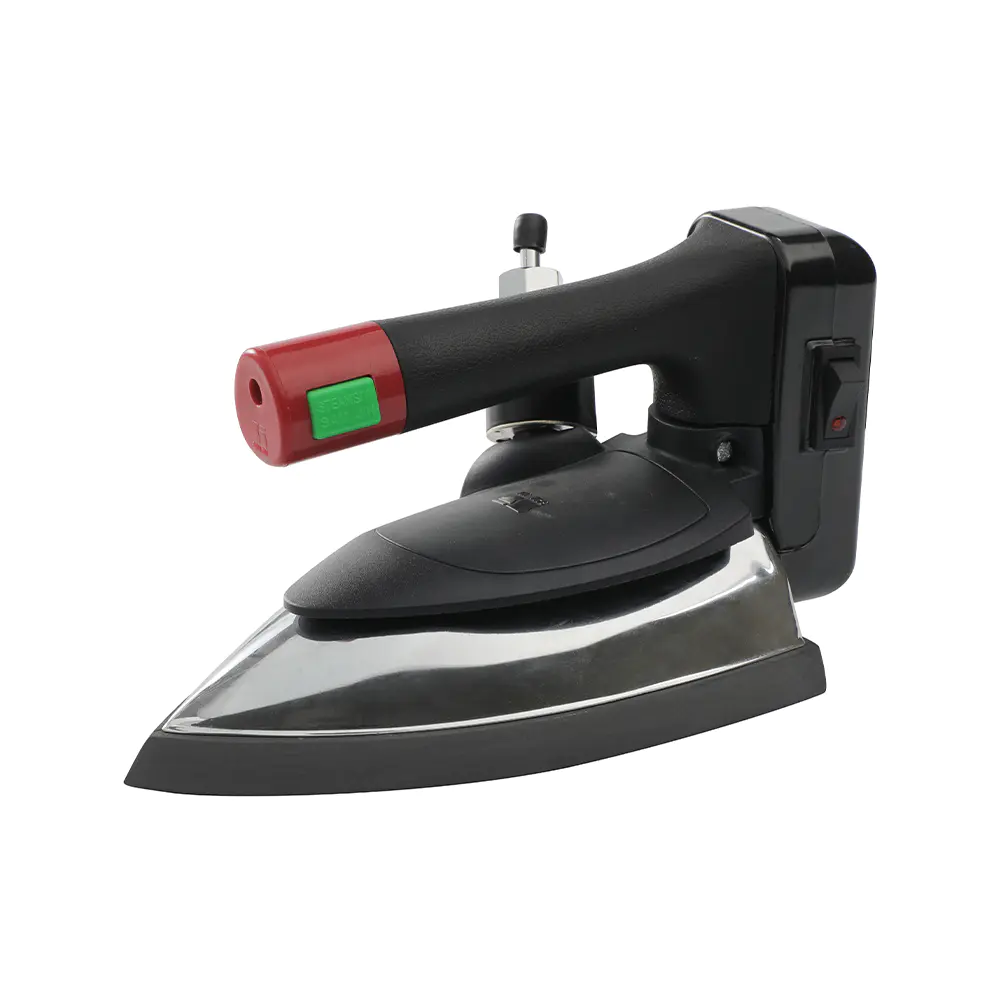
JY Shengda develops and supplies ironing equipment and related accessories for global customers. The company focuses on providing solutions for garment finishing applications, including electric irons, steam equipment, heat transfer machines, and supporting components. For B2B buyers, selecting a suitable supplier requires evaluating product structure, manufacturing capability, quality control, and production consistency.
Unlike household purchasing decisions, industrial buyers usually consider equipment stability, maintenance requirements, and compatibility with existing production processes. A manufacturer needs to understand how different working environments influence product design and performance.
The production of an electro iron involves multiple manufacturing stages, including heating element assembly, temperature control integration, housing production, electrical connection installation, and performance inspection.
The heating system is one of the key components affecting ironing efficiency. Manufacturers need to ensure stable heat generation and accurate temperature control to meet different fabric requirements. The external structure also requires appropriate material selection to support long-term operation in professional environments.
JY Shengda manages production procedures from component preparation to finished product inspection. Quality checks during assembly help identify potential issues related to electrical safety, heating performance, and operational stability.
|
Production Area |
Manufacturing Focus |
Buyer Concern |
|
Heating Component |
Stable heat output and temperature control |
Consistent ironing performance |
|
Electrical Assembly |
Connection accuracy and safety inspection |
Reliable daily operation |
|
Housing Production |
Durable structure and ergonomic design |
Product service life |
|
Final Testing |
Functional verification before shipment |
Reduced application risks |
Different industries have different ironing requirements. Clothing factories, textile processing companies, and professional finishing facilities may require equipment with specific power levels, operating methods, or accessory configurations.
A supplier with customization capability can adjust product solutions according to customer needs. These adjustments may include technical specifications, packaging requirements, and production quantities.
For international distributors, cooperation with a manufacturer that understands garment equipment applications can simplify product selection. Clear communication regarding fabrics, production volume, and working conditions helps create more suitable equipment solutions.
B2B buyers often evaluate suppliers based on manufacturing systems rather than individual product features. Stable production processes, inspection procedures, and supply capability influence long-term cooperation.
An electro iron used in professional environments must maintain reliable performance through repeated operation. Manufacturing accuracy, component matching, and quality management all contribute to product consistency.
JY Shengda continues to develop ironing equipment and related solutions for international markets. Through production experience and application-focused design, the company supports customers seeking dependable garment finishing equipment.
The demand for professional ironing equipment continues across garment factories, textile workshops, and commercial clothing services. As production standards increase, businesses require equipment that supports efficient finishing processes.
An electro iron remains an important part of garment finishing systems because it provides direct heat application and controlled pressing functions. For procurement teams, evaluating technical specifications, supplier capability, and production support helps identify suitable manufacturing partners.
 +86-578-3158872 / +86-578-3158958
 jyshengda@163.com / caroying@jy-shengda.com
 No. 8 Nanyi Rd, Huzhen Industrial Park, Zhejiang, China
Copyright © Jinyun Shengda Sewing Equipment Co., Ltd. All Rights Reserved.
Ironing Press Machine Equipment Factory
 English
 中文简体
中文简体 русский
 عربى
عربى